ToolMage
Sign in

Best 4 Data Entry AI tools for Business

Popular Data Entry AI tools in Business include Handwriting OCR, picturetotext, Mediar, and Copywritee, helping you work more efficiently.

Mediar
Paid

Mediar

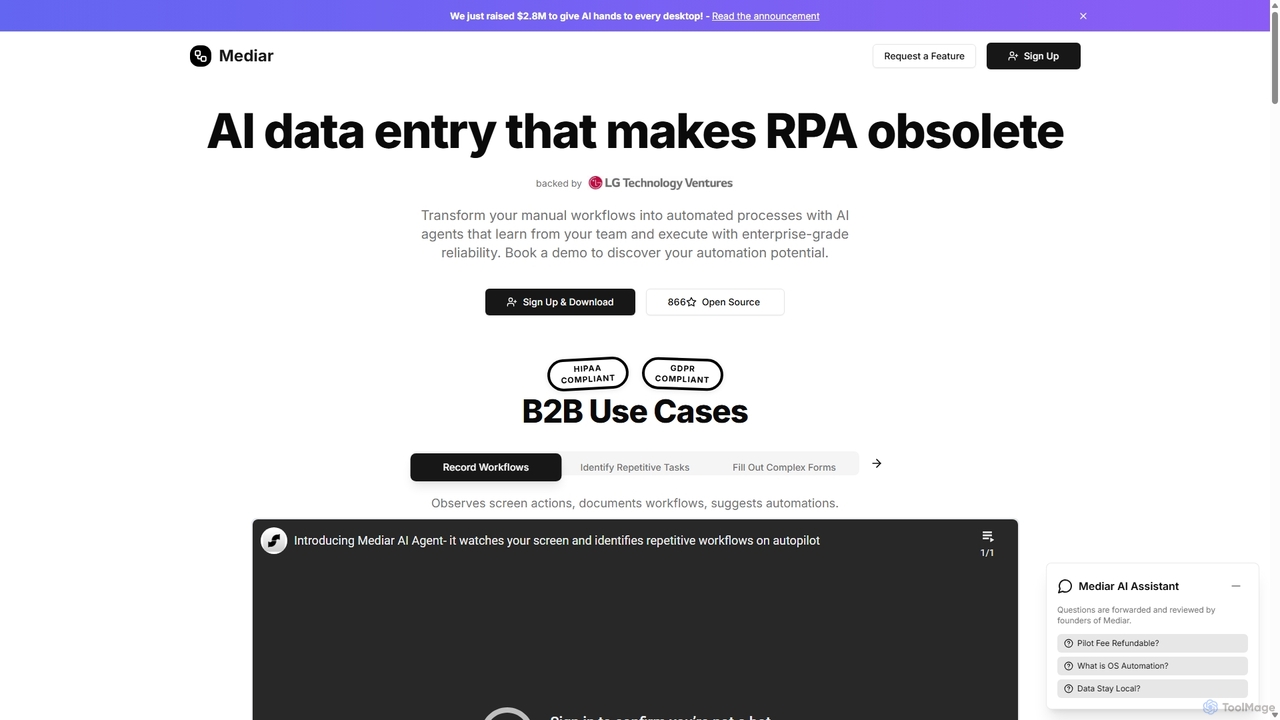
Mediar is an AI-native automation platform designed to replace traditional RPA and manual data entry. It employs AI agents that learn directly from your team's screen actions to automate complex, repetitive workflows across any desktop application. Mediar offers enterprise-grade reliability, rapid 24-48 hour deployment, and significant cost savings by turning manual processes into self-healing, intelligent automations.

Data Entry
Visits 7.5KFavorites 142Likes 145
picturetotext
Freemium

picturetotext

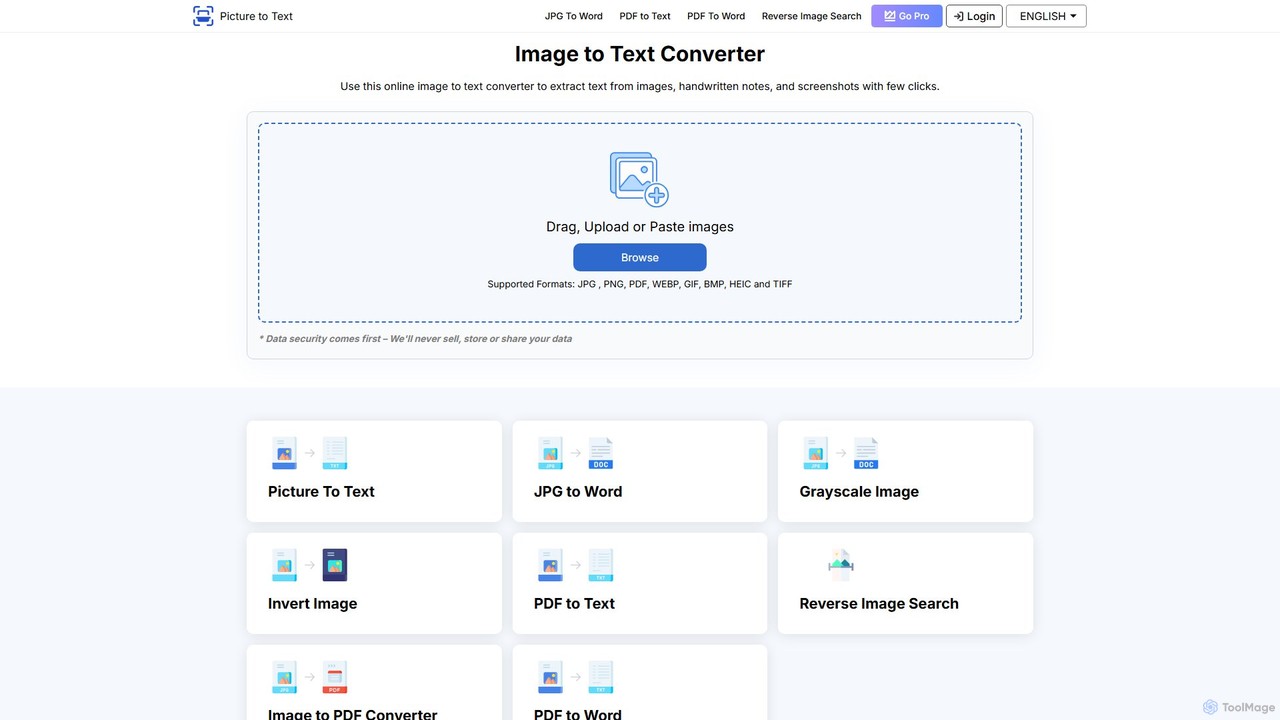
An AI-powered OCR tool that accurately converts images into editable text. It supports various formats, batch processing, and over 20 languages. Ideal for digitizing documents, automating data entry, and improving study efficiency with a user-friendly interface and a focus on data privacy.

Data Entry
Visits 13.4KFavorites 117Likes 109
Handwriting OCR
Freemium

Handwriting OCR

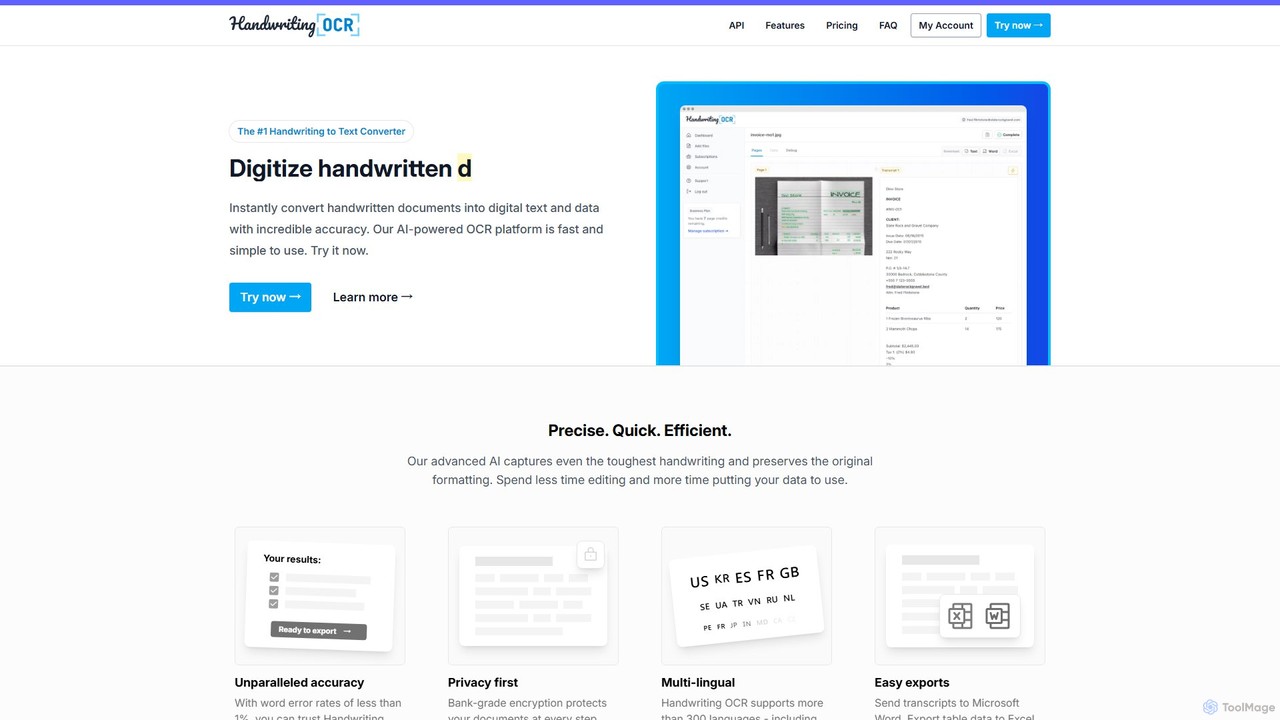
Handwriting OCR is an AI-powered platform that instantly converts handwritten and printed documents into editable digital text with incredible accuracy. It supports over 300 languages, various file formats (PDF, JPG, PNG), and exports to Word, Excel, and plain text. Designed for businesses, researchers, and individuals, it prioritizes security with bank-grade encryption and a strict no-data-training policy.

Data Entry
Visits 36KFavorites 108Likes 89
Copywritee
Freemium

Copywritee

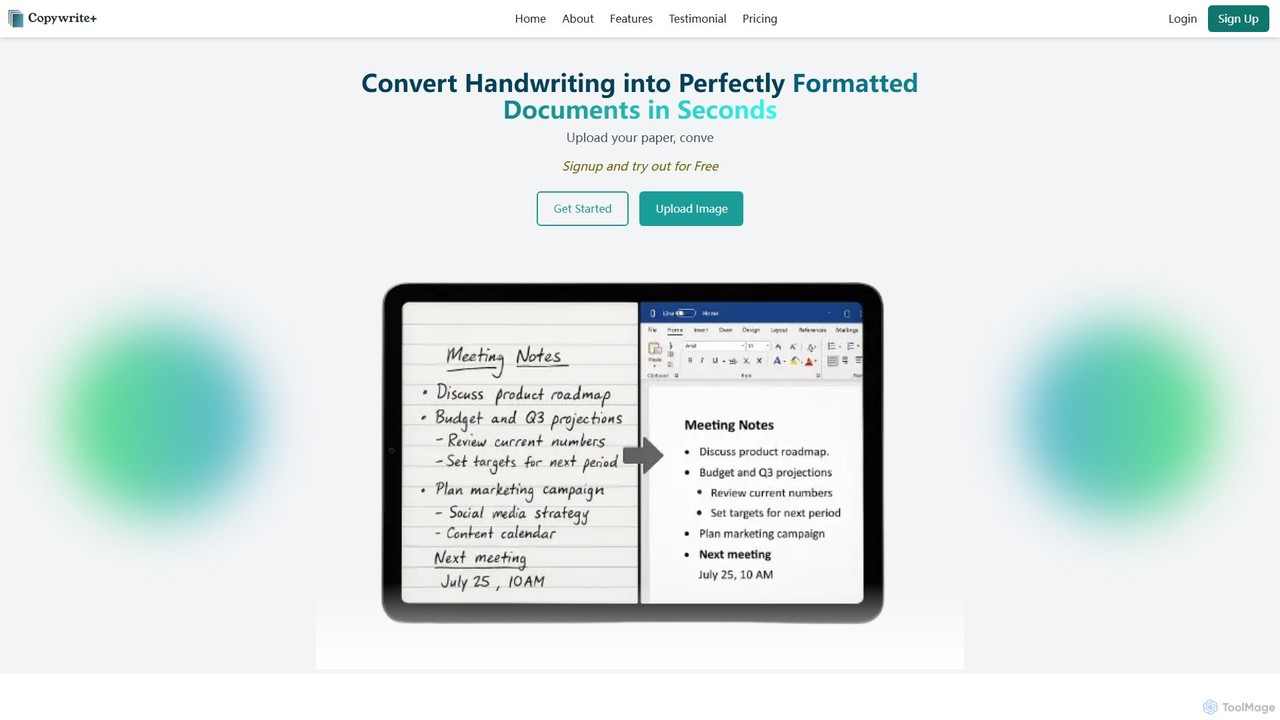
Copywritee is an AI-powered platform that converts handwritten notes, tables, and documents into perfectly formatted, editable digital text with 99% accuracy. It's more than a converter; it's a complete cloud-based document management ecosystem with an intuitive editor, spreadsheet support, and seamless collaboration features.

Data Entry
Visits 4.3KFavorites 105Likes 127

About Data Entry

Data Entry tools are AI-powered solutions designed to automate the process of extracting, validating, and inputting information into digital systems. Leveraging technologies like optical character recognition (OCR), intelligent document processing (IDP), and natural language processing (NLP), these tools significantly reduce manual effort and human error. They streamline operations across various business functions, transforming raw data from diverse sources into structured, usable formats. This automation is crucial for maintaining data accuracy and accelerating workflows within the broader business context.

Core Features

  • Automated Data Extraction: Automatically identifies and extracts specific data points from structured and unstructured documents, images, or web pages.
  • Intelligent Document Processing (IDP): Understands document layouts and content context to process invoices, forms, contracts, and receipts without predefined templates.
  • Data Validation & Cleansing: Verifies extracted data against predefined rules or external databases, flagging inconsistencies and correcting errors.
  • Integration Capabilities: Seamlessly connects with existing CRM, ERP, accounting, and database systems for direct data transfer.
  • Handwriting Recognition (HCR): Converts handwritten text from forms or notes into digital data, expanding the scope of automation.

Use Cases

Businesses across sectors utilize Data Entry AI to manage high volumes of information. For instance, financial institutions process loan applications, healthcare providers digitize patient records, and e-commerce companies update product inventories. These tools are essential for any organization aiming to reduce operational costs and improve data quality.

How to Choose

When selecting a Data Entry AI tool, consider its accuracy rates for your specific data types, its ability to integrate with your current software ecosystem, and the level of customization offered for different document formats. Evaluate the scalability to handle fluctuating data volumes and the vendor's support for ongoing optimization.

Featured tool rankings

Data Entry use cases

1

Automating Invoice Processing

Finance departments use AI Data Entry tools to automatically extract vendor details, line items, amounts, and dates from incoming invoices. This data is then validated against purchase orders and directly entered into accounting systems, significantly reducing manual reconciliation time and errors.

2

Digitizing Patient Medical Records

Healthcare providers leverage these tools to convert scanned paper medical charts, lab results, and patient intake forms into structured electronic health records (EHR). This ensures quick access to critical patient information, improves data accuracy, and supports compliance with regulatory standards.

3

Streamlining E-commerce Product Data Uploads

E-commerce businesses utilize AI Data Entry to extract product specifications, descriptions, prices, and images from supplier catalogs or competitor websites. This automates the bulk upload of new products or updates to existing inventory, accelerating time-to-market for new offerings.

4

Processing Customer Feedback and Surveys

Marketing and customer service teams employ AI Data Entry to analyze large volumes of customer feedback from surveys, emails, and social media. The tools extract key sentiments, topics, and specific issues, providing actionable insights for product improvement and service enhancement.

5

Automating Loan Application Data Capture

Financial institutions use AI Data Entry to process diverse documents submitted with loan applications, such as bank statements, pay stubs, and identification. The tools extract relevant financial data and personal information, speeding up the application review process and reducing manual data entry bottlenecks.

6

Extracting Data from Legal Contracts

Legal firms and corporate legal departments apply AI Data Entry to automatically identify and extract critical clauses, dates, parties, and terms from contracts. This facilitates contract review, compliance checks, and the creation of searchable legal databases, saving significant time on document analysis.

Data Entry FAQ

What are AI Data Entry tools?

AI Data Entry tools are software solutions that use artificial intelligence, including optical character recognition (OCR), natural language processing (NLP), and machine learning, to automate the extraction, validation, and input of data from various sources into digital systems. They aim to minimize manual data handling, improve accuracy, and accelerate business processes.

How do AI Data Entry tools differ from traditional data entry methods?

Traditional data entry relies heavily on manual human input, which is prone to errors, slow, and costly. AI Data Entry tools automate these tasks, processing large volumes of data much faster and with higher accuracy by intelligently recognizing and extracting information, often learning and improving over time.

What types of data can AI Data Entry tools process?

AI Data Entry tools can process a wide range of data types, including structured data from forms and tables, semi-structured data like invoices and purchase orders, and even unstructured data from contracts, emails, and reports. They can handle text, numbers, dates, and sometimes even images or signatures.

What are the key benefits of implementing AI Data Entry?

Implementing AI Data Entry offers several benefits, including significant cost reduction by minimizing manual labor, improved data accuracy through automated validation, faster processing times for high-volume tasks, and enhanced employee productivity as staff can focus on higher-value activities. It also provides better data quality for analytics and decision-making.

How secure are AI Data Entry tools with sensitive information?

Reputable AI Data Entry tools prioritize data security and compliance. They often incorporate features like encryption, access controls, audit trails, and adherence to industry standards (e.g., GDPR, HIPAA). Many solutions also offer on-premise deployment options or secure cloud environments to protect sensitive information during processing and storage.