Business Best in category 17 results Erp AI Tool

Popular AI tools in the Erp field of Business include SAP、AppZen、Coperniq、GrubMarket、keel、Merlin AI、Acho、ERP.AI、Rockeye、Tangle, etc., helping you quickly improve efficiency.

SAP

SAP

SAP is a leading provider of enterprise application software, offering a comprehensive suite of AI-powered, cloud-based solutions. It …

16.0M
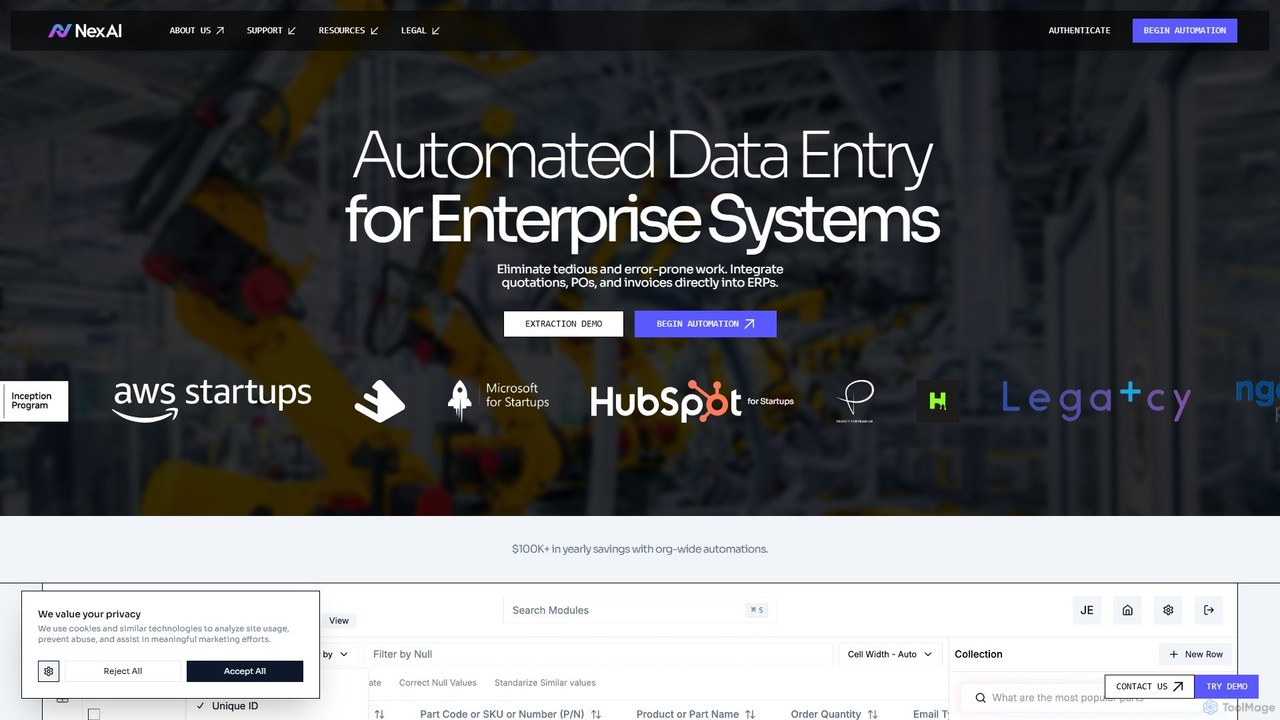
Nex AI

Nex AI

Nex AI is an enterprise-grade AI platform that automates data entry by extracting information from documents like quotations, …

4.8K
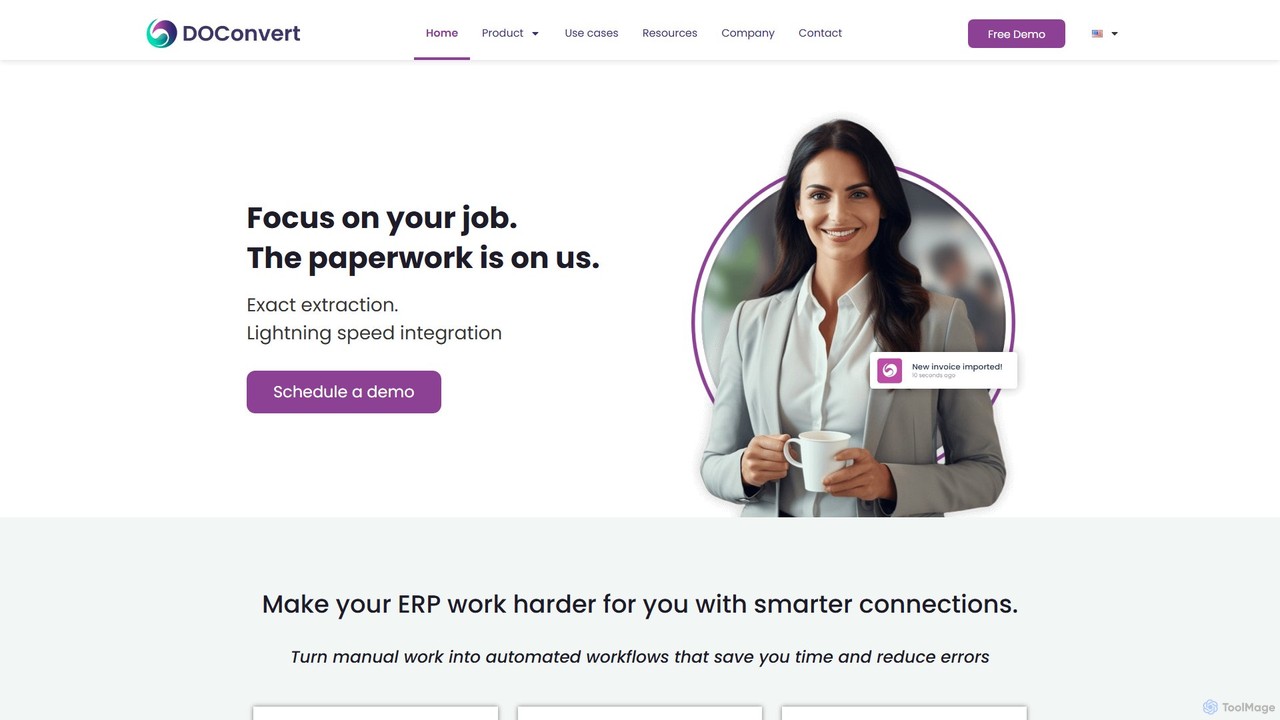
doconvert

doconvert

doconvert is an AI-powered intelligent document processing (IDP) platform that automates data extraction from business documents. It seamlessly …

3.1K
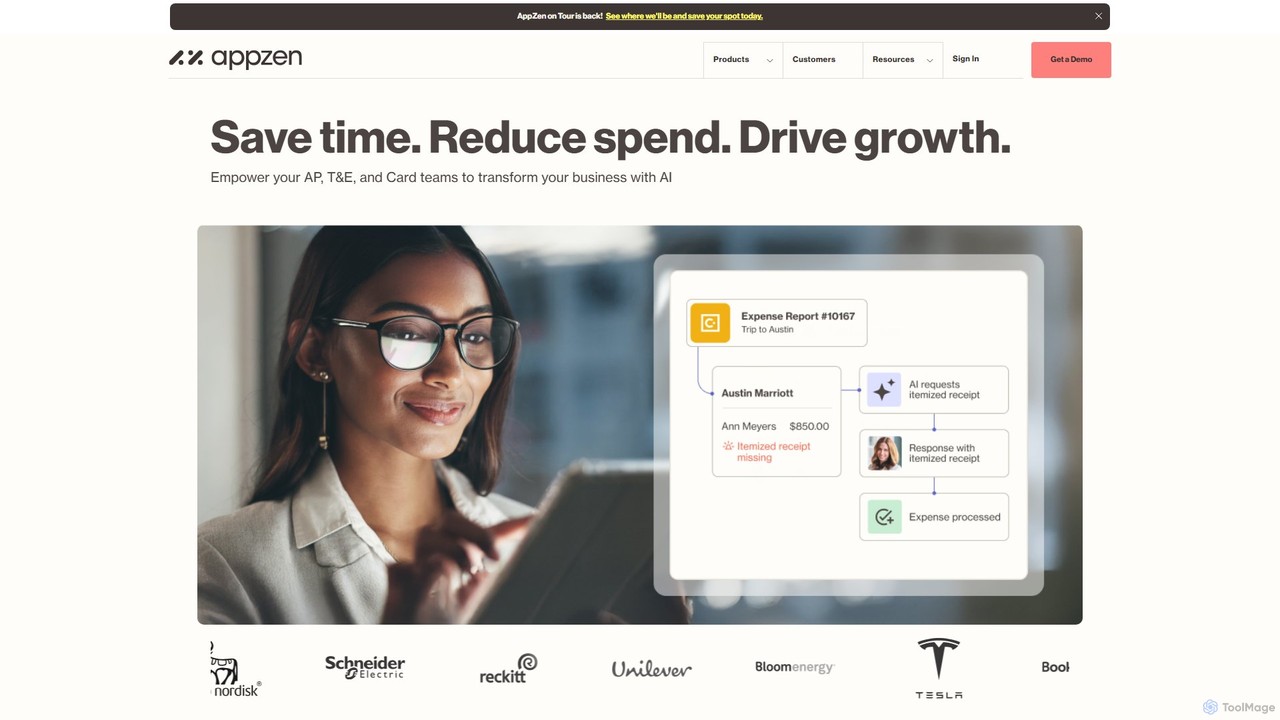
AppZen

AppZen

AppZen is an AI-powered finance automation platform designed to streamline Accounts Payable (AP), Travel & Expense (T&E) auditing, …

39.6K
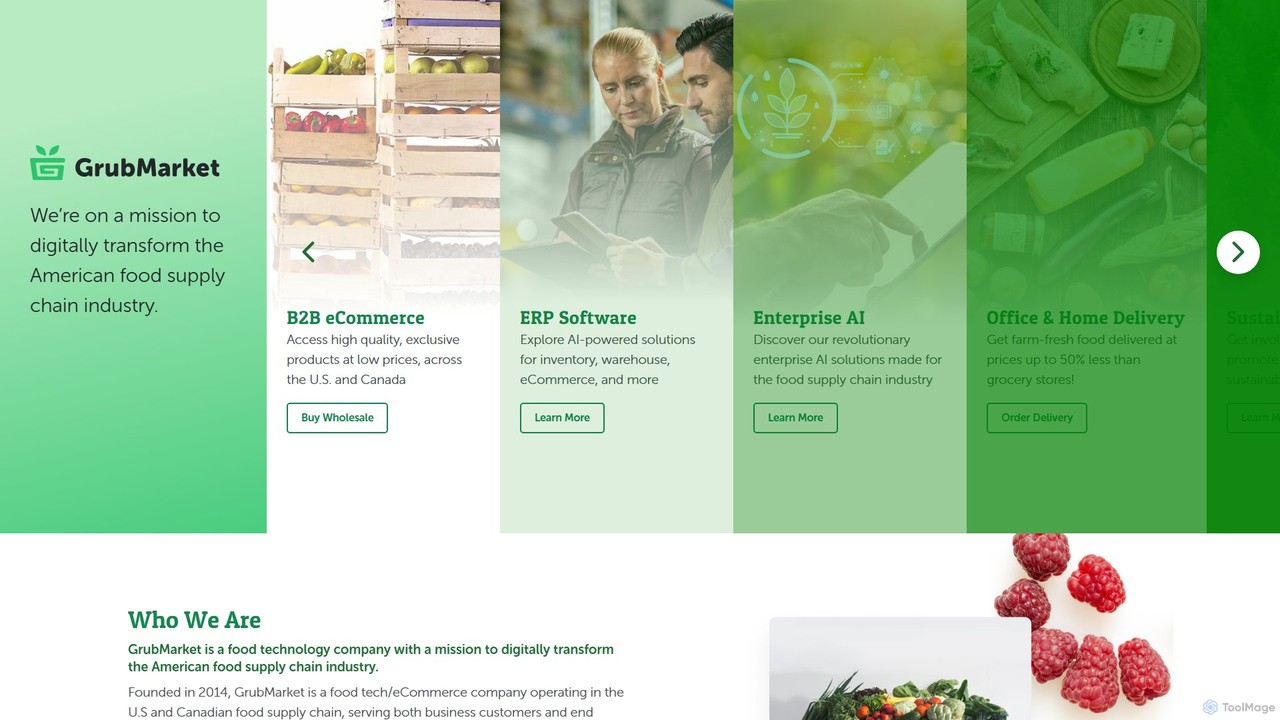
GrubMarket

GrubMarket

GrubMarket is an AI-powered technology platform revolutionizing the food supply chain. It provides B2B eCommerce, enterprise ERP software …

27.4K
Rockeye

Rockeye

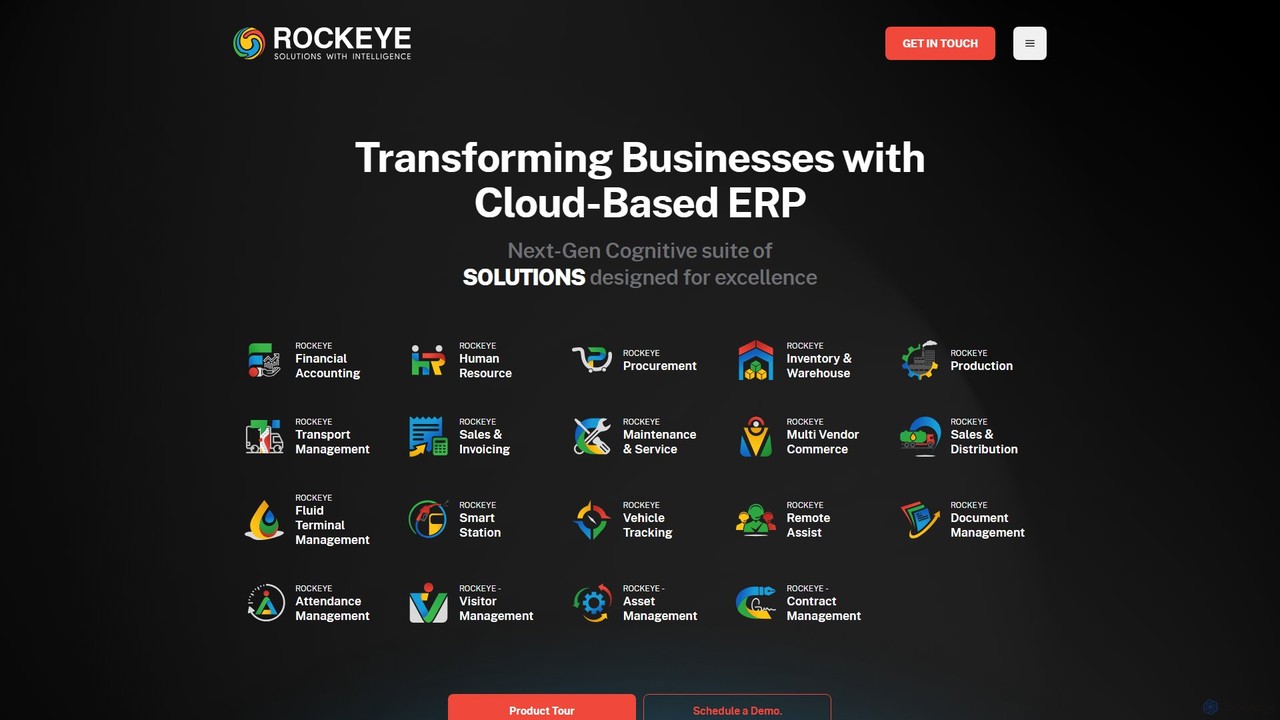
Rockeye is a powerful, cloud-based ERP suite that leverages AI and automation to transform business operations. It offers …

7.9K
Merlin AI

Merlin AI

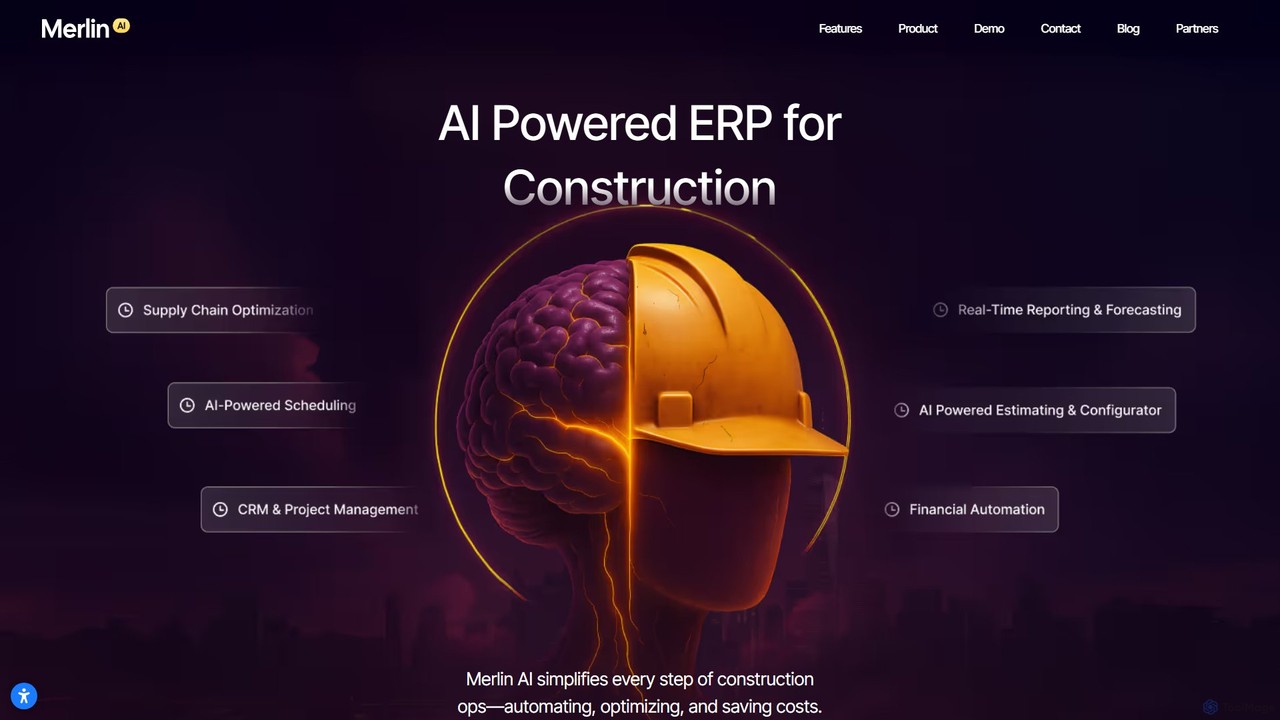
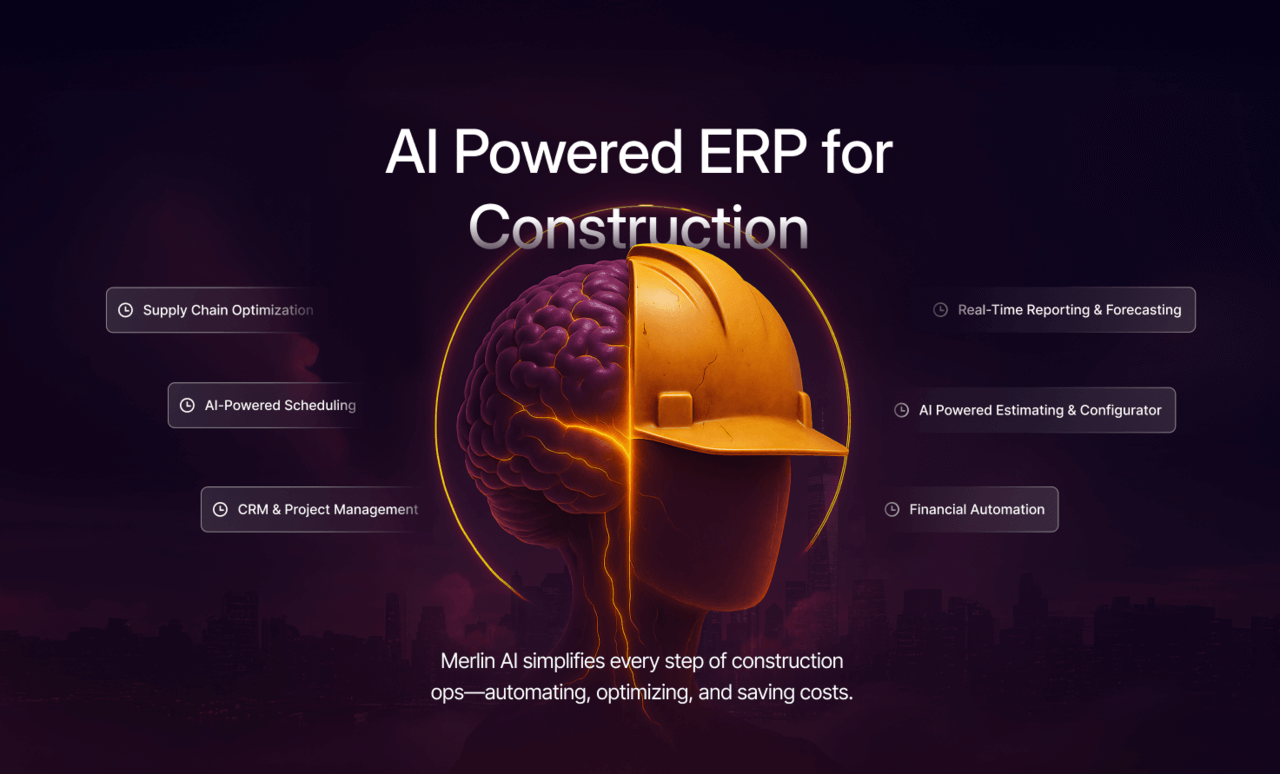
Merlin AI is an AI-powered, all-in-one Enterprise Resource Planning (ERP) platform specifically designed for the construction industry. It …

20.4K
DuoSoft

DuoSoft

DuoSoft offers an integrated, open-source digital transformation ecosystem for businesses. It provides a comprehensive suite of tools including …

3.0K
Afterquote

Afterquote

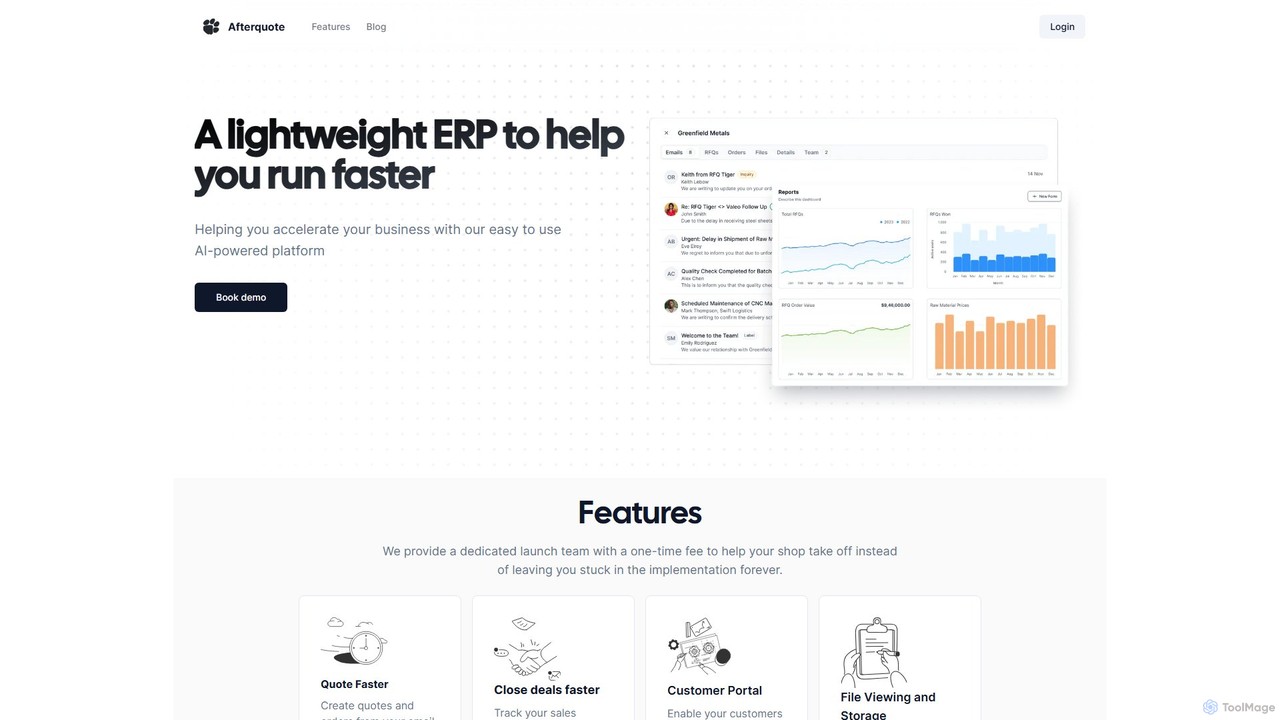
Afterquote is a lightweight, AI-powered ERP platform designed for manufacturing businesses, particularly in metal fabrication. It streamlines operations …

3.0K
Acho

Acho

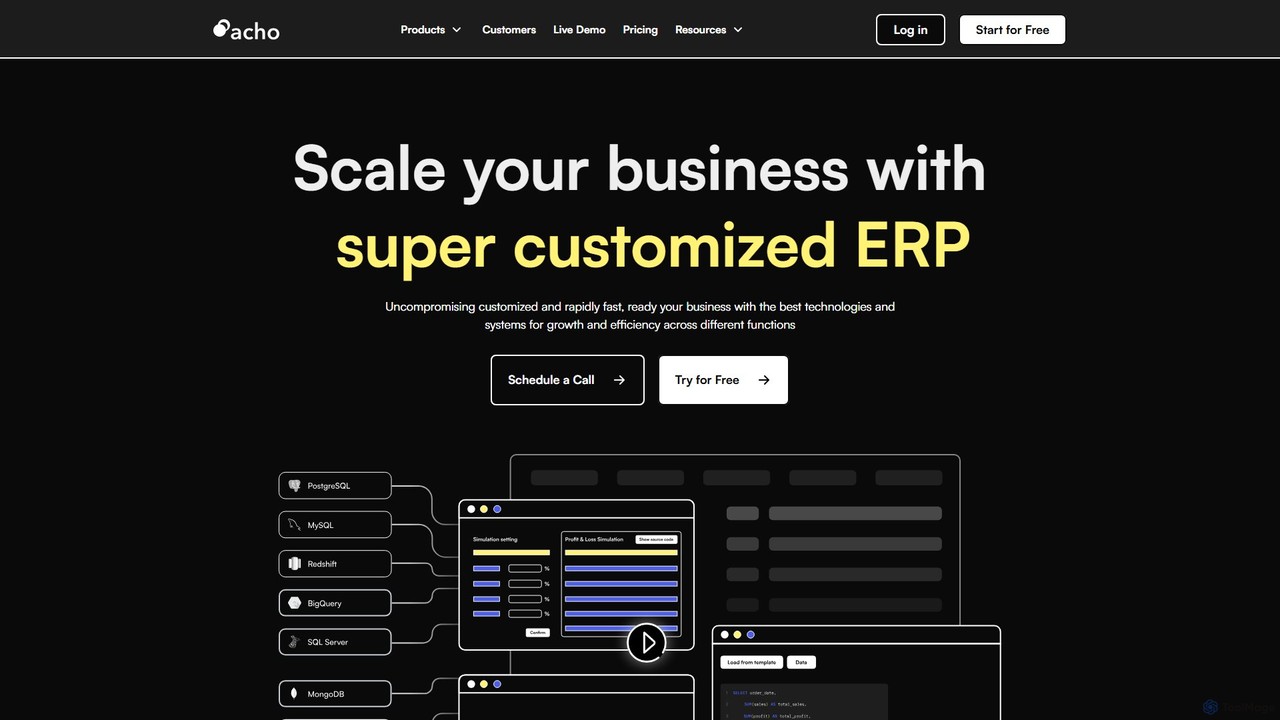
Acho is an AI-powered, low-code platform for building modern ERP systems and data applications. It enables businesses to …

16.5K
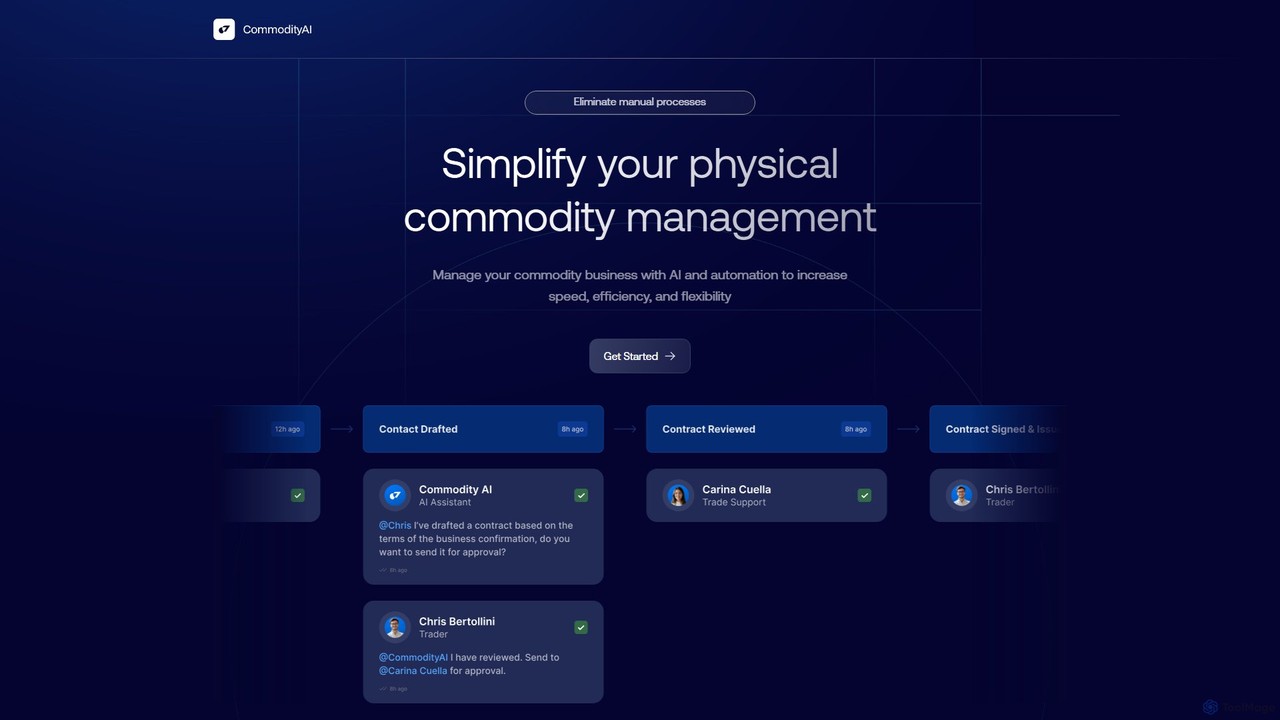
CommodityAI

CommodityAI

CommodityAI is a modern commodity management platform that leverages AI and automation to streamline trading operations. It enhances …

3.4K
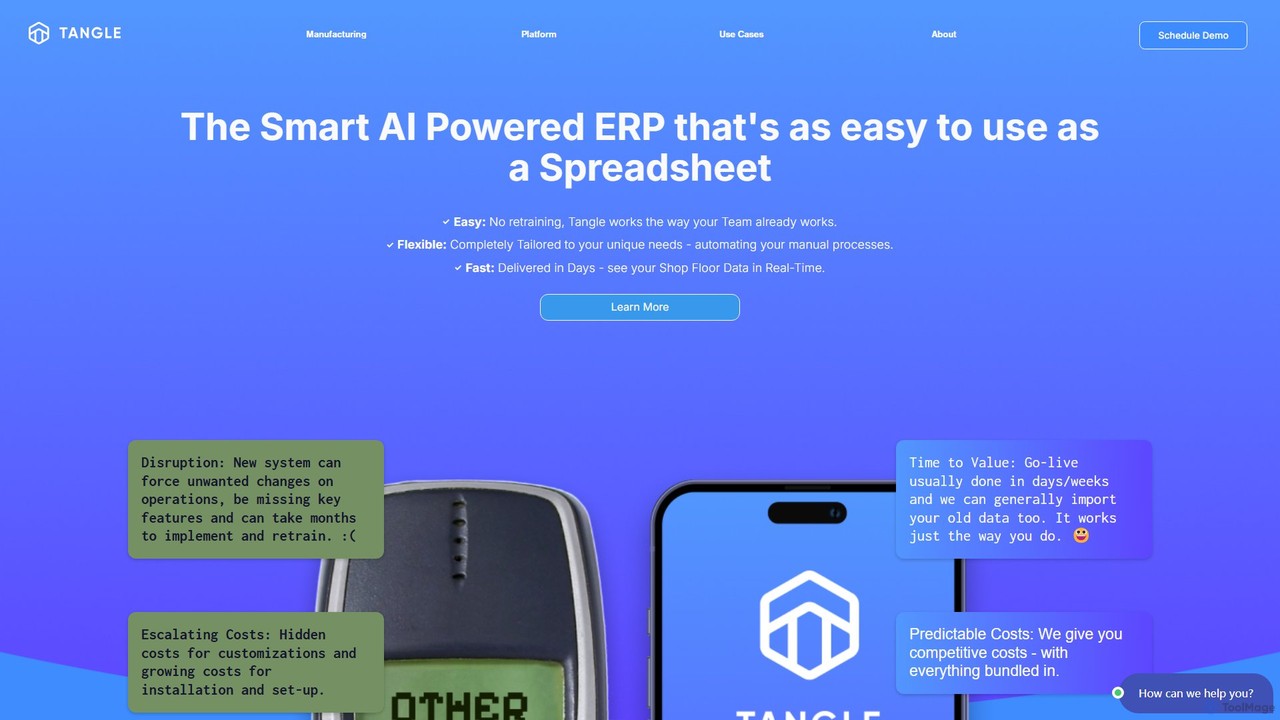
Tangle

Tangle

Tangle is an AI-powered Manufacturing ERP platform designed to be as flexible and easy to use as a …

6.2K
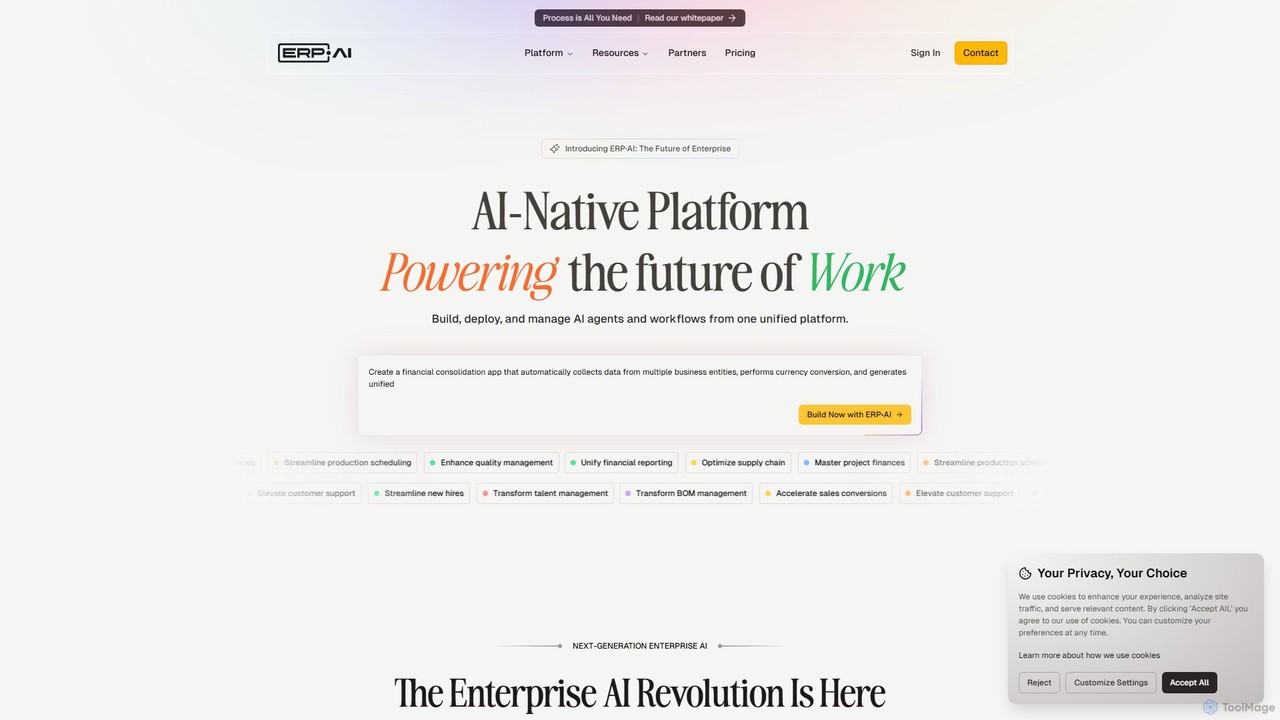
ERP.AI

ERP.AI

ERP.AI is an enterprise AI-native platform that enables businesses to build, deploy, and manage custom applications and autonomous …

10.6K
easyerp.ai

easyerp.ai

easyerp.ai was an AI-powered Enterprise Resource Planning (ERP) platform designed to simplify and automate core business operations for …

4.2K
Apptrop

Apptrop

Apptrop is an AI-powered, all-in-one business application suite designed to streamline operations for businesses of all sizes. As …

4.7K
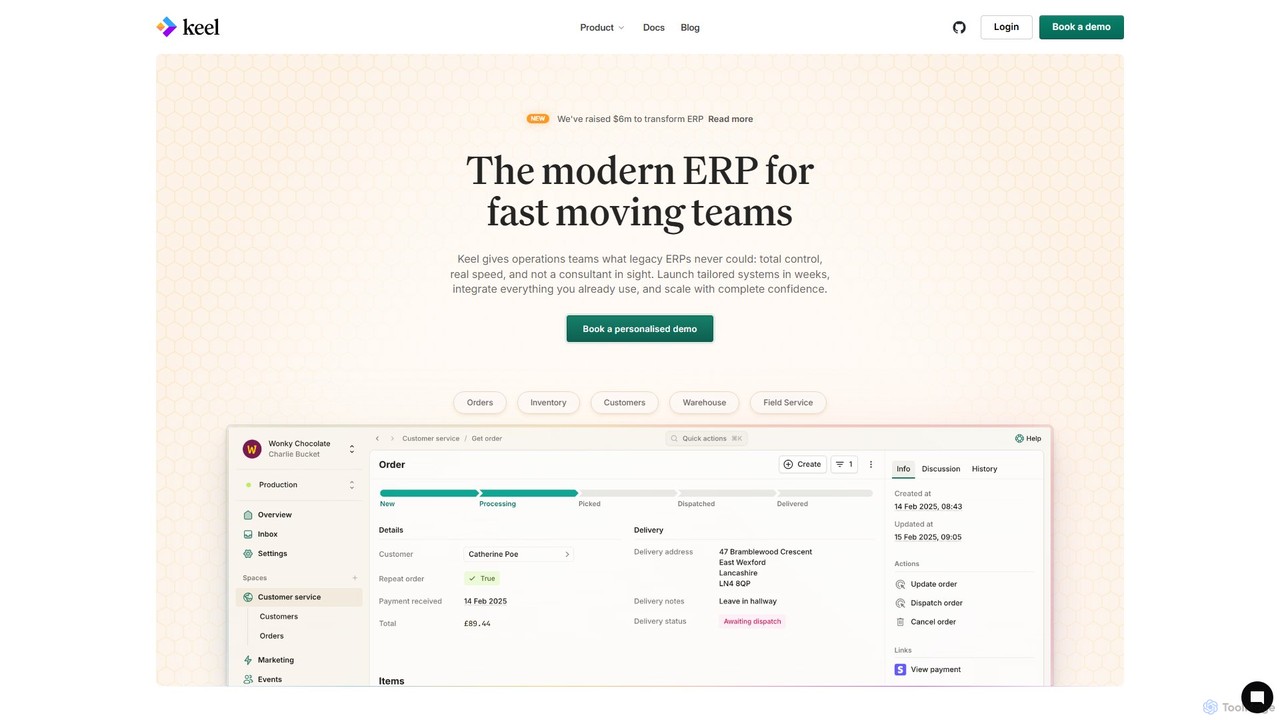
keel

keel

Keel is a modern, code-first ERP platform designed for fast-moving operations teams. It enables businesses to build, deploy, …

21.5K
Coperniq

Coperniq

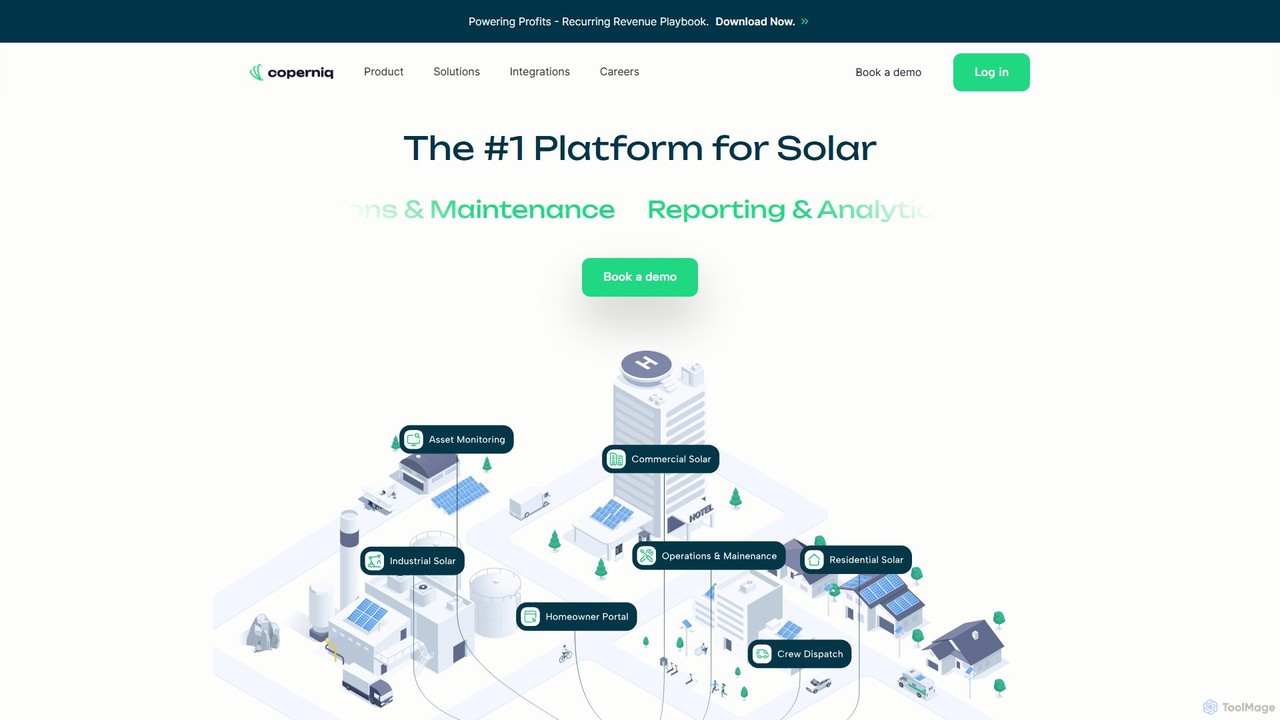
Coperniq is the #1 all-in-one platform for solar installers, providing a comprehensive suite of tools for project management, …

31.2K

About Erp

AI-powered ERP (Enterprise Resource Planning) tools integrate and optimize core business processes by leveraging artificial intelligence. These systems utilize AI to automate routine tasks, provide predictive insights, and enhance decision-making across various departments like finance, HR, supply chain, and operations. They aim to streamline workflows, improve operational efficiency, and offer a unified view of enterprise data for strategic planning and resource allocation within the broader business context.

Core Features

  • Intelligent Process Automation: Automates repetitive tasks such as data entry, invoice processing, and report generation, reducing manual effort and errors.
  • Predictive Analytics & Forecasting: Analyzes historical data to forecast demand, predict financial trends, and identify potential supply chain disruptions, enabling proactive planning.
  • Enhanced Decision Support: Provides real-time, data-driven recommendations and insights to support strategic business decisions and resource optimization.
  • Natural Language Processing (NLP): Facilitates intuitive interactions through voice commands, intelligent search, and conversational interfaces for data retrieval and task execution.

Applicable Scenarios

AI ERP tools are vital for businesses seeking to integrate disparate systems and gain a holistic view of their operations. They are particularly beneficial in manufacturing for production planning, in retail for inventory optimization, and in finance for automated reporting and fraud detection, enabling cross-departmental efficiency and data synergy across the enterprise.

How to Choose

When selecting an AI ERP solution, consider its integration capabilities with existing systems, scalability to accommodate future growth, and the breadth of its AI features, such as automation and predictive analytics. Evaluate the user interface for ease of use, the vendor's industry-specific expertise, and the level of data security and compliance offered to ensure it aligns with your business needs.

ErpUse Cases

1

Automated Financial Reporting and Anomaly Detection

Finance departments leverage AI ERP to automate the generation of complex financial statements, budget reports, and cash flow analyses. The AI engine can quickly process vast amounts of transactional data, identify unusual patterns or discrepancies indicative of fraud or errors, and provide real-time insights into financial health. This reduces manual reconciliation efforts, accelerates closing cycles, and enhances accuracy for compliance and strategic planning.

2

Optimized Supply Chain and Inventory Management

Logistics and operations managers utilize AI ERP to gain predictive insights into demand fluctuations, optimize inventory levels, and streamline supply chain processes. The AI analyzes historical sales data, market trends, and external factors to forecast future demand with higher accuracy. This enables proactive stock replenishment, reduces carrying costs, minimizes waste, and optimizes routing for deliveries, leading to a more resilient and cost-effective supply chain.

3

Intelligent HR and Workforce Planning

HR departments leverage AI ERP to analyze employee data, predict attrition risks, and optimize talent allocation. The system can identify patterns in employee performance, engagement, and career paths to forecast future staffing needs and potential skill gaps. This enables proactive recruitment, personalized training recommendations, and strategic workforce planning, ensuring the right talent is in the right place at the right time to support business objectives.

4

Personalized Customer Relationship Management (CRM) Integration

Sales and marketing teams integrate AI ERP with CRM systems to analyze customer behavior, personalize interactions, and predict sales opportunities. The AI processes customer data from various touchpoints, identifies purchasing patterns, and segments customers for targeted campaigns. This leads to more effective lead nurturing, improved customer satisfaction through tailored communication, and higher conversion rates by predicting which customers are most likely to convert or churn.

5

Predictive Maintenance in Manufacturing

Production managers in manufacturing utilize AI ERP to implement predictive maintenance strategies for machinery and equipment. The AI analyzes sensor data, operational history, and environmental factors to predict potential equipment failures before they occur. This allows for proactive scheduling of maintenance, reducing costly downtime, extending asset lifespan, and ensuring continuous production, significantly improving overall equipment effectiveness (OEE).

6

Automated Project and Resource Allocation

Project managers leverage AI ERP to optimize project planning, resource allocation, and progress tracking. The AI analyzes project requirements, team skills, and historical project data to recommend optimal team assignments, forecast project timelines, and estimate costs with greater accuracy. This automation reduces manual planning overhead, minimizes resource conflicts, and provides real-time insights into project health, ensuring projects are delivered on time and within budget.

ErpFrequently Asked Questions