ToolMage
Sign in

Best 2 Summarizer AI tools for Communication

Popular Summarizer AI tools in Communication include Rizemail and Slacksift, helping you work more efficiently.

Rizemail
Freemium

Rizemail

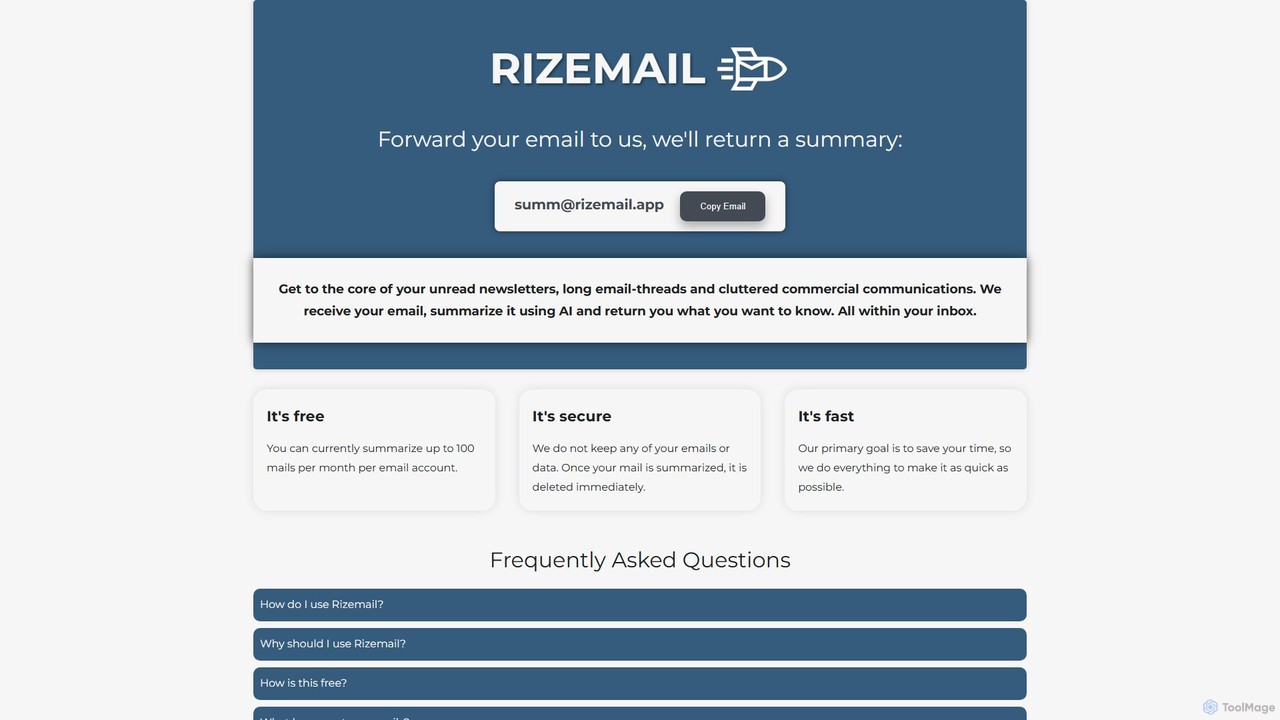
Rizemail is an AI-powered email summarization tool that helps you save time by instantly condensing long emails and threads. Simply forward your emails to a specific address, and receive a concise, easy-to-read summary in your inbox. It's fast, secure, and free for up to 100 summaries per month, prioritizing your privacy by deleting all data immediately after processing.

Time Management
Visits 10.9KFavorites 207Likes 204
Slacksift
Paid

Slacksift

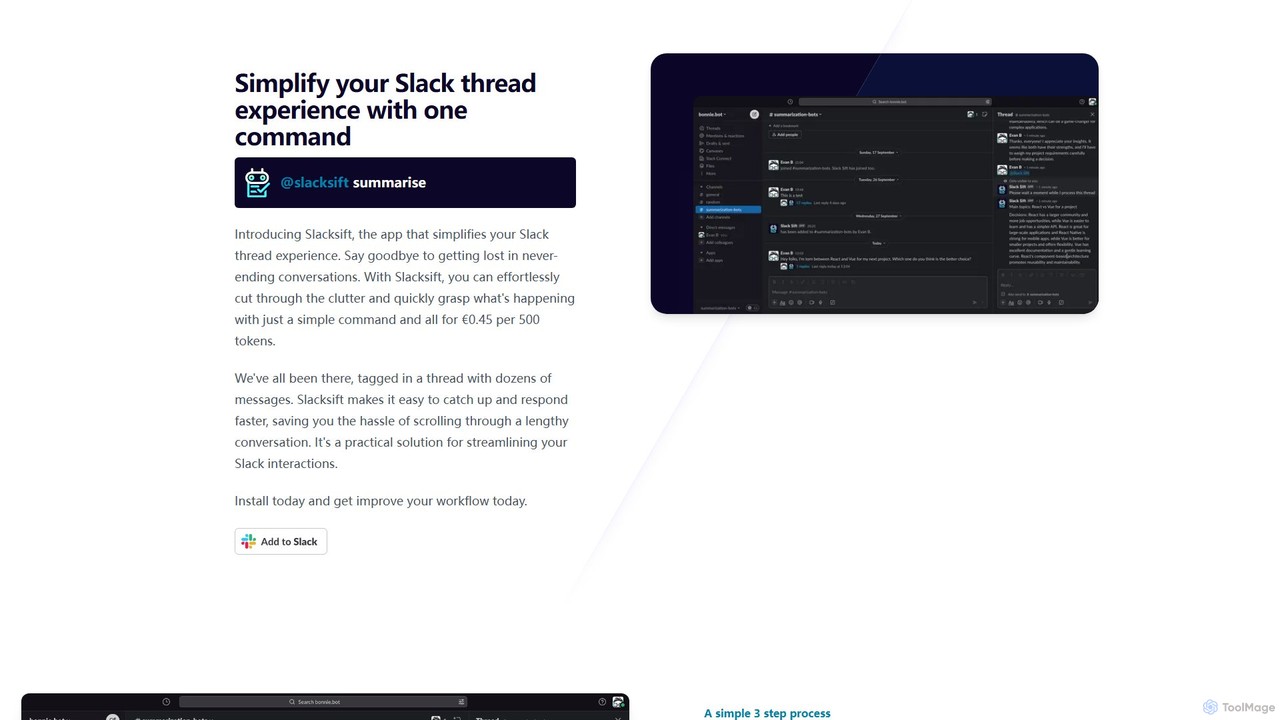
Slacksift is an AI-powered Slack application that simplifies your team's communication by summarizing long and complex threads. With a single command, it condenses conversations into concise, easy-to-digest summaries, helping you save time, catch up quickly, and respond faster. It operates on a simple pay-as-you-go model, eliminating the need for fixed subscriptions.

Workflow Automation
Visits 10.7KFavorites 182Likes 163

About Summarizer

Summarizer tools are AI-powered applications that condense long-form text into concise, coherent summaries. They utilize advanced Natural Language Processing (NLP) models to identify key information, extract main ideas, and generate shortened versions of the original content. This allows users to quickly understand the essence of articles, reports, and documents, saving significant time in research and information processing. Unlike simple keyword extractors, modern summarizers can perform abstractive summarization, creating new, human-like sentences that capture the context and nuance of the source material.

Core Features

  • Extractive Summarization: Identifies and pulls the most critical sentences directly from the source text to form a summary.
  • Abstractive Summarization: Generates entirely new sentences that paraphrase and convey the core message of the original content.
  • Customizable Length: Allows users to define the desired output length by percentage, word count, or number of bullet points.
  • Multi-Format Input: Supports various input methods, including pasting text, providing a URL, or uploading documents like PDFs and DOCX files.
  • Key Takeaway Extraction: Automatically identifies and lists the main points or conclusions from the text for a quick overview.

Use Cases

These tools are widely used by students and researchers to quickly vet academic papers, business analysts to digest market reports, and content creators to repurpose long articles. In a corporate setting, they help teams stay informed by summarizing meeting transcripts, long email threads, and internal documentation, improving overall communication efficiency.

How to Choose

When selecting a summarizer, consider the type of summarization offered (extractive, abstractive, or both). Evaluate the accuracy and coherence of the output for your specific content type. Check for support for necessary languages and document formats. Finally, consider integration options, such as browser extensions or APIs, to fit the tool into your existing workflow.

Summarizer use cases

1

Accelerate Academic Research and Literature Review

For students and researchers, reviewing dozens of academic papers is a time-consuming process. An AI Summarizer tool streamlines this by quickly generating concise overviews of lengthy studies. A graduate student can upload a folder of 20 PDF research papers and receive a bullet-point summary for each within minutes. This allows them to rapidly identify the most relevant papers concerning their hypothesis, understand key findings and methodologies, and discard irrelevant sources, reducing literature review time by up to 70% and focusing their efforts on deeper analysis of critical studies.

2

Efficient Market and Competitor Analysis

Business analysts and marketing professionals constantly need to stay updated on industry trends and competitor activities. Instead of manually reading lengthy market reports, news articles, and press releases, they can use a summarizer. By feeding URLs of these sources into the tool, an analyst can get a daily digest of key market shifts, competitor product launches, and financial results. This practice transforms hours of daily reading into a 15-minute review, enabling faster decision-making and more timely strategic adjustments.

3

Condense Meeting Transcripts into Actionable Minutes

Project managers and team leads often struggle with documenting and sharing key outcomes from long meetings. After a one-hour virtual meeting, a manager can upload the auto-generated transcript into a summarizer. The tool processes the entire conversation and outputs a structured summary including: decisions made, key discussion points, and a list of action items with assigned owners. This summary can be shared with attendees and stakeholders immediately, ensuring alignment and accountability without anyone needing to review the full transcript.

4

Create Engaging Social Media Content from Articles

A social media manager needs to create a week's worth of content based on a new company whitepaper. Instead of manually extracting quotes, they paste the whitepaper text into a summarizer. They use the 'key takeaways' feature to generate five distinct bullet points. Each bullet point is then easily adapted into a tweet, a LinkedIn post, or a graphic for Instagram. This process not only saves hours of content creation time but also ensures the core messages of the whitepaper are accurately and consistently communicated across all social channels.

5

Streamline Legal Document Review

Legal professionals, such as paralegals and lawyers, often face vast amounts of text in contracts, case law, and depositions. An AI summarizer can provide a high-level overview of these documents quickly. A paralegal can process a 50-page contract and receive a one-page summary highlighting key clauses, obligations, and potential liabilities. While not a substitute for detailed legal analysis, this initial summary helps prioritize documents, identify critical sections for in-depth review, and significantly speeds up the preliminary stages of case preparation or contract negotiation.

6

Manage Email Overload and Long Threads

A busy executive receives hundreds of emails daily, including long, multi-reply threads. Using a summarizer integrated into their email client, they can click a button to get a summary of a 20-email thread. The summary outlines the initial query, key discussion points from various participants, and the current status or unresolved questions. This allows the executive to quickly grasp the context and provide an informed response in minutes, rather than spending 20-30 minutes reading the entire chain, thereby improving communication responsiveness and clearing their inbox faster.

Summarizer FAQ

What is an AI Summarizer tool?

An AI Summarizer is a software tool that uses artificial intelligence, specifically Natural Language Processing (NLP), to condense a long piece of text into a shorter, more digestible version. It works by identifying the most important information and presenting it as a concise summary. These tools are designed to save time and help users quickly understand the core message of articles, reports, documents, or any other form of extensive text without needing to read it in its entirety.

What is the difference between extractive and abstractive summarization?

Extractive and abstractive are the two main types of AI summarization. Here's the key difference:

  • Extractive Summarization: This method works like a highlighter. It identifies and selects the most important sentences or phrases directly from the original text and combines them to create a summary. It's faster and ensures factual accuracy since it uses the original wording.
  • Abstractive Summarization: This method is more advanced, like a human writer. It understands the context of the source text and then generates new, unique sentences to convey the main ideas. This often results in more fluent and natural-sounding summaries but requires more complex AI models.
How to choose the right AI Summarizer tool?

Choosing the right summarizer depends on your specific needs. Consider these factors:

  • Accuracy and Quality: Test the tool with your typical content. Does it capture the main points accurately and produce a coherent, readable summary?
  • Input Formats: Ensure the tool supports the formats you use, such as text pasting, URL links, or document uploads (PDF, DOCX).
  • Customization: Look for options to control the summary length (e.g., by percentage or word count) or style (e.g., paragraph vs. bullet points).
  • Integrations: Check if it offers browser extensions, API access, or integrations with other apps (like Slack or Notion) to fit into your workflow.
  • Language Support: Verify that it can process and summarize text in the languages you require.
Are AI-generated summaries reliable and accurate?

The reliability of AI summaries has improved dramatically with modern NLP models. For most general content, they are highly accurate at capturing the main ideas and key facts. However, their accuracy can vary depending on the complexity and nuance of the source text. For highly technical, legal, or creative content, summaries might miss subtle points. It's best practice to use AI summaries as a first-pass tool to get the gist of a document, but for critical applications, they should be reviewed by a human to ensure no crucial details are lost.

Can summarizer tools handle different languages and file formats?

Yes, many modern AI summarizer tools are multilingual and support various file formats. However, capabilities vary significantly between tools. Most high-quality summarizers can handle major languages like English, Spanish, French, German, and Chinese. Support for less common languages may be limited. Regarding file formats, common supported types include:

  • Direct text input (copy and paste)
  • Web page URLs
  • Document uploads (PDF, DOCX, TXT)

It is crucial to check the specifications of a particular tool to ensure it meets your language and format requirements before committing to it.