thankyounote.app
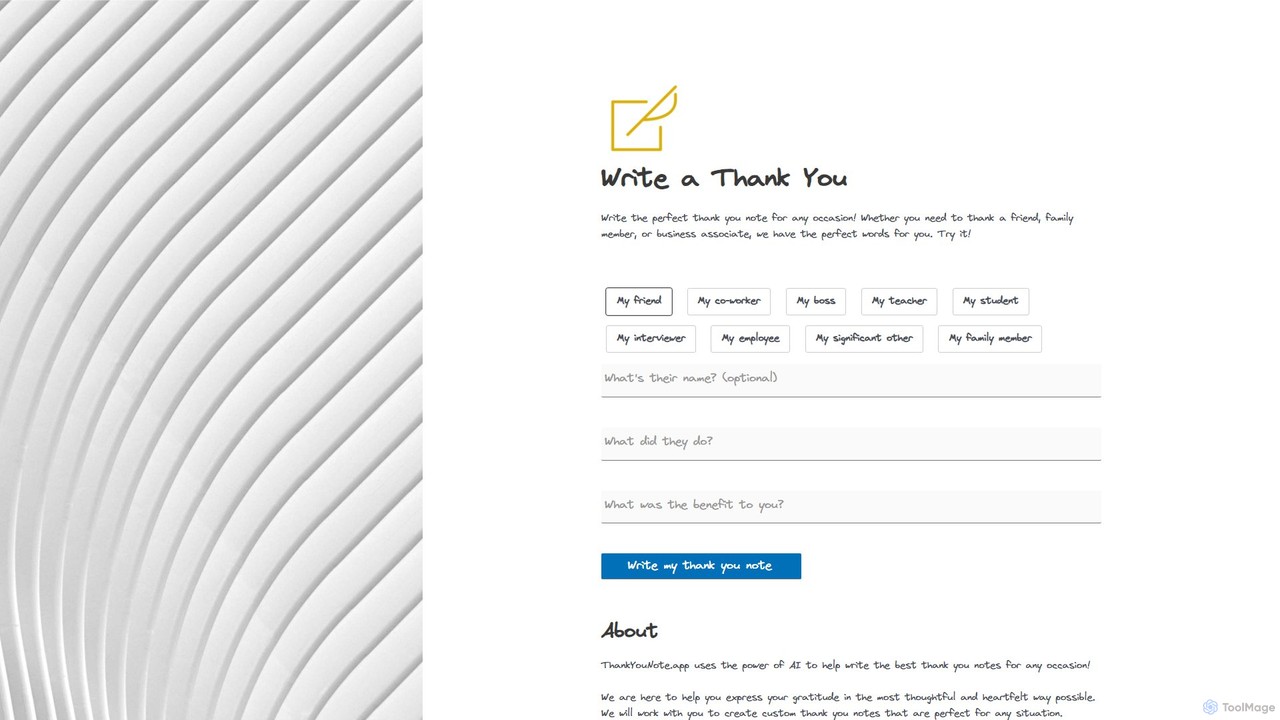
An AI-powered tool that helps you write the perfect, heartfelt thank you note for any occasion. Simply select …
An AI-powered tool that helps you write the perfect, heartfelt thank you note for any occasion. Simply select the recipient, describe the situation, and let the AI generate a thoughtful message to express your gratitude for gifts, favors, or professional support.
mailreply
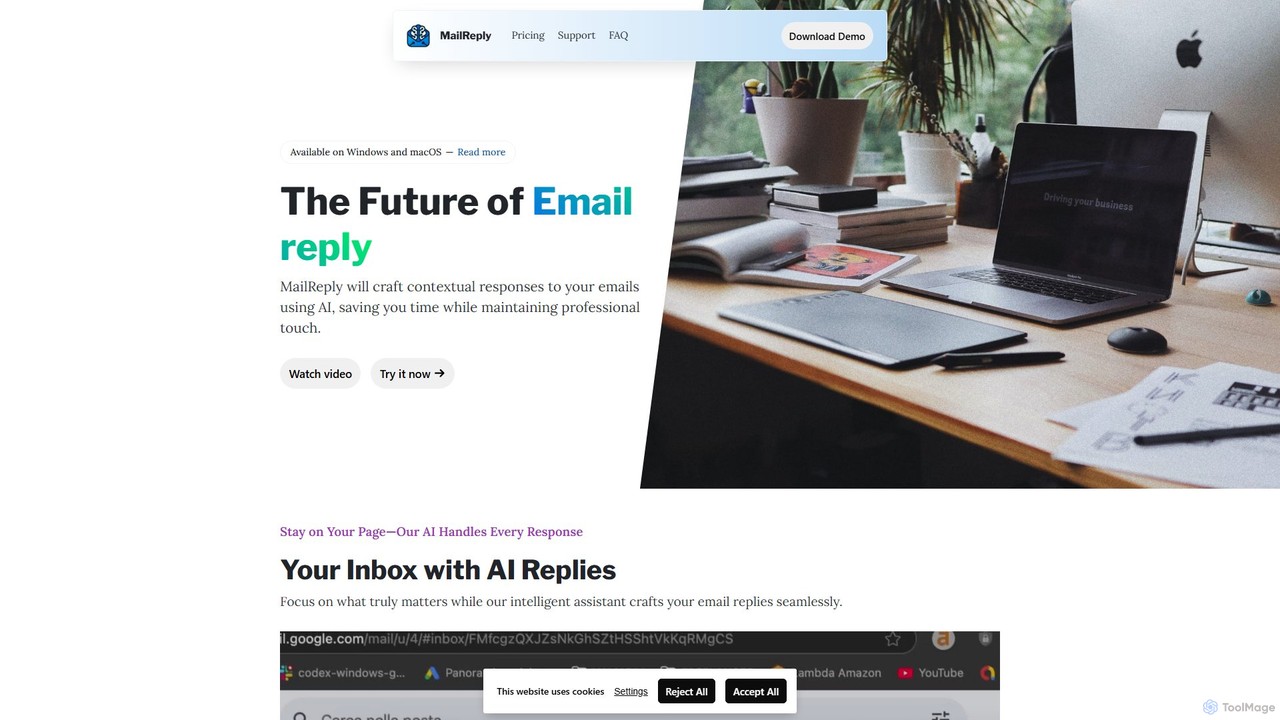
mailreply is an independent AI email assistant designed for professionals. It helps you draft high-quality, context-aware email replies …
mailreply is an independent AI email assistant designed for professionals. It helps you draft high-quality, context-aware email replies in seconds, maintaining a professional tone. It works with any email client, including Outlook and Gmail, while prioritizing user control and data privacy.
About Writing Assistant
Writing Assistant tools are AI-powered applications designed to improve and accelerate the entire writing process. Leveraging natural language processing (NLP), these assistants go beyond basic spell checking to offer advanced grammar correction, style suggestions, tone adjustment, and even content generation. They function as intelligent partners, helping users craft clearer, more effective, and error-free written communication. This makes them a vital component within the broader category of AI Communication tools.
Core Features
- Grammar & Fluency: Corrects complex grammatical errors and improves sentence flow for enhanced readability.
- Style & Tone Adjustment: Adapts text to specific tones like formal, casual, or persuasive to match the intended audience.
- Content Generation & Expansion: Helps overcome writer's block by suggesting sentences, expanding on ideas, or drafting entire sections.
- Rephrasing & Summarization: Offers alternative phrasing to improve clarity and condenses long documents into key points.
Use Cases
These tools are widely used by content creators for drafting blog posts, marketers for crafting compelling ad copy, students for structuring academic papers, and business professionals for composing clear emails and reports. They are valuable in any role that involves significant written communication.
How to Choose
When selecting a Writing Assistant, consider its integration with your existing software (e.g., browsers, word processors), the specific features you need (basic proofreading vs. advanced generation), supported languages, and the pricing model. Also, evaluate its specialization, as some tools are better for creative writing while others excel in technical or academic contexts.

Writing AssistantUse Cases
Drafting and Optimizing Blog Posts
For content marketers and bloggers, an AI Writing Assistant is a powerful ally. It helps brainstorm topics, generate outlines, and draft initial versions of articles. During the writing process, it can expand on bullet points, suggest better vocabulary, and ensure the tone is engaging. Before publishing, it performs a final check for grammar, spelling, and style consistency, and can even help optimize content for SEO by suggesting relevant keywords and improving readability scores, significantly reducing the time from idea to publication.
Crafting Professional Business Emails
Business professionals often need to write clear, concise, and appropriately toned emails. An AI Writing Assistant helps draft messages from scratch or refine existing ones. It can adjust the tone from assertive to diplomatic, shorten lengthy sentences for clarity, and check for any grammatical mistakes that could undermine professionalism. This ensures that every communication, from a client proposal to an internal memo, is polished and effective, strengthening business relationships.
Enhancing Academic Papers and Reports
Students and researchers use AI Writing Assistants to improve the quality of their academic work. The tool helps structure complex arguments, paraphrase sources to avoid plagiarism, and ensure consistent citation styles. It identifies awkward phrasing and suggests more formal, academic language. By handling the mechanical aspects of writing, it allows the writer to focus on the core research and ideas, leading to a more coherent and well-argued paper.
Generating Engaging Social Media Content
Social media managers can use AI Writing Assistants to quickly generate a variety of content for platforms like Twitter, LinkedIn, and Instagram. By providing a simple prompt or topic, the tool can create multiple caption options with different tones and lengths. It can also help rephrase existing content for different channels, ensuring the message is tailored to each audience. This automates a significant part of the content creation workflow, allowing managers to post more consistently.
Overcoming Writer's Block in Creative Projects
For novelists, screenwriters, and creative writers, an AI Writing Assistant can be a valuable tool for breaking through creative hurdles. When stuck, a writer can input a scene's context and ask the AI to generate potential continuations, dialogue, or descriptive passages. While not a replacement for creativity, it serves as an interactive brainstorming partner, offering fresh perspectives and ideas to keep the narrative moving forward.
Standardizing Technical Documentation
Technical writers responsible for creating user manuals, API documentation, or support articles can leverage AI Writing Assistants to maintain consistency and clarity. The tool can enforce a specific style guide, check for consistent terminology across multiple documents, and simplify complex technical explanations for a broader audience. This ensures that the documentation is easy to understand, accurate, and professional, reducing user confusion and support requests.