ToolMage
Sign in

Best 33 Generative Ai AI tools for Content Creation

Popular Generative Ai AI tools in Content Creation include Bing, Wrtn, Chad AI, Inner AI, YesChat.ai, StepFun, GizAI, Cabina.AI, TaskAGI, and Saifs AI, helping you work more efficiently.

juicyai
Freemium

juicyai

juicyai is an all-in-one AI platform featuring a suite of specialized AI assistants called "Juicers." Each Juicer is designed for a specific task, such as voice synthesis, image generation, code assistance, and speech recognition, allowing users to build a custom AI team to streamline their creative and technical workflows.

Text To Speech
Visits 7.6KFavorites 142Likes 124
infinaity
Freemium

infinaity

infinaity is an all-in-one AI-powered creation suite designed to break creative boundaries. It integrates multi-modal content generation (text, images, audio) with a no-code AI agent builder and workflow automation. Ideal for marketers, creators, and businesses looking to streamline their creative process and build custom AI solutions without writing code.

Generative Ai
Visits 5.6KFavorites 150Likes 128
axofy
Freemium

axofy

Axofy is an all-in-one AI content creation platform designed to streamline workflows for marketers, creators, and businesses. It offers a comprehensive suite of tools for generating text, images, audio, and code. With over 100 templates, real-time editing, and unlimited word credits, Axofy empowers users to produce high-quality, SEO-optimized content 10x faster, without needing any technical skills.

Generative Ai
Visits 5.7KFavorites 152Likes 144
ZenAIGenerator
Freemium

ZenAIGenerator

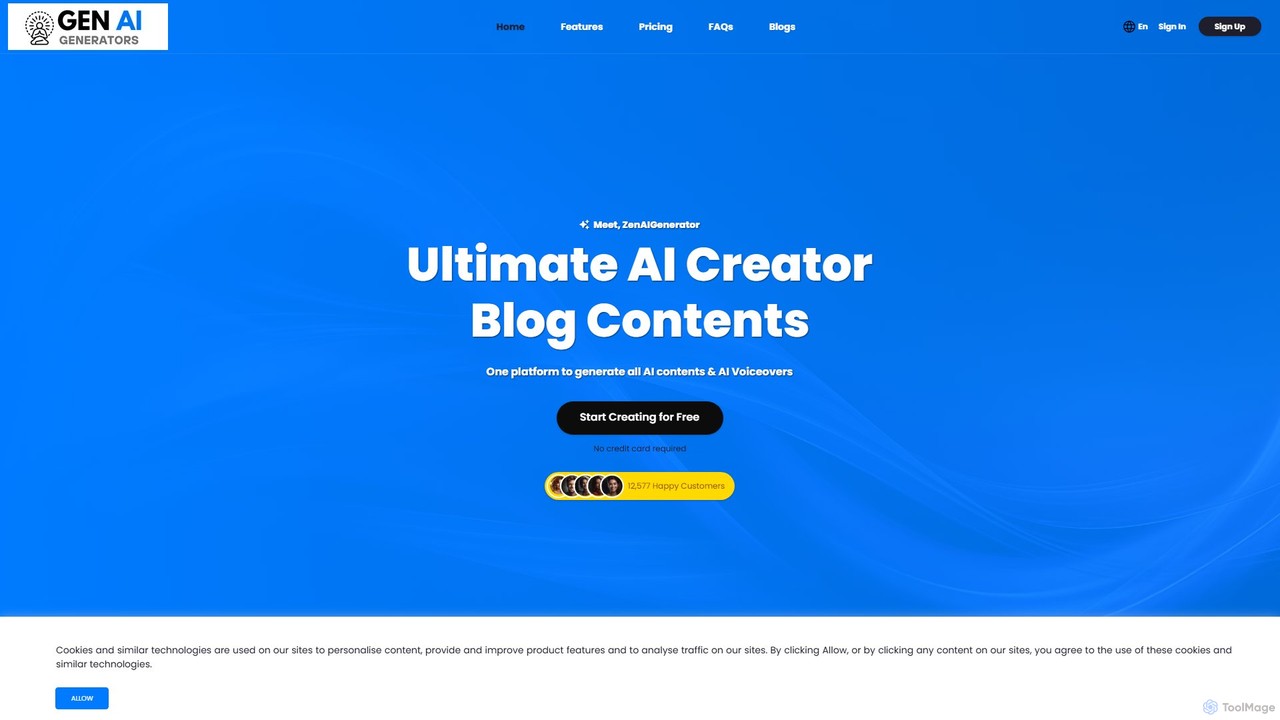
ZenAIGenerator is an all-in-one AI platform for creating high-quality content, images, voiceovers, and code. It offers a vast library of templates for marketing, blogging, social media, and e-commerce, along with features like AI chatbots, team collaboration, and multi-language support. Ideal for marketers, creators, and businesses looking to boost productivity.

Text To Speech
Visits 7.9KFavorites 145Likes 154
TaskAGI
Paid

TaskAGI

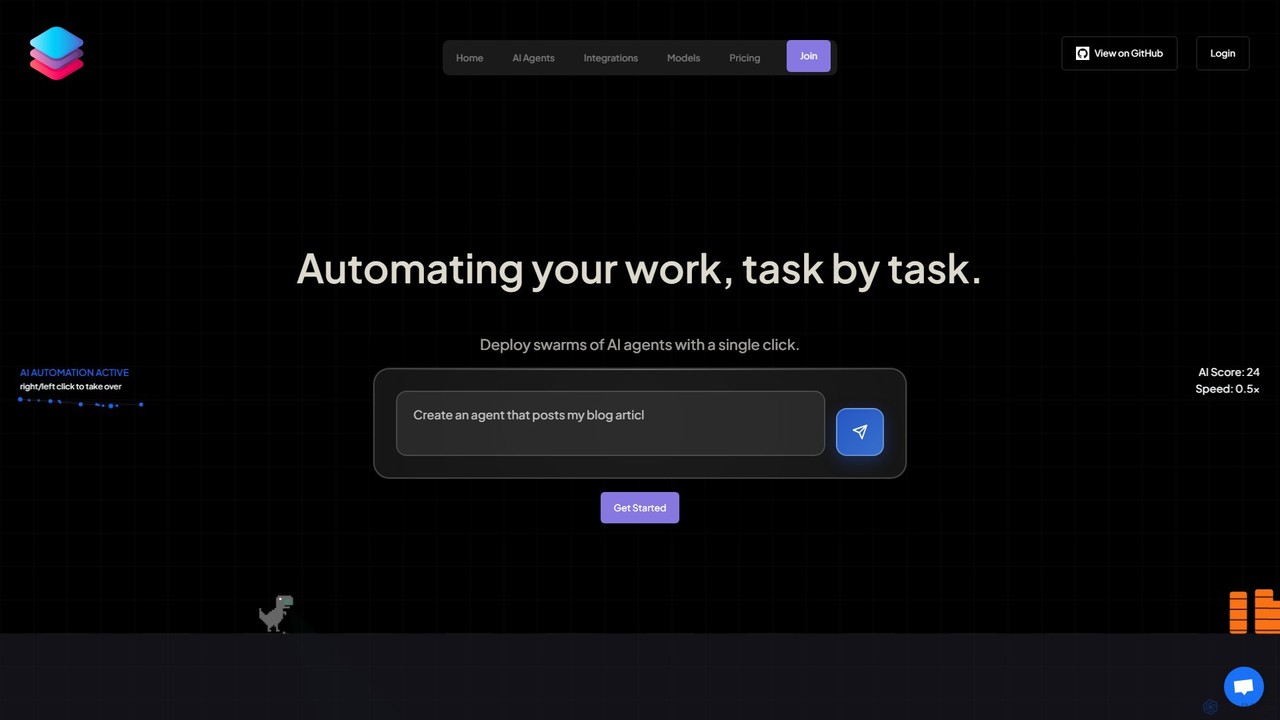
TaskAGI is a powerful no-code platform for building, testing, and deploying AI agents to automate complex workflows. With an intuitive drag-and-drop builder, users can connect various applications and AI models like OpenAI, Gemini, and Claude. It offers pre-built agents for tasks like customer support, marketing, and content creation, alongside specialized services like HyperVoice for realistic text-to-speech and HyperVideo for automated video generation.

Generative Ai
Visits 58.9KFavorites 166Likes 144
Chad AI
Freemium

Chad AI

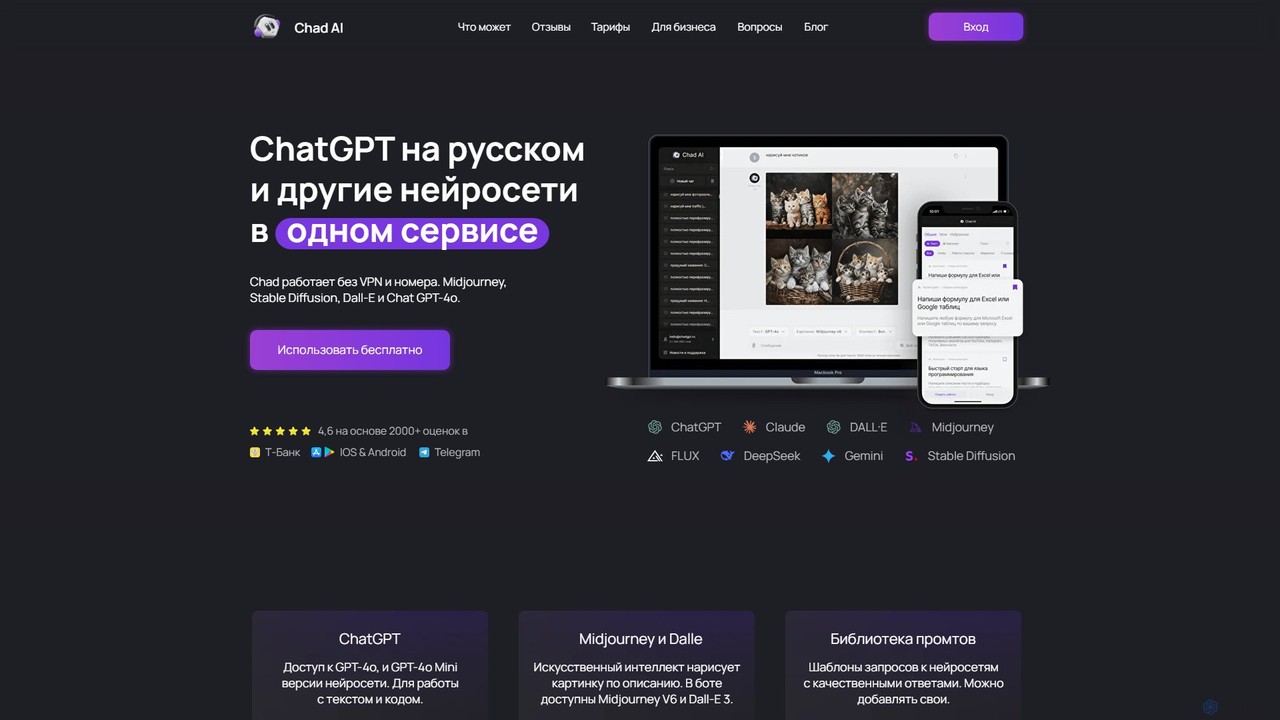
Chad AI is an all-in-one platform providing seamless, VPN-free access to a wide range of leading AI models like GPT-4o, Claude 3, Midjourney, DALL-E 3, and various video generators. It's designed for text generation, coding, image creation, and more, all within a single, user-friendly interface with a flexible credit-based pricing system.

Generative Ai
Visits 1.9MFavorites 115Likes 126
charlielounge
Freemium

charlielounge

charlielounge is an all-in-one AI ecosystem designed to help businesses automate operations, grow their customer base, and create new revenue streams. It integrates CRM, marketing automation, advanced AI content creation tools, and a lucrative affiliate program into a single, seamless platform for entrepreneurs and business owners.

Generative Ai
Visits 5.7KFavorites 131Likes 134
1forAll
Freemium

1forAll

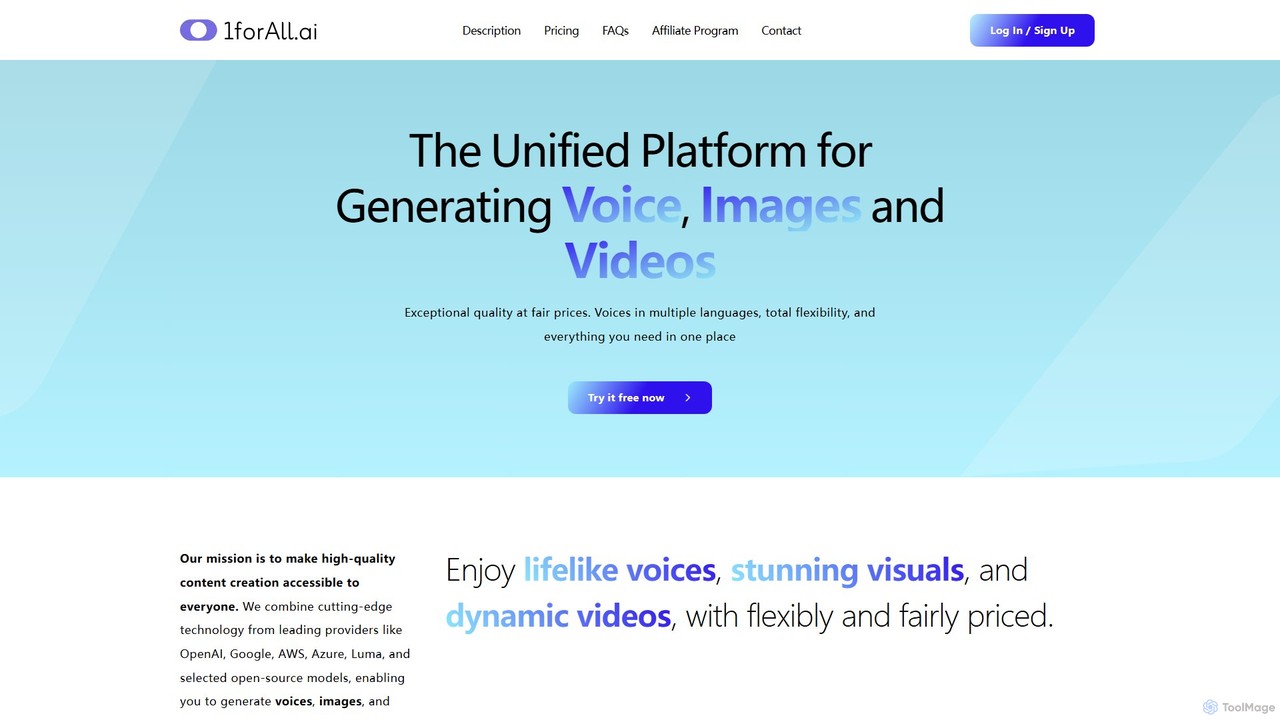
1forAll is a unified AI content creation platform for generating high-quality voice, images, and videos. It integrates leading models from OpenAI, Google, and AWS, offering text-to-speech, voice cloning, and bulk generation. With a flexible pay-as-you-go model and no subscriptions, it provides exceptional quality at fair prices, making it accessible for creators and businesses of all sizes.

Text To Speech
Visits 39.7KFavorites 138Likes 151
Bing
Freemium

Bing

Bing is an AI-powered search engine by Microsoft, integrated with Copilot to provide direct answers, content creation, and image generation. It goes beyond traditional search by offering conversational AI to help users research, write, plan, and create, all in one place.

Generative Ai
Visits 1.4BFavorites 132Likes 130

About Generative Ai

Generative AI is a class of artificial intelligence capable of creating new, original content, such as text, images, music, and code. These tools operate on large models like LLMs or diffusion models, learning patterns from vast datasets to produce outputs that are contextually relevant and coherent. Their primary value lies in automating and augmenting creative workflows within content creation, enabling users to generate diverse materials from simple text prompts. This technology significantly accelerates idea generation, content production, and problem-solving across various industries.

Core Features

  • Multi-Modal Generation: Creates a wide range of content types including text, images, audio, video, and code from a single platform or specialized tools.
  • Prompt-Based Control: Utilizes natural language instructions (prompts) to guide the AI's output, allowing for detailed control over style, tone, and content.
  • Iterative Refinement: Supports a process of generating, reviewing, and refining outputs by adjusting prompts to achieve the desired result.
  • Contextual Understanding: Analyzes input prompts to understand context, relationships, and nuances, leading to more relevant and coherent creations.

Use Cases

Generative AI is widely adopted by content creators for drafting articles and scripts, marketers for producing ad copy and social media posts, and developers for writing boilerplate code and documentation. It also serves designers for rapid prototyping and concept visualization, and researchers for synthesizing data and summarizing complex information.

How to Choose

When selecting a Generative AI tool, consider the primary content type you need to create (e.g., text, images, code). Evaluate the quality and consistency of the output, the level of control offered through prompting, and its integration capabilities via APIs. Also, assess the pricing model (e.g., subscription vs. pay-per-use) and the platform's ease of use to ensure it aligns with your technical skills and budget.

Featured tool rankings

Generative Ai use cases

1

Automated Marketing Copy Creation

Marketing teams use Generative AI to produce high volumes of creative copy for various channels. A social media manager can input a product's key features and target audience to instantly generate dozens of variations for ad headlines, social media posts, and email subject lines. This process reduces brainstorming time from hours to minutes, enables A/B testing of different messaging styles, and ensures a consistent brand voice across all campaigns.

2

Rapid Software Prototyping and Code Generation

Developers leverage Generative AI to accelerate the coding process. By describing a function's logic in plain English, such as "write a Python function to validate an email address using regex," the AI can generate the corresponding code snippet instantly. This is useful for creating boilerplate code, writing unit tests, explaining complex code blocks, or even translating code from one programming language to another, significantly boosting development productivity.

3

Conceptual Design and Art Visualization

Designers and concept artists utilize Generative AI to quickly explore visual ideas. An artist can input a descriptive prompt like "a futuristic city in the style of cyberpunk with neon lights and flying vehicles" to generate multiple high-quality concept images. This allows for rapid iteration on visual themes, character designs, and environmental concepts before committing to detailed manual work, streamlining the creative discovery phase.

4

Drafting Business Documents and Communications

Business professionals employ Generative AI to streamline the creation of internal and external communications. A manager can provide bullet points from a meeting to have the AI draft a formal summary email for the team. Similarly, it can be used to create initial drafts of reports, proposals, and presentations by providing a topic and key data points, ensuring professional tone and structure while saving significant writing time.

5

AI-Assisted Music and Sound Effect Composition

Musicians, podcasters, and game developers use Generative AI to create original audio content. A user can specify a genre, mood, and tempo (e.g., "an upbeat, 120 BPM lo-fi track for a study playlist") to generate a royalty-free music loop. It can also produce sound effects based on descriptions, such as "the sound of footsteps on a gravel path," providing custom audio assets for projects without needing extensive audio engineering skills.

6

Synthetic Data Generation for Model Training

Data scientists and machine learning engineers use Generative AI to create artificial datasets. When real-world data is scarce, sensitive, or imbalanced, a generative model can produce synthetic data that mimics the statistical properties of the original dataset. This is crucial for training and testing other AI models, such as fraud detection systems or medical imaging classifiers, without compromising user privacy or dealing with data collection limitations.

Generative Ai FAQ

What is Generative AI?

Generative AI is a branch of artificial intelligence that focuses on creating new, original content rather than just analyzing or classifying existing data. It learns patterns, structures, and styles from massive datasets and then uses that knowledge to generate novel outputs like text, images, code, and music from user prompts. Its key capability is synthesis and creation, distinguishing it from analytical AI.

How do I choose the right Generative AI tool?

To choose the right tool, first identify your primary need: text, image, code, or another modality. Then, consider these factors:

  • Output Quality: Evaluate the coherence, accuracy, and creativity of the generated content.
  • Ease of Use: Assess if the interface is intuitive for your skill level.
  • Customization & Control: Check how well you can guide the output through prompts and settings.
  • Integration: Determine if it offers an API or integrations for your existing workflow.
  • Pricing: Compare subscription plans, pay-per-use models, and free tiers to match your budget.

What is the difference between Generative AI and Analytical AI?

The primary difference lies in their purpose. Generative AI creates new content; it synthesizes information to produce something that didn't exist before, like writing an essay or designing an image. Analytical AI (or Discriminative AI) focuses on analyzing existing data to make predictions or classifications, such as identifying spam in an email, recognizing faces in photos, or forecasting sales trends. In short, one creates, the other analyzes.

What types of content can Generative AI create?

Generative AI is highly versatile and can create a wide array of digital content. Common examples include:

  • Text: Articles, emails, marketing copy, poems, and computer code.
  • Images: Photorealistic pictures, digital art, logos, and illustrations.
  • Audio: Music compositions, voiceovers, and sound effects.
  • Video: Short clips, animations, and character lip-syncing.
  • 3D Models: Basic 3D assets for gaming or prototyping.

Who can benefit from using Generative AI tools?

A wide range of professionals and creators can benefit from Generative AI. Marketers use it for content creation, developers for coding assistance, designers for brainstorming, and writers for drafting and overcoming writer's block. Business professionals use it for summarizing reports and writing emails. Essentially, anyone involved in the creation of digital content or looking to automate repetitive intellectual tasks can find significant value in these tools.