Fuser
Fuser is an innovative AI workspace designed for creatives to evolve ideas across various mediums. It offers a …
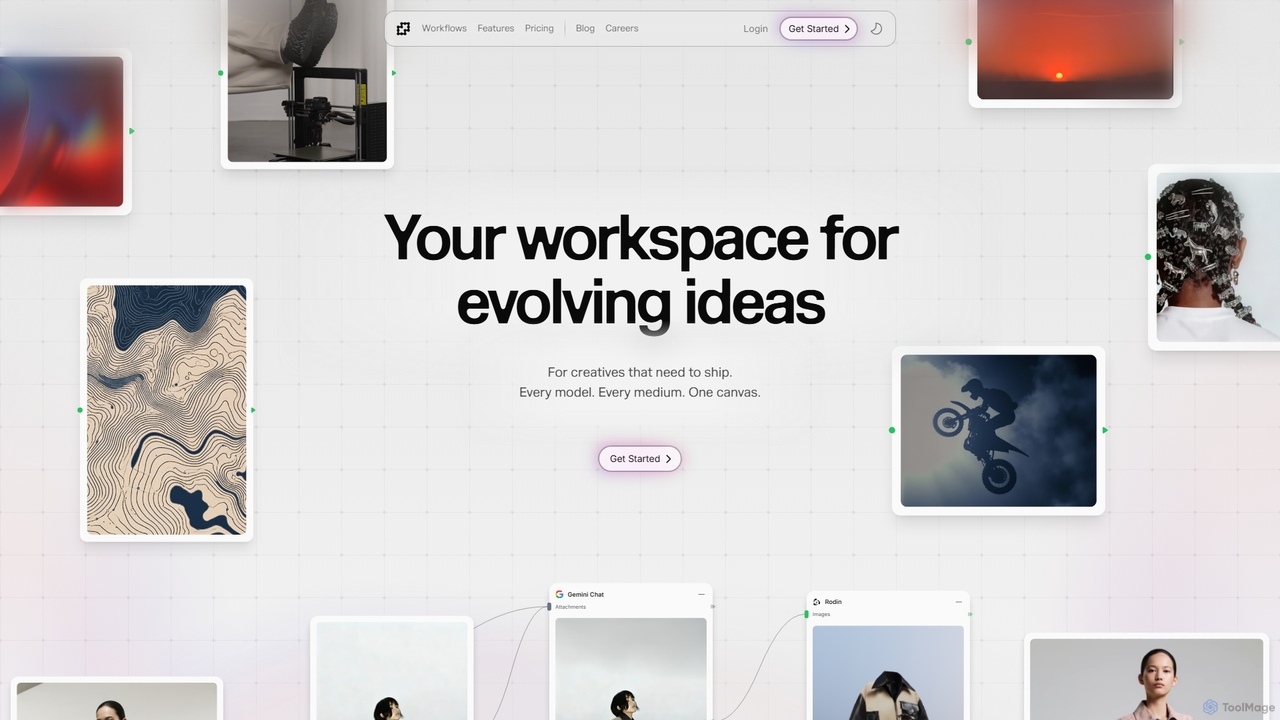
Fuser is an innovative AI workspace designed for creatives to evolve ideas across various mediums. It offers a unified canvas to integrate over 160 models and 300 LLMs, facilitating iterative design for text, images, videos, audio, and 3D. Emphasizing process over output, Fuser empowers users to build tailored workflows, manage assets, and connect API keys for seamless creative exploration and production.
About Generative Art
Generative Art tools are a specialized category of AI-powered applications that autonomously create new and unique artistic content, such as images, music, text, or 3D models. These tools leverage advanced machine learning algorithms, including GANs and diffusion models, to interpret user prompts or parameters and produce novel creative outputs. They empower artists, designers, and enthusiasts to explore new aesthetic possibilities, accelerate creative workflows, and democratize the art creation process within the broader Creative Assistant landscape.
Core Features
- Prompt-to-Art Generation: Transforms text descriptions or conceptual inputs into visual, audio, or textual art pieces.
- Style Transfer & Blending: Applies the artistic style from a source image or dataset to new content, or blends multiple styles.
- Parameter-Driven Customization: Allows users to fine-tune aspects like color palettes, composition, textures, and moods through adjustable controls.
- Iterative Variation & Refinement: Generates multiple versions of an artwork and enables users to guide the AI towards desired aesthetic outcomes.
- Multi-Modal Output: Capable of producing diverse artistic forms, from abstract visuals and realistic renders to musical compositions and poetic texts.
Applicable Scenarios
Generative Art tools are invaluable for digital artists seeking inspiration, graphic designers creating unique assets, and game developers prototyping visual elements. They are also used by marketers for generating diverse ad creatives, musicians exploring new soundscapes, and architects visualizing conceptual designs. These tools streamline the initial ideation phase and provide a rich source of unique content.
How to Choose
When selecting a Generative Art tool, consider the primary art form you wish to create (e.g., images, music, 3D models) and the level of control offered over the generation process. Evaluate the quality and diversity of outputs, the intuitiveness of the user interface, and the availability of specific features like style transfer or advanced parameter tuning. Also, assess the community support, pricing model, and whether it integrates with your existing creative software.

Generative ArtUse Cases
Concept Art for Game Development
Game artists and designers can rapidly generate diverse concept art for characters, environments, and props. By inputting text prompts like "futuristic cyberpunk city at sunset" or "mythical forest creature with glowing eyes," the AI produces numerous visual interpretations, significantly accelerating the ideation and prototyping phases for new game assets.
Unique Digital Art Creation
Independent artists and hobbyists can create original digital artworks without extensive traditional art skills. Users can experiment with abstract concepts, surreal landscapes, or specific artistic styles by providing simple prompts, fostering creativity and enabling the production of unique pieces for portfolios or personal enjoyment.
Marketing Campaign Visuals
Marketing teams can generate a wide array of unique visuals for social media posts, ad campaigns, and website banners. Instead of relying solely on stock photos or custom design, generative AI can produce bespoke imagery tailored to specific campaign themes, target audiences, and brand aesthetics, ensuring fresh and engaging content.
Personalized Music Composition
Musicians and content creators can generate unique musical pieces or soundscapes for videos, podcasts, or background ambiance. By specifying genre, mood, instrumentation, and tempo, the AI can compose original tracks, offering a cost-effective and efficient way to acquire custom audio content without needing a full-scale production.
Architectural Visualization & Ideation
Architects and interior designers can quickly visualize conceptual designs and explore various aesthetic options. Inputting parameters for building styles, materials, lighting, and environmental settings allows the AI to generate diverse architectural renderings, aiding in early-stage design exploration and client presentations.
Fashion Design Pattern Generation
Fashion designers can generate novel patterns, textures, and garment designs. By feeding the AI with design principles, color palettes, or historical fashion data, it can produce unique textile prints or conceptual garment sketches, inspiring new collections and accelerating the design iteration process.