SoftlyWished
SoftlyWished is an innovative AI text-to-video generator that combines artificial intelligence with professional human editing to create deeply …
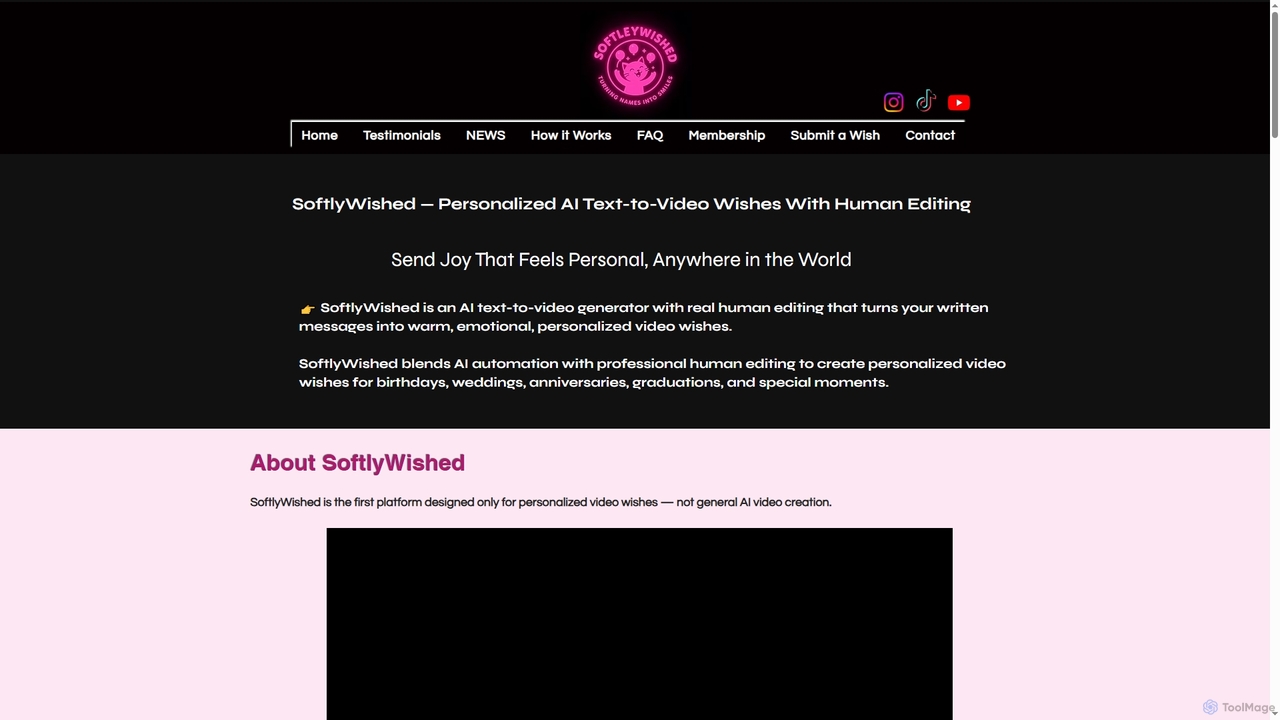
SoftlyWished is an innovative AI text-to-video generator that combines artificial intelligence with professional human editing to create deeply personalized and emotional video wishes. It transforms your written messages into heartfelt video greetings for any special occasion, offering a unique blend of automation and human touch without requiring editing skills or sign-ins.
About Emotional Storytelling
Emotional Storytelling tools are AI-powered platforms designed to craft narratives that evoke specific emotional responses in an audience. These advanced creative tools leverage natural language processing, sentiment analysis, and psychological models to generate or refine content with targeted emotional impact. They help creators, marketers, and educators build deeper connections by infusing stories with compelling emotional arcs and resonant themes, transforming mere information into memorable experiences.
Core Features
- Emotion-Driven Content Generation: Creates text, scripts, or dialogue specifically engineered to elicit desired feelings like joy, empathy, suspense, or inspiration.
- Sentiment Analysis & Optimization: Analyzes existing content for its emotional tone and suggests revisions to enhance or adjust its psychological impact.
- Character Emotional Arc Development: Assists in designing character journeys and plot points that align with specific emotional progressions, ensuring compelling narrative development.
- Narrative Structure Enhancement: Provides guidance on pacing, plot twists, and thematic elements to maximize audience engagement and emotional resonance.
- Personalized Emotional Narratives: Adapts storytelling elements to individual audience profiles, creating more impactful and relatable experiences.
Use Cases
These tools are invaluable for professionals aiming to create content that truly connects. Marketers can craft ad campaigns with powerful emotional appeals, while content creators can develop blog posts and articles that resonate deeply with readers. Educators can design learning materials that inspire curiosity and empathy, making complex topics more accessible and engaging through emotionally rich narratives.
How to Choose
When selecting an Emotional Storytelling tool, consider its range of supported emotions and the granularity of control it offers over tone and style. Evaluate its integration capabilities with existing content creation workflows and the quality of its natural language generation. Assess the tool's ability to handle complex narrative structures and its capacity for personalized storytelling, ensuring it aligns with your specific creative and audience engagement goals.
Emotional StorytellingUse Cases
Crafting Emotionally Resonant Marketing Campaigns
Marketing professionals utilize emotional storytelling AI to develop ad copy, video scripts, and social media content that taps into specific consumer emotions. By analyzing target audience psychology and brand values, the AI generates narratives designed to evoke trust, excitement, or urgency, leading to higher engagement rates and stronger brand loyalty. This ensures campaigns move beyond mere product features to create a deeper, more memorable connection with potential customers.
Developing Engaging Educational Content
Educators and instructional designers employ these tools to transform dry academic material into captivating learning experiences. The AI helps structure lessons, create character-driven scenarios, and design interactive narratives that foster curiosity, empathy, and a deeper understanding of complex subjects. By weaving emotional threads into educational content, it makes learning more memorable and relatable for students across various age groups and disciplines.
Enhancing Creative Writing and Screenplays
Authors, screenwriters, and playwrights leverage emotional storytelling AI to refine their narratives, ensuring maximum emotional impact on their audience. The tools can analyze character arcs, plot pacing, and dialogue to suggest improvements that heighten suspense, deepen empathy, or amplify dramatic tension. This helps writers craft more compelling stories, develop richer characters, and ensure their work resonates powerfully with readers or viewers.
Personalizing Customer Service Interactions
Customer service teams and chatbot developers use emotional storytelling AI to create more empathetic and personalized communication. The AI can help design responses that acknowledge customer feelings, offer reassurance, or express gratitude, moving beyond generic scripts. This approach fosters stronger customer relationships, de-escalates tense situations, and improves overall satisfaction by making interactions feel more human and understanding.
Designing Immersive Game Narratives
Game developers integrate emotional storytelling AI to build richer, more immersive game worlds and character backstories. The tools assist in crafting branching narratives where player choices lead to emotionally significant outcomes, and in designing non-player characters (NPCs) with believable emotional responses. This enhances player engagement, creates deeper connections to the game's universe, and provides a more memorable interactive experience.
Crafting Impactful Public Speeches and Presentations
Public speakers and presenters utilize emotional storytelling AI to structure their speeches and presentations for maximum persuasive and emotional impact. The AI can help identify key emotional triggers, suggest compelling anecdotes, and optimize rhetorical devices to connect with the audience on a deeper level. This ensures messages are not only informative but also inspiring, memorable, and capable of driving desired actions or shifts in perspective.