ToolMage
Sign in

Best 1 Kids AI tools for Creativity

Popular Kids AI tools in Creativity include SmartDreams, helping you work more efficiently.

SmartDreams
Freemium

SmartDreams

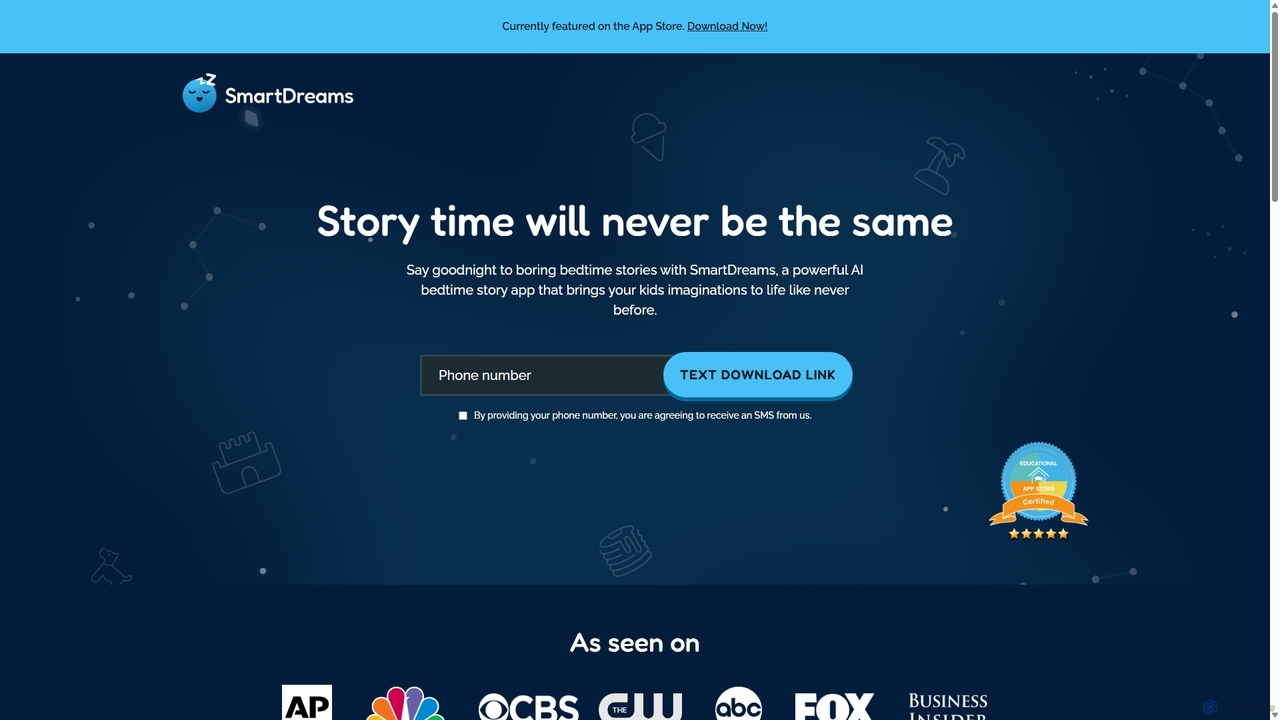
SmartDreams is an AI-powered bedtime story app that generates unique, personalized stories and illustrations for children. By selecting characters, locations, and other elements, kids can bring their wildest imaginations to life, fostering creativity and a love for reading in a safe, interactive, and endlessly entertaining way.

Kids
Visits 7.2KFavorites 139Likes 124

About Kids

AI tools for Kids are specially designed artificial intelligence applications that empower children to learn, create, and play in engaging and age-appropriate ways. These tools leverage AI to simplify complex tasks, offer interactive experiences, and generate content that fosters imagination and critical thinking. They provide a safe and stimulating environment for young users to explore digital creativity, develop problem-solving skills, and interact with technology in a fun and educational manner, often serving as an entry point into the broader world of AI-powered creativity.

Core Features

  • Simplified & Intuitive Interfaces: Designed with large buttons, visual cues, and touch-friendly controls suitable for young children.
  • Guided Creative Prompts: Offer structured suggestions and templates to help children initiate creative projects like storytelling or drawing.
  • Interactive Learning & Gamification: Incorporate game-like elements and immediate feedback to make learning and creation enjoyable.
  • Age-Appropriate Content Generation: AI assists in generating child-friendly stories, art, music, or simple coding blocks based on children's inputs.
  • Robust Safety & Privacy Controls: Implement content filters, data protection, and parental oversight features to ensure a secure environment.

Applicable Scenarios

AI tools for kids are ideal for parents and educators looking to introduce technology and creativity to young learners. They are used in home learning environments for supplementary education, in classrooms for interactive lessons, and in after-school programs to foster digital literacy. These tools can transform abstract concepts into tangible, interactive experiences, making learning more accessible and fun for children.

How to Choose

When selecting AI tools for kids, prioritize age appropriateness, ensuring content and complexity match the child's developmental stage. Evaluate the educational value and how it supports skill development in areas like creativity, logic, or problem-solving. Consider the level of engagement and fun it offers, as well as robust safety features, including content moderation and privacy policies. Finally, assess the ease of use for both children and parents, looking for intuitive interfaces and clear parental controls.

Kids use cases

1

Interactive Story Creation

Children use AI storytelling tools to invent characters, settings, and plot points. The AI then generates a unique, age-appropriate story based on their inputs, encouraging imaginative narrative development and literacy skills. This allows young creators to see their ideas come to life instantly, fostering a love for reading and writing.

2

Digital Art & Drawing Assistance

Young artists utilize AI drawing applications to experiment with colors, shapes, and styles. AI can suggest drawing prompts, help complete sketches, or even generate backgrounds based on simple descriptions, making digital art accessible and less intimidating for beginners. It empowers children to express themselves visually without needing advanced drawing skills.

3

Personalized Learning Companions

AI-powered educational apps act as personalized tutors, adapting to a child's learning pace and style. They can offer customized exercises, explain concepts in multiple ways, and provide immediate feedback on progress in subjects like math, language, or science, making learning more engaging and effective for individual needs.

4

Music Composition & Sound Exploration

Kids explore musical creativity with AI tools that allow them to arrange melodies, add instruments, and experiment with different genres. The AI can assist in harmonizing tunes or suggesting rhythmic patterns, turning music creation into an intuitive game. This introduces fundamental music theory concepts in a playful manner.

5

Basic Coding & Logic Games

AI-enhanced platforms teach foundational coding principles through visual, block-based programming interfaces. Children drag and drop commands to make characters move or solve puzzles, with AI providing hints or validating their logic. This builds computational thinking and problem-solving skills in an an accessible, gamified environment.

6

Creative Problem-Solving Challenges

AI tools present children with open-ended challenges, such as designing a virtual playground or inventing a new creature. The AI provides tools and feedback to help them iterate on their ideas, encouraging innovative thinking and design skills. This fosters critical thinking and the ability to approach problems creatively.

Kids FAQ

What are AI tools for kids?

AI tools for kids are specialized artificial intelligence applications designed to engage children in learning, creativity, and play. They use AI to simplify interfaces, provide guided creation, offer interactive learning experiences, and generate age-appropriate content like stories, art, or music, all within a safe and controlled environment.

How do AI tools help children's creativity?

AI tools foster children's creativity by providing accessible platforms for expression. They offer prompts, templates, and assistance that help overcome creative blocks, allowing kids to experiment with ideas in art, storytelling, or music without needing advanced skills. This encourages imaginative thinking, exploration, and the development of unique ideas.

What should parents consider when choosing AI tools for kids?

Parents should prioritize age appropriateness, ensuring the content and complexity align with their child's developmental stage. Key considerations include robust safety features like content filtering and privacy protection, the educational value and skill development it offers, and the tool's ability to engage and entertain the child. Ease of use for both child and parent is also crucial.

Are AI tools for kids safe?

Reputable AI tools for kids are designed with safety as a top priority. They typically include strict content moderation, privacy policies that protect children's data, and parental control features that allow adults to monitor and manage usage. It's essential for parents to research and choose tools from trusted developers that adhere to child online safety standards.

How do AI tools for kids differ from general creativity AI tools?

AI tools for kids are specifically tailored for young users, featuring simplified, intuitive interfaces, age-appropriate content filters, and guided creative processes. General creativity AI tools, while powerful, are often more complex, require advanced prompts, and lack the built-in safety and educational frameworks essential for children. The focus for kids' tools is on learning, safety, and simplified engagement.