mystorybot
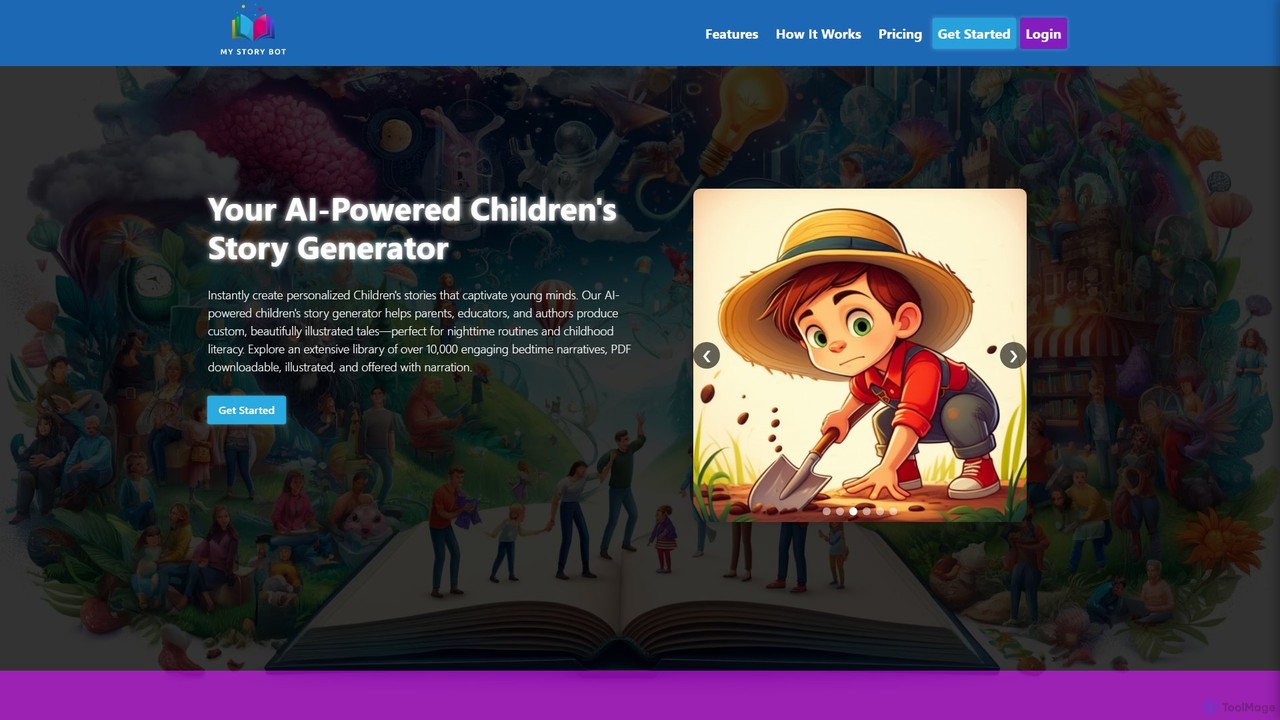
MyStoryBot is an AI-powered children's story generator that creates personalized, illustrated tales. It allows users to turn photos …
MyStoryBot is an AI-powered children's story generator that creates personalized, illustrated tales. It allows users to turn photos into consistent story characters, guide the narrative through interactive choices, and generate high-quality illustrations and narration. It's designed for parents, educators, and authors, offering a commercial license to print, distribute, and sell the created books.
Kidzbook
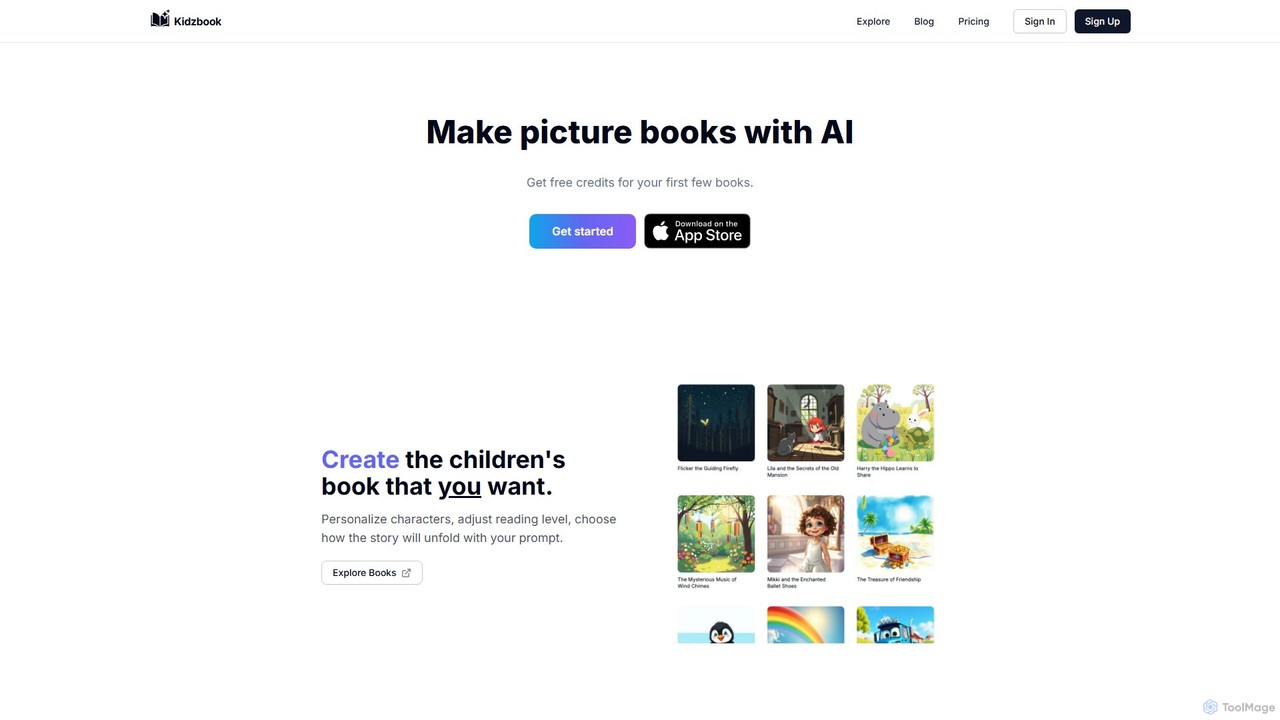
Kidzbook is an AI-powered platform for creating personalized children's picture books. Generate unique stories and illustrations, customize characters, …
Kidzbook is an AI-powered platform for creating personalized children's picture books. Generate unique stories and illustrations, customize characters, translate into over 20 languages, create bilingual versions, and even produce audiobooks. Perfect for parents, educators, and anyone wanting to create a unique story.
TinyTalk.AI
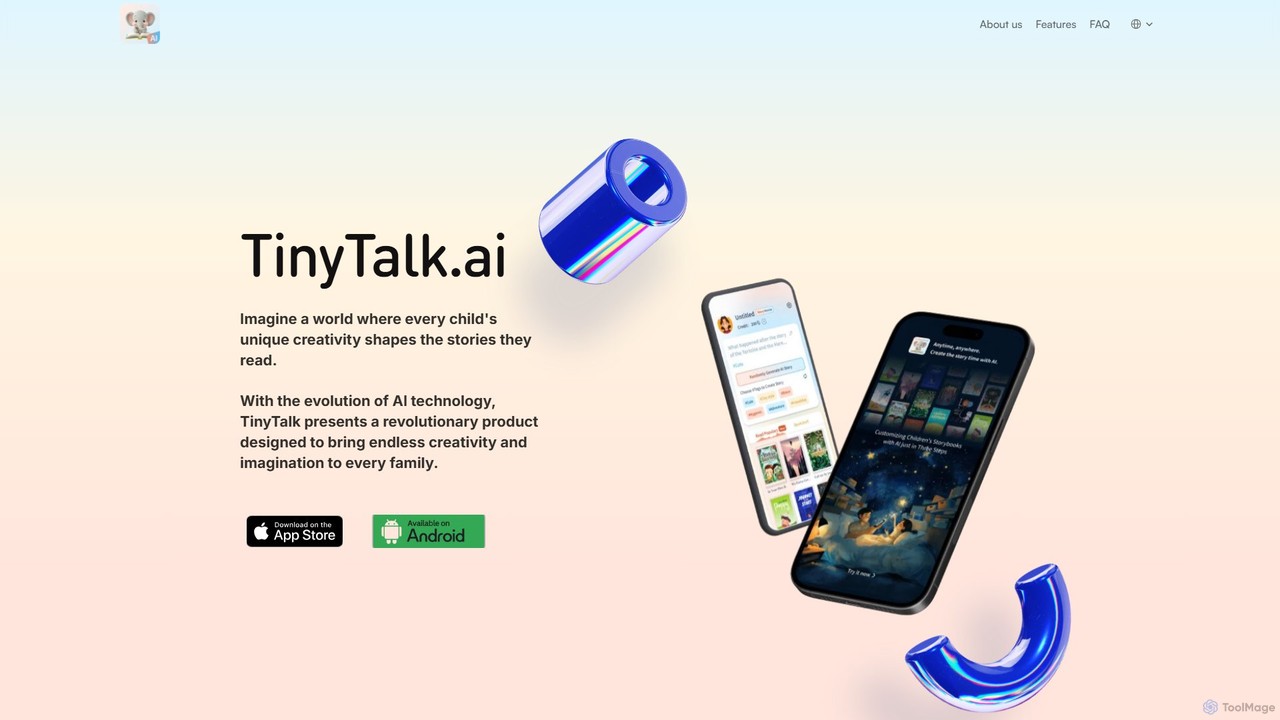
TinyTalk.AI is an AI-powered storytelling platform that creates personalized, illustrated children's books. It generates unique, age-appropriate stories with …
TinyTalk.AI is an AI-powered storytelling platform that creates personalized, illustrated children's books. It generates unique, age-appropriate stories with visually consistent characters based on user prompts. With over 500 artistic styles, it transforms a child's imagination into a magical reading experience, making it a perfect tool for parents and educators to foster creativity and a love for reading.
About Art Generation
Art Generation tools are a category of AI-powered software that automatically create unique visual content, ranging from images and illustrations to 3D models, based on textual prompts or existing inputs. Leveraging advanced generative adversarial networks (GANs) and diffusion models, these tools transform abstract ideas into tangible artistic expressions. They empower creators across various fields to rapidly prototype concepts, explore diverse styles, and produce high-quality visuals with unprecedented speed and flexibility, significantly expanding the scope of digital creativity.
Core Features
- Text-to-Image Generation: Create visuals from descriptive text prompts.
- Image-to-Image Transformation: Modify existing images or transfer styles between them.
- Style Transfer: Apply the artistic style of one image to the content of another.
- Inpainting & Outpainting: Fill in missing parts of an image or extend its boundaries seamlessly.
- Variations & Iterations: Generate multiple versions of an artwork based on a single input or seed.
Use Cases
Digital artists and designers utilize these tools for rapid concept art development, generating diverse visual ideas for projects like games, films, or marketing campaigns. Content creators can quickly produce unique social media graphics, blog post illustrations, or video thumbnails without extensive manual design work. Businesses leverage AI art generation for creating distinctive branding elements, advertising visuals, and personalized marketing materials at scale.
How to Choose
When selecting an Art Generation tool, consider the desired output quality and resolution, as different models excel in various styles. Evaluate the level of control offered over generation parameters, such as prompt engineering flexibility and style customization. Assess the cost structure, whether subscription-based or pay-per-generation, and check for integration capabilities with existing creative workflows. Finally, consider the community support and available resources for learning and troubleshooting.

Art GenerationUse Cases
Game Concept Art & Asset Creation
Game developers and concept artists use AI art generators to quickly visualize character designs, environmental settings, and prop ideas. By inputting textual descriptions or rough sketches, they can generate hundreds of unique variations in minutes, accelerating the iterative design process and providing a rich pool of visual inspiration for game assets.
Marketing & Advertising Visuals
Marketing professionals and advertisers leverage AI art generation to create eye-catching campaign visuals, banner ads, and social media content. This allows for rapid A/B testing of different visual styles and themes, producing highly customized and engaging imagery that resonates with target audiences without the need for extensive photography or traditional graphic design.
Personalized Digital Art & Gifts
Individuals and small businesses utilize these tools to create unique personalized artworks, custom illustrations, or digital gifts. Users can input specific themes, names, or personal memories to generate bespoke pieces, offering a novel way to produce one-of-a-kind artistic expressions for personal enjoyment or commercial sale.
Fashion Design & Textile Patterns
Fashion designers and textile artists employ AI art generation to explore new patterns, textures, and garment designs. By feeding design concepts or mood boards into the AI, they can generate innovative fabric prints, clothing silhouettes, and accessory ideas, significantly speeding up the initial design phase and fostering creative exploration.
Book Cover & Illustration Design
Authors and publishers use AI art generators to create compelling book covers and internal illustrations. Describing the book's genre, themes, and characters allows the AI to produce a range of visual concepts, helping to quickly find a unique and appealing aesthetic that captures the essence of the story and attracts readers.
Architectural Visualization & Interior Design
Architects and interior designers apply AI art generation to visualize conceptual designs and explore aesthetic options. By providing basic layouts or descriptive prompts, they can generate realistic or stylized renderings of buildings, rooms, and landscapes, aiding in client presentations and design iteration without extensive manual rendering time.