ToolMage
Sign in

Best 1 Songwriting AI tools for Creativity

Popular Songwriting AI tools in Creativity include OpenMusic, helping you work more efficiently.

OpenMusic
Freemium

OpenMusic

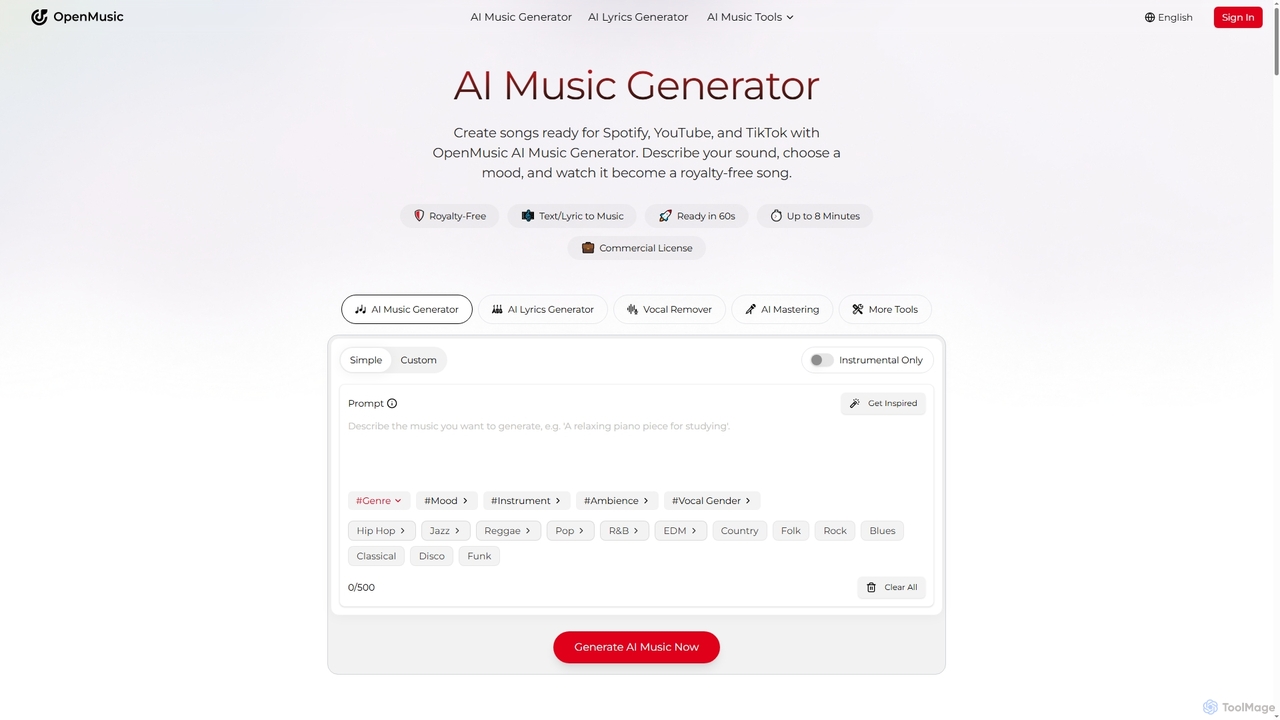
OpenMusic is an advanced AI music generator and comprehensive toolkit designed for creators of all levels. It enables users to effortlessly create royalty-free, studio-quality music, lyrics, and instrumental tracks for commercial use. From generating full songs from text prompts to splitting stems and mastering audio, OpenMusic streamlines the entire music production workflow, making creativity accessible and monetizable.

Stem Separation
Visits 1.2MFavorites 151Likes 147

About Songwriting

AI Songwriting tools are a specialized category of AI-powered applications designed to assist musicians, composers, and lyricists in the creative process of music composition. Leveraging advanced machine learning, natural language processing, and deep understanding of music theory, these tools can generate melodies, chord progressions, rhythms, and even lyrical suggestions. They serve as powerful creative partners, helping users overcome writer's block, explore new musical ideas, and accelerate the production of original songs within the broader domain of digital creativity.

Core Features

  • Melody Generation: Automatically creates unique melodic lines based on specified parameters like key, tempo, and mood.
  • Chord Progression Assistance: Suggests harmonious chord sequences that complement generated or existing melodies.
  • Lyric & Rhyme Suggestions: Provides AI-generated lyrical ideas, rhyming words, and thematic prompts to inspire songwriters.
  • Rhythm & Beat Creation: Generates drum patterns and rhythmic structures to form the backbone of a song.
  • Style & Genre Adaptation: Allows users to experiment with different musical genres or adapt compositions to specific styles.

Applicable Scenarios

AI Songwriting tools are invaluable for solo artists seeking fresh inspiration, music producers looking to quickly prototype song ideas, and content creators needing unique background music. They empower users to rapidly iterate on musical concepts, explore diverse stylistic avenues, and streamline the initial stages of song production, making the creative process more accessible and efficient.

How to Choose

When selecting an AI Songwriting tool, consider its genre compatibility and the range of musical styles it supports. Evaluate the level of customization offered for generated elements, ensuring it aligns with your creative control needs. Assess its ease of integration with your existing Digital Audio Workstation (DAW) and overall user-friendliness. Finally, compare pricing models and the quality of its AI-generated output to find a tool that best enhances your songwriting workflow.

Songwriting use cases

1

Overcoming Lyricist's Block

Lyricists often face challenges in finding fresh words or themes. AI songwriting tools can analyze existing lyrical styles and generate diverse suggestions for verses, choruses, or bridges, complete with rhyming options and thematic prompts. This helps writers quickly break through creative impasses, explore new narrative directions, and accelerate the completion of their song lyrics, saving hours of brainstorming.

2

Rapid Musical Idea Prototyping

Music producers and composers can use AI tools to quickly generate multiple melody and chord progression variations for a new track. By inputting basic parameters like key, tempo, and mood, they can receive instant musical snippets. This allows for rapid experimentation and iteration on foundational song elements, significantly speeding up the initial creative phase and helping to identify promising musical directions without extensive manual composition.

3

Exploring New Genres and Styles

Artists looking to diversify their sound or experiment with unfamiliar genres can leverage AI songwriting tools. These tools can generate compositions in various styles, from classical to electronic, or even blend elements of different genres. This capability enables musicians to explore new creative territories, understand different musical structures, and expand their artistic range without needing deep expertise in every genre, fostering innovation.

4

Generating Unique Background Music for Content

Video creators, podcasters, and game developers frequently need original, royalty-free background music. AI songwriting tools can produce custom tracks tailored to specific moods, durations, and instrumentation requirements. This eliminates the need for expensive stock music licenses or time-consuming manual composition, providing unique audio backdrops that perfectly fit the content's tone and enhance the overall viewer/listener experience efficiently.

5

Educational Tool for Aspiring Composers

For students and aspiring songwriters, AI tools offer a practical way to learn about music theory and composition. By generating musical pieces and then analyzing their structure, harmony, and melody, users can gain insights into songwriting principles. This hands-on approach provides a dynamic learning environment, helping individuals understand how different musical elements interact and apply these concepts to their own compositions more effectively.

6

AI-Assisted Collaborative Songwriting

Songwriting teams or solo artists can use AI as a virtual collaborator. If a song has a strong melody but lacks a compelling bridge, the AI can suggest several options. Similarly, it can fill in gaps in a composition, offer alternative harmonies, or expand on a nascent idea. This collaborative approach augments human creativity, providing fresh perspectives and accelerating the completion of complex musical projects by leveraging AI's generative capabilities.

Songwriting FAQ

What are AI Songwriting tools?

AI Songwriting tools are software applications that utilize artificial intelligence, including machine learning and natural language processing, to assist in the creation of music. They can generate various musical elements such as melodies, chord progressions, rhythms, and even lyrical ideas, acting as a creative aid for musicians, composers, and lyricists. These tools aim to streamline the songwriting process and inspire new musical directions.

How do I choose the best AI Songwriting tool for my needs?

To choose the best AI songwriting tool, consider its genre compatibility with your musical style, the level of customization it offers for generated elements, and its integration capabilities with your existing Digital Audio Workstation (DAW). Also, evaluate the quality and originality of its AI-generated output and its user-friendliness. Some tools excel in specific areas like lyrics, while others are better for instrumental composition.

What specific musical elements can AI Songwriting tools help with?

AI Songwriting tools can assist with a wide range of musical elements. This includes generating melodies based on mood or key, suggesting harmonious chord progressions, creating diverse rhythmic patterns and beats, and offering lyrical prompts, rhyming words, and thematic ideas. Some advanced tools can also help with instrumentation suggestions and arrangements, providing a comprehensive creative toolkit.

Can AI Songwriting tools replace human creativity?

No, AI Songwriting tools are designed to augment, not replace, human creativity. They serve as powerful assistants that can generate ideas, overcome creative blocks, and automate repetitive tasks, allowing human artists to focus on refinement, emotional expression, and artistic vision. The unique human touch, personal experience, and nuanced storytelling remain central to truly compelling songwriting, with AI acting as a valuable co-pilot.

How do AI Songwriting tools integrate with existing music production workflows?

Many AI Songwriting tools offer various integration options to fit into existing music production workflows. Common methods include MIDI export, allowing generated musical ideas to be imported into any Digital Audio Workstation (DAW) for further editing. Some tools provide audio file export (WAV, MP3), while others offer direct plugins or APIs for seamless integration with popular DAWs like Ableton Live, Logic Pro, or FL Studio, ensuring a smooth transition from AI generation to final production.