ToolMage
Sign in

Best 3 Story Generation AI tools for Creativity

Popular Story Generation AI tools in Creativity include What If Life, AI Story, and Naria, helping you work more efficiently.

What If Life

What If Life

What If Life is an imaginative AI tool designed to help users explore hypothetical alternate timelines of their lives. It encourages self-reflection by generating scenarios based on the intriguing question, "What if?" Users can delve into different life paths and share their unique alternate stories, fostering creativity and a deeper understanding of personal identity across various possibilities.

Story Generation
Visits 5.4KFavorites 149Likes 138
AI Story

AI Story

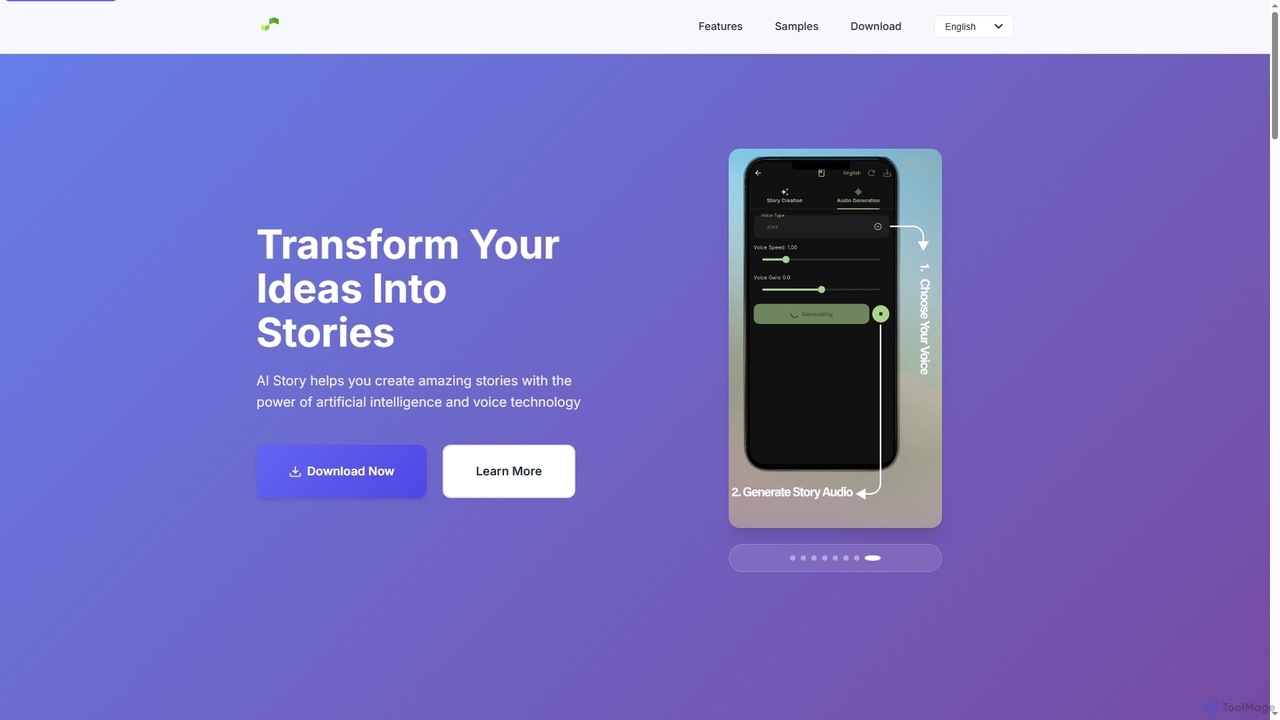
AI Story is an innovative mobile application that leverages artificial intelligence and voice technology to help users transform their ideas into captivating narratives. It offers AI-powered storytelling, natural voice integration for creation and narration, creative freedom across genres, easy sharing, and prioritizes user privacy by storing all data locally.

Story Generation
Visits 5.3KFavorites 99Likes 106
Naria
Freemium

Naria

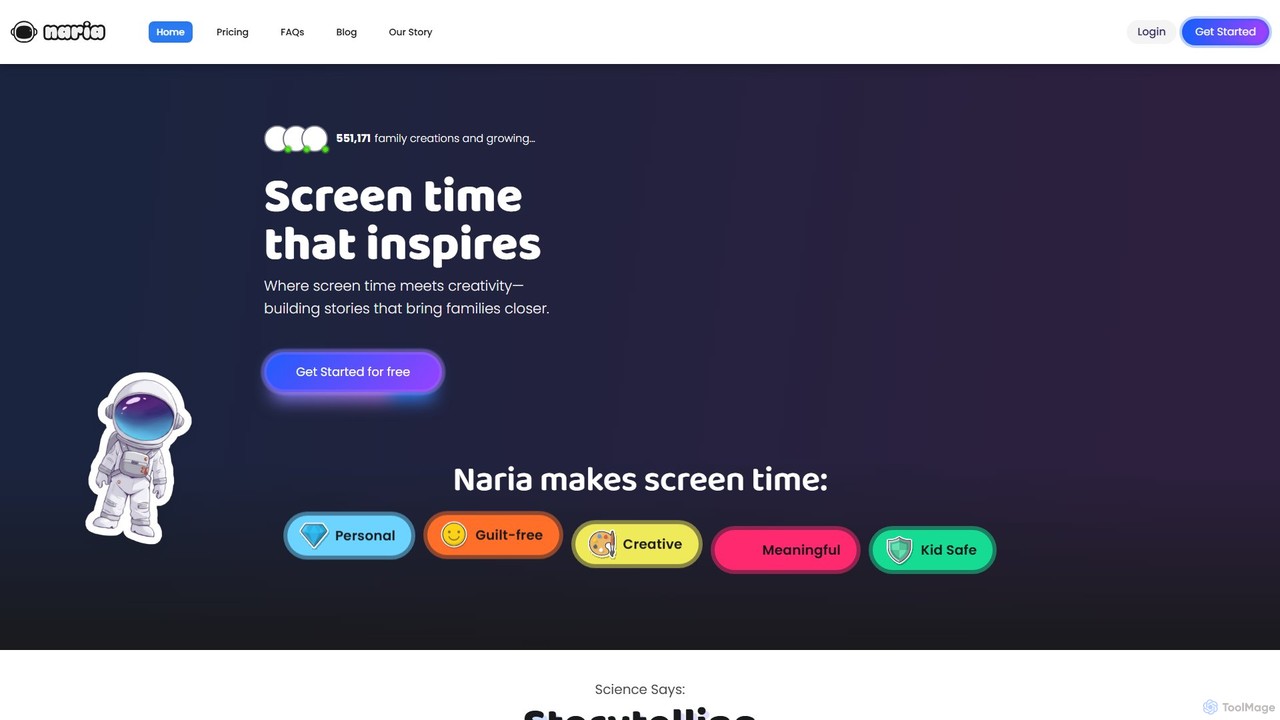
Naria is an AI-powered storytelling platform that transforms screen time into a creative and educational experience for families. It allows users to create personalized characters and stories, fostering literacy, creativity, and emotional intelligence in children through interactive and collaborative fun.

Story Generation
Visits 5.1KFavorites 139Likes 143

About Story Generation

Story Generation tools are AI-powered platforms that automatically create narratives, plots, and character arcs, falling under the broader category of Creativity tools. These advanced systems leverage natural language processing (NLP) and machine learning to understand prompts and generate coherent, engaging stories across various genres and styles. They empower writers, content creators, and game developers to overcome writer's block, rapidly prototype ideas, and explore diverse narrative possibilities with unprecedented speed and flexibility.

Core Features

  • Plot & Outline Generation: Automatically creates detailed story outlines, plot points, and narrative structures based on user inputs.
  • Character Development: Generates unique character profiles, backstories, and personality traits to enrich narratives.
  • Dialogue Creation: Produces natural-sounding and contextually appropriate dialogue for characters.
  • Genre & Style Adaptation: Adapts writing style and tone to match specific genres (e.g., fantasy, sci-fi, horror) or authorial voices.
  • World-Building Assistance: Helps construct detailed fictional worlds, including settings, cultures, and historical elements.

Use Cases

Story Generation tools are invaluable for professional writers seeking inspiration or needing to quickly draft multiple story variations. Game developers utilize them to create rich lore, character backstories, and dynamic quest lines for their games. Marketers and advertisers can generate compelling narratives for campaigns, while educators use them to create engaging learning materials or prompts for creative writing exercises.

How to Choose

When selecting a Story Generation tool, consider its genre support and stylistic flexibility to ensure it aligns with your creative vision. Evaluate the level of customization offered for plots, characters, and dialogue, as well as the quality and coherence of the generated output. Look for tools with intuitive interfaces and integration capabilities with other writing or development software. Finally, assess the pricing model and community support for ongoing assistance and inspiration.

Story Generation use cases

1

Drafting Novel Chapters and Plotlines

A novelist struggling with writer's block can input initial ideas, character profiles, and desired plot points into a Story Generation tool. The AI then generates multiple chapter outlines, dialogue snippets, or even full draft paragraphs, allowing the author to quickly explore different narrative directions and accelerate the initial drafting phase, saving weeks of brainstorming time.

2

Developing Game Lore and Quests

Game designers need rich backstories and engaging quests. By providing core concepts, character archetypes, and world settings to a Story Generation tool, they can rapidly generate extensive lore documents, character histories, and branching quest narratives. This streamlines the world-building process, ensuring consistency and depth across the game's universe, and allows for quick iteration on narrative ideas.

3

Crafting Marketing Campaign Narratives

Marketing teams often need compelling stories to connect with their audience. A Story Generation tool can help create engaging brand narratives, customer testimonials, or product origin stories. By inputting key brand messages and target audience demographics, the AI can generate diverse narrative angles and emotional hooks, significantly reducing the time spent on content ideation for campaigns and advertisements.

4

Generating Educational Scenarios and Prompts

Educators can use Story Generation tools to create dynamic learning scenarios or creative writing prompts for students. By inputting specific historical events, scientific concepts, or moral dilemmas, the AI can generate short stories or narrative frameworks that make complex topics more engaging and relatable. This fosters critical thinking and imaginative expression in the classroom, offering personalized learning experiences.

5

Personalized Storytelling for Entertainment

Individuals can use Story Generation tools for personal entertainment, creating unique bedtime stories for children, personalized fan fiction, or interactive narratives for role-playing games. By providing simple prompts about characters, settings, or desired outcomes, the AI can craft engaging and imaginative tales tailored to specific preferences, offering endless possibilities for creative leisure and personalized content consumption.

6

Scriptwriting for Short Films and Videos

Independent filmmakers and video creators can leverage Story Generation tools to quickly develop scripts for short films, YouTube videos, or commercials. By inputting genre, character types, and desired themes, the AI can generate scene descriptions, dialogue, and plot progressions. This accelerates the pre-production phase, allowing creators to experiment with various narrative structures and refine their vision efficiently before filming.

Story Generation FAQ

What are AI Story Generation tools?

AI Story Generation tools are software applications that use artificial intelligence, specifically natural language processing (NLP) and machine learning, to create original narratives. They can generate plots, characters, dialogues, and entire story outlines from simple text prompts. These tools serve as creative assistants, helping users to brainstorm ideas, overcome writer's block, and rapidly prototype various story concepts across different genres and styles.

How do AI Story Generation tools work?

AI Story Generation tools typically work by leveraging large language models (LLMs) trained on vast datasets of text, including books, scripts, and articles. When a user provides a prompt (e.g., genre, characters, plot points), the AI analyzes it and predicts the most probable sequence of words and sentences to form a coherent narrative. Advanced tools use techniques like neural networks and deep learning to understand context, maintain consistency, and adapt to specific writing styles, generating creative and contextually relevant content.

Who benefits most from using Story Generation tools?

Story Generation tools primarily benefit writers (novelists, screenwriters, short story authors) by providing inspiration and accelerating drafting. Game developers use them for world-building and quest design. Marketers leverage them for compelling brand narratives. Educators find them useful for creating engaging learning materials. Essentially, anyone involved in creative writing, content creation, or narrative design can significantly enhance their productivity and explore new creative avenues with these AI-powered assistants.

What are the key features to look for in a Story Generation tool?

When choosing a Story Generation tool, prioritize features like robust plot generation, which can create detailed outlines and narrative arcs. Look for strong character development capabilities, including personality traits and backstories. Effective dialogue creation is crucial for realistic interactions. Genre and style adaptation allows for versatility, while world-building assistance helps construct rich settings. Customization options, ease of use, and integration with other writing software are also important for a seamless creative workflow.

How do Story Generation tools differ from general AI writing assistants?

While general AI writing assistants focus on tasks like grammar correction, rephrasing, or generating short-form content (e.g., emails, social media posts), Story Generation tools are specifically designed for long-form narrative creation. They excel at developing complex plots, consistent character arcs, and intricate world-building, which are beyond the scope of most general assistants. Story generators prioritize narrative coherence and creative depth, whereas general assistants emphasize efficiency and correctness for diverse text types.