LoreKeeper
LoreKeeper is an AI-powered assistant for TTRPG Game Masters and writers. It streamlines campaign preparation by helping you …
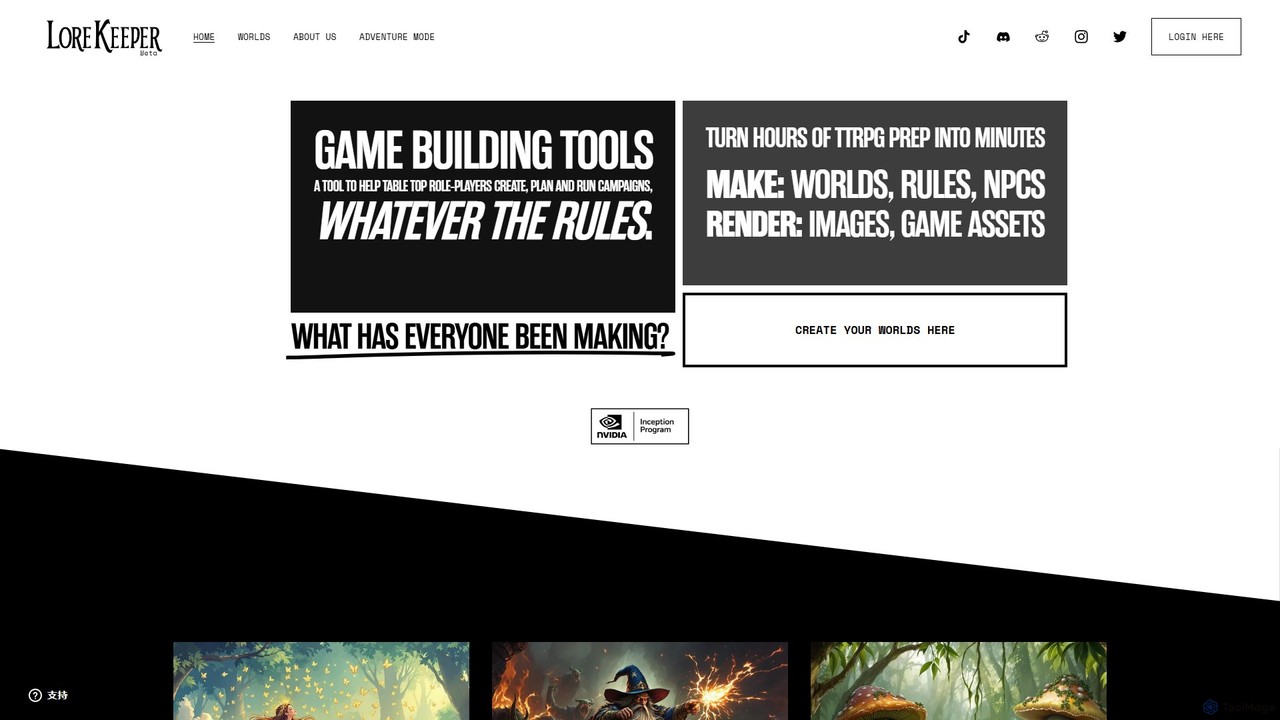
LoreKeeper is an AI-powered assistant for TTRPG Game Masters and writers. It streamlines campaign preparation by helping you create detailed worlds, rules, NPCs, and game assets. Turn hours of prep time into minutes and bring your creative visions to life with an intelligent, interactive partner.
About World Building
AI World Building tools are specialized creative assistants for generating and managing the intricate details of fictional universes. They utilize large language models and procedural generation algorithms to create interconnected elements like lore, characters, maps, and timelines. These tools help writers, game developers, and creators maintain consistency, overcome creative blocks, and rapidly flesh out immersive settings. They differ from general AI writers by focusing on the structured, database-like nature of a world's components.
Core Features
- Lore Generation: Creates detailed histories, mythologies, political systems, and cultural norms for a fictional world.
- Character & Faction Creation: Generates characters with unique backstories, traits, motivations, and relationships, as well as entire factions or organizations.
- Interactive Map Making: Produces geographical maps with distinct regions, cities, and points of interest, often linked to generated lore.
- Timeline Management: Organizes historical events, plot points, and character arcs into a coherent and accessible timeline.
- Consistency Checking: Analyzes new and existing content to flag contradictions in lore, character details, or world rules.
Applicable Scenarios
These tools are invaluable for novelists and screenwriters crafting complex settings for their stories. Game developers, especially in RPG and strategy genres, use them to build rich game worlds and lore bibles. Tabletop RPG game masters also leverage them to design unique campaign settings, NPCs, and adventures for their players.
Selection Criteria
When choosing an AI World Building tool, evaluate the scope of its generation capabilities—does it cover maps, characters, and lore, or just text? Assess the level of user control and customization for guiding the AI's output. Consider its data organization features, such as wiki-style linking and visual timelines. Finally, check for collaboration options if you are working as part of a creative team.

World BuildingUse Cases
Designing a Fantasy Novel Series
A fantasy author is starting a new epic series and needs to build a deep, consistent world. They use an AI World Building tool to generate a foundational timeline of the 'First Age,' create distinct magic systems for two rival nations, and design a detailed continent map with key cities and ancient ruins. The tool helps generate unique cultural norms and naming conventions for different races, ensuring consistency across multiple books. This process accelerates the pre-writing phase, allowing the author to focus on plot and character development within a rich, pre-established setting.
Creating a TTRPG Campaign Setting
A Game Master (GM) for a tabletop role-playing game like Dungeons & Dragons wants to create a unique homebrew world. Using an AI tool, they generate a starting town complete with key NPCs, local rumors, and a nearby dungeon map. The tool helps create interconnected plot hooks based on the region's generated history. When players decide to travel to an unexpected location, the GM can quickly generate details for the new area, including its political climate and points of interest, maintaining the illusion of a vast, living world without extensive prior preparation.
Developing Lore for an Indie Video Game
A small indie game studio is developing a sci-fi RPG. To make the world feel lived-in, they use an AI world builder to create the foundational lore. This includes generating detailed histories for three major galactic factions, creating a timeline of significant technological advancements and past conflicts, and writing descriptions for dozens of planets. The tool's wiki-like structure allows the narrative designer, level designer, and artists to all access and contribute to the same consistent lore bible, ensuring that item descriptions, environmental storytelling, and character dialogues are all aligned.
Visualizing Alien Worlds for Concept Art
A concept artist is tasked with designing a new alien planet for a film. They input high-level concepts into an AI world builder, such as 'a crystalline jungle under a binary sun' or 'a sentient ocean-planet.' The tool generates rich textual descriptions of the flora, fauna, atmospheric conditions, and geological formations. The artist then uses these detailed descriptions as highly specific prompts for AI image generators or as direct inspiration for their manual sketches, ensuring their artwork is grounded in a cohesive and imaginative ecological system.
Managing a Complex Universe for a Comic Book
A comic book creative team is working on a long-running series with a complex history and a large cast of characters. They use an AI World Building tool as a central, living document. It tracks character power evolutions, relationship changes, and a detailed timeline of all major story arcs. Before writing a new issue, the writer can query the system to check for potential continuity errors, such as a character referencing an event they weren't present for. This ensures the universe remains consistent and believable for dedicated readers over many years.
Generating Procedural Lore for a Roguelike Game
A solo developer is creating a roguelike game where each playthrough should feel unique. They integrate an AI world-building API to procedurally generate content. For each new game session, the API generates a unique 'seed history' for the world, including a fallen kingdom's backstory, the origins of a legendary artifact, and descriptions for procedurally generated monsters. This generated text is then used for item descriptions, lore books found in-game, and NPC dialogue, adding significant narrative depth and replayability with minimal manual content creation.