ToolMage
Sign in

Best 6 Chatbots AI tools for Customer Service

Popular Chatbots AI tools in Customer Service include Laburen, Advent AI, CreatorChat, NeuvonSoftware, NeoAgent, and Aptolix, helping you work more efficiently.

Advent AI

Advent AI

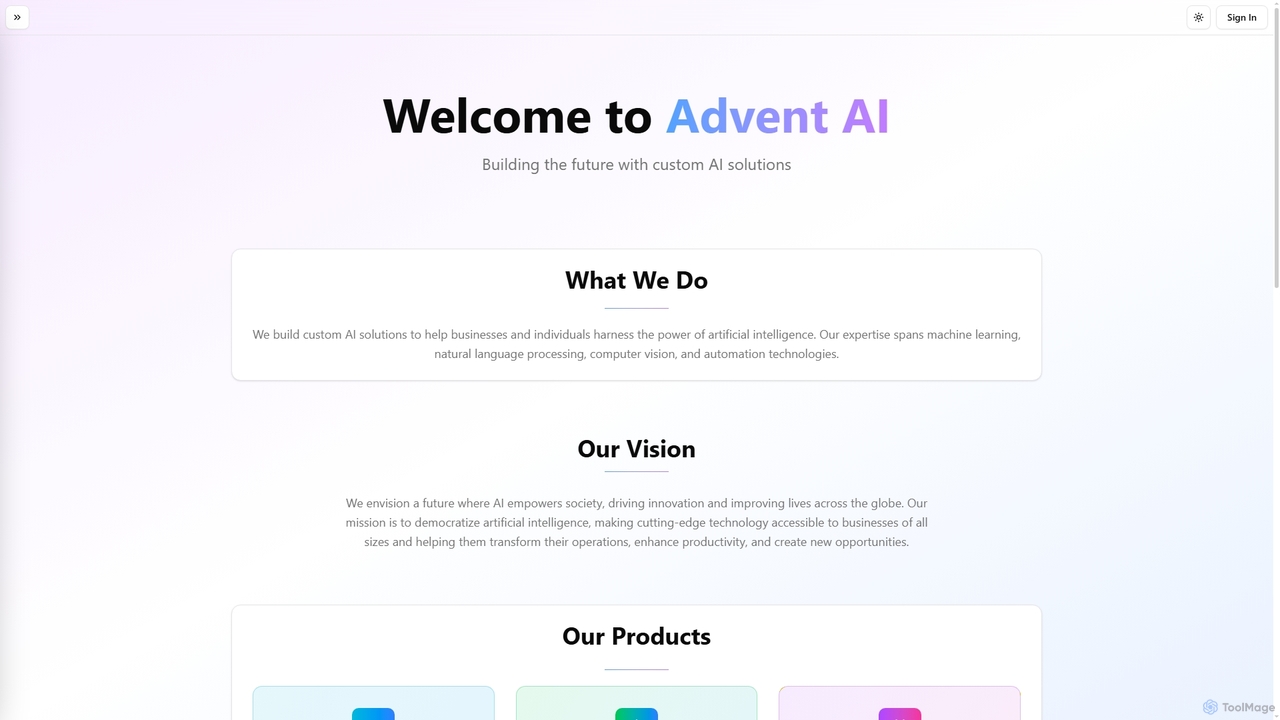
Advent AI specializes in building custom artificial intelligence solutions for businesses and individuals, leveraging expertise in machine learning, natural language processing, computer vision, and automation technologies. Their offerings include AI agents for customer support, tax optimization tools, and personalized fashion recommendations.

Custom Ai Solutions
Visits 6.9KFavorites 32Likes 42
NeuvonSoftware

NeuvonSoftware

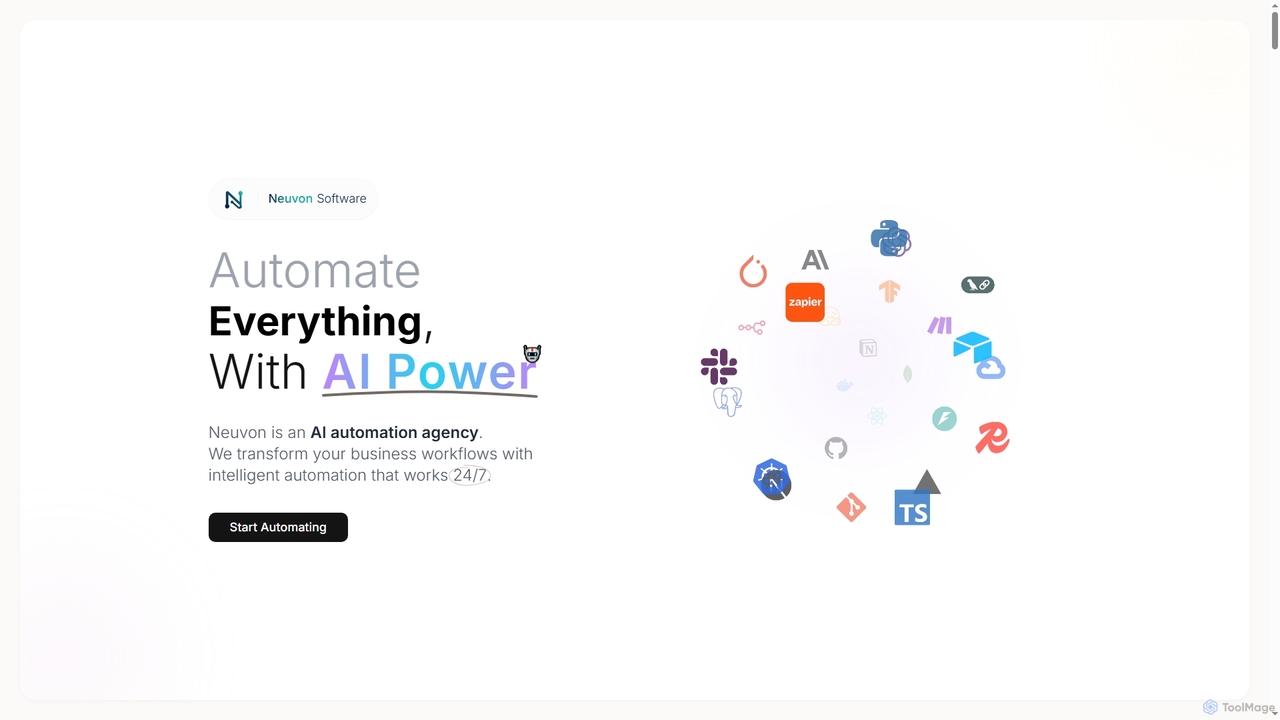
NeuvonSoftware is an AI automation and software development agency specializing in transforming business workflows with intelligent, 24/7 automation. They offer custom AI solutions, workflow automation, data integration, and bespoke software development to enhance efficiency, reduce errors, and drive data-driven decisions for businesses across various sectors.

3D
Visits 6.3KFavorites 86Likes 77
Aptolix
Paid

Aptolix

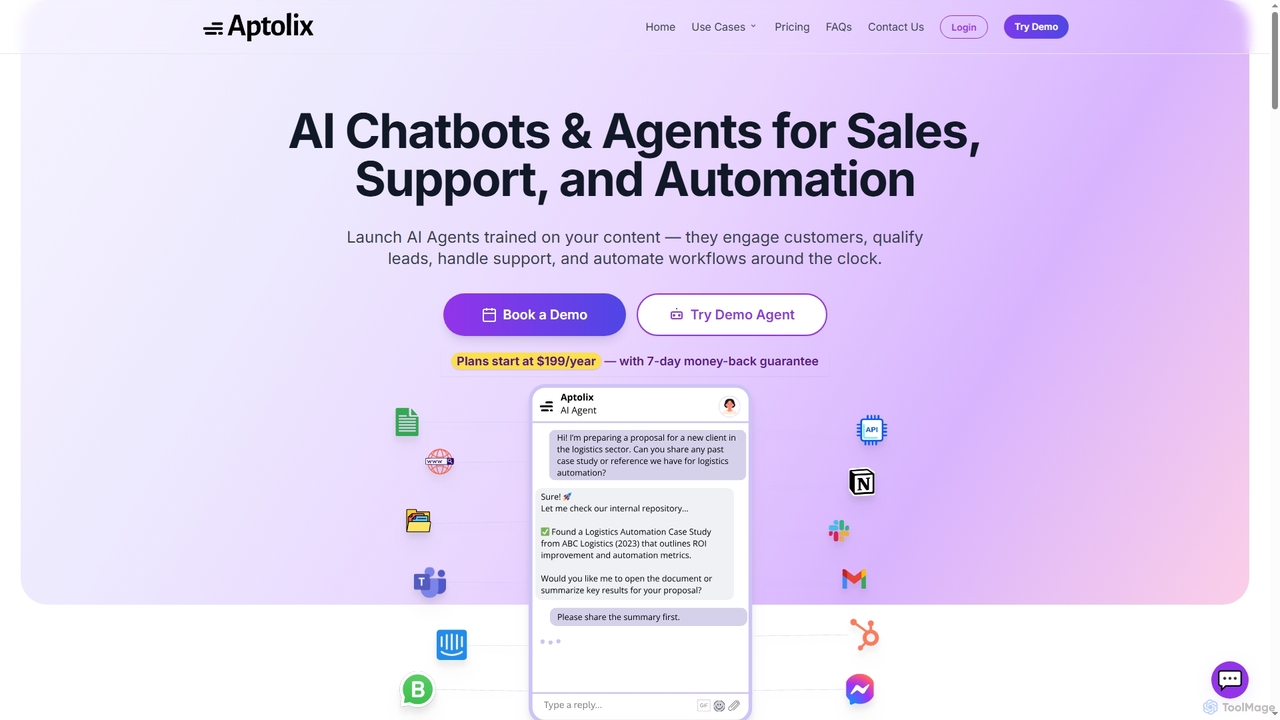
Aptolix is an AI chatbot platform designed for websites, enhancing sales, support, and automation. It allows businesses to deploy AI agents trained on their content to engage customers, qualify leads, handle support, and automate workflows 24/7.

Workflow Automation
Visits 5.7KFavorites 108Likes 109
NeoAgent

NeoAgent

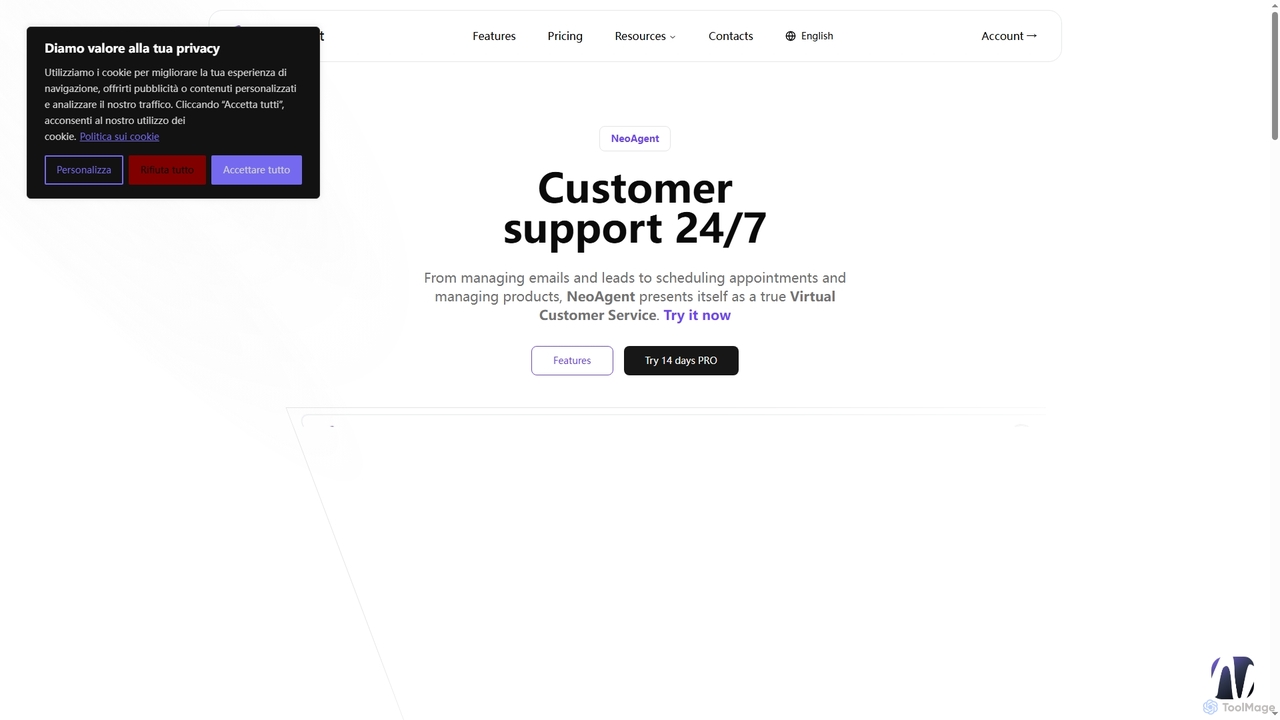
NeoAgent provides 24/7 AI customer assistance through intelligent agents for WhatsApp, web, and human-like AI calls. It leverages GPT Realtime Voice technology to offer automated, efficient, and scalable customer support solutions, enhancing user experience and streamlining business operations.

Voice Assistants
Visits 5.7KFavorites 116Likes 128
Laburen
Freemium

Laburen

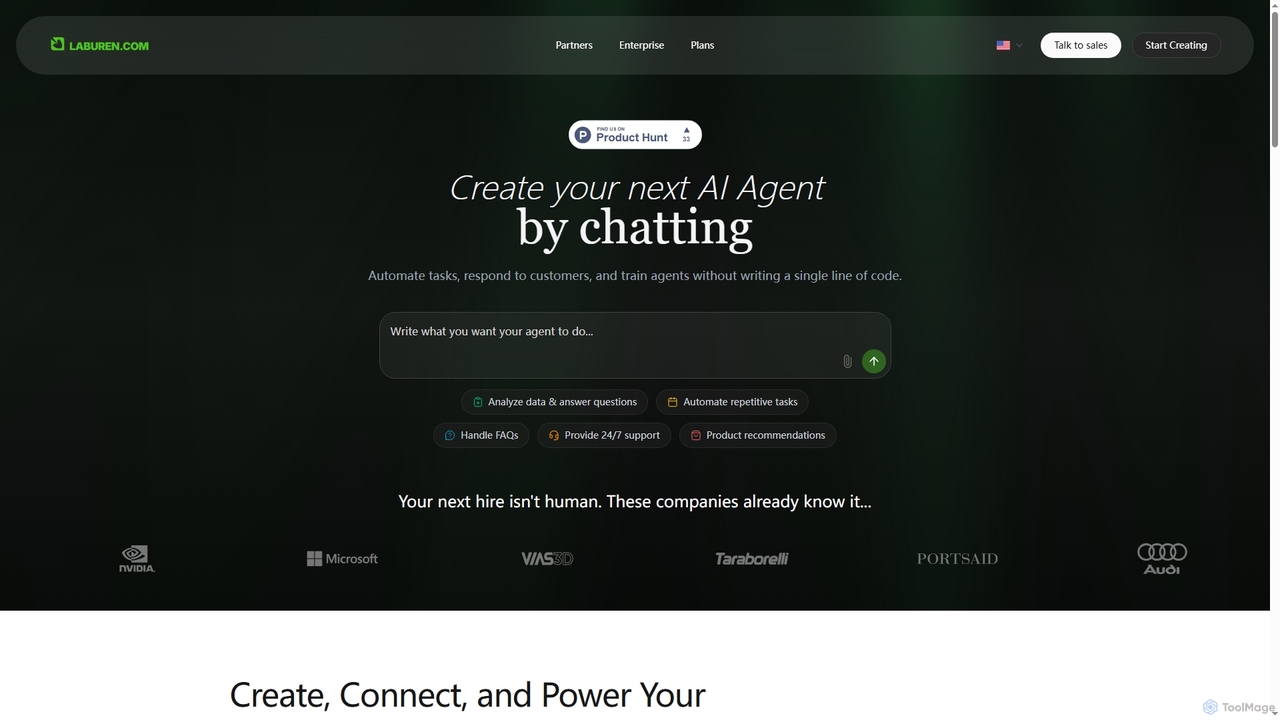
Laburen is a no-code AI agent platform that empowers businesses to automate tasks, customer support, sales, and administration. It allows users to create and train AI employees through a simple chat interface, integrating seamlessly with existing business tools to boost productivity and scale operations.

3D
Visits 19.2KFavorites 128Likes 128
CreatorChat
Freemium

CreatorChat

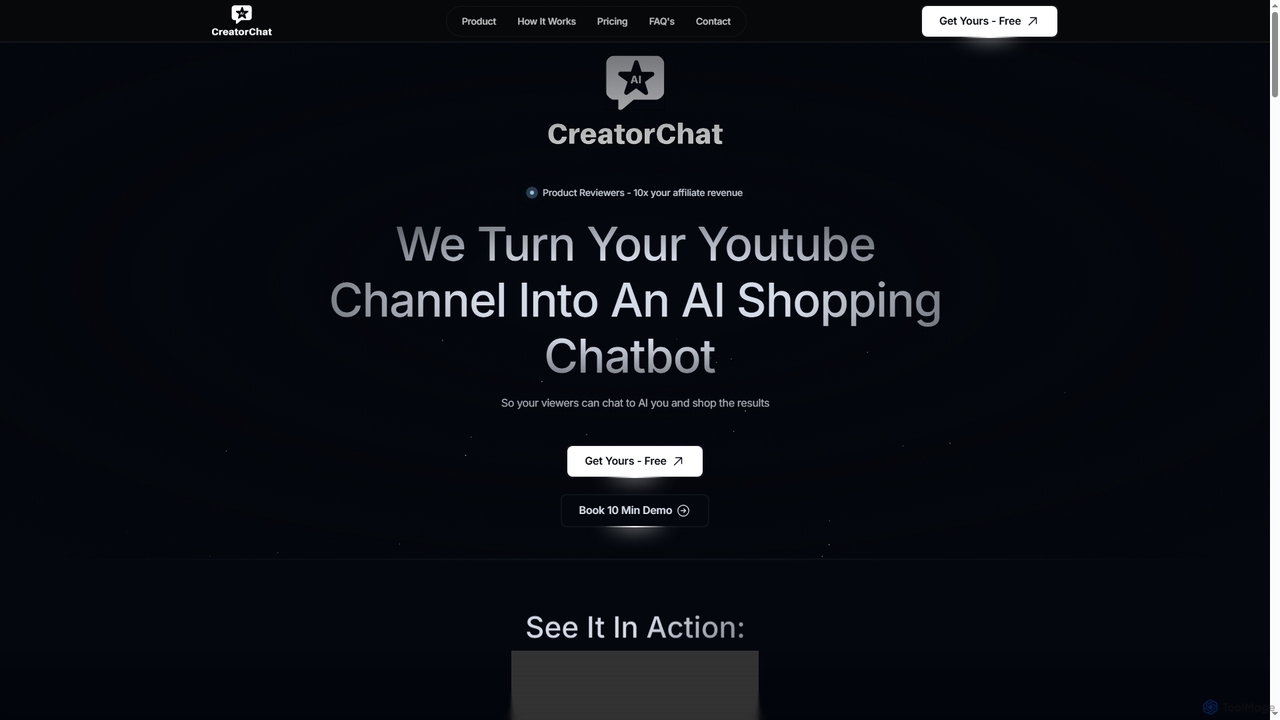
CreatorChat transforms YouTube channels and other social media content into intelligent AI shopping chatbots. It empowers product reviewers and content creators to significantly boost affiliate revenue by offering viewers a personalized, interactive shopping experience, guiding them to the best products and prices directly from their content.

Video Tools
Visits 6.5KFavorites 125Likes 143

About Chatbots

Chatbots are AI-powered tools designed to simulate human conversation through text or voice interfaces. Leveraging natural language processing (NLP) and machine learning, they automate interactions, provide instant support, and streamline communication. These virtual assistants are crucial for enhancing customer engagement and operational efficiency in various digital environments, serving as a key component within customer service solutions.

Core Features

  • Natural Language Understanding (NLU): Interprets user intent and context from free-form text or speech.
  • Automated Responses: Delivers pre-programmed or dynamically generated answers to common queries.
  • Integration Capabilities: Connects with CRM, ticketing systems, and other business applications.
  • Multi-channel Support: Operates across websites, messaging apps, social media, and voice platforms.
  • Personalization: Adapts interactions based on user history and preferences for a tailored experience.

Applicable Scenarios

Businesses across various sectors utilize chatbots to enhance their customer service and operational workflows. For instance, e-commerce sites deploy them to handle routine customer inquiries 24/7, while marketing teams use them for lead generation and qualification on websites. Internally, companies leverage chatbots for IT helpdesks, assisting employees with common issues like password resets and software troubleshooting.

How to Choose

When selecting a chatbot, prioritize its NLP/NLU capabilities to ensure accurate understanding of complex queries. Evaluate its integration ecosystem for compatibility with existing CRM or support platforms. Consider scalability and customization options to meet growing user volumes and specific business needs. Finally, assess the ease of deployment, training data requirements, and ongoing maintenance for long-term viability.

Chatbots use cases

1

Automating Customer Service Inquiries

E-commerce businesses deploy AI chatbots on their websites to instantly answer common customer questions about order status, shipping, returns, and product details. This reduces the need for human agents to handle repetitive queries, ensuring 24/7 support and improving customer satisfaction by providing immediate responses.

2

Automate Customer Support for E-commerce

An e-commerce business uses a chatbot to handle common customer inquiries such as order status, shipping information, product details, and return policies. The chatbot provides instant, accurate answers 24/7, reducing the workload on human support agents and improving customer satisfaction by offering immediate assistance. It can also guide customers through the purchasing process or suggest related products based on their browsing history.

3

Automating Customer Support FAQs

E-commerce businesses use chatbots to instantly answer common customer questions about shipping, returns, product details, and order status. This reduces the workload on human support teams, provides 24/7 assistance, and improves customer satisfaction by offering immediate resolutions without waiting times.

4

Lead Generation and Qualification on Websites

Marketing teams deploy chatbots on company websites to engage visitors, ask qualifying questions about their needs and budget, and collect contact information. The chatbot can then route qualified leads directly to sales representatives, streamlining the sales funnel and increasing conversion rates.

5

Enhance Lead Generation and Qualification

Marketing teams deploy chatbots on landing pages to engage website visitors, ask qualifying questions, and collect contact information. The chatbot can identify potential leads by assessing their needs and budget, then seamlessly pass qualified leads to the sales team with detailed conversation transcripts. This process automates the initial stages of the sales funnel, ensuring that sales representatives focus on high-potential prospects, thereby increasing conversion rates.

6

Generating and Qualifying Sales Leads

Marketing teams integrate chatbots into landing pages or social media platforms to engage potential customers. The chatbot asks qualifying questions, gathers contact information, and assesses interest levels, effectively filtering out unqualified leads and passing warm prospects directly to the sales team for follow-up, streamlining the sales funnel.

7

Provide Internal IT Helpdesk Support

Large organizations utilize chatbots to serve as a first line of support for internal IT helpdesks. Employees can ask the chatbot questions about common software issues, password resets, network connectivity problems, or access to internal tools. The chatbot provides immediate solutions from a knowledge base, guides users through troubleshooting steps, or automatically creates a support ticket if the issue requires human intervention, significantly reducing IT support response times.

8

Providing Instant Technical Support

Software companies use chatbots as a first line of defense for technical support. Users can describe their issues, and the chatbot provides troubleshooting steps, links to relevant documentation, or guides them through common fixes. This reduces the volume of support tickets and empowers users to resolve problems independently.

9

Personalized Product Recommendations

Retailers integrate chatbots into their online stores to interact with shoppers, understand their preferences, and suggest relevant products. By asking about style, size, or purpose, the chatbot guides users through the catalog, enhancing the shopping experience and boosting sales.

10

Internal HR Support for Employees

Large organizations utilize HR chatbots to answer employee queries regarding company policies, benefits, leave requests, and payroll. This provides employees with instant access to information, reduces the administrative burden on HR staff, and ensures consistent policy communication.

11

Personalize User Onboarding and Education

Software companies and online platforms deploy chatbots to guide new users through the onboarding process. The chatbot can provide interactive tutorials, answer questions about features, and offer personalized tips based on user behavior and goals. This approach makes the learning curve smoother, reduces user frustration, and ensures users quickly understand how to maximize the value of the product, leading to higher adoption and retention rates.

12

Enhancing Employee Self-Service

Large organizations implement internal chatbots for HR or IT support. Employees can ask questions about company policies, benefits, payroll, or IT issues like password resets. The chatbot provides immediate answers or directs them to the correct resources, significantly reducing the workload on HR and IT departments and improving employee experience.

13

Collect Customer Feedback and Surveys

Businesses use chatbots to conduct interactive surveys and collect customer feedback after a service interaction or purchase. Instead of static forms, the chatbot engages users in a conversational manner, making the feedback process more engaging and less tedious. This results in higher completion rates for surveys and provides valuable insights into customer satisfaction, product preferences, and areas for improvement, which can then inform business decisions.

14

Booking and Appointment Scheduling

Service-based businesses like clinics, salons, or consultants use chatbots to manage appointment bookings. Users can interact with the chatbot to check availability, select preferred times, and confirm appointments, simplifying the scheduling process for both customers and staff.

15

Personalized Product Recommendations

Retailers leverage conversational AI to offer personalized shopping experiences. A chatbot interacts with customers, asking about their preferences, style, and budget, then recommends suitable products. This mimics an in-store assistant, helping customers discover items they might like and increasing conversion rates.

16

Collecting Customer Feedback and Surveys

Businesses use chatbots to conduct interactive surveys and gather feedback after a service interaction or purchase. The chatbot can ask follow-up questions based on previous answers, making the feedback process more engaging and dynamic than traditional forms, leading to higher completion rates and richer insights.

17

Collecting Customer Feedback and Surveys

Companies employ chatbots to conduct interactive surveys and gather feedback after a service interaction or purchase. The chatbot can ask targeted questions, collect ratings, and identify areas for improvement, providing valuable insights for business optimization in a user-friendly format.

18

Streamline HR and Employee Self-Service

HR departments deploy chatbots to provide employees with instant access to information regarding company policies, benefits, payroll, and leave requests. Employees can ask questions about their employment terms, submit requests, or get guidance on internal processes without needing to contact an HR representative directly. This self-service model reduces the administrative burden on HR staff, ensures consistent information delivery, and empowers employees with quick access to essential resources.

Chatbots FAQ

What are AI Chatbots?

AI Chatbots are computer programs that simulate human conversation through voice commands or text chats, powered by artificial intelligence. They leverage natural language processing (NLP) to understand user queries, machine learning to improve over time, and often generative AI to create human-like responses. Their primary goal is to automate interactions, provide instant support, and streamline communication in various business and personal contexts, acting as a key tool in modern customer service.

What are AI Chatbots?

AI chatbots are computer programs designed to simulate human conversation, primarily through text or voice. They utilize artificial intelligence technologies like Natural Language Processing (NLP) and machine learning to understand user intent, process queries, and provide relevant, automated responses, often enhancing customer service and operational efficiency.

What are AI Chatbots?

AI chatbots are software programs that simulate human conversation using artificial intelligence, specifically natural language processing (NLP) and machine learning. They are designed to understand user intent, provide relevant responses, and automate interactions across various digital channels, significantly enhancing customer service and operational efficiency.

How do AI Chatbots differ from traditional rule-based chatbots?

AI chatbots use advanced NLP and machine learning to understand context, sentiment, and complex, varied language, allowing for more natural and flexible conversations. Traditional rule-based chatbots, in contrast, rely on predefined scripts and keyword matching, limiting them to specific questions and rigid response flows. AI chatbots can learn and adapt, while rule-based ones cannot.

How do AI Chatbots differ from traditional rule-based chatbots?

AI chatbots use advanced NLP to understand context, sentiment, and complex queries, allowing for more natural and flexible conversations. In contrast, traditional rule-based chatbots operate on predefined scripts and keywords, only responding to exact matches. AI chatbots can learn and adapt over time, offering a more dynamic and intelligent user experience.

How do AI Chatbots differ from traditional rule-based chatbots?

AI chatbots differ significantly from traditional rule-based chatbots in their intelligence and flexibility. Rule-based chatbots operate on predefined scripts and keywords, only responding to exact matches or specific commands. In contrast, AI chatbots use natural language processing (NLP) and machine learning to understand the intent behind varied user inputs, even with misspellings or colloquialisms. This allows AI chatbots to handle more complex, nuanced conversations, learn from interactions, and provide more human-like, dynamic responses, making them suitable for a wider range of customer service scenarios.

What are the key benefits of implementing an AI Chatbot?

Implementing an AI chatbot offers numerous benefits for businesses. Firstly, it provides 24/7 instant support, improving customer satisfaction and reducing response times. Secondly, it significantly lowers operational costs by automating routine inquiries and reducing the need for human agents. Thirdly, chatbots can handle a high volume of concurrent conversations without fatigue, ensuring scalability during peak periods. Lastly, they collect valuable data on customer interactions, which can be analyzed to gain insights into customer needs and improve service quality.

What are the key benefits of implementing chatbots in customer service?

Implementing chatbots in customer service offers several benefits, including 24/7 availability, instant response times, reduced operational costs by automating routine tasks, and the ability to handle a high volume of inquiries simultaneously. They also free up human agents to focus on more complex issues, leading to improved overall customer satisfaction.

What are the key benefits of implementing a chatbot for a business?

Implementing a chatbot offers several benefits, including 24/7 customer support, instant response times, reduced operational costs by automating routine tasks, improved customer satisfaction through quick resolutions, and efficient lead generation and qualification. They also provide valuable data insights into customer interactions.

What should I consider when choosing an AI chatbot platform?

When choosing an AI chatbot platform, consider its natural language understanding (NLU) capabilities, ease of integration with your existing systems (CRM, helpdesk), customization options for branding and specific use cases, scalability to handle growing user volumes, and the analytics and reporting features for performance monitoring.

What should I consider when choosing an AI chatbot platform?

When choosing an AI chatbot platform, consider its Natural Language Understanding (NLU) capabilities, ease of integration with your existing systems (CRM, helpdesk), scalability to handle future growth, customization options for branding and specific use cases, and the availability of analytics to monitor performance. Also, evaluate the vendor's support and pricing model.

What are the essential features to look for in an AI Chatbot platform?

When choosing an AI chatbot platform, look for robust Natural Language Understanding (NLU) capabilities to accurately interpret user intent. Multi-channel deployment is crucial for reaching customers wherever they are, be it on your website, social media, or messaging apps. Integration with existing CRM, helpdesk, and other business systems ensures seamless data flow. Advanced features like personalization, sentiment analysis, and the ability to escalate to human agents are also vital for delivering a comprehensive and effective customer experience. Finally, consider the ease of use for building and managing conversational flows without extensive coding.

Can AI Chatbots fully replace human customer service agents?

While AI chatbots significantly automate and enhance customer service, they are not designed to fully replace human agents. Instead, they serve as powerful complementary tools. Chatbots excel at handling routine, repetitive queries, providing instant answers, and collecting basic information. However, complex, emotionally charged, or highly nuanced issues often require the empathy, critical thinking, and problem-solving skills of a human agent. The most effective strategy is a hybrid approach, where chatbots manage the initial contact and common questions, seamlessly escalating to human agents for more intricate or sensitive interactions, creating a more efficient and satisfying customer experience overall.

Can chatbots handle complex customer issues, or are they only for simple queries?

While chatbots excel at handling simple, repetitive queries and FAQs, advanced AI chatbots can manage increasingly complex issues. They can guide users through multi-step processes, integrate with backend systems to retrieve specific information, and even escalate to a human agent seamlessly when a query requires nuanced understanding or human intervention, ensuring a smooth customer experience.

Can chatbots handle complex customer service issues?

While chatbots excel at handling routine inquiries and FAQs, their ability to manage complex customer service issues depends on their sophistication. Advanced AI chatbots can often guide users through multi-step processes or even escalate to a human agent seamlessly when a query becomes too intricate, ensuring a smooth transition and comprehensive support.