Grain
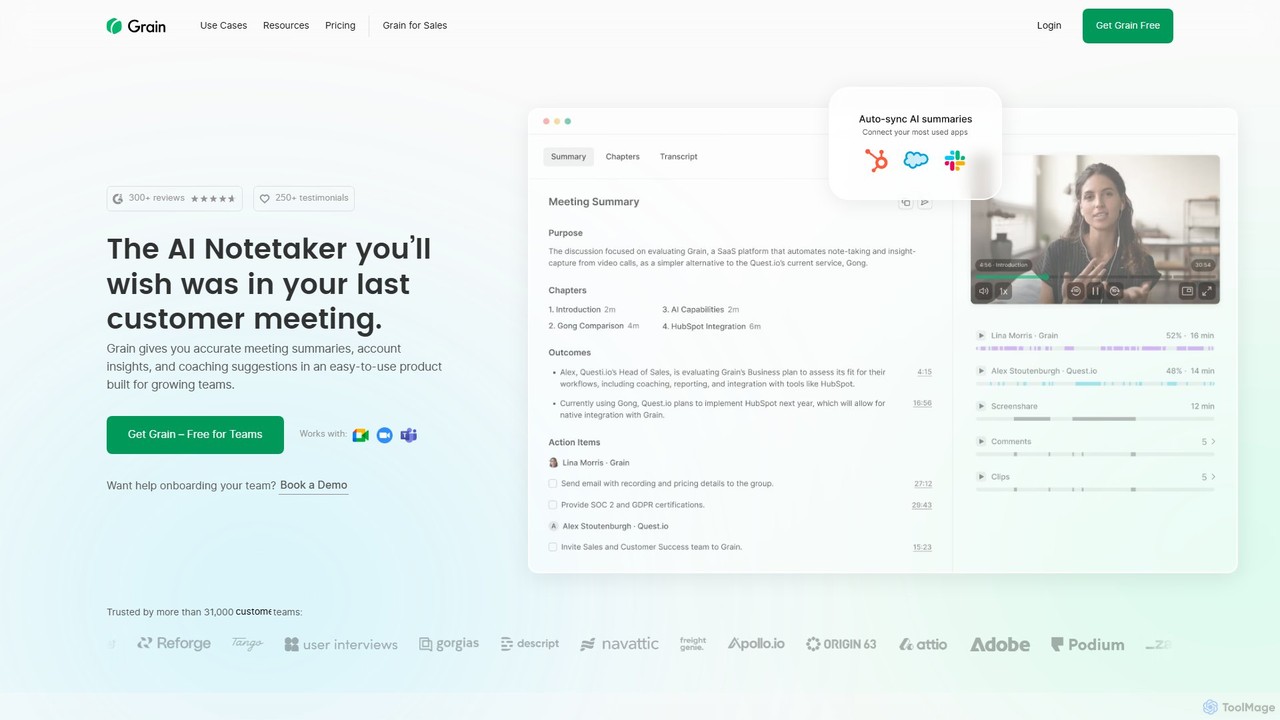
Grain is an AI-powered meeting notetaker designed for growing teams. It automatically records, transcribes, and summarizes video calls …
Grain is an AI-powered meeting notetaker designed for growing teams. It automatically records, transcribes, and summarizes video calls from platforms like Zoom, Google Meet, and Microsoft Teams. It helps sales, customer success, and product teams capture crucial insights, automate follow-ups, sync data to CRMs, and facilitate team coaching and collaboration, allowing everyone to stay focused during conversations.
Polling.com
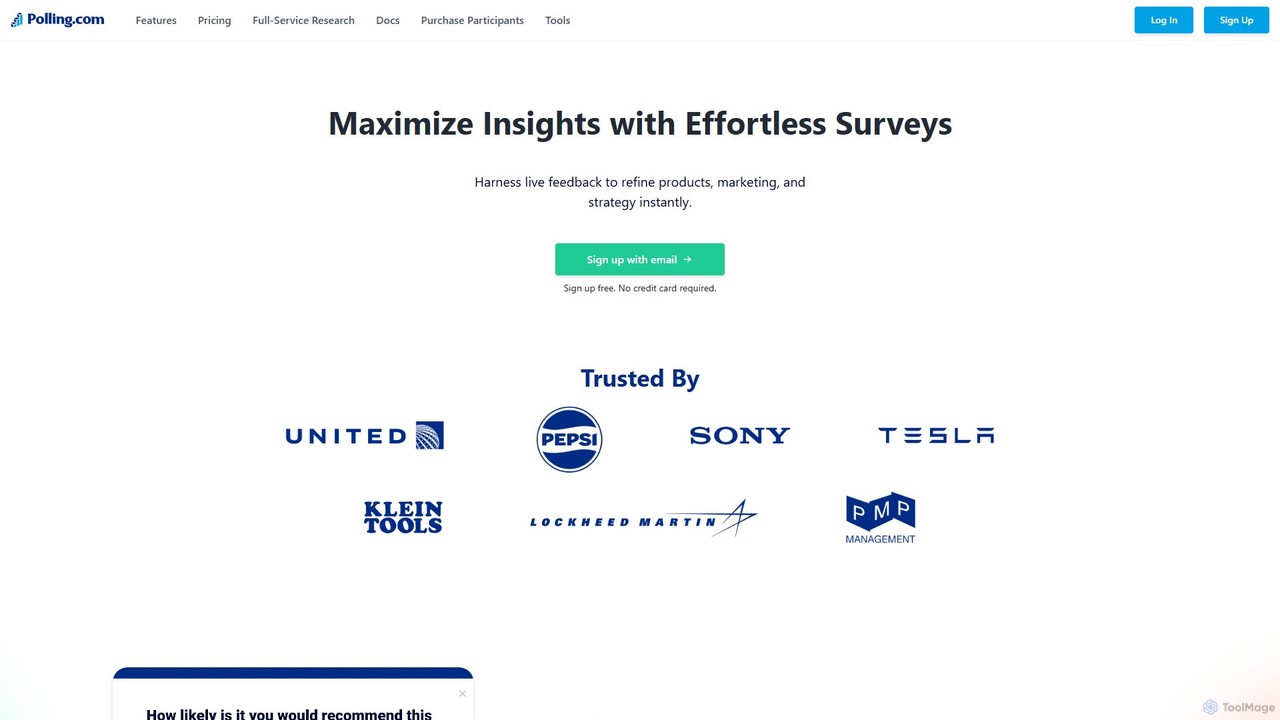
Polling.com is an AI-powered survey and poll creation platform designed to gather instant, actionable feedback. It enables users …
Polling.com is an AI-powered survey and poll creation platform designed to gather instant, actionable feedback. It enables users to refine products, marketing, and strategy through intuitive, enterprise-grade research tools. The platform offers seamless integrations, advanced targeting, and powerful analytics, positioning itself as a superior alternative to tools like SurveyMonkey and Typeform.
Responsly
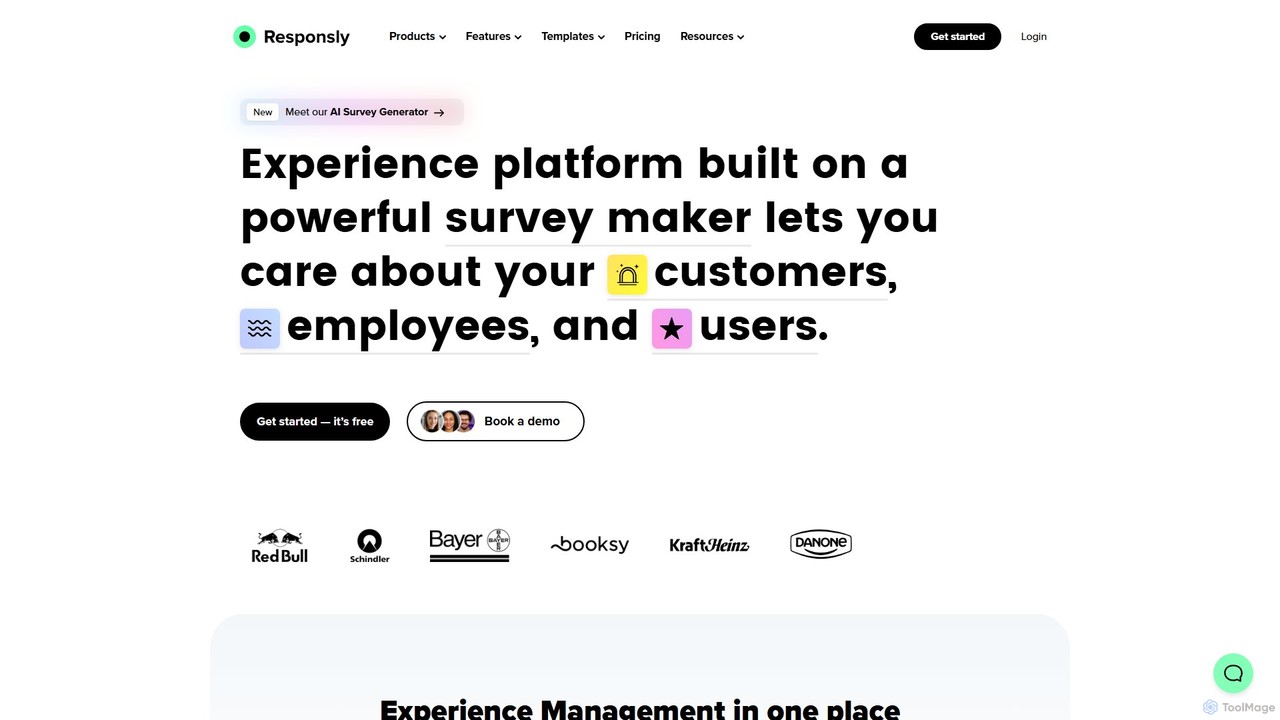
Responsly is an AI-powered experience management platform designed to create advanced surveys, quizzes, and forms. It helps businesses …
Responsly is an AI-powered experience management platform designed to create advanced surveys, quizzes, and forms. It helps businesses gather insights on customer (CX), employee (EX), and product (PX) experiences, featuring an AI survey generator, extensive integrations, and robust security.
RightResponseAI
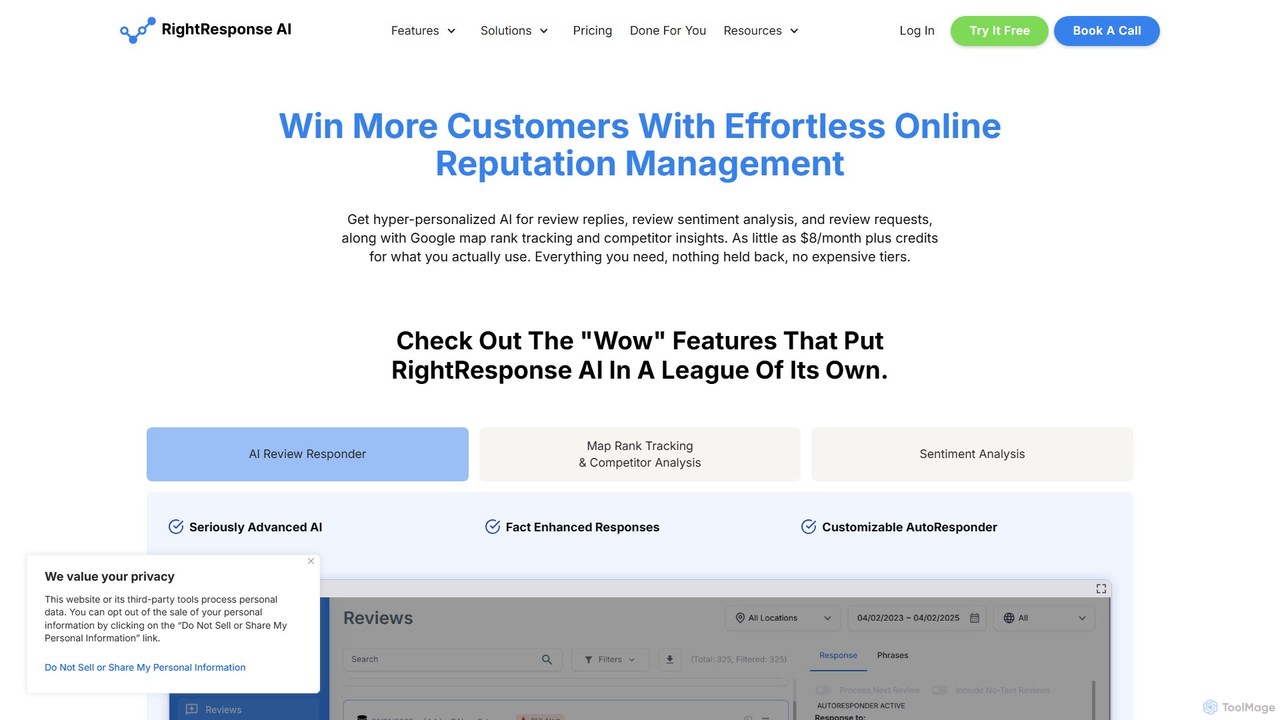
RightResponseAI is an all-in-one reputation management and local SEO platform. It uses advanced AI to generate hyper-personalized review …
RightResponseAI is an all-in-one reputation management and local SEO platform. It uses advanced AI to generate hyper-personalized review responses, perform deep sentiment analysis on customer feedback, and track your business's ranking on Google Maps. The platform helps local and multi-location businesses improve their online presence, build customer trust, and outrank competitors through actionable insights.
About Customer Feedback
AI Customer Feedback tools are specialized platforms that leverage artificial intelligence to automate the collection, analysis, and interpretation of customer opinions and experiences. These tools utilize advanced natural language processing (NLP) and machine learning algorithms to extract sentiment, identify key themes, and categorize feedback from various sources. By transforming raw data into actionable insights, they empower businesses to understand customer needs deeply, improve products and services, and enhance overall customer satisfaction, serving as a critical component within the broader customer support ecosystem.
Core Features
- Automated Data Collection: Gathers feedback from surveys, reviews, social media, and support interactions.
- Sentiment Analysis: AI-driven assessment of emotional tone (positive, negative, neutral) in text.
- Topic & Keyword Extraction: Automatically identifies recurring themes and important keywords from large datasets.
- Predictive Analytics: Forecasts potential customer churn or satisfaction trends based on feedback patterns.
- Customizable Dashboards: Provides visual summaries and reports for quick insight into customer sentiment and trends.
Applicable Scenarios
Product development teams use these tools to pinpoint desired features or common pain points from user reviews, guiding their roadmap. Marketing departments monitor brand perception across social media and review sites to refine messaging and campaigns. Customer experience managers analyze feedback from support interactions to identify systemic issues and improve service quality, ensuring a proactive approach to customer satisfaction.
How to Choose
When selecting an AI customer feedback tool, consider its ability to integrate with your existing data sources (CRM, helpdesk, survey platforms) and the breadth of its AI analysis capabilities, such as sentiment accuracy and topic modeling depth. Evaluate the customization options for reporting and dashboards, ensuring they align with your specific analytical needs. Finally, assess scalability to handle your anticipated volume of feedback and the level of support provided for implementation and ongoing use.
Customer FeedbackUse Cases
Automated Sentiment Analysis of Product Reviews
E-commerce managers leverage AI customer feedback tools to automatically analyze thousands of product reviews across various platforms. This helps them quickly identify common complaints, praises, and emerging trends in customer sentiment. The insights gained directly inform product development priorities, marketing messaging, and even customer service training, leading to data-driven improvements and a better customer experience.
Real-time Feedback Collection Post-Interaction
Customer service teams deploy AI feedback tools to automatically send short, targeted surveys immediately after a customer interaction (e.g., chat, call, email support). The AI then analyzes these responses in real-time to gauge satisfaction, identify specific pain points in the service process, or pinpoint areas where agent training might be needed. This enables rapid adjustments and continuous improvement of support quality.
Identifying Emerging Product Issues from Social Media
Product managers utilize AI customer feedback tools to continuously monitor social media platforms, forums, and online communities for mentions of their products. The AI can detect subtle shifts in sentiment, identify emerging bugs, or highlight frequently requested features that might not yet be on the roadmap. This proactive monitoring allows teams to address issues early, prioritize development efforts, and stay ahead of customer expectations.
Optimizing Website/App UX through In-App Feedback
UX designers and product teams integrate AI customer feedback tools directly into their websites or mobile applications to collect contextual feedback. Users can report bugs, suggest features, or rate their experience at specific points within the interface. The AI then categorizes this feedback, analyzes sentiment, and identifies common usability issues, allowing designers to prioritize improvements that directly enhance the user experience and drive engagement.
Competitor Feedback Monitoring and Benchmarking
Marketing analysts and business strategists employ AI customer feedback tools to monitor and analyze customer feedback related to competitors' products and services. By tracking reviews, social media mentions, and public forums for rival companies, they can identify market gaps, understand competitive advantages, and uncover unmet customer needs. This intelligence is crucial for refining their own market positioning, product differentiation, and strategic planning.
Automating Customer Survey Analysis and Reporting
Market researchers and CX professionals use AI customer feedback tools to automate the analysis of large volumes of survey responses, including open-ended text fields. The AI can quickly identify key themes, sentiment, and common issues from qualitative data that would take human analysts days or weeks to process. This automation drastically reduces analysis time, provides deeper insights, and enables faster, more informed decision-making for product and service improvements.