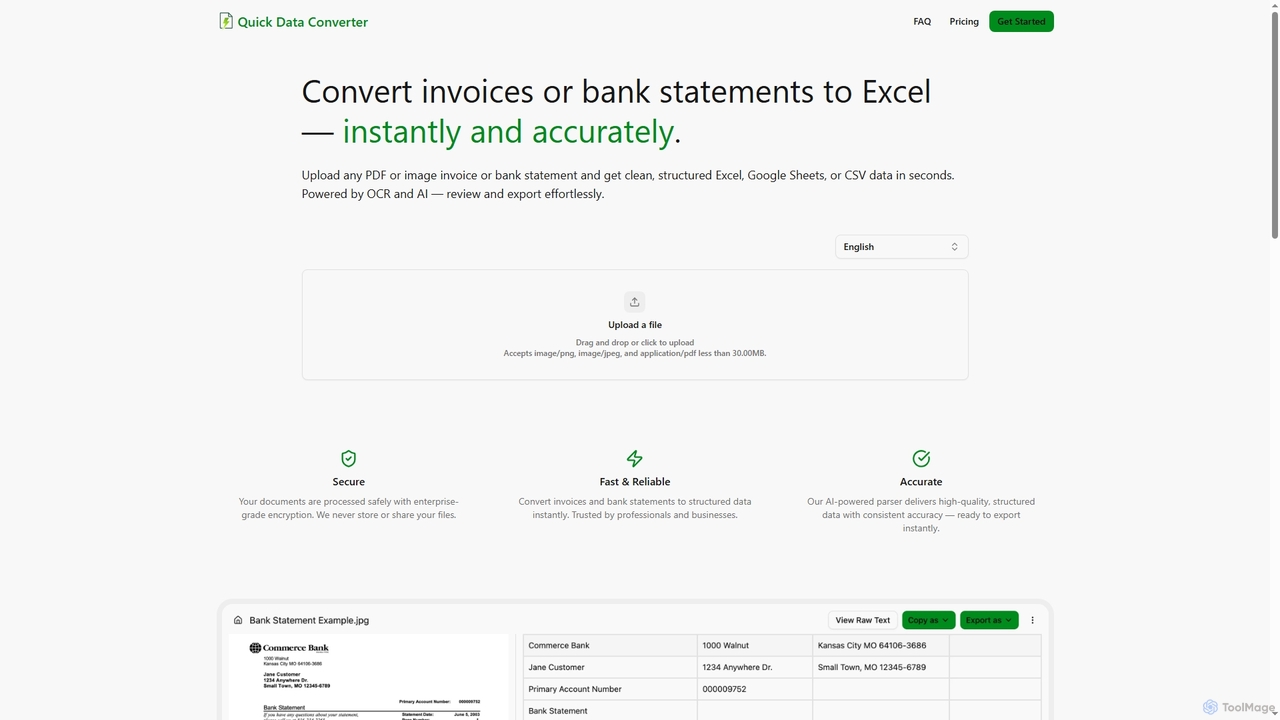
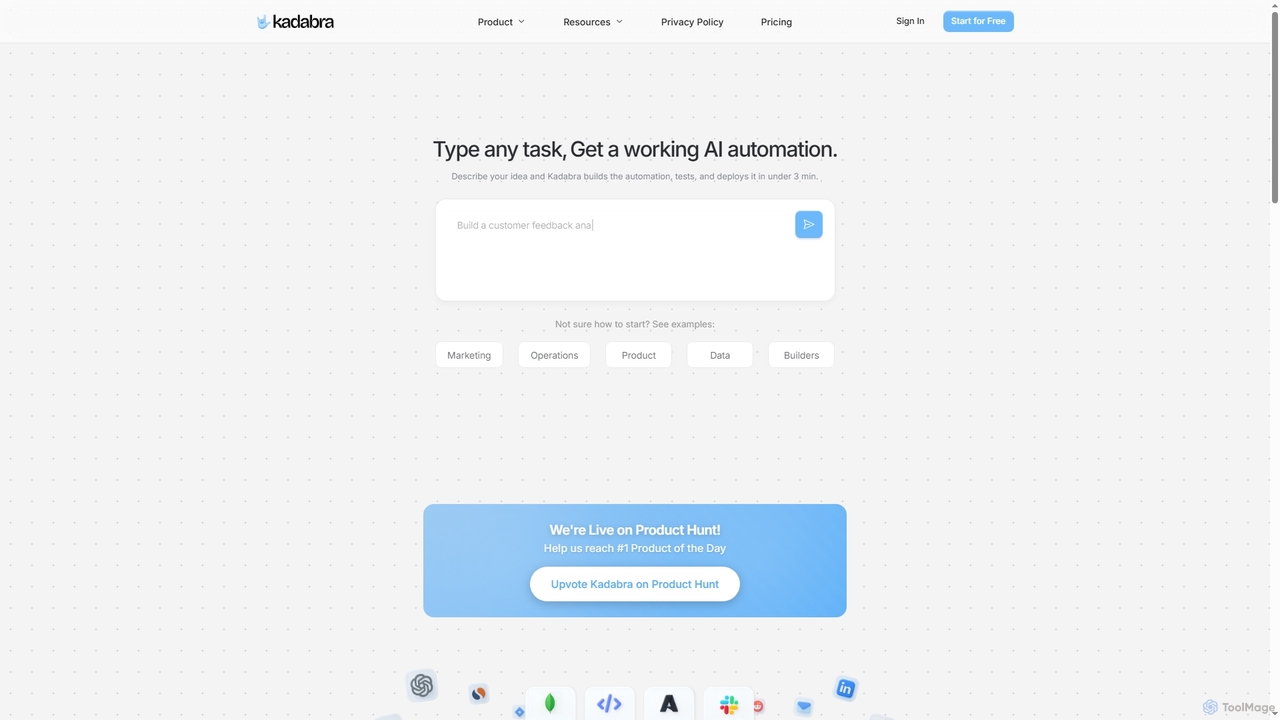
Data Extraction tools are AI-powered solutions designed to automatically identify, collect, and structure specific information from various sources, both digital and physical. Leveraging advanced machine learning, natural language processing (NLP), and computer vision, these tools transform unstructured or semi-structured data into usable formats. They significantly streamline data processing workflows, enabling businesses and individuals to efficiently gather insights, populate databases, and automate reporting from vast amounts of text, images, and documents, thereby enhancing data-driven decision-making within the broader field of data management.
Core Features
- Automated Data Identification: Automatically locates and recognizes key data points (e.g., names, dates, amounts, addresses) within documents or web pages.
- Structured & Unstructured Data Handling: Extracts information from diverse formats, including PDFs, images, web pages, emails, and scanned documents.
- OCR (Optical Character Recognition): Converts text from images or scanned documents into machine-readable and editable data.
- Pattern Recognition & NLP: Uses AI to understand context and extract relevant entities, sentiments, or relationships from natural language text.
- Customizable Extraction Rules: Allows users to define specific rules or train models for highly precise and tailored data retrieval.
Applicable Scenarios
Data Extraction tools are indispensable for industries dealing with large volumes of information, such as finance, legal, healthcare, and e-commerce. They are used by data analysts, business intelligence specialists, compliance officers, and researchers to automate the tedious process of manual data entry and information gathering, ensuring accuracy and speed in critical operations.
How to Choose
When selecting a Data Extraction tool, consider its accuracy in handling your specific data types (e.g., invoices, contracts, web pages), its ability to integrate with existing systems (APIs), the level of customization offered for extraction rules, and its scalability to process varying data volumes. Evaluate the user interface for ease of use and the vendor's support for ongoing model training and maintenance.