Data Management Best in category 1 results Tamper Proof Storage AI Tool

Popular AI tools in the Tamper Proof Storage field of Data Management include DeConsole, etc., helping you quickly improve efficiency.

DeConsole

DeConsole

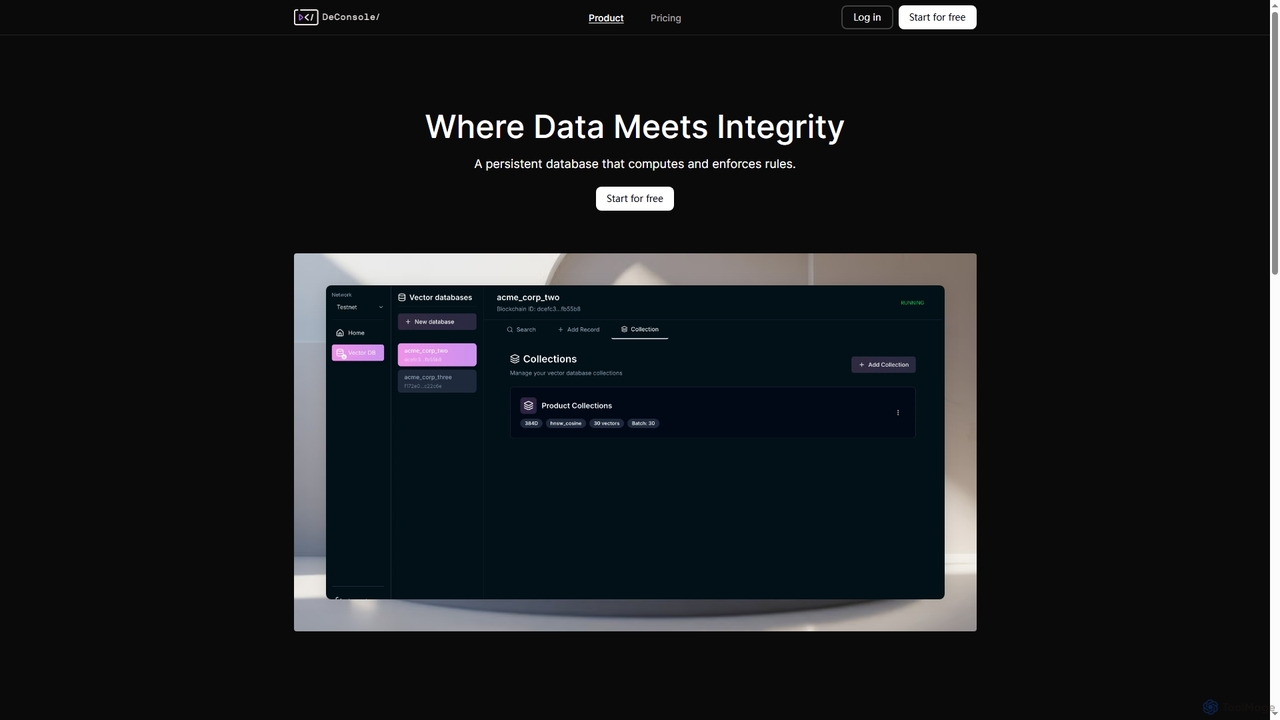
DeConsole is a distributed, persistent, and tamper-resistant database service designed for critical data, offering the simplicity of a …

3.0K

About Tamper Proof Storage

Tamper Proof Storage refers to a specialized data management solution designed to protect digital information from unauthorized alteration, deletion, or manipulation. It employs advanced cryptographic techniques, immutable ledgers, or write-once-read-many (WORM) technologies to ensure the absolute integrity and authenticity of stored data. This is critical for organizations that must maintain verifiable records for regulatory compliance, legal evidence, or long-term archival purposes, providing an unchangeable historical record.

Core Features

  • Data Immutability: Ensures that once data is written, it cannot be modified or deleted, creating a permanent record.
  • Cryptographic Hashing: Uses unique digital fingerprints to verify data integrity, immediately detecting any unauthorized changes.
  • Audit Trails: Maintains a comprehensive, unalterable log of all data access and activity, crucial for compliance and forensics.
  • Version Control: While data is immutable, some systems allow for new versions to be added, with all previous versions remaining intact and accessible.
  • Secure Enclaves: Utilizes isolated processing environments to protect data even when in use, adding an extra layer of security.

Applicable Scenarios

Tamper Proof Storage is vital in sectors like finance for transaction logging, healthcare for patient records, and legal for digital evidence preservation. It ensures that critical data remains authentic and verifiable over time, meeting strict regulatory requirements and building trust in data integrity.

How to Choose

When selecting a Tamper Proof Storage solution, consider the required level of immutability (e.g., WORM vs. blockchain), integration capabilities with existing data management systems, compliance certifications (e.g., HIPAA, GDPR, SEC), and scalability for future data growth. Evaluate the cost-effectiveness and the vendor's track record in data security.

Tamper Proof StorageUse Cases

1

Securing Financial Transaction Logs

Financial institutions utilize tamper-proof storage to record every transaction, ensuring an unalterable audit trail for regulatory compliance and dispute resolution. This prevents any fraudulent modification of historical data, maintaining trust and accountability. For instance, a bank can store all customer transactions, knowing that the records are cryptographically secured against any post-facto changes, which is vital for anti-money laundering (AML) and know-your-customer (KYC) regulations.

2

Ensuring Financial Transaction Integrity

Financial institutions and banks utilize tamper proof storage to immutably log every transaction, trade, and financial record. This ensures that once a transaction is recorded, it cannot be altered or deleted, providing an unchallengeable audit trail for regulatory bodies like the SEC. This practice is crucial for fraud prevention, dispute resolution, and maintaining trust in the financial system, significantly reducing compliance risks and operational overhead related to data verification.

3

Protecting Electronic Health Records (EHR)

Healthcare providers store patient EHRs in tamper-proof systems to guarantee data integrity over time. This ensures that medical histories, diagnoses, and treatments remain accurate and unaltered, vital for patient care, legal compliance (e.g., HIPAA), and medical research. Any attempt to modify a record would be immediately detected and logged, providing an indisputable chain of custody for sensitive patient information.

4

Protecting Healthcare Patient Records

Healthcare providers leverage tamper proof storage to secure sensitive patient data, including medical histories, diagnoses, and treatment plans. By ensuring these records are immutable, hospitals and clinics comply with stringent regulations like HIPAA and GDPR, preventing unauthorized alterations that could lead to medical errors or fraud. This enhances patient safety, maintains data privacy, and provides an indisputable record for legal and insurance purposes, fostering trust between patients and providers.

5

Ensuring Supply Chain Traceability

Companies in logistics and manufacturing use tamper-proof storage to record every step of a product's journey, from raw materials to consumer. This creates an immutable ledger of provenance, combating counterfeiting and ensuring product authenticity. For example, a luxury goods manufacturer can track each item's production and distribution, allowing consumers to verify its origin and authenticity using a blockchain-backed system.

6

Preserving Digital Evidence for Legal Cases

Law enforcement agencies and legal firms rely on tamper proof storage to preserve digital evidence, such as surveillance footage, emails, and forensic data. Ensuring the immutability of this evidence maintains its chain of custody and legal admissibility in court. This prevents any claims of evidence tampering, strengthens legal arguments, and significantly reduces the risk of cases being dismissed due to compromised data integrity, streamlining the judicial process.

7

Archiving Legal and Regulatory Documents

Legal firms and government agencies employ tamper-proof storage for archiving critical documents, contracts, and evidence. This ensures that the integrity of these records is maintained for legal proceedings, audits, and long-term retention requirements. By using cryptographic hashes, any alteration to a document, even years later, can be immediately identified, upholding legal validity and trust in the archived information.

8

Ensuring Supply Chain Traceability and Authenticity

Manufacturers and logistics companies utilize tamper proof storage to record every step of a product's journey, from raw materials to consumer. By immutably logging data points like origin, production dates, and shipping details, they can prevent counterfeiting, verify product authenticity, and quickly identify sources of contamination or defects. This builds consumer trust, enhances brand reputation, and streamlines recall processes, leading to greater operational transparency and accountability across the supply chain.

9

Protecting Intellectual Property and Research Data

Research institutions and R&D departments use tamper-proof storage to secure intellectual property, experimental results, and scientific data. This ensures that research findings remain untainted and can be reliably presented for patent applications or academic publications. The immutable nature of the storage provides verifiable proof of creation dates and data states, preventing disputes over originality or data manipulation.

10

Protecting Intellectual Property and Creative Works

Content creators, R&D departments, and artists use tamper proof storage to timestamp and secure their intellectual property, including design files, source code, and digital art. By creating an immutable record of creation and modifications, they can prove ownership, protect against plagiarism, and establish a clear history of development. This is vital for copyright protection, patent applications, and licensing agreements, safeguarding valuable assets and facilitating legal recourse in case of infringement.

11

Ensuring Data Integrity for IoT and Sensor Networks

Organizations deploying IoT devices and sensor networks use tamper-proof storage to collect and store data from these sources. This is critical for applications like smart city infrastructure, industrial automation, and environmental monitoring, where the authenticity of sensor readings directly impacts decision-making and operational safety. The immutable records ensure that data streams from potentially vulnerable edge devices cannot be compromised post-collection.

12

Meeting Regulatory Compliance for Data Archiving

Enterprises across various industries, such as government, energy, and telecommunications, use tamper proof storage to archive critical business documents and communications for long periods. This ensures that data remains unchanged and verifiable for compliance with industry-specific regulations (e.g., SEC 17a-4, GDPR, SOX). By maintaining an immutable archive, organizations can confidently pass audits, avoid hefty fines, and demonstrate due diligence in data governance, reinforcing their commitment to legal and ethical standards.

Tamper Proof StorageFrequently Asked Questions