Vectorize
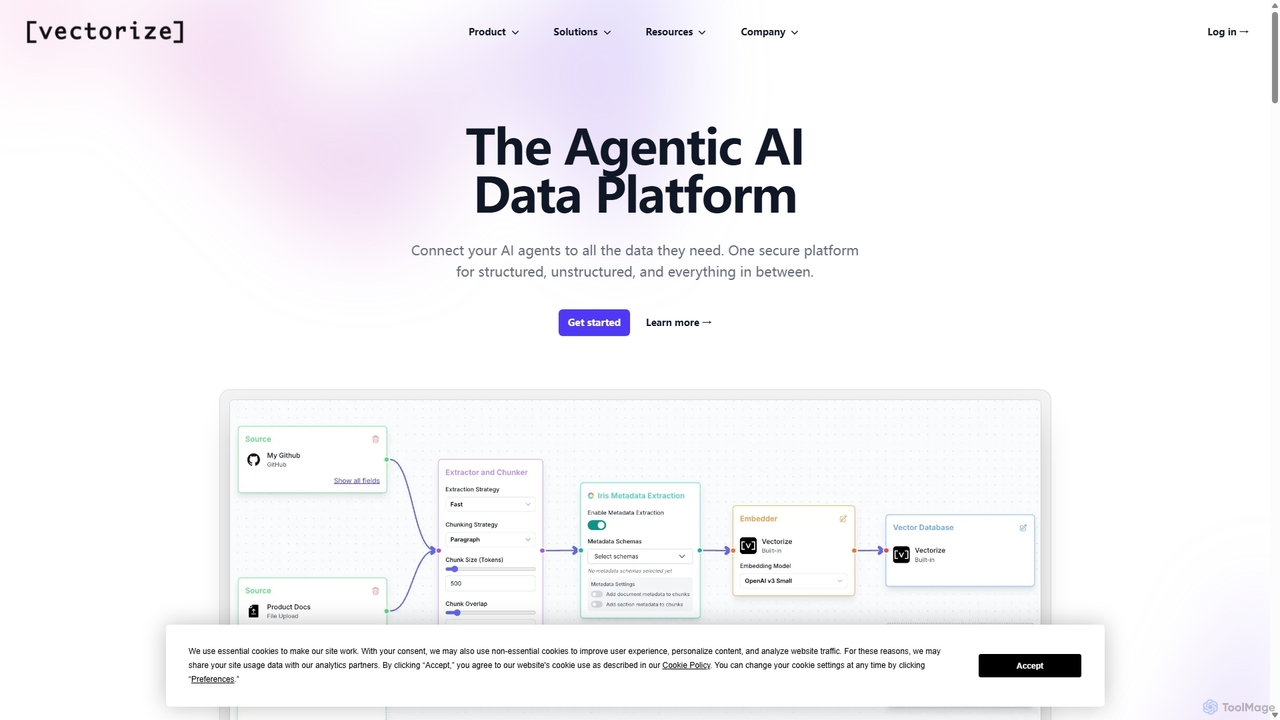
Vectorize is a RAG-as-a-Service platform that simplifies building AI applications on unstructured data. It offers managed RAG pipelines, …
Vectorize is a RAG-as-a-Service platform that simplifies building AI applications on unstructured data. It offers managed RAG pipelines, extensive data source connectors, and the flexibility to use its managed vector database or connect your own, enabling developers to deploy production-ready AI solutions quickly.
About Unstructured Data
Unstructured Data tools are AI-powered solutions designed to process, analyze, and extract valuable insights from data that lacks a predefined format or organization. These tools leverage advanced techniques like Natural Language Processing (NLP), computer vision, and machine learning to interpret text, images, audio, and video. Their primary purpose is to transform vast amounts of raw, chaotic information into structured, searchable, and actionable knowledge, empowering better decision-making and automating complex data management tasks within the broader field of data management.
Core Features
- Content Extraction: Automatically identifies and extracts specific entities, keywords, and facts from diverse unstructured sources.
- Sentiment Analysis: Determines the emotional tone and subjective opinions expressed in text data, such as customer reviews or social media posts.
- Document Classification: Categorizes documents (e.g., contracts, invoices, emails) based on their content, facilitating organization and retrieval.
- Image & Video Analysis: Recognizes objects, faces, scenes, and activities within visual media, enabling content moderation and search.
- Data Normalization: Standardizes extracted information into a consistent format for easier integration and analysis.
Use Cases
These tools are vital for organizations dealing with large volumes of diverse data. They are used by data analysts, compliance officers, and marketing teams to gain insights from customer feedback, automate legal document review, or monitor brand mentions across various media. By converting unstructured data into a usable format, businesses can unlock hidden patterns and make data-driven decisions more efficiently.
How to Choose
When selecting an Unstructured Data tool, consider the specific types of data you need to process (e.g., text, audio, video), the accuracy and performance of its AI models, and its scalability to handle your data volume. Evaluate its integration capabilities with existing systems, the level of customization offered for specific industry needs, and the clarity of its output for downstream analysis. User-friendliness and robust security features are also crucial for effective deployment.

Unstructured DataUse Cases
Customer Feedback & Sentiment Analysis
Marketing and customer service teams utilize Unstructured Data tools to analyze vast quantities of customer feedback from social media, emails, and support tickets. By automatically extracting sentiment, key topics, and common issues, businesses can quickly identify pain points, improve products, and enhance customer satisfaction without manual review.
Automated Invoice & Contract Processing
Finance and legal departments employ these tools to automate the extraction of critical information from invoices, contracts, and legal documents. AI can identify dates, amounts, parties, and clauses, significantly reducing manual data entry errors and accelerating processes like accounts payable or contract review, ensuring compliance.
Media Content Moderation
Online platforms and social media companies use Unstructured Data tools to automatically detect and flag inappropriate, harmful, or policy-violating content in user-generated images, videos, and text. This ensures a safer online environment, reduces the burden on human moderators, and helps maintain brand reputation at scale.
Clinical Note & Medical Record Analysis
Healthcare providers and researchers leverage AI to extract valuable insights from free-text clinical notes, patient histories, and medical reports. Tools can identify symptoms, diagnoses, treatments, and drug interactions, aiding in disease surveillance, personalized medicine, and accelerating medical research by structuring complex patient data.
Competitive Intelligence from Web Data
Market research and business intelligence teams use Unstructured Data tools to scrape and analyze vast amounts of public web data, including news articles, blogs, forums, and competitor websites. This allows them to monitor industry trends, track competitor strategies, and identify emerging market opportunities by transforming web content into actionable intelligence.
Legal Discovery & E-Discovery
Law firms and corporate legal teams deploy these tools for efficient legal discovery. They can rapidly search, categorize, and identify relevant documents (emails, contracts, internal communications) from massive datasets, significantly reducing the time and cost associated with manual review during litigation or regulatory investigations.