ToolMage
Sign in

Best 2 Drawing AI tools for Design

Popular Drawing AI tools in Design include AutoDraw and AppVision, helping you work more efficiently.

AutoDraw
Free

AutoDraw

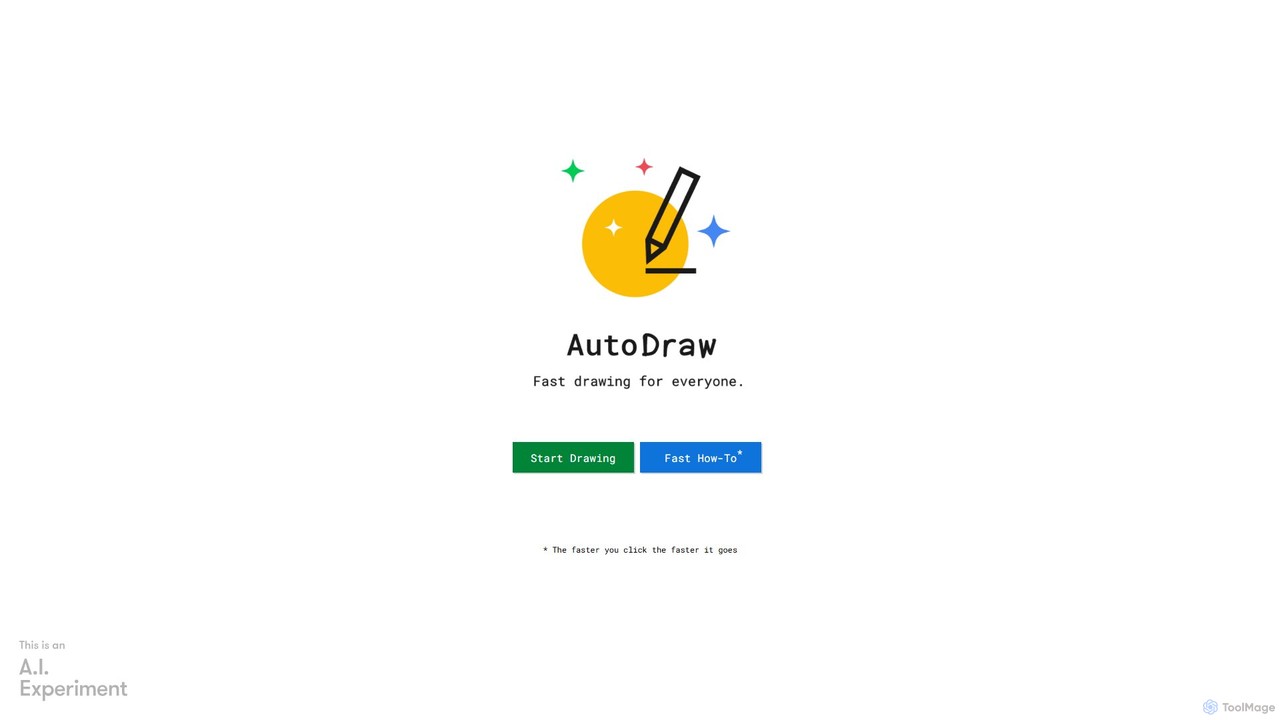
AutoDraw is a free, AI-powered drawing tool by Google that transforms your rough sketches into polished, professional illustrations in real-time. Simply start doodling, and its machine learning algorithm suggests beautiful clipart to replace your drawing. It's perfect for creating icons, diagrams, and simple graphics quickly, even if you have no artistic skill. Fast, fun, and accessible to everyone on any device with a web browser.

Drawing
Visits 1.2MFavorites 123Likes 101
AppVision
Freemium

AppVision

AppVision is a developer of a diverse suite of AI-powered and utility mobile applications. From generating music with AI to drawing in augmented reality and analyzing WiFi networks, AppVision offers innovative and user-friendly apps for creativity, entertainment, and productivity on both Google Play and the Apple App Store.

Music Generation
Visits 22.8KFavorites 96Likes 117

About Drawing

AI Drawing tools are a class of software that uses artificial intelligence to assist, enhance, or automate the digital drawing process. These tools leverage generative models and computer vision to transform rough sketches into polished illustrations, apply artistic styles, or refine existing line art. They serve as powerful creative partners for artists and designers, enabling rapid ideation, exploration of different visual styles, and significant acceleration of production workflows. Unlike simple image generators, AI drawing tools often provide more granular control, integrating directly into the creative process.

Core Features

  • Sketch-to-Image Refinement: Transforms basic sketches or line art into detailed, colored, or stylized images.
  • Style Transfer: Applies the aesthetic style of a source image or artist to your own drawing.
  • AI-Assisted Inpainting & Outpainting: Intelligently fills in missing parts or extends the canvas of a drawing based on existing content.
  • Line Art Enhancement: Automatically cleans up, smooths, and perfects hand-drawn lines for a professional finish.
  • Vectorization: Converts raster-based drawings (pixels) into scalable vector graphics (SVG) with AI precision.

Use Cases

AI Drawing tools are widely used by concept artists for rapid character and environment design, illustrators for creating comic books and storyboards, and architects for visualizing initial sketches. They are also valuable for graphic designers needing to quickly convert hand-drawn logos into digital formats or for hobbyists looking to bring their creative ideas to life without extensive technical skill.

How to Choose

When selecting an AI Drawing tool, consider the level of control it offers—whether it's a fully automated generator or an assistive plugin. Evaluate its specialization in specific styles (e.g., anime, photorealistic). Check for integration with your existing software like Photoshop or Procreate, and assess the supported input methods (sketch, photo, text) and output formats (PNG, JPG, SVG) to ensure they match your workflow.

Featured tool rankings

Drawing use cases

1

Concept Art Ideation for Game Development

A concept artist working on a new video game needs to generate multiple visual ideas for a key character quickly. Instead of drawing dozens of variations from scratch, they create a single detailed sketch outlining the character's pose and main features. They then use an AI Drawing tool's sketch-to-image function, applying different style prompts like 'cyberpunk armor,' 'fantasy mage robes,' or 'post-apocalyptic survivor gear.' The tool generates a wide array of fully rendered character designs based on the initial sketch, allowing the art director to review and select a direction in hours instead of days, dramatically speeding up the pre-production phase.

2

Architectural Visualization from Hand-Drawn Sketches

An architect drafts a preliminary concept for a new building's facade using pencil and paper. To present this initial idea to a client, they need a more polished visualization. They take a photo of the sketch and upload it to an AI Drawing tool. The tool's line enhancement feature cleans up the pencil lines, and its rendering engine allows the architect to apply different materials like 'glass facade,' 'red brick,' and 'brushed steel' to the drawing. Within minutes, they have several high-quality, stylized renderings of their concept to share, facilitating clearer communication and faster feedback from the client early in the design process.

3

Accelerating Comic Book Inking and Coloring

A comic book artist has finished the pencil sketches for an entire issue but faces the time-consuming process of inking and coloring. They scan their pencil pages and use an AI Drawing tool specifically trained for line art. The tool automatically converts the messy pencil lines into clean, smooth, and dynamic digital ink lines, saving dozens of hours of manual tracing. Afterward, they use an AI coloring feature that suggests color palettes based on the comic's genre (e.g., 'noir,' 'superhero') and applies flat colors to the characters and backgrounds, which the artist can then quickly refine with shading and highlights.

4

Creating Unique Patterns for Textile Design

A textile designer wants to create a new, intricate pattern for a fabric collection. They start by drawing a simple motif—like a flower or a geometric shape—on a digital canvas. Using an AI Drawing tool's pattern generation or outpainting feature, they can seamlessly repeat and transform this single element into a complex, tileable pattern. The AI can introduce variations in rotation, scale, and color, generating hundreds of unique pattern options from one initial drawing. This allows the designer to explore a vast creative space and produce production-ready seamless patterns far more efficiently than with manual methods.

5

Converting Hand-Drawn Logos to Vector Graphics

A graphic designer for a branding agency often starts the logo design process with hand-drawn sketches. To digitize these concepts for client presentations and final production, they need scalable vector versions. Instead of manually tracing each sketch in a vector software, which is tedious, they use an AI Drawing tool with a vectorization feature. They upload a clean scan of their best sketch, and the AI intelligently traces the lines and shapes, converting the raster image into a clean, editable SVG file. This reduces the digitization time from hours to minutes, allowing the designer to focus more on creative refinement and iteration.

6

Assisting Children's Book Illustrations

An illustrator is working on a children's book and has a clear vision for the characters and scenes but wants to apply a consistent, charming watercolor style across all 30 pages. They create the line art for each illustration. Then, they use an AI Drawing tool with a style transfer feature. They upload a reference image of a watercolor painting they admire. The tool then applies this exact texture, color blending, and brushstroke style to their line art, ensuring every page of the book shares the same cohesive and professional aesthetic. This automates the most repetitive parts of the styling process, freeing the illustrator to focus on storytelling and composition.

Drawing FAQ

What are AI Drawing tools?

AI Drawing tools are software applications that use artificial intelligence to assist in the digital drawing process. Unlike tools that generate images purely from text, AI drawing tools often work with user input like a sketch, line art, or a rough composition. They act as a collaborator, helping to refine lines, add color and texture, apply complex styles, or generate variations of an artist's initial idea. Their primary purpose is to enhance and accelerate the creative workflow of artists, illustrators, and designers rather than replacing it entirely.

How do AI Drawing tools differ from AI Image Generators?

The main difference lies in the creative process and level of user control. AI Image Generators typically create images from scratch based on a text prompt (text-to-image). The user's role is primarily to write a descriptive prompt. In contrast, AI Drawing tools are more interactive and integrated into an artist's workflow. They often start with a user's own drawing or sketch (sketch-to-image) and provide tools to refine, stylize, or complete it. Essentially, generators are about creating something new from a description, while drawing tools are about augmenting and collaborating on an existing visual idea.

How to choose the right AI Drawing tool?

Choosing the right tool depends on your specific needs and workflow. Consider the following factors:

  • Primary Use Case: Do you need to refine sketches, apply styles, clean up line art, or vectorize logos? Different tools specialize in different tasks.
  • Level of Control: Do you prefer a tool that offers subtle assistance and plugins within your existing software (like Photoshop), or a standalone application that automates more of the process?
  • Artistic Style: Check the tool's gallery or examples to see if its output matches your desired aesthetic (e.g., anime, photorealistic, painterly).
  • Input and Output: Ensure the tool supports your preferred input (e.g., hand-drawn sketches, digital line art) and provides the output formats you need (e.g., high-resolution PNG, SVG).
Who can benefit from using AI Drawing tools?

A wide range of creative professionals and hobbyists can benefit. This includes:

  • Concept Artists: For rapidly generating variations of characters, environments, and props.
  • Illustrators & Comic Artists: To speed up inking, coloring, and style application.
  • Architects & Industrial Designers: For quickly turning initial concept sketches into presentable visualizations.
  • Graphic Designers: To vectorize hand-drawn elements and create unique patterns.
  • Hobbyists & Beginners: To explore creative ideas and achieve polished results without needing advanced technical drawing skills.
Do I need artistic skills to use AI Drawing tools?

While professional artists can leverage these tools to enhance their advanced workflows, many AI Drawing tools are designed to be accessible to beginners. Having a basic sense of composition or an initial idea (even a very rough sketch) can be helpful to guide the AI. However, you don't necessarily need traditional drawing skills like mastering perspective or anatomy. These tools can act as a bridge, helping users without extensive training to visualize their ideas and produce aesthetically pleasing images, making digital art creation more accessible to everyone.