Basedash
Basedash is an AI-native business intelligence platform that allows teams to interact with their data using natural language. …
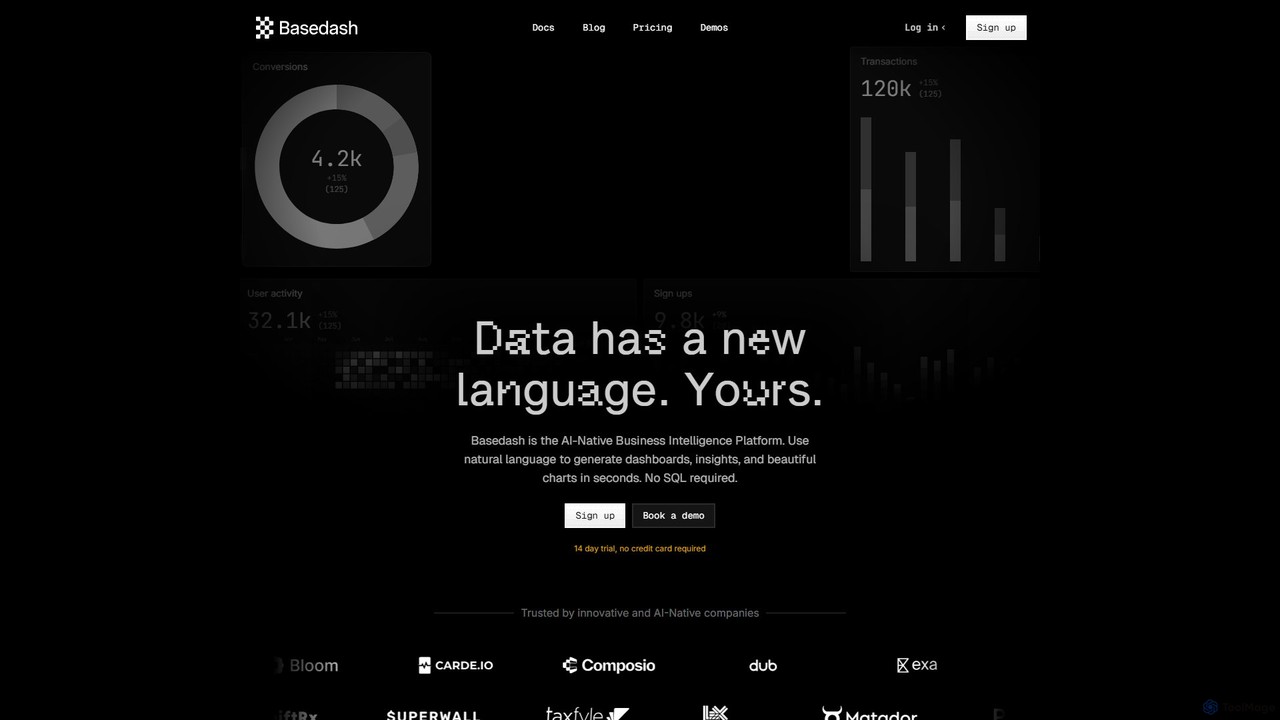
Basedash is an AI-native business intelligence platform that allows teams to interact with their data using natural language. Generate beautiful dashboards, charts, and insights in seconds without writing any SQL code. Connect your data sources and simply ask questions to get answers.
About Database
Database tools leverage artificial intelligence to optimize, automate, and enhance the management and performance of database systems. These AI-powered solutions analyze data patterns, query behaviors, and system metrics to provide intelligent insights and proactive interventions. They significantly improve efficiency, scalability, and security for developers and database administrators. By automating complex tasks like query optimization and resource allocation, they free up valuable time for strategic initiatives.
Core Features
- Intelligent Query Optimization: Automatically analyzes and rewrites SQL queries for faster execution and reduced resource consumption.
- Automated Database Management: Handles routine tasks such as backups, patching, and scaling with minimal human intervention.
- Predictive Performance Tuning: Uses machine learning to anticipate performance bottlenecks and suggest proactive adjustments to database configurations.
- Anomaly Detection & Security: Identifies unusual data access patterns or system behaviors that may indicate security threats or operational issues.
- Data Indexing & Schema Design: Recommends optimal indexing strategies and assists in designing efficient database schemas based on usage patterns.
Applicable Scenarios
AI Database tools are crucial for developers building high-performance applications, database administrators managing complex and large-scale data infrastructures, and data engineers optimizing data pipelines. They are particularly valuable in environments requiring real-time data processing, high availability, and stringent security, such as e-commerce, IoT, and financial services.
How to Choose
When selecting an AI Database tool, consider its compatibility with your existing database technologies (SQL, NoSQL), the specific AI capabilities offered (e.g., query optimization, automation, security), its scalability to handle your data volume and traffic, and the level of integration with your development and operations workflows. Evaluate the tool's ability to provide actionable insights and its ease of use for your team.

DatabaseUse Cases
Automated Query Optimization for E-commerce Platforms
An e-commerce platform developer uses AI Database tools to automatically analyze and optimize millions of daily product queries. The AI identifies slow queries, suggests better indexing, and rewrites inefficient SQL, resulting in a 30% reduction in page load times during peak sales events and improved customer experience.
Predictive Maintenance for IoT Device Databases
A smart city infrastructure manager leverages AI Database tools to monitor the performance of databases storing data from thousands of IoT sensors. The AI predicts potential storage capacity issues or performance degradation before they occur, allowing for proactive scaling and maintenance, preventing service interruptions and ensuring data continuity.
Intelligent Data Indexing for Content Management Systems
A content creator managing a large news portal utilizes AI Database tools to intelligently index diverse content types, from articles to videos. The AI analyzes search patterns and content relationships to create optimal indexes, leading to a 40% faster content retrieval for users and more relevant search results within the CMS.
Anomaly Detection in Financial Transaction Databases
A financial institution employs AI Database tools to continuously monitor its transaction databases for unusual activities. The AI detects anomalies in transaction volumes, locations, or amounts in real-time, flagging potential fraudulent transactions or security breaches instantly, thereby enhancing security and compliance measures.
Schema Design and Evolution for SaaS Startups
A SaaS startup developer uses AI Database tools to assist in designing and evolving their application's database schema. The AI analyzes data access patterns and application requirements to recommend optimal table structures, relationships, and data types, streamlining development cycles and ensuring the database scales efficiently with user growth.
Resource Allocation Optimization for Cloud Databases
A cloud operations team manages multiple database instances on a public cloud provider. They use AI Database tools to dynamically optimize resource allocation (CPU, memory, storage) based on real-time workload demands. This results in a 25% reduction in cloud infrastructure costs while maintaining consistent high performance for critical applications.