ToolMage
Sign in

Best 1 Handoff AI tools for Developer

Popular Handoff AI tools in Developer include Motiff, helping you work more efficiently.

Motiff
Freemium

Motiff

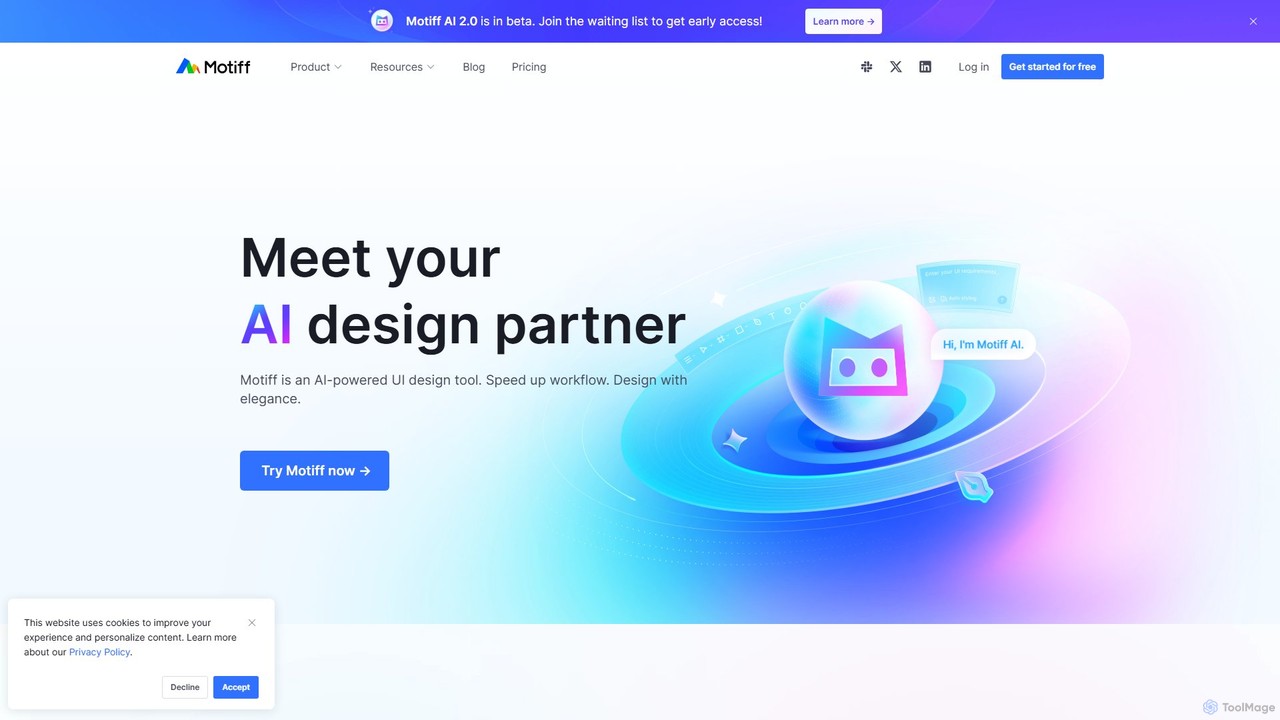
Motiff is an AI-powered professional interface design tool that accelerates the entire workflow. It enables users to generate UIs from text and images, iterate on designs with AI assistance, and collaborate in real-time. Combining robust design tools, prototyping, and a developer-friendly handoff mode, Motiff serves as a comprehensive, high-performance platform for modern product teams.

Ui Ux
Visits 71.4KFavorites 102Likes 103

About Handoff

Handoff tools are AI-powered solutions designed to streamline the transfer of tasks, information, or control between different entities within a workflow. As a crucial component in the Developer category, these tools leverage artificial intelligence to understand context, summarize data, predict needs, and automate the routing or preparation of information for seamless transitions. They enhance collaboration, reduce friction in complex processes, and ensure continuity in AI-driven operations, particularly across development, testing, and deployment cycles.

Core Features

  • Contextual Data Transfer: AI analyzes and transfers relevant data points, ensuring all necessary information moves with the task.
  • Automated Escalation Logic: Defines intelligent rules for routing tasks between AI systems and human teams based on predefined criteria.
  • Workflow Orchestration: Manages the sequence and dependencies of tasks across various teams, systems, or stages in a development pipeline.
  • Summary Generation: AI creates concise, actionable summaries of interactions, project statuses, or code changes for efficient information transfer.
  • Integration Capabilities: Connects seamlessly with existing development tools, project management platforms, and communication systems.

Applicable Scenarios

These tools are vital for development teams, MLOps engineers, and customer support operations. They facilitate smooth transitions in software development lifecycles, automate incident response handoffs, and ensure comprehensive context transfer in AI-driven customer service escalations.

How to Choose

When selecting an AI Handoff tool, consider its integration ecosystem with your existing tech stack, the sophistication of its AI in understanding context and making routing decisions, and its customization flexibility for defining specific handoff rules. Scalability and robust audit trails are also crucial for managing complex and growing operations.

Featured tool rankings

Handoff use cases

1

Automating Customer Service Escalations

Customer support teams utilize AI Handoff tools to manage complex user queries. When an AI chatbot identifies an issue beyond its scope, it automatically summarizes the entire conversation, user history, and relevant data, then seamlessly transfers the interaction to a human agent, providing them with immediate, comprehensive context to resolve the problem efficiently.

2

Streamlining Software Development Lifecycle (SDLC) Transitions

Development teams employ these tools to automate the transfer of code commits and associated documentation from development to quality assurance (QA) or staging environments. The AI ensures all relevant test cases, build artifacts, and change summaries are packaged and handed off, reducing manual overhead and accelerating the release pipeline.

3

Facilitating Incident Response Handoffs

During critical system incidents, on-call engineers rely on AI Handoff tools to summarize alert data, previous mitigation attempts, and system health status. This enables rapid and informed handoff between shifts or different engineering teams, ensuring continuity in troubleshooting and minimizing downtime by providing immediate context.

4

Managing AI Model Deployment Handoffs

Data scientists use AI Handoff tools to prepare and transfer trained machine learning models, associated metadata, performance metrics, and deployment scripts to MLOps engineers. This structured handover ensures that models are deployed correctly, monitored effectively, and integrated smoothly into production environments, bridging the gap between research and operations.

5

Enhancing Cross-functional Project Collaboration

Project managers leverage AI Handoff tools to summarize progress, highlight dependencies, and outline outstanding tasks when transitioning between project phases or handing over work between different functional teams (e.g., design to development, development to marketing). This ensures all stakeholders are aligned and informed, preventing miscommunication.

6

Optimizing Content Creation Workflow Handoffs

Content teams utilize AI Handoff tools to streamline the transfer of content drafts from writers to editors. The AI can provide summaries of changes, flag potential style guide violations, and suggest grammatical improvements, enabling editors to quickly grasp the context and focus on higher-level refinements, accelerating the content review process.

Handoff FAQ

What are AI Handoff tools?

AI Handoff tools are specialized software solutions that leverage artificial intelligence to intelligently manage and automate the transfer of tasks, information, or control between different entities within a workflow. This includes facilitating transitions between AI systems and human operators, or between various human teams and automated processes, aiming to reduce friction and ensure continuity.

How do AI Handoff tools differ from general workflow automation tools?

While both automate processes, AI Handoff tools distinguish themselves by employing AI for intelligent decision-making during transitions. Unlike rigid, rule-based workflow automation, AI Handoff tools can understand context, summarize complex data, predict next steps, and dynamically route tasks based on real-time information, making them adept at handling nuanced and adaptive scenarios.

What are the key benefits of using AI Handoff tools in development?

In development, AI Handoff tools significantly boost efficiency and minimize errors. They ensure that all necessary context, documentation, and code artifacts are accurately and completely transferred between development, testing, and operations teams. This leads to faster deployment cycles, fewer integration issues, improved collaboration, and ultimately, higher quality software products.

What features should I look for when choosing an AI Handoff tool?

When selecting an AI Handoff tool, prioritize robust integration capabilities with your existing tech stack (e.g., Git, Jira, Slack), the sophistication of its AI in understanding context and making routing decisions, and its customization flexibility for defining specific handoff rules and workflows. Comprehensive audit trails, scalability, and security features are also crucial considerations.

Can AI Handoff tools be used for both human-to-human and AI-to-human handoffs?

Yes, AI Handoff tools are designed to facilitate both scenarios. They enhance human-to-human handoffs by providing summarized context and structured information, improving team collaboration. Crucially, they also manage AI-to-human handoffs, where an AI system intelligently identifies situations requiring human intervention and transfers the task with all relevant data to a human agent for resolution.