Developer Tools Best in category 3 results Ai Development Platform AI Tool

Popular AI tools in the Ai Development Platform field of Developer Tools include Hal9、NisusAI、SuperGrowthAI, etc., helping you quickly improve efficiency.

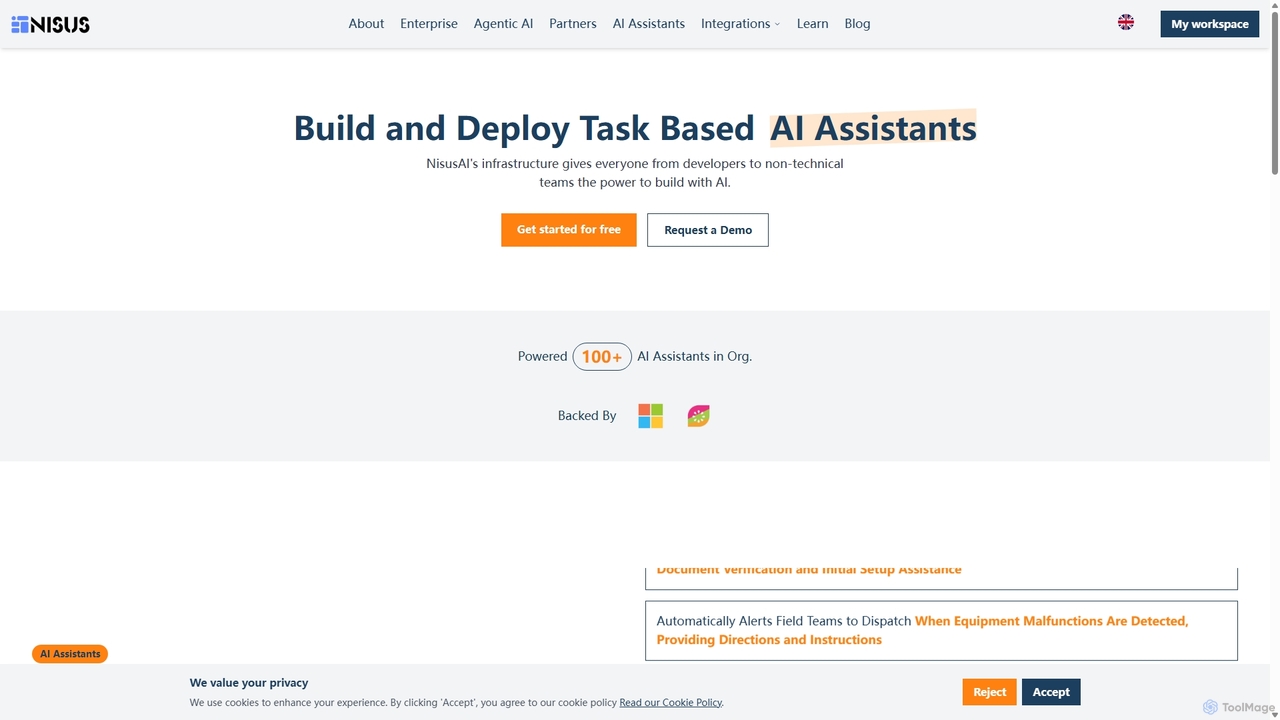
NisusAI

NisusAI

NisusAI is a unified platform that empowers both developers and non-technical teams to build, deploy, and monitor custom, …

3.1K
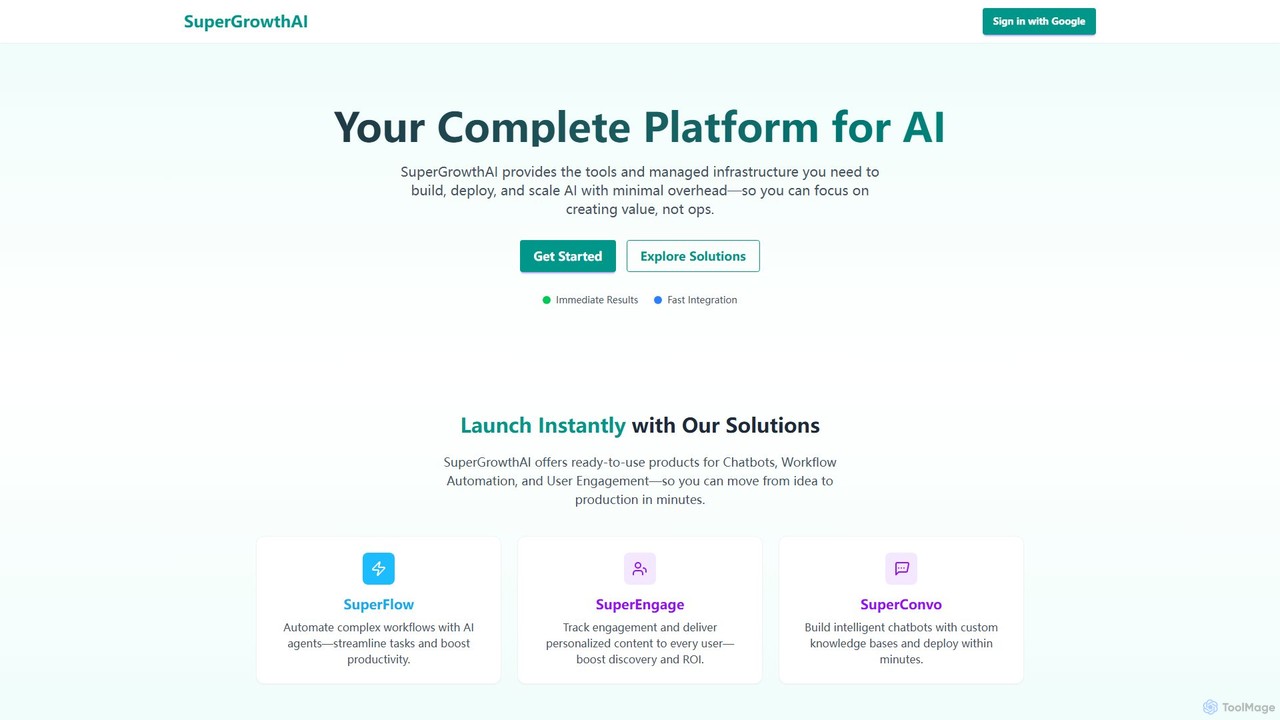
SuperGrowthAI

SuperGrowthAI

SuperGrowthAI is a comprehensive AI platform providing tools and managed infrastructure to build, deploy, and scale AI applications …

3.0K
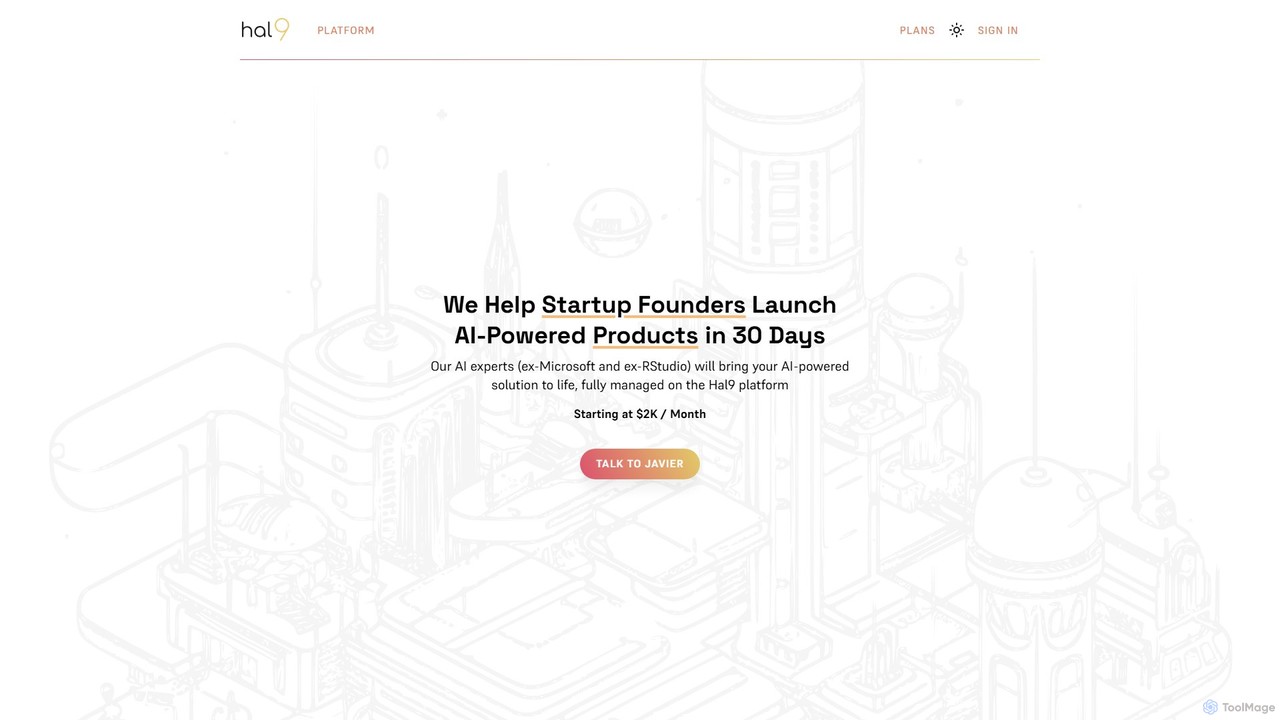
Hal9

Hal9

Hal9 is a fully managed AI platform and service that empowers startups and businesses to launch custom AI-powered …

9.4K

About Ai Development Platform

An AI Development Platform is a comprehensive suite of tools designed to streamline the entire lifecycle of building, training, and deploying custom artificial intelligence models. These platforms integrate data preparation, model development environments, automated machine learning (AutoML), and MLOps capabilities into a single, unified workspace. They empower developers and data scientists to accelerate the creation of bespoke AI applications, from predictive analytics to natural language processing, by managing the underlying infrastructure and operational complexity. Unlike standalone libraries, these platforms provide an end-to-end solution that significantly reduces the time and expertise required to bring AI projects from concept to production.

Core Features

  • Integrated Development Environment (IDE): A centralized workspace for writing code, managing datasets, and experimenting with models, often supporting popular frameworks like TensorFlow and PyTorch.
  • MLOps & Automation: Tools for automating the training, deployment, versioning, and monitoring of machine learning models to ensure reliability and scalability.
  • Data Management & Labeling: Features for ingesting, cleaning, versioning, and annotating data to create high-quality training sets.
  • AutoML Capabilities: Automated processes for model selection, feature engineering, and hyperparameter tuning, making AI accessible to non-experts.
  • Scalable Deployment: Functionality to deploy trained models as secure, scalable APIs or services with just a few clicks.

Use Cases

AI Development Platforms are utilized by data science teams, AI engineers, and enterprise developers across various industries. In finance, they are used to build fraud detection systems. In healthcare, they help create diagnostic tools from medical imaging. E-commerce companies leverage them to develop personalized recommendation engines, while manufacturing firms use them for predictive maintenance.

How to Choose

When selecting an AI Development Platform, consider the technical skill level of your team—whether you need a code-first, low-code, or no-code environment. Evaluate the platform's support for different model types (e.g., NLP, computer vision). Assess its integration capabilities with your existing data sources and cloud infrastructure. Finally, analyze the scalability for production workloads and the pricing model to ensure it aligns with your budget and usage patterns.

Ai Development PlatformUse Cases

1

Build a Custom Customer Service Chatbot

An enterprise development team needs to create a chatbot that understands their specific product catalog and customer history, going beyond generic FAQ bots. Using an AI Development Platform, they ingest company knowledge bases and past support tickets as training data. The platform's NLP environment is used to fine-tune a language model for industry-specific terminology. Finally, they deploy the trained model as a scalable API, which is then integrated into their website and mobile app, resulting in a context-aware chatbot that reduces human support ticket volume significantly.

2

Develop a Predictive Maintenance System

A data scientist in a manufacturing plant is tasked with reducing equipment downtime. They use an AI Development Platform to ingest and process real-time sensor data from machinery. The platform's AutoML capabilities allow them to rapidly test various time-series forecasting models to predict equipment failures. The best-performing model is then deployed via the platform's MLOps pipeline, feeding predictions into a dashboard that alerts maintenance crews before a failure occurs, enabling proactive repairs and minimizing costly production halts.

3

Create a Personalized Product Recommendation Engine

An e-commerce AI team aims to increase user engagement by providing tailored product suggestions. They leverage an AI Development Platform to manage and process large volumes of user interaction data, such as clicks and purchases. Within the platform's integrated environment, they build and train a collaborative filtering model. The MLOps features are crucial for A/B testing different model versions in production and automatically deploying the one that leads to the highest conversion rate, ensuring the recommendation system continuously improves.

4

Automate Document Processing and Data Extraction

A financial services firm needs to extract key information like names, amounts, and dates from thousands of invoices. Manually, this is slow and error-prone. They use an AI Development Platform's data labeling tools to annotate a sample set of documents. This labeled data is then used to train a custom Optical Character Recognition (OCR) and Named Entity Recognition (NER) model. The platform simplifies the deployment of this model as a secure internal API, allowing the accounting department to automate data entry, drastically reducing processing time and improving accuracy.

5

Build a Medical Image Analysis Tool

A healthcare AI startup is developing a tool to help radiologists detect anomalies in X-rays. They require a secure and compliant environment to handle sensitive patient data. An AI Development Platform provides this, allowing them to securely upload and manage medical image datasets. They use its specialized computer vision tools and pre-trained models to accelerate the development of a deep learning model for image classification. The platform's managed deployment capabilities enable them to create a secure API for integration into hospital software, turning their research into a viable product prototype.

6

Rapid Prototyping of AI-Powered Features

A product manager wants to quickly test the viability of a new AI feature, such as sentiment analysis for user feedback, without a large engineering investment. Using a low-code interface on an AI Development Platform, they can connect their app's feedback data source to a pre-built sentiment analysis model via an API. The platform allows them to quickly build a simple workflow and visualize the results on a dashboard. This enables them to validate the feature concept and present data-driven insights to stakeholders in days instead of months, informing the product roadmap efficiently.

Ai Development PlatformFrequently Asked Questions