Developer Tools Best in category 2 results Ai & Ml Platforms AI Tool

Popular AI tools in the Ai & Ml Platforms field of Developer Tools include QuData、Accubits, etc., helping you quickly improve efficiency.

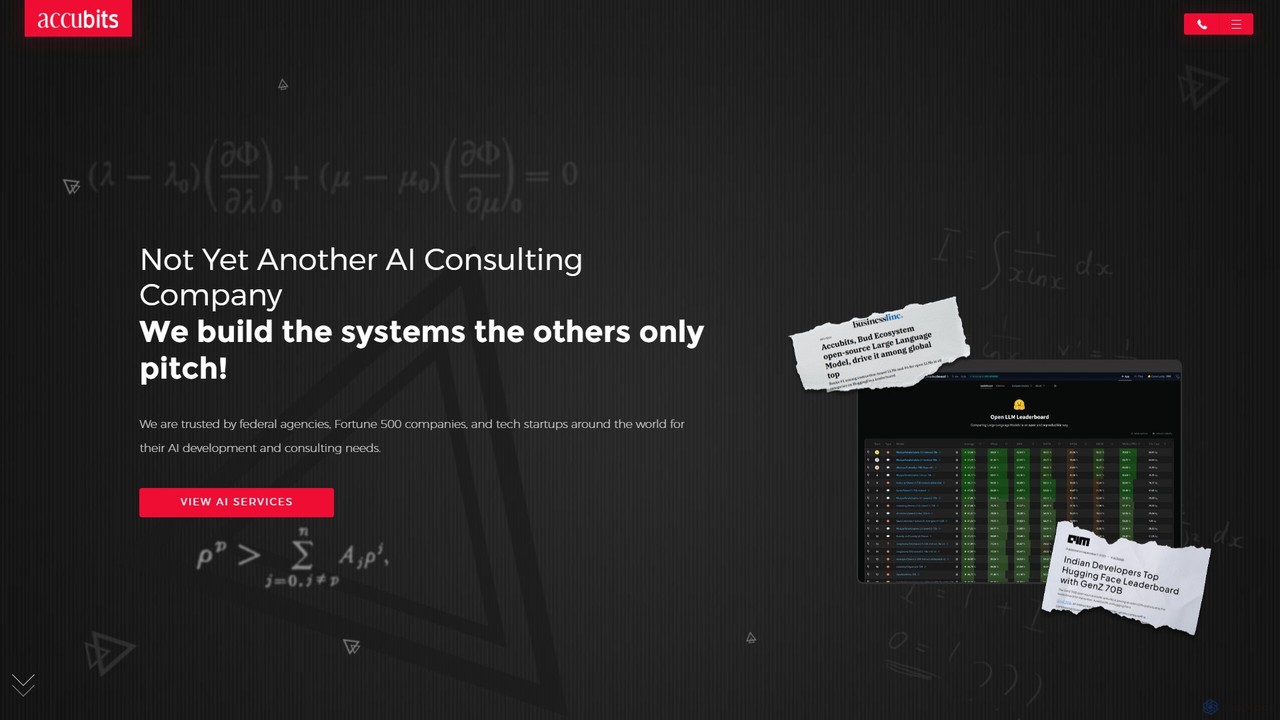
Accubits

Accubits

Accubits is a leading technology enabler specializing in custom AI, Blockchain, Web3, and Metaverse development. They provide full-service …

12.0K
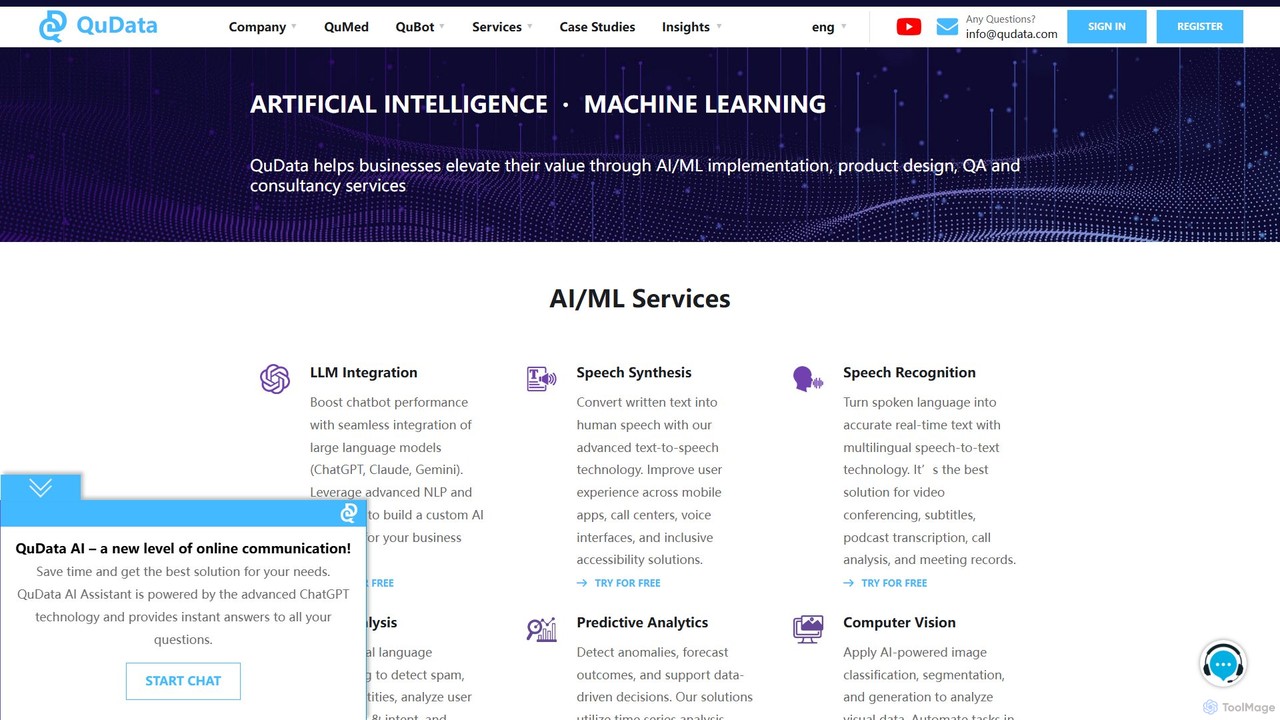
QuData

QuData

QuData is a specialized AI and Machine Learning solutions provider that helps businesses with custom development, implementation, and …

131.9K

About Ai & Ml Platforms

Ai & Ml Platforms are integrated environments and services designed to streamline the entire lifecycle of artificial intelligence and machine learning projects. These platforms provide comprehensive tools for data preparation, model training, evaluation, deployment, and monitoring. They empower developers and data scientists to build, scale, and manage intelligent applications more efficiently, accelerating innovation in various industries.

Core Features

  • Data Management & Preparation: Tools for ingesting, cleaning, transforming, and labeling data to feed ML models.
  • Model Development & Training: Integrated development environments (IDEs), libraries, and scalable compute resources for building and training ML models.
  • Model Deployment & Inference: Capabilities to deploy trained models as APIs or services, enabling real-time predictions and batch processing.
  • MLOps & Lifecycle Management: Features for version control, experiment tracking, model monitoring, and automated retraining to manage the ML workflow.
  • Pre-built Models & APIs: Access to pre-trained models and AI services for common tasks like natural language processing, computer vision, and speech recognition.

Use Cases

Data scientists leverage these platforms to experiment with different algorithms, train models on large datasets, and track experiment results efficiently. Developers integrate deployed models into their applications, enabling features like recommendation engines or intelligent automation. Businesses utilize them to manage their entire AI portfolio, ensuring models are performing optimally and are easily updated.

How to Choose

When selecting an AI & ML platform, consider its scalability for data and compute resources, the breadth of supported ML frameworks and libraries, ease of integration with existing systems, and MLOps capabilities for lifecycle management. Evaluate the pricing model, community support, and the level of abstraction offered, balancing flexibility with ease of use.

Ai & Ml PlatformsUse Cases

1

Automated Machine Learning Model Training

Data scientists use AI/ML platforms to automate hyperparameter tuning and model selection, significantly reducing the time required to develop high-performing models. By leveraging automated ML (AutoML) features, they can quickly iterate through various algorithms and configurations, identifying the optimal model for specific predictive tasks without extensive manual effort. This accelerates the development cycle and allows for faster deployment of intelligent solutions.

2

Scalable AI Application Deployment

Developers utilize these platforms to deploy trained AI models as robust, scalable APIs or microservices. This enables seamless integration of AI capabilities into web applications, mobile apps, or enterprise systems, handling varying loads efficiently. For instance, a recommendation engine model can be deployed to serve millions of users, with the platform managing the underlying infrastructure and scaling automatically based on demand.

3

Real-time Anomaly Detection in Data Streams

Financial institutions or cybersecurity teams employ AI/ML platforms to build and deploy models that monitor real-time data streams for unusual patterns. These platforms provide the necessary infrastructure for continuous data ingestion and immediate inference, allowing for instant identification of fraudulent transactions or security breaches. The models are trained and updated on the platform, ensuring they adapt to new threats quickly.

4

Personalized Content Recommendation Systems

E-commerce companies and media platforms use AI/ML platforms to develop and manage recommendation engines. These systems analyze user behavior and preferences to suggest personalized products, articles, or videos. The platforms facilitate the training of complex collaborative filtering or deep learning models on vast user data, and then deploy them to provide real-time, tailored recommendations, enhancing user engagement and sales.

5

Efficient MLOps for Model Lifecycle Management

Enterprise teams implement AI/ML platforms to establish robust MLOps pipelines, covering everything from experiment tracking and model versioning to automated deployment and continuous monitoring. This ensures that models remain accurate and performant over time, with automated alerts for drift and easy rollback capabilities. It streamlines the operational aspects of machine learning, making AI solutions more reliable and maintainable.

6

Custom Computer Vision Model Development

Manufacturing or healthcare companies leverage AI/ML platforms to train custom computer vision models for tasks like quality inspection or medical image analysis. The platforms provide tools for image annotation, access to powerful GPUs for deep learning training, and features for evaluating model performance. This allows specialists to develop highly accurate vision systems tailored to their specific needs, improving efficiency and diagnostic capabilities.

Ai & Ml PlatformsFrequently Asked Questions