ToolMage
Sign in

Best 3 Auditing AI tools for Developer Tools

Popular Auditing AI tools in Developer Tools include Vanta, Warden AI, and PageSignalPro, helping you work more efficiently.

PageSignalPro
Freemium

PageSignalPro

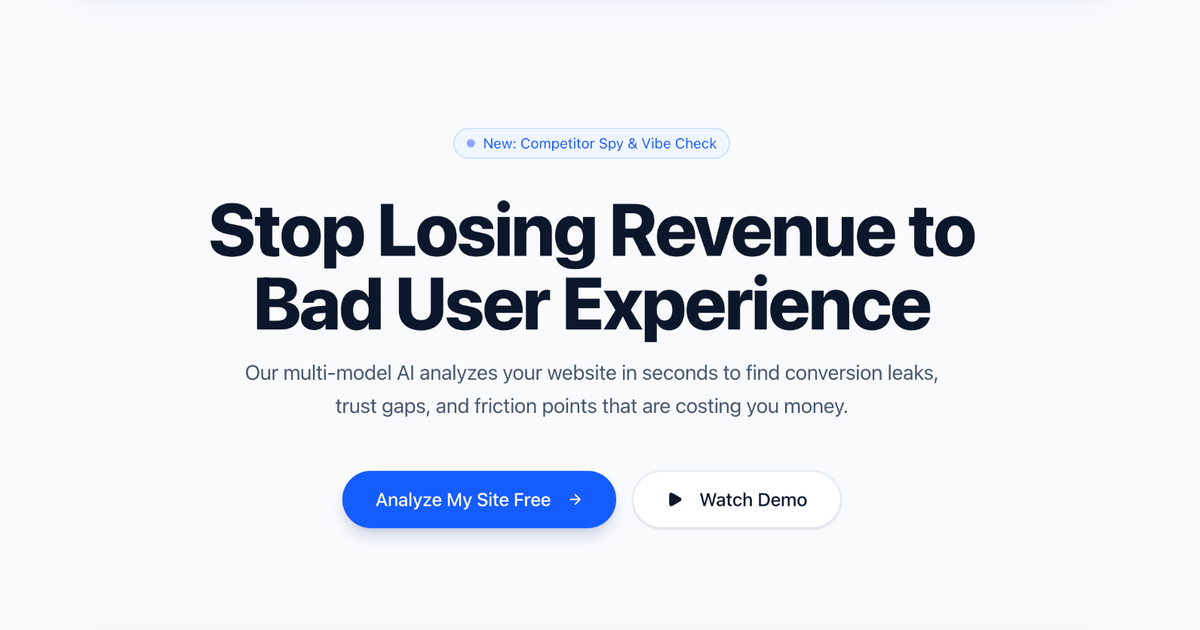
PageSignalPro is an AI-powered landing page optimizer that analyzes your website in seconds to identify conversion leaks, trust gaps, and user experience friction points. It quantifies potential revenue loss and provides actionable insights to improve performance.

Auditing
Visits 3.9KFavorites 101Likes 111
Warden AI
Paid

Warden AI

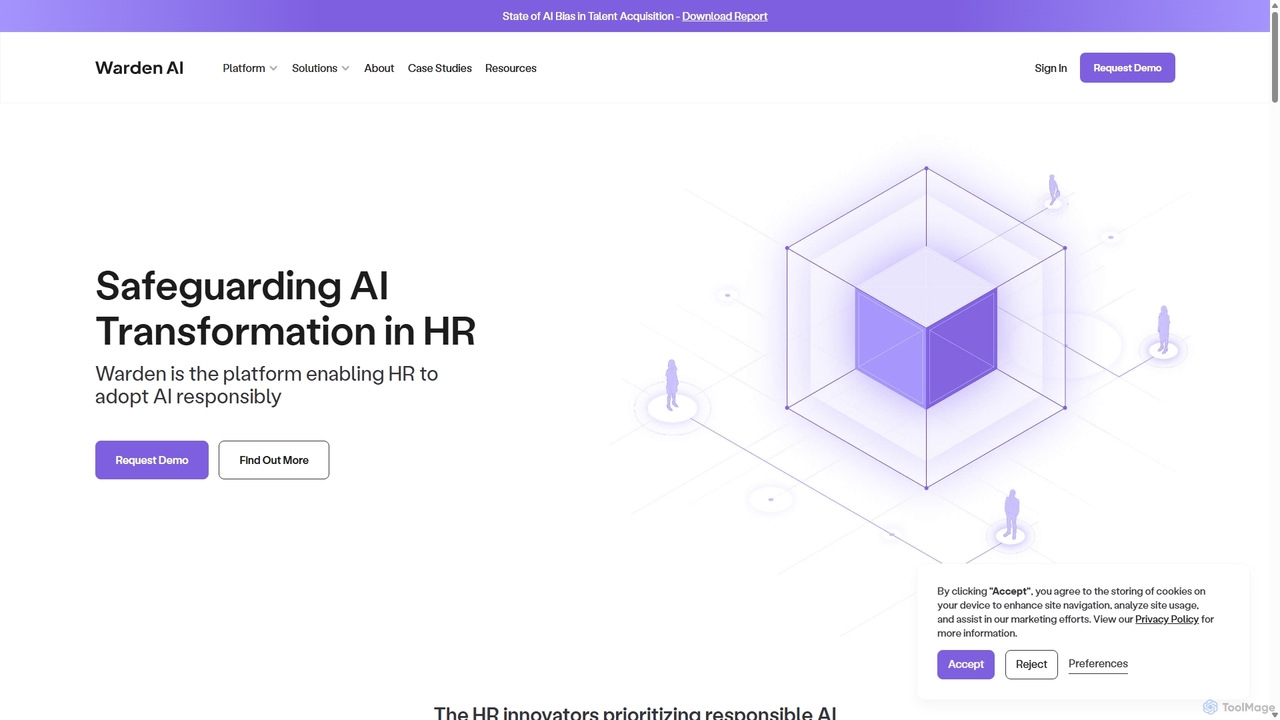
Warden AI is a trusted AI assurance platform designed for HR technology. It provides real-time, third-party auditing to ensure fairness, transparency, and compliance in AI systems used for recruitment and talent management. It helps HR tech vendors and enterprises build, adopt, and deploy AI responsibly by mitigating bias and adhering to global regulations like the EU AI Act and NYC Local Law 144.

Auditing
Visits 11.5KFavorites 104Likes 109
Vanta
Paid

Vanta

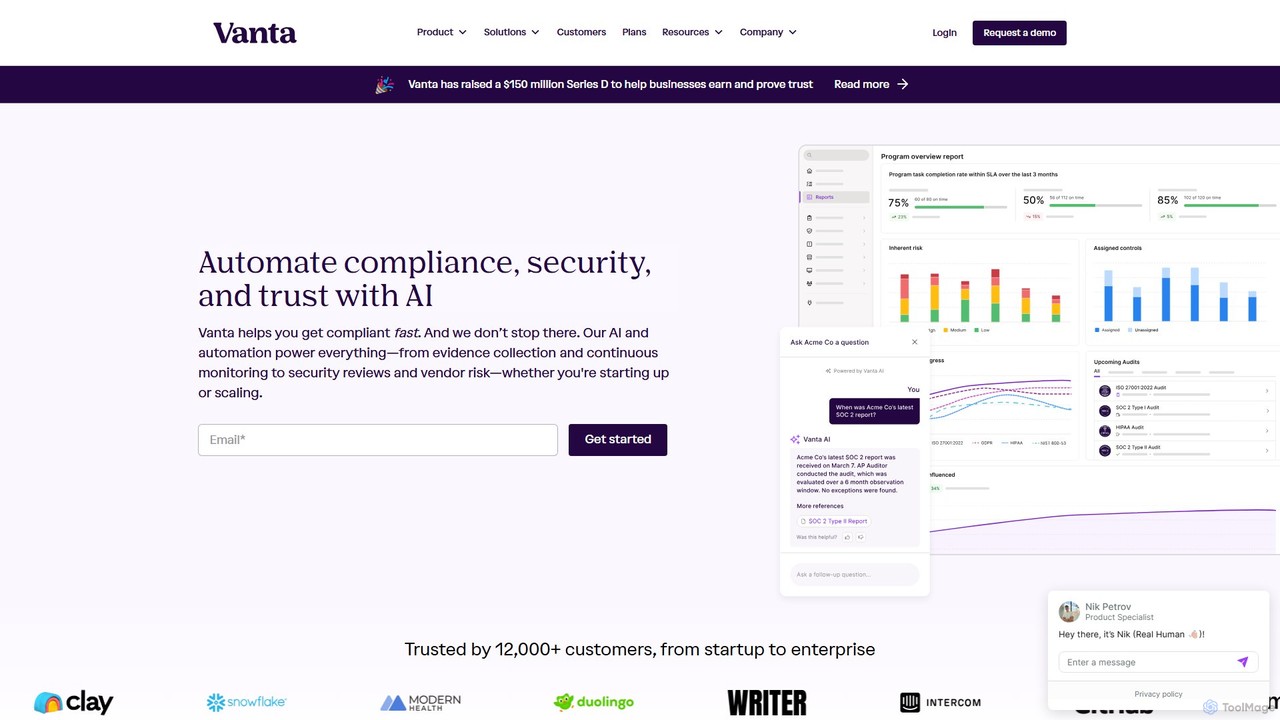
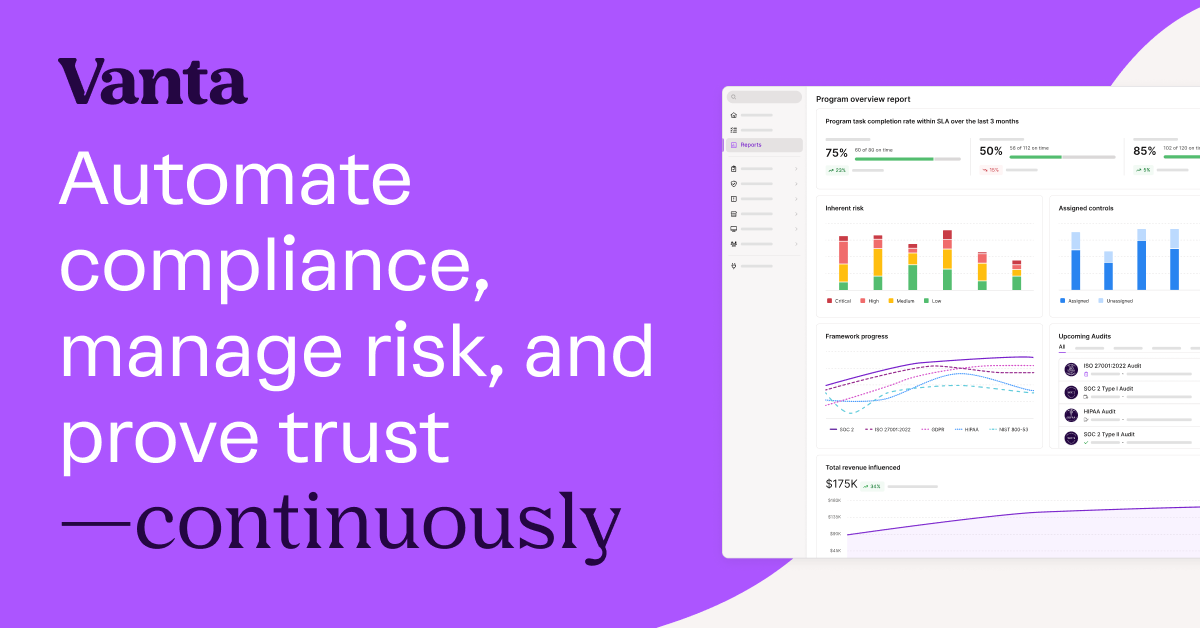
Vanta is an AI-powered trust management platform that automates compliance and simplifies security. It helps businesses of all sizes achieve and maintain standards like SOC 2, ISO 27001, HIPAA, and GDPR, manage risk, and prove their security posture to customers and partners. By automating up to 90% of compliance work, Vanta streamlines audits, accelerates sales cycles, and builds a foundation of trust.

Risk Management
Visits 779.2KFavorites 117Likes 130

About Auditing

Auditing tools are specialized AI-powered solutions within developer tools that leverage artificial intelligence to automate and enhance the process of reviewing systems, code, data, and processes. These tools utilize machine learning algorithms to identify anomalies, vulnerabilities, and compliance issues more efficiently than traditional methods. They provide developers and organizations with deeper insights into their digital assets, ensuring security, performance, and regulatory adherence, leading to faster risk identification and improved system integrity.

Core Features

  • Automated Vulnerability Scanning: Proactively identifies security flaws and weaknesses in codebases and deployed systems.
  • Compliance Monitoring: Automatically checks adherence to industry standards and regulatory requirements (e.g., GDPR, SOC 2).
  • Performance Bottleneck Detection: Analyzes system logs and metrics to pinpoint performance issues and suggest optimizations.
  • Code Quality Analysis: Evaluates code for best practices, maintainability, and potential bugs using AI-driven patterns.
  • Data Integrity Verification: Assesses data consistency, accuracy, and completeness across various databases and systems.

Applicable Scenarios

Software development teams integrate AI auditing tools into their CI/CD pipelines for continuous security and quality checks. Cybersecurity professionals leverage them for proactive threat hunting and automated incident response validation. Financial institutions employ these tools for regulatory compliance audits and fraud detection in transactional data.

How to Choose

When selecting AI Auditing tools, consider the specific audit scope (code, security, data, compliance) and the types of AI models employed. Evaluate integration capabilities with existing developer workflows and CI/CD pipelines, as well as the clarity and actionability of the generated reports. Scalability for future needs and the vendor's support for evolving regulatory landscapes are also crucial factors.

Featured tool rankings

Auditing use cases

1

Automated Code Security Review in CI/CD

Developers integrate AI auditing tools into their Git workflows to automatically scan new code commits for common vulnerabilities (e.g., SQL injection, XSS) before merging. This helps catch security flaws early in the development cycle, reducing remediation costs and preventing the deployment of insecure code into production environments, thereby enhancing overall software security posture.

2

Continuous Compliance Monitoring for Cloud Infrastructure

DevOps teams use AI auditing to continuously monitor cloud configurations and deployed services against industry compliance standards like SOC 2 or HIPAA. The tool automatically flags non-compliant settings, providing real-time alerts and recommendations for remediation. This ensures regulatory adherence without constant manual checks, significantly reducing the risk of compliance violations and associated penalties.

3

Predictive Performance Anomaly Detection for SREs

Site Reliability Engineers (SREs) deploy AI auditing tools to analyze application logs and performance metrics across complex systems. The AI learns normal system behavior patterns and proactively identifies subtle performance degradations or potential bottlenecks before they impact users. This enables preventative maintenance and optimization, ensuring high availability and a seamless user experience.

4

Third-Party Library Vulnerability Assessment

Development teams utilize AI auditing tools to scan all third-party libraries and dependencies used in their projects. The tool identifies known vulnerabilities (CVEs) within these components, assesses their severity, and suggests updated versions or alternative libraries. This proactive approach mitigates supply chain risks, ensuring that applications are not exposed to security threats originating from external code.

5

Data Quality and Integrity Audit for Data Engineers

Data engineers employ AI auditing tools to regularly check large datasets for inconsistencies, missing values, or anomalous entries that could indicate data corruption or fraudulent activity. The AI identifies patterns of data drift and flags discrepancies, ensuring high data quality for analytics, machine learning models, and operational processes. This maintains the reliability and trustworthiness of critical business data.

6

Smart Contract Security Auditing for Blockchain Developers

Blockchain developers use specialized AI auditing tools to analyze smart contract code for common vulnerabilities like reentrancy attacks, integer overflows, or gas limit issues. The AI helps identify critical flaws in complex decentralized applications (dApps) that might be missed by manual review. This significantly enhances the security and reliability of blockchain solutions, protecting digital assets and user trust.

Auditing FAQ

What are AI Auditing tools?

AI Auditing tools are software solutions that use artificial intelligence, particularly machine learning, to automate and enhance the process of reviewing digital assets like code, systems, data, and processes. They identify anomalies, vulnerabilities, and compliance issues more efficiently than manual methods, providing actionable insights for security, performance, and quality assurance across various developer-centric tasks.

How do AI Auditing tools differ from traditional auditing methods?

AI Auditing tools differ by leveraging machine learning for pattern recognition, anomaly detection, and predictive analysis, allowing for continuous, large-scale, and proactive identification of issues. Traditional methods often rely on manual checks, predefined rules, and periodic reviews, which can be time-consuming, prone to human error, and less effective at detecting novel threats or subtle performance degradations in complex, dynamic systems.

What types of audits can AI Auditing tools perform?

AI Auditing tools can perform various types of audits crucial for developer workflows. These include security audits (vulnerability scanning, threat detection in code and infrastructure), compliance audits (regulatory adherence, policy enforcement for cloud configurations), performance audits (bottleneck identification, optimization suggestions from logs), code quality audits (best practices, bug detection), and data integrity audits (consistency, accuracy checks for databases and data pipelines).

Who benefits most from using AI Auditing tools?

Developers, DevOps engineers, cybersecurity professionals, compliance officers, and Site Reliability Engineers (SREs) benefit significantly. Developers gain automated code reviews and early bug detection, security teams get proactive vulnerability detection and threat intelligence, and compliance officers ensure continuous adherence to regulations. Essentially, any role involved in maintaining the security, quality, performance, and compliance of digital systems and software development processes can leverage these tools to enhance efficiency and accuracy.

What should I consider when integrating AI Auditing into my development workflow?

When integrating AI Auditing, consider its compatibility with your existing CI/CD pipelines, version control systems, and other developer tools. Evaluate the tool's ability to provide clear, actionable remediation suggestions and its false positive rate to avoid alert fatigue. Also, assess the learning curve for your team, the tool's scalability to handle growing projects, and its ability to adapt to evolving threats and compliance standards. Data privacy and security practices of the vendor are also critical.