ToolMage
Sign in

Best 1 Bots for Developer Tools

Popular Bots in Developer Tools include Mava, helping you work more efficiently.

Mava
Freemium

Mava

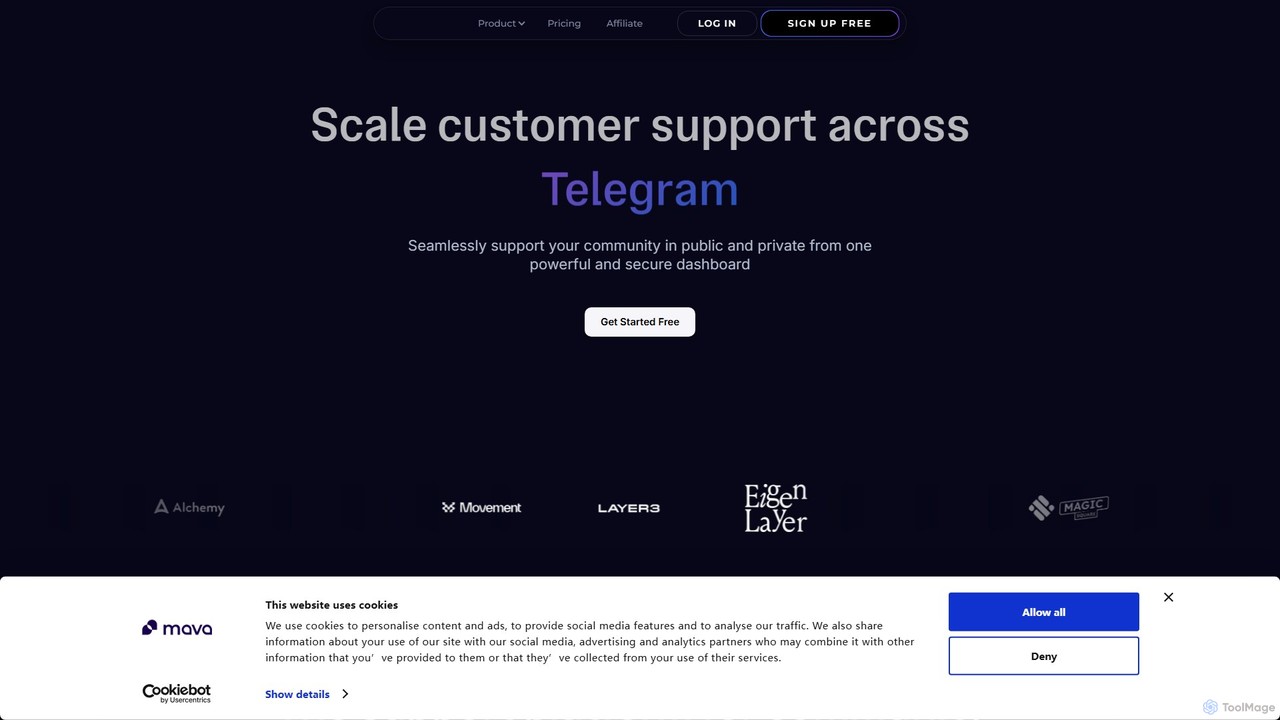
Mava is an AI-powered customer support platform designed specifically for online communities. It integrates with platforms like Discord and Slack to automatically answer user questions, create support tickets, and provide 24/7 assistance, freeing up your team to focus on more complex issues and fostering a more engaged community.

Community Management
Visits 45.6KFavorites 135Likes 141

About Bots

Bots are AI-powered software applications designed to automate specific tasks and interact with users or systems. Leveraging technologies like Natural Language Processing (NLP) and machine learning, these tools can understand requests, process information, and execute actions or generate responses. They are invaluable for streamlining operations, providing instant support, and enhancing user engagement across various digital platforms. Bots offer significant advantages in scalability, efficiency, and the ability to operate continuously, making them a crucial component in modern developer toolkits.

Core Features

  • Automated Interaction: Perform tasks or engage in conversations without direct human intervention.
  • Natural Language Processing (NLP): Understand and generate human-like text or speech for intuitive communication.
  • Task Automation: Execute predefined workflows, data entry, system commands, or information retrieval.
  • Integration Capabilities: Seamlessly connect with messaging platforms, CRMs, databases, and other APIs.
  • Scalability & Efficiency: Handle a large volume of requests simultaneously and operate 24/7.

Applicable Scenarios

Bots are widely adopted in customer service for automating FAQs and support, in IT for internal helpdesk automation, and in marketing for social media engagement. Developers also utilize bots for automating testing, deployment, and monitoring tasks within their workflows, significantly reducing manual effort and improving response times, thereby fitting perfectly within the broader category of developer tools.

How to Choose

When selecting a bot tool, consider its primary purpose and the specific tasks it needs to automate. Evaluate its integration ecosystem with your existing platforms, the sophistication of its AI capabilities (e.g., NLP accuracy, learning ability), and its scalability to handle future demand. Additionally, assess the ease of customization, training, and ongoing maintenance to ensure it aligns with your technical resources and business objectives.

Bots use cases

1

Automated Customer Service Chatbot

E-commerce businesses or service providers deploy bots on their websites or messaging apps to handle common customer inquiries, provide instant answers to FAQs, and guide users through purchasing processes or troubleshooting steps. This reduces the workload on human agents and ensures 24/7 support availability, significantly improving customer satisfaction.

2

Internal IT Helpdesk Automation

Large organizations utilize bots to automate routine IT support tasks for employees. This includes assisting with password resets, providing step-by-step guides for software installation, or offering basic troubleshooting for common technical issues, freeing up IT staff for more complex problems and improving internal efficiency.

3

Social Media Engagement and Moderation

Marketing and community management teams use bots to automatically respond to mentions, direct messages, or comments on social media platforms. These bots can also help moderate content, filter spam, and ensure brand consistency in online interactions, enhancing audience engagement and protecting brand reputation.

4

Web Scraping for Market Research

Market analysts and researchers deploy bots to systematically collect specific data from various websites. This includes tracking competitor pricing, monitoring industry news, gathering product reviews, or compiling public data for trend analysis, providing valuable insights efficiently and at scale for strategic decision-making.

5

Automated Workflow and RPA (Robotic Process Automation)

Businesses implement bots for Robotic Process Automation (RPA) to automate repetitive, rule-based back-office tasks. Examples include data entry into CRM systems, generating routine reports, processing invoices, or managing inventory updates, significantly improving operational efficiency, accuracy, and compliance across departments.

6

Personalized Content Recommendation

Media platforms, streaming services, or content creators use bots to analyze user behavior and preferences, then recommend personalized articles, videos, music, or products. These bots enhance user experience by delivering highly relevant content, increasing engagement, retention, and ultimately driving revenue through tailored suggestions.

Bots FAQ

What are Bots?

Bots are automated software applications designed to perform specific tasks or interact with users, often mimicking human behavior. They leverage artificial intelligence, such as Natural Language Processing (NLP) and machine learning, to understand inputs, process information, and generate relevant responses or execute predefined actions. Bots are primarily used to automate repetitive tasks, provide instant information, and enhance digital interactions across various platforms.

How do Bots differ from traditional software applications?

The key difference lies in their autonomy and interaction model. Traditional software typically requires direct human operation or follows rigid, pre-programmed logic for specific functions. Bots, especially AI-powered ones, are designed for more autonomous operation, often interacting conversationally or performing tasks in the background without constant human input. They can adapt and learn from interactions, making them more dynamic and responsive than conventional applications.

What are the main types of Bots?

There are several types of bots, each with distinct functions. Chatbots engage in conversational interactions, providing customer support or information. Web crawlers (spiders) index content for search engines or collect data. Robotic Process Automation (RPA) bots automate repetitive business processes. Social bots interact on social media platforms. Monitoring bots track system performance or market data. Each type serves to automate specific digital tasks, enhancing efficiency and reach.

How can Bots enhance developer workflows?

For developers, bots can significantly streamline workflows by automating routine and time-consuming tasks. This includes automating code testing and deployment processes, sending real-time notifications for build failures or system alerts, facilitating code review reminders, and even providing quick access to documentation or API references within development environments. By handling these repetitive tasks, bots allow developers to focus on more complex problem-solving and innovation, improving overall productivity.

What should I consider when implementing a Bot?

When implementing a bot, consider its intended purpose and the specific problems it will solve. Evaluate the platform it will operate on (e.g., website, messaging app) and its integration capabilities with your existing systems. Data security and privacy are paramount, especially when handling sensitive information. Also, plan for user experience, ensuring the bot's interactions are intuitive and helpful, and consider the ongoing maintenance and training required to keep it effective and up-to-date.