Developer Tools Best in category 1 results Database & Search AI Tool

Popular AI tools in the Database & Search field of Developer Tools include Nuclia, etc., helping you quickly improve efficiency.

Nuclia

Nuclia

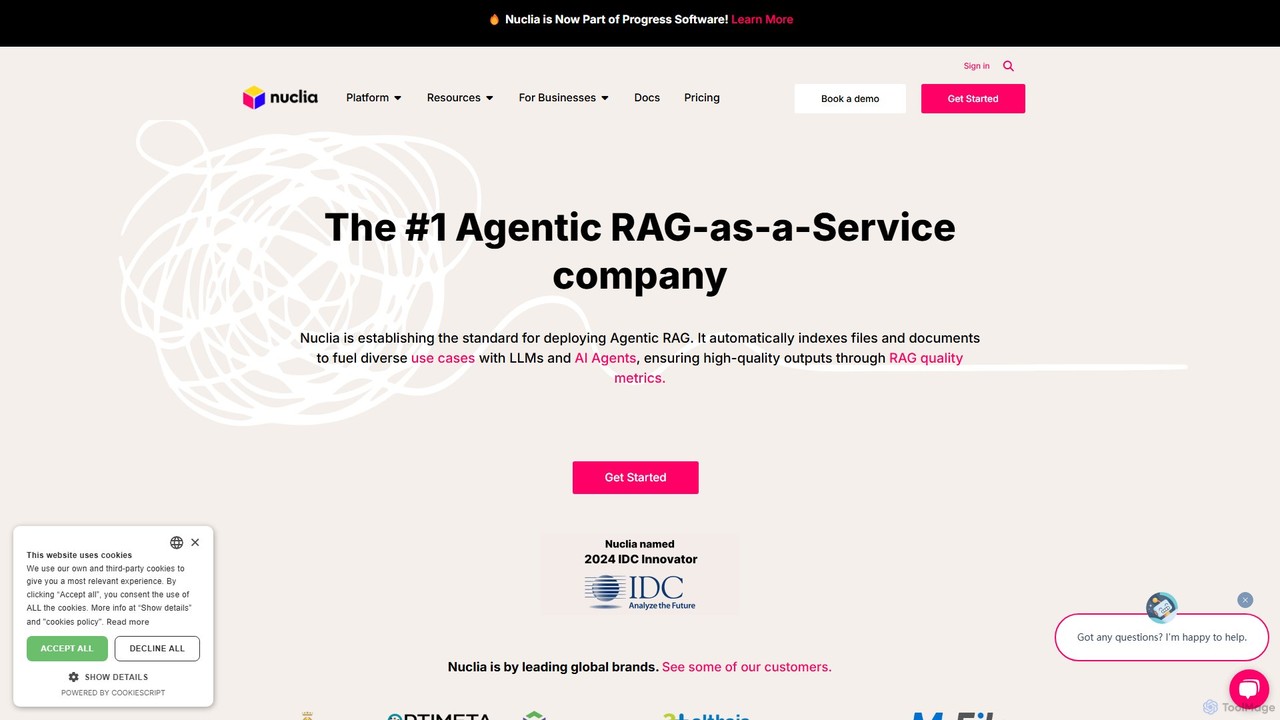
Nuclia is a leading Agentic RAG-as-a-Service platform that enables businesses to index any unstructured data and build powerful …

7.1K

About Database & Search

Database & Search AI tools are specialized solutions that enhance data storage, management, and retrieval processes using artificial intelligence. These tools leverage advanced AI algorithms, such as natural language processing and machine learning, to enable more intelligent data indexing, semantic search, and efficient information discovery. They empower developers to build sophisticated applications that can understand context, retrieve highly relevant information, and manage complex datasets with unprecedented efficiency.

Core Features

  • Semantic Search: Understands query intent and context, returning conceptually relevant results beyond keyword matching.
  • Vector Embeddings: Converts data into numerical vectors for efficient similarity search and contextual retrieval in vector databases.
  • Intelligent Indexing: Automatically categorizes, tags, and organizes data for faster, more accurate access and improved data governance.
  • Query Optimization: Uses AI to analyze and suggest improvements for database queries, enhancing performance and reducing latency.
  • Anomaly Detection: Identifies unusual patterns or outliers in database activity, crucial for security and operational monitoring.

Use Cases

These tools are essential for developers building next-generation AI applications, enhancing existing data infrastructure, and creating intelligent knowledge management systems. They are widely adopted in scenarios requiring highly contextual data retrieval, such as powering RAG (Retrieval-Augmented Generation) systems for large language models or building personalized recommendation engines.

How to Choose

When selecting AI Database & Search tools, consider their scalability to handle growing data volumes, compatibility with your existing technology stack, and the specific AI capabilities offered (e.g., quality of semantic search, vector database performance). Evaluate data security features, ease of integration, and the total cost of ownership, including potential for custom model training and ongoing maintenance.

Database & SearchUse Cases

1

Building Advanced Semantic Search Engines

E-commerce platforms or internal knowledge bases can utilize AI Database & Search tools to power semantic search. Developers integrate these tools to allow users to query information using natural language, understanding intent rather than just keywords. This results in highly relevant product recommendations or document retrieval, significantly improving user experience and reducing search abandonment rates.

2

Developing AI-Powered Chatbots with RAG

For AI chatbot development, especially those leveraging Large Language Models (LLMs) for Retrieval-Augmented Generation (RAG), these tools are crucial. Developers use vector databases to store and retrieve contextual information from vast datasets, enabling chatbots to provide accurate, up-to-date, and relevant answers by fetching specific data points that augment the LLM's general knowledge.

3

Intelligent Data Cataloging and Discovery

Enterprises with large, disparate data lakes face challenges in data discovery. AI Database & Search tools can automatically classify, tag, and create metadata for unstructured and structured data. This allows data scientists and analysts to quickly find relevant datasets, understand their content, and ensure data governance, accelerating data-driven projects and insights.

4

Real-time Anomaly Detection in Operational Databases

Security and operations teams can deploy AI Database & Search tools to monitor database activity for unusual patterns. By analyzing query logs, access patterns, and data modifications in real-time, these tools can detect potential security breaches, performance bottlenecks, or data integrity issues, triggering immediate alerts and enabling proactive intervention to maintain system health.

5

Optimizing Complex Database Query Performance

For applications with heavy analytical workloads or complex data models, AI can significantly enhance query performance. Developers use AI-powered query optimizers that learn from past query executions and data distribution to suggest or automatically apply more efficient execution plans, reducing query times and improving application responsiveness for end-users.

6

Personalized Content Recommendation Systems

Media companies, streaming services, or content platforms can leverage AI Database & Search tools to build highly personalized recommendation engines. By analyzing user interaction data, viewing history, and content metadata, these tools can identify semantic similarities and user preferences, delivering tailored content suggestions that increase engagement and user satisfaction.

Database & SearchFrequently Asked Questions