ToolMage
Sign in

Best 4 Embedded Analytics AI tools for Developer Tools

Popular Embedded Analytics AI tools in Developer Tools include Sisense, Polymer Search, Upsolve AI, and Onvo AI, helping you work more efficiently.

Upsolve AI
Paid

Upsolve AI

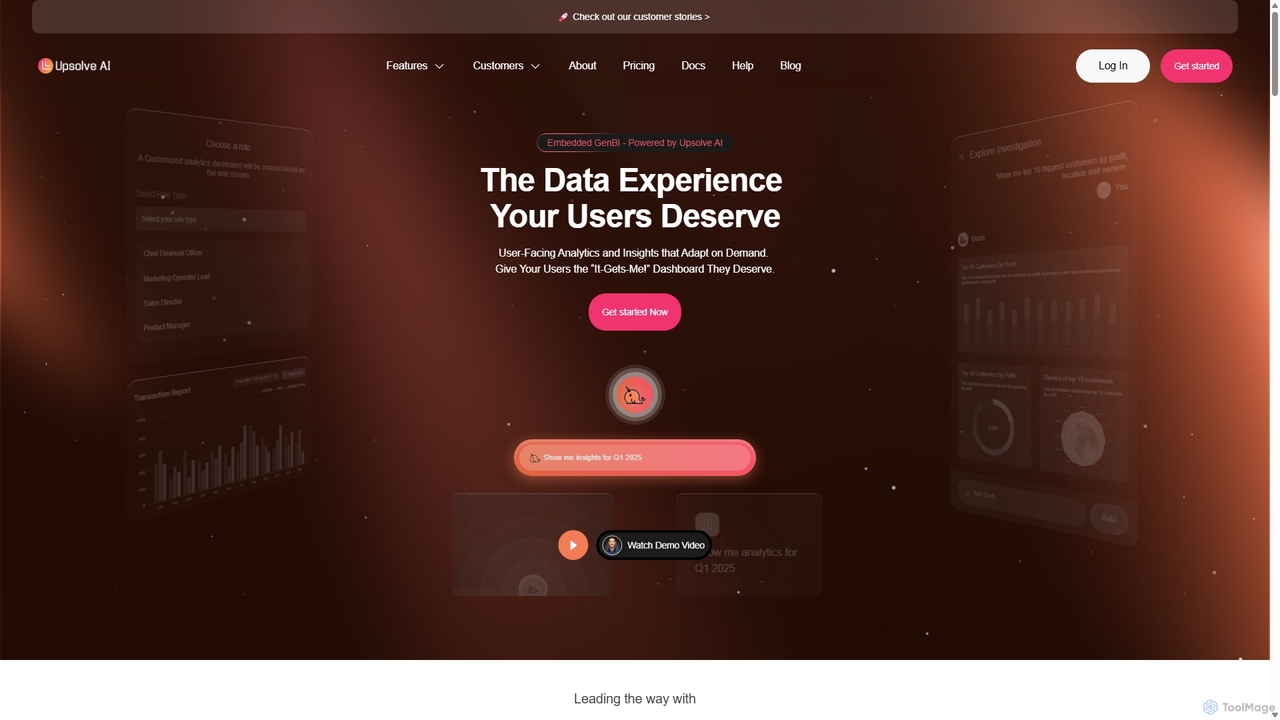
Upsolve AI is an embedded Generative Business Intelligence (GenBI) platform that enables SaaS companies to integrate AI-powered, hyper-personalized analytics dashboards directly into their products. It allows end-users to interact with data using natural language, providing actionable insights and a seamless, self-service data experience without requiring extensive development resources.

Business Intelligence
Visits 15KFavorites 127Likes 122
Polymer Search
Freemium

Polymer Search

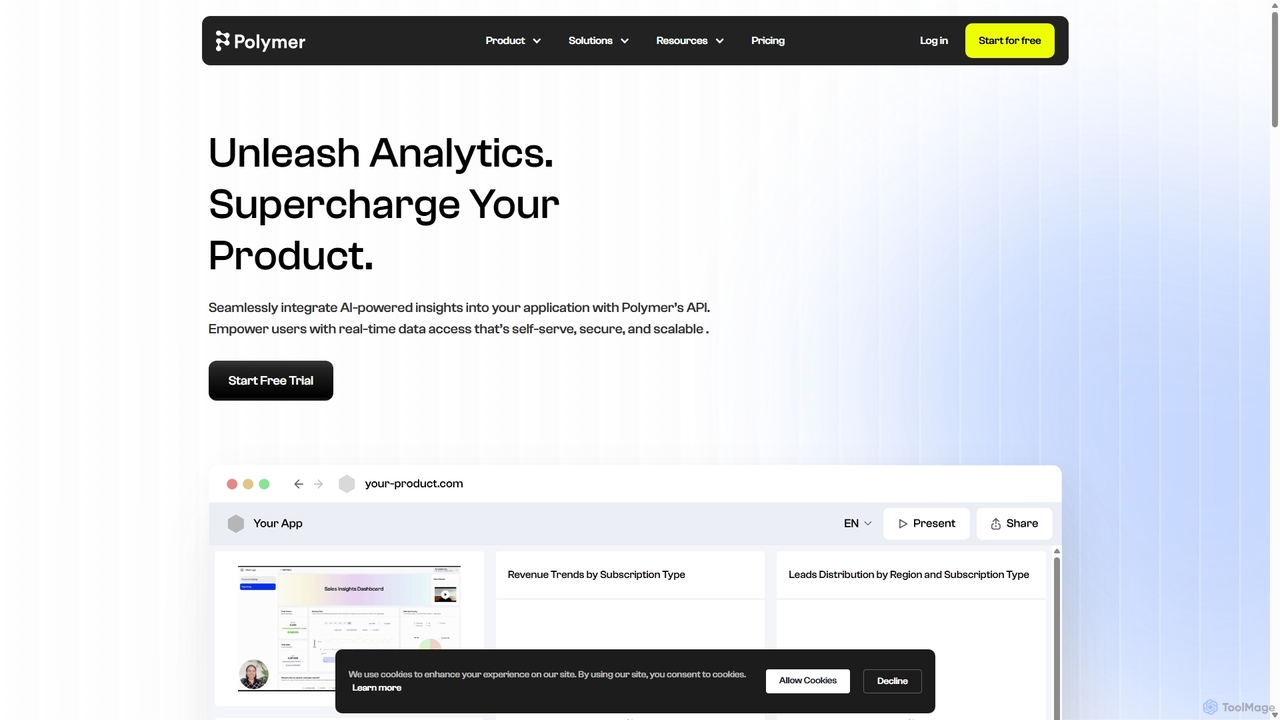
Polymer Search is an AI-driven embedded analytics platform designed to supercharge products with powerful, white-labeled data visualizations. It enables seamless integration of beautiful dashboards and reports directly into your application, empowering users with self-serve analytics and AI-generated insights, all with minimal development effort.

Business Intelligence
Visits 26.2KFavorites 142Likes 145
Sisense
Paid

Sisense

Sisense is an AI-powered embedded analytics platform that enables businesses to infuse analytics into their products, applications, and workflows. It provides a comprehensive suite of tools for data integration, visualization, and delivering actionable insights to both internal users and customers.

Business Intelligence
Visits 185.5KFavorites 127Likes 138
Onvo AI
Paid

Onvo AI

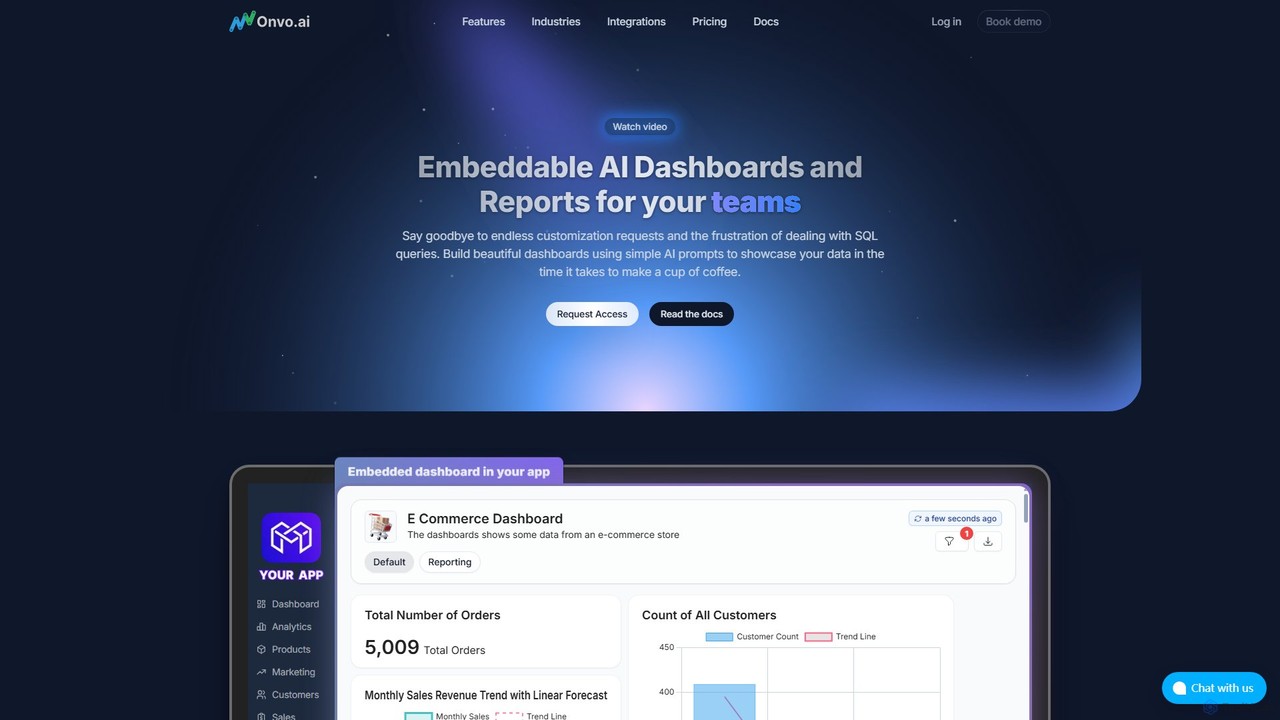
Onvo AI is a powerful platform for building and embedding AI-driven dashboards and reports directly into your applications. It replaces complex SQL queries with simple natural language prompts, allowing both technical and non-technical users to create stunning data visualizations effortlessly. This solution saves significant engineering resources and empowers your teams and customers with secure, self-service analytics.

Business Intelligence
Visits 6.4KFavorites 133Likes 143

About Embedded Analytics

Embedded Analytics tools are platforms that allow developers to integrate interactive dashboards, reports, and data visualizations directly into their own applications. Instead of requiring users to switch to a separate business intelligence (BI) platform, these tools provide APIs, SDKs, and white-label components to create a seamless, in-context data experience. This enhances product value, improves user engagement, and empowers end-users to make data-driven decisions without leaving the software they use daily. As a specialized category within Developer Tools, they focus on delivering analytics as a native feature of an application.

Core Features

  • White-Label Customization: Allows for complete branding control to match the look and feel of the host application.
  • Seamless Integration: Provides robust APIs, SDKs, and components for easy embedding into existing software.
  • Interactive Dashboards: Enables the creation of dynamic reports with filters, drill-downs, and real-time data exploration.
  • Multi-Tenant Security: Ensures that users can only access their own data through secure, row-level permissions and data isolation.
  • Data Connectivity: Supports connections to a wide range of databases and data sources to unify information.

Use Cases

Embedded Analytics is primarily used by SaaS companies, software vendors, and enterprises building custom applications. For example, a marketing automation platform can embed campaign performance dashboards for its customers, or a CRM system can display real-time sales analytics directly on a contact's page. This approach is valuable in any application where users benefit from immediate access to contextual data.

How to Choose

When selecting an Embedded Analytics tool, consider the ease of integration and the quality of developer documentation. Evaluate the level of customization and white-labeling options available. Assess its scalability to handle your user base and data volume. Finally, review the security model, especially for multi-tenant applications, and compare pricing structures based on users or usage.

Embedded Analytics use cases

1

Enhancing SaaS Platforms with Customer-Facing Dashboards

A product manager at a SaaS company wants to increase customer retention and provide more value. They use an embedded analytics tool to build and integrate customer-facing dashboards directly into their application. This allows their clients to track key performance indicators, monitor usage patterns, and generate their own reports without leaving the platform. The result is a 'stickier' product with higher user engagement, as customers rely on the built-in analytics for their daily operations, reducing churn and creating opportunities for upselling premium analytics features.

2

Providing Vendor Analytics in an E-commerce Marketplace

An e-commerce marketplace operator needs to empower its vendors with data to help them succeed. Using an embedded analytics platform, their development team integrates a personalized 'Vendor Dashboard' into the seller portal. Each vendor can now log in and see real-time data on their sales, top-performing products, customer demographics, and inventory levels. This self-service analytics capability helps vendors optimize their listings and promotions, leading to increased sales for them and higher commission revenue for the marketplace operator.

3

Monitoring Operations in a Custom Internal Application

A logistics company has a custom-built internal application for managing its fleet and deliveries. To improve efficiency, developers embed an operational dashboard into the application's main screen. This dashboard displays real-time metrics such as delivery completion rates, average transit times, fuel consumption, and vehicle maintenance alerts. Managers and dispatchers can now monitor performance at a glance, identify bottlenecks instantly, and make informed decisions to optimize routes and schedules, all within the tool they use for their core work.

4

Delivering Personalized Financial Portfolio Insights

A wealth management firm offers a client portal for investors to view their portfolios. To differentiate their service, they use an embedded analytics tool to create personalized, interactive performance reports. Clients can log in and not only see their current asset allocation but also drill down into historical performance, compare their returns against market benchmarks, and model potential future scenarios. This provides a premium, data-rich experience that increases client trust and satisfaction, making the portal an indispensable tool for investors.

5

Analyzing User Behavior Within a Mobile App

A product team for a mobile gaming app wants to understand player behavior to improve engagement and monetization. They embed analytics directly into the app's backend management portal. This allows them to visualize user journeys, identify drop-off points in the tutorial, analyze the popularity of in-game items, and segment players based on their activity levels. With these in-context insights, the team can quickly make data-informed decisions about game design, A/B test new features, and create targeted promotions, all without relying on a separate analytics team or tool.

6

Streamlining HR Reporting with Embedded Dashboards

An HR department in a large corporation uses a Human Resource Information System (HRIS). To empower line managers, the IT team embeds analytics into the HRIS. Now, when a manager logs in to approve vacation requests, they also see an interactive dashboard showing their team's headcount, turnover rate, and compensation distribution compared to company averages. This provides immediate, actionable context, helping managers make better decisions about staffing, promotions, and retention without needing to request custom reports from HR analysts.

Embedded Analytics FAQ

What is Embedded Analytics?

Embedded Analytics refers to the integration of data analysis capabilities, such as interactive dashboards and reports, directly within a user's workflow in another software application. Instead of using a separate tool for analysis, users can access data insights in the context of their daily tasks. These tools are designed for developers to seamlessly incorporate analytics as a native feature of their product, enhancing its value and user experience.

How does Embedded Analytics differ from traditional BI tools?

The main difference lies in the user experience and purpose. Traditional BI tools (like Tableau or Power BI) are standalone applications used primarily by data analysts for deep, exploratory analysis. Embedded Analytics integrates these capabilities directly into operational applications for non-technical users. The goal of embedded tools is to provide contextual, in-workflow insights to help users make immediate decisions, whereas traditional BI is for comprehensive, after-the-fact reporting and analysis.

What are the key criteria for choosing an Embedded Analytics tool?

When selecting a tool, focus on these four areas:

  • Integration & Developer Experience: How easy is it to embed? Look for well-documented APIs, SDKs, and strong developer support.
  • Customization & White-Labeling: Can the tool's appearance be fully customized to match your application's branding and user interface?
  • Scalability & Performance: Can it handle your expected number of users and data volume without slowing down?
  • Security & Data Governance: Does it support multi-tenancy and provide robust row-level security to ensure users only see their own data?

Who are the primary users of Embedded Analytics tools?

There are two main user groups. The first is the implementers: software developers and product managers who use the tool's APIs and SDKs to build and integrate the analytics features into their application. The second group is the end-users: the customers or employees using the host application, who consume the dashboards and reports to gain insights and perform their jobs more effectively. The tools must cater to both groups, offering a great developer experience and an intuitive interface for the final user.

What are the main benefits of implementing Embedded Analytics?

Implementing embedded analytics offers significant advantages. It increases product value and 'stickiness' by making data an integral part of the user experience, reducing customer churn. It can also create new revenue streams by offering premium analytics features. For users, it provides immediate, contextual insights, empowering them to make better, faster decisions without switching applications. This leads to higher user satisfaction and adoption of your software.