Niya AI
Niya AI is a service platform that connects businesses with a global network of vetted AI experts to …
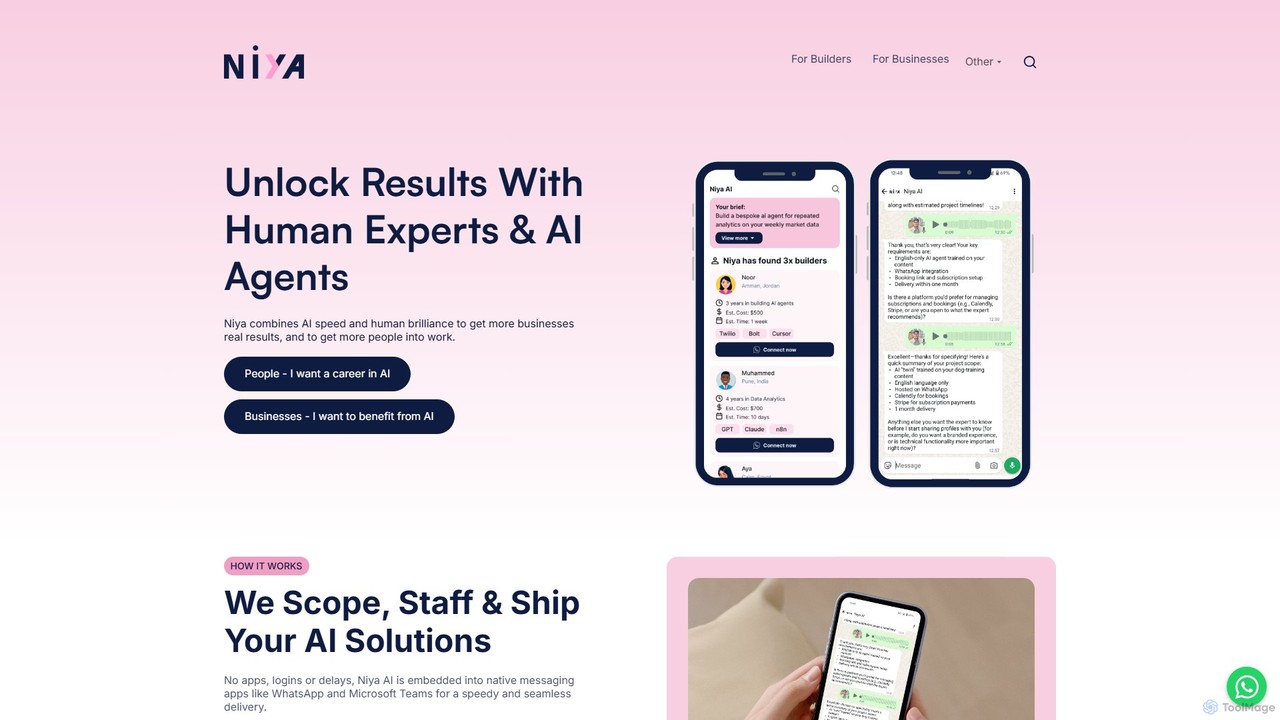
Niya AI is a service platform that connects businesses with a global network of vetted AI experts to build custom AI solutions and agents. Operating directly through messaging apps like WhatsApp and Microsoft Teams, it simplifies the process of scoping, staffing, and shipping AI projects without the need for new software or logins.
About Freelance Platforms
Freelance Platforms are specialized online marketplaces designed to connect skilled professionals, particularly developers and AI experts, with clients seeking project-based work. These platforms utilize algorithms for talent matching, provide secure payment systems, and offer integrated communication tools to facilitate remote collaboration. They serve as a crucial resource within the developer toolkit, enabling individuals and teams to find projects, manage contracts, and build a professional reputation. By centralizing the process of finding and managing freelance work, these tools streamline the gig economy for the tech industry.
Core Features
- AI-Powered Talent Matching: Uses algorithms to connect clients with freelancers based on skills, experience, and project requirements.
- Secure Escrow & Payment Systems: Protects both parties by holding funds in escrow until project milestones are met and approved.
- Integrated Collaboration Tools: Provides built-in messaging, file sharing, and time-tracking features to manage projects efficiently.
- Reputation and Review System: Allows clients and freelancers to rate each other, building trust and transparency within the marketplace.
- Skill Verification and Portfolios: Offers options for freelancers to showcase their work and complete skill tests to validate their expertise.
Use Cases
These platforms are widely used by tech companies, startups, and individual entrepreneurs to source specialized talent on demand. Developers, data scientists, UI/UX designers, and AI specialists use them to find short-term gigs, long-term contracts, or side projects. They are particularly valuable for building agile, distributed teams without the overhead of traditional hiring, allowing businesses to scale their workforce according to project needs.
How to Choose
When selecting a Freelance Platform, consider the platform's fee structure for both clients and freelancers. Evaluate the quality and specialization of its talent pool to ensure it aligns with your technical needs. Examine the project management and communication tools provided, as well as the robustness of its dispute resolution and payment protection policies. For developers, the volume and type of available projects in your specific technology stack are also critical factors.
Freelance PlatformsUse Cases
Finding a Short-Term AI Model Tuning Project
An AI developer with expertise in natural language processing wants to find a side project. They create a profile on a freelance platform, highlighting their skills in fine-tuning large language models (LLMs). The platform's AI matching algorithm suggests their profile to a startup that needs to adapt a pre-trained model for a specific customer service chatbot. The developer bids on the project, communicates with the client via the platform's messaging system, and secures a two-week contract. All payments are handled through the platform's escrow service, ensuring security for both parties.
Assembling a Remote Development Team for a Product Launch
A product manager at a mid-sized company needs to build a small, agile team to develop a new mobile app feature under a tight deadline. Instead of going through a lengthy traditional hiring process, she uses a freelance platform to find a backend developer, a frontend developer, and a QA tester. She reviews portfolios, checks ratings from previous clients, and conducts short interviews through the platform. Within a week, she assembles a qualified team. The platform's integrated project management tools help her track progress, manage tasks, and facilitate communication across different time zones.
Securing Ongoing Part-Time Technical Writing Work
A technical writer specializing in API documentation wants to supplement their full-time income. They use a freelance platform that focuses on technical and developer-focused roles. They build a strong portfolio on the platform, showcasing examples of clear and concise documentation. A growing SaaS company discovers their profile and hires them for a small project to document a new API endpoint. Impressed with the quality, the company offers an ongoing, part-time contract to handle all future documentation needs, managed entirely through the platform's contract and invoicing system.
Hiring a Specialist for a Database Optimization Task
A startup's application is experiencing performance issues due to an inefficient database. The in-house team lacks deep expertise in database optimization. The CTO posts a detailed project description on a freelance platform, specifying the database technology and the performance metrics they want to achieve. They receive proposals from several database administrators (DBAs) with verified experience. After a brief technical discussion, they hire a specialist for a one-time project. The freelancer analyzes the queries, indexes the tables correctly, and provides a report, resolving the performance bottleneck within days.
Validating a Business Idea with a Prototype
An entrepreneur has an idea for a new web service but lacks the technical skills to build it. To validate the concept with potential users and investors, they need a minimum viable product (MVP). They use a freelance platform to hire a full-stack developer. They post a clear project scope, including wireframes and user stories. The developer builds the MVP over a few weeks, with regular check-ins managed through the platform. This allows the entrepreneur to test their idea in the market quickly and cost-effectively without hiring a full-time employee.
Finding a Niche UI/UX Design Expert
A healthcare tech company is developing a complex application for medical professionals and needs a UI/UX designer with specific experience in designing clinical software. This niche skill set is hard to find through general job boards. The hiring manager uses a freelance platform with advanced search filters to find designers who list 'healthcare UI/UX' or 'clinical software design' in their profiles. They identify a few highly-rated candidates with relevant portfolio pieces and hire one for a contract to design the user interface, ensuring the final product is both intuitive and compliant with industry standards.