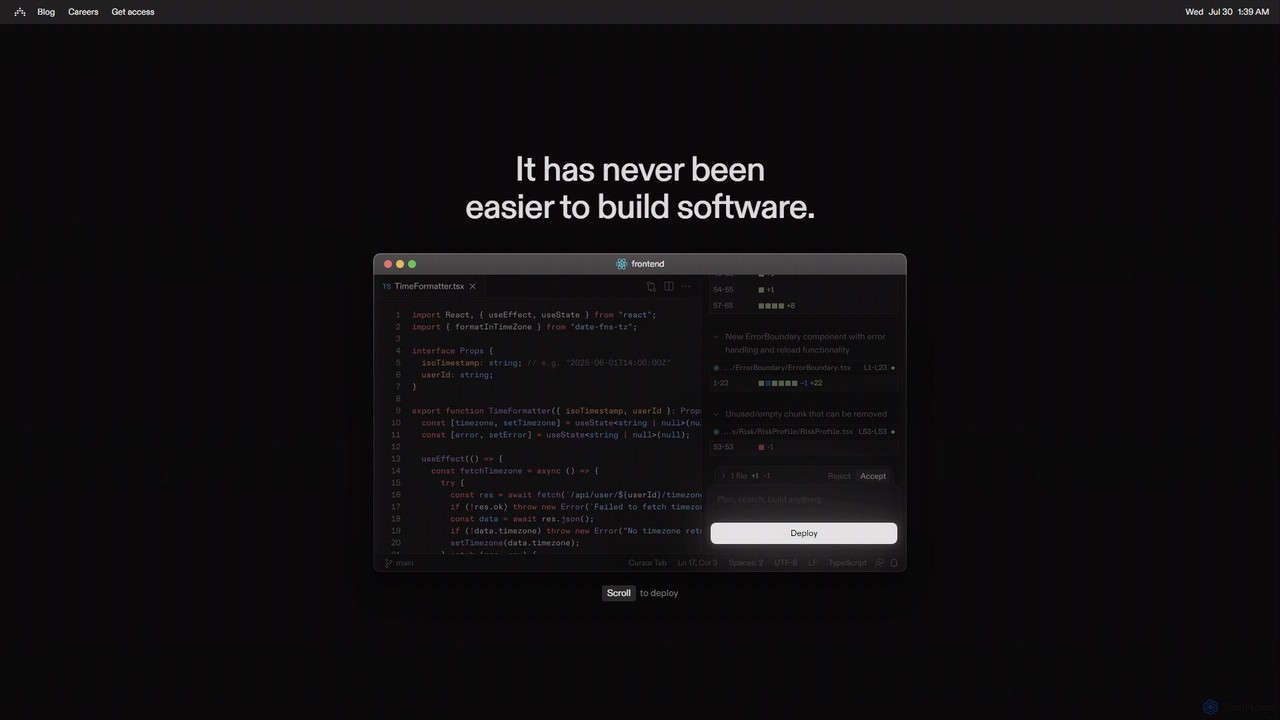
AI Infrastructure & DevOps tools are a specialized category of developer tools that leverage artificial intelligence to automate, optimize, and secure the software development lifecycle. These tools analyze vast amounts of operational data, such as logs, metrics, and code changes, to provide predictive insights and intelligent automation. They help teams proactively identify potential issues, accelerate delivery pipelines, and enhance system reliability. This moves beyond traditional automation by introducing learning and prediction into operational workflows.
Core Features
- AIOps (AI for IT Operations): Provides predictive monitoring, automated root cause analysis, and anomaly detection to prevent outages before they occur.
- Intelligent CI/CD Pipeline Optimization: Analyzes build and test history to intelligently prioritize tests, predict failures, and optimize resource allocation for faster feedback cycles.
- AI-Powered Security Scanning: Automates the detection of complex vulnerabilities and security threats in code and infrastructure configurations with higher accuracy.
- Cloud Cost Management and Optimization: Uses machine learning to analyze cloud usage patterns and recommend specific actions for cost reduction without impacting performance.
- Automated Incident Response: Assists in diagnosing and resolving production incidents by correlating alerts and suggesting remediation steps.
Use Cases
These tools are primarily used by DevOps engineers, Site Reliability Engineers (SREs), cloud architects, and security teams in technology-driven companies. Common scenarios include preventing system downtime in e-commerce platforms through predictive monitoring, securing financial applications with advanced vulnerability scanning, and managing complex microservices architectures in SaaS products.
How to Choose
When selecting an AI Infrastructure & DevOps tool, consider its integration capabilities with your existing stack (e.g., Kubernetes, Jenkins, GitHub, AWS). Evaluate the scope of its AI features—whether it focuses on a niche like AIOps or covers the entire lifecycle. Assess the tool's learning curve, the transparency of its AI models, and its data privacy policies. Finally, compare pricing models, which may be based on data volume, nodes, or users.