Developer Tools Best in category 1 results Recruitment AI Tool

Popular AI tools in the Recruitment field of Developer Tools include Huntless, etc., helping you quickly improve efficiency.

Huntless

Huntless

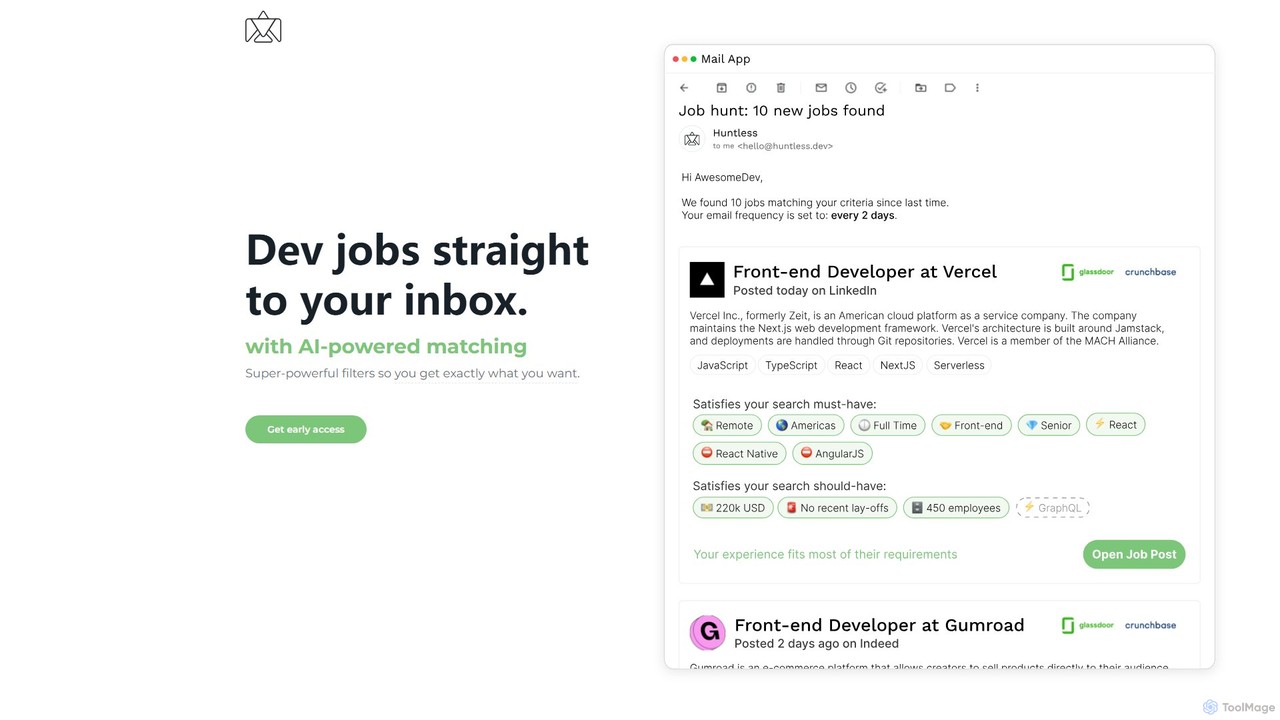
Huntless is an AI-powered job platform designed specifically for developers. It automates your job search by aggregating listings …

2.2K

About Recruitment

AI Recruitment tools are specialized platforms that leverage artificial intelligence to automate, optimize, and enhance various stages of the hiring process. These tools utilize machine learning, natural language processing (NLP), and predictive analytics to streamline talent acquisition, from candidate sourcing to initial screening and engagement. They aim to improve efficiency, reduce bias, and identify the best-fit candidates more effectively, allowing recruiters and hiring managers to focus on strategic decision-making and human interaction.

Core Features

  • Automated Candidate Sourcing: Scans vast databases and online platforms to identify potential candidates matching specific job requirements.
  • Intelligent Resume Screening: Analyzes resumes and applications for relevant skills, experience, and qualifications, significantly reducing manual review time.
  • AI-Powered Interviewing: Uses AI to analyze candidate responses, vocal tone, and facial expressions during initial interviews, providing objective insights.
  • Skill Matching & Assessment: Evaluates candidate skills against job descriptions and can administer AI-driven assessments to verify proficiencies.
  • Personalized Candidate Engagement: Automates communication with candidates through chatbots and personalized emails, improving candidate experience.

Use Cases

AI Recruitment tools are invaluable for organizations facing high-volume hiring, seeking specialized technical talent, or aiming to build diverse teams. They are particularly useful for HR departments and talent acquisition teams looking to reduce time-to-hire, improve candidate quality, and enhance overall recruitment efficiency across various industries, including tech, healthcare, and manufacturing.

How to Choose

When selecting an AI Recruitment tool, consider its integration capabilities with existing Applicant Tracking Systems (ATS) and HRIS. Evaluate the accuracy and transparency of its AI algorithms, especially regarding bias detection and mitigation. Assess the level of customization offered for job matching and candidate communication, and review data privacy and security protocols to ensure compliance with regulations like GDPR.

RecruitmentUse Cases

1

Automate Resume Screening for High-Volume Hiring

For large enterprises or fast-growing startups, manually sifting through hundreds of resumes for entry-level or high-volume positions is time-consuming. AI recruitment tools can automatically parse, analyze, and rank resumes based on predefined criteria, keywords, and skill sets. This allows recruiters to quickly identify the most qualified candidates, reducing screening time by up to 70% and ensuring no suitable applicant is overlooked due to human error or fatigue.

2

AI-Powered Sourcing for Niche Technical Talent

Hiring for specialized technical roles, such as AI engineers or cybersecurity experts, often requires searching beyond traditional job boards. AI recruitment platforms can scour professional networks, open-source communities, and academic databases to identify passive candidates with specific, hard-to-find skills. This proactive sourcing approach expands the talent pool significantly, helping companies find top-tier talent that might not be actively looking for new opportunities.

3

Scale Personalized Candidate Communication

Maintaining engaging communication with a large pool of candidates can be challenging. AI chatbots and automated email sequences can provide instant answers to frequently asked questions, schedule interviews, and send personalized updates throughout the hiring process. This enhances the candidate experience by offering timely and consistent information, reducing drop-off rates, and freeing up recruiters to focus on more complex interactions.

4

Reduce Unconscious Bias in Candidate Evaluation

Unconscious bias can inadvertently affect hiring decisions, leading to a lack of diversity. AI recruitment tools are designed to mitigate this by anonymizing candidate data, focusing solely on skills and qualifications, and providing objective assessments during initial screening and interviews. By standardizing evaluation criteria and removing subjective elements, these tools help organizations build more diverse and inclusive workforces.

5

Leverage Predictive Analytics for Hiring Success

Understanding which candidates are most likely to succeed and stay long-term is crucial for reducing turnover. AI recruitment platforms can analyze historical hiring data, candidate profiles, and performance metrics to predict future job success and retention rates. This data-driven insight empowers hiring managers to make more informed decisions, leading to better quality hires and a stronger, more stable workforce.

6

Streamline Onboarding with AI Assistants

The onboarding process can be complex, involving numerous forms, training modules, and information dissemination. AI assistants can guide new hires through initial paperwork, answer common questions about company policies, and provide access to necessary resources. This automation ensures a smoother, more efficient onboarding experience, allowing new employees to become productive faster and feel more integrated into the company culture from day one.

RecruitmentFrequently Asked Questions