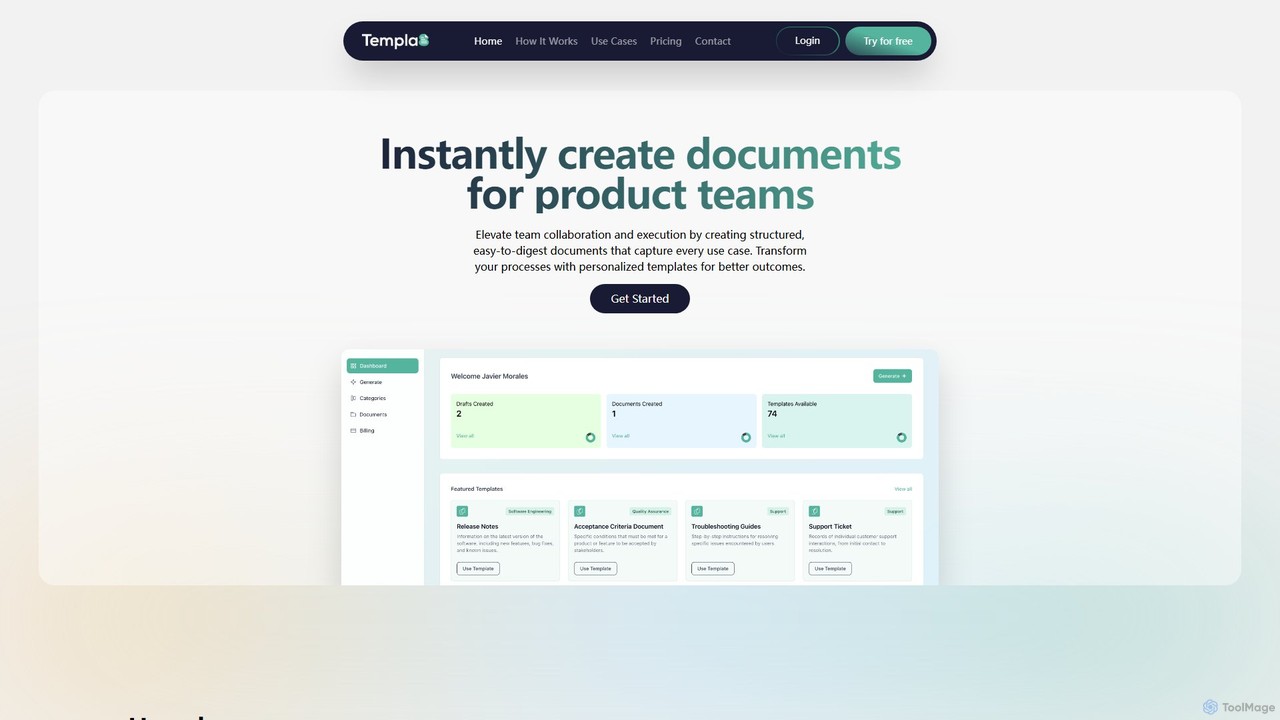
AI Technical Writing tools are specialized applications designed to assist in creating, managing, and optimizing technical documentation. These tools leverage natural language processing (NLP) and machine learning to automate tasks like generating API references, enforcing style consistency, and simplifying complex jargon. Their primary value lies in improving the accuracy, clarity, and maintainability of documents such as user manuals, SDK guides, and internal knowledge bases. By integrating directly with code repositories and development workflows, they help ensure documentation remains synchronized with the software it describes.
Core Features
- Documentation Generation: Automatically creates structured documents like API references or tutorials from source code comments, specifications (e.g., OpenAPI), or other data sources.
- Style and Terminology Enforcement: Analyzes text to ensure it adheres to a predefined style guide, maintaining consistent tone and terminology across all documents.
- Content Simplification: Rewrites complex technical sentences into clearer, more accessible language suitable for a broader audience.
- Code Snippet Management: Helps generate, validate, and update code examples within documentation to prevent them from becoming outdated.
- Structural Analysis: Provides feedback on document structure, logical flow, and completeness to enhance readability and user comprehension.
Use Cases
These tools are primarily used by software developers, dedicated technical writers, and product managers within technology companies. Common applications include generating and maintaining API documentation for external developers, creating comprehensive user guides for SaaS products, and building searchable internal knowledge bases to support engineering teams. They are essential in agile environments where software and its documentation must evolve rapidly and in parallel.
How to Choose
When selecting an AI Technical Writing tool, consider its integration capabilities with your existing toolchain, such as Git repositories, CI/CD pipelines, and IDEs. Evaluate its support for the specific programming languages and documentation formats (e.g., Markdown, AsciiDoc) you use. Also, assess the sophistication of its AI features, such as the accuracy of its content generation and the flexibility of its style guide customization. Finally, consider collaboration features and the overall user experience for your team.