ToolMage
Sign in

Best 2 Agent Builder AI tools for Development

Popular Agent Builder AI tools in Development include Ardor and Pydantic AI, helping you work more efficiently.

Pydantic AI
Free

Pydantic AI

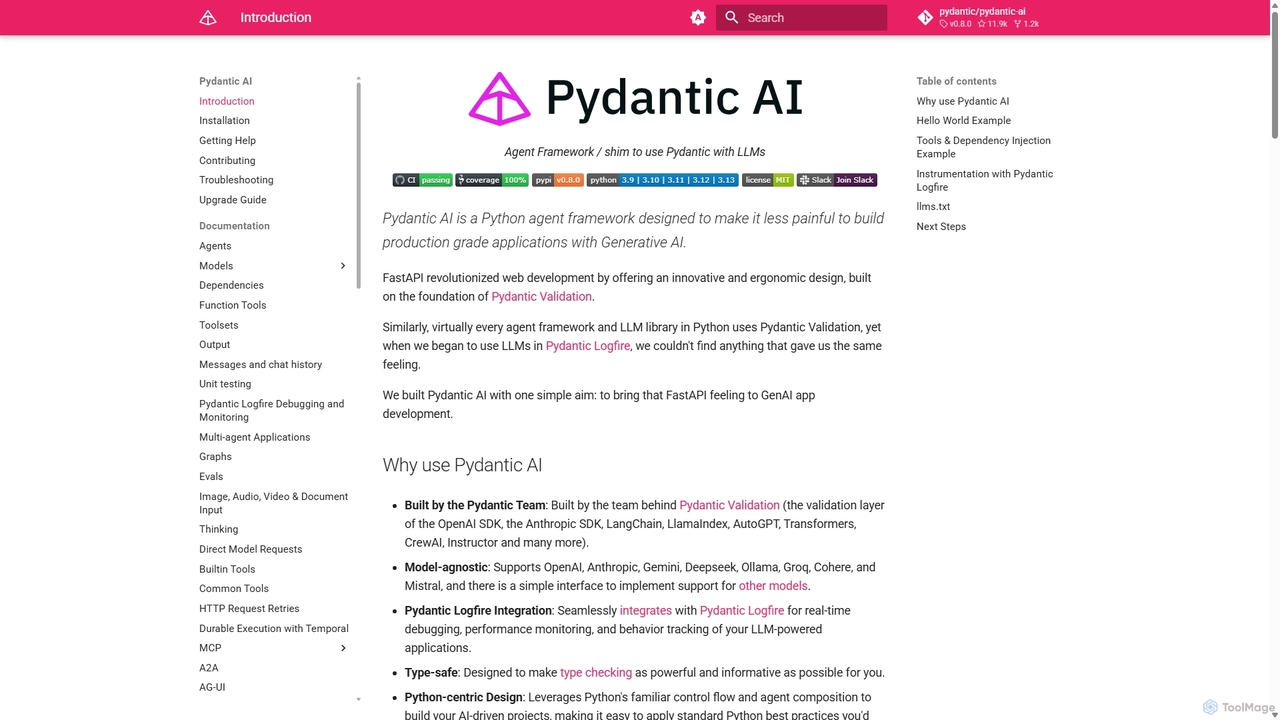
Pydantic AI is a Python agent framework from the creators of Pydantic, designed to simplify building production-grade Generative AI applications. It offers a model-agnostic approach, supporting major LLMs like OpenAI, Gemini, and Anthropic. By leveraging Pydantic's robust validation, it ensures type-safe, structured outputs, aiming to bring the ergonomic and intuitive developer experience of FastAPI to the world of AI agent development.

Agent Builder
Visits 7.5KFavorites 101Likes 107
Ardor
Freemium

Ardor

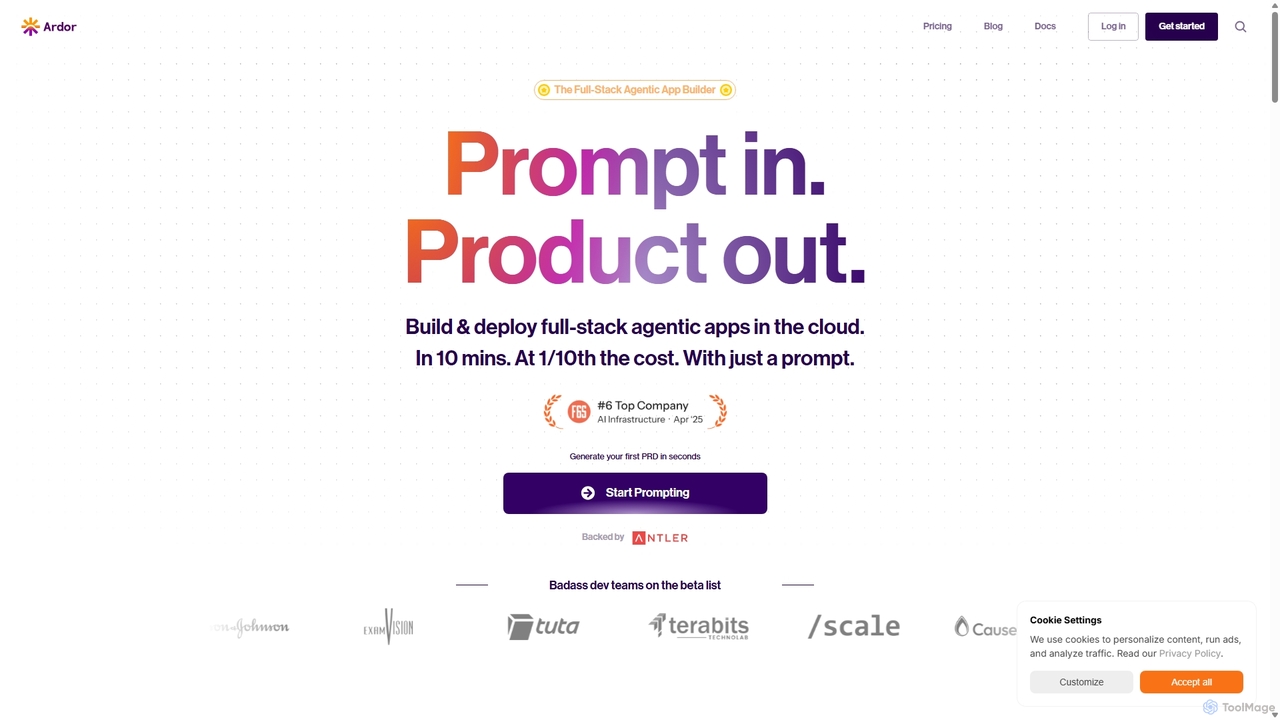
Ardor is a full-stack, multi-agent platform that revolutionizes software development by enabling users to build, deploy, and monitor complete agentic AI applications from a single prompt. It automates the entire software development lifecycle (SDLC), drastically reducing development time from months to minutes and cutting costs by up to 90%. Ideal for developers, startups, and enterprises looking to accelerate innovation.

Agent Builder
Visits 11.9KFavorites 106Likes 119

About Agent Builder

Agent Builder tools are specialized platforms within the Development category that enable users to design, configure, and deploy autonomous AI agents. These tools leverage large language models (LLMs), planning algorithms, and external tool integrations to create intelligent entities capable of performing complex tasks, making decisions, and interacting with various systems without constant human oversight. They empower developers and businesses to automate sophisticated workflows and build custom AI assistants.

Core Features

  • Agent Design Interface: Provides visual or code-based environments to define agent roles, goals, and behavioral logic.
  • Tool Integration: Allows agents to connect with external APIs, databases, web services, and custom tools to perform real-world actions.
  • Memory Management: Implements mechanisms for agents to store and retrieve both short-term context and long-term knowledge.
  • Planning & Reasoning: Equips agents with the ability to break down complex objectives into actionable steps and adapt execution based on new information.
  • Monitoring & Debugging: Offers tools to observe agent execution, identify issues, and refine agent behavior for optimal performance.

Use Cases

Agent Builders are utilized across various industries to create intelligent automation solutions. They are ideal for developing AI assistants that can handle multi-step processes, such as automating customer service interactions by integrating with CRM systems, or streamlining data analysis by connecting to multiple data sources and generating reports. These tools enable the creation of sophisticated agents that go beyond simple rule-based automation.

How to Choose

When selecting an Agent Builder, consider its flexibility in defining agent behaviors and integrating custom tools, as well as its compatibility with your existing tech stack. Evaluate the robustness of its monitoring and debugging features, which are crucial for managing complex agents. Assess the platform's scalability to ensure it can support your future needs, and compare pricing models based on usage or features to align with your budget and project requirements.

Featured tool rankings

Agent Builder use cases

1

Automated Customer Service & Support

A customer support manager deploys an AI agent built with an Agent Builder to handle routine inquiries, troubleshoot common issues, and provide personalized assistance. The agent integrates with the CRM system to access customer history and knowledge bases, reducing response times by 70% and freeing human agents for complex cases. It can also escalate unresolved issues to the appropriate department automatically.

2

Personalized Content Generation & Curation

A marketing team uses an Agent Builder to create an AI agent that researches trending topics, generates blog post drafts, and curates relevant news articles for social media. The agent learns from past content performance and audience engagement, producing highly relevant and engaging material. This automates a significant portion of content creation, allowing the team to focus on strategy and refinement, increasing content output by 50%.

3

Automated Data Analysis & Reporting

A data analyst configures an AI agent to automatically collect data from various sources (databases, APIs, spreadsheets), perform complex statistical analysis, identify key trends, and generate weekly performance reports. The agent can even visualize data and highlight anomalies, saving the analyst hours of manual work each week and ensuring timely, accurate insights for business decision-making.

4

Software Development & Testing Assistant

A software development team utilizes an Agent Builder to create an AI assistant that helps with code generation, bug identification, and test case creation. The agent integrates with version control systems and IDEs, suggesting code improvements, writing unit tests based on new features, and even performing basic debugging. This accelerates the development cycle by 30% and improves code quality.

5

Market Research & Trend Monitoring

A business intelligence analyst deploys an AI agent to continuously monitor news, social media, industry reports, and competitor activities. The agent identifies emerging market trends, sentiment shifts, and competitive threats, summarizing key findings and generating alerts. This proactive intelligence gathering helps the company stay ahead of the curve and make informed strategic decisions, reducing research time by 60%.

6

Automated IT Operations & Incident Response

An IT operations team uses an Agent Builder to create an AI agent that monitors system logs, identifies anomalies, and automatically initiates incident response protocols. The agent can diagnose common network issues, restart services, or even create support tickets with pre-filled information, significantly reducing downtime and manual intervention. This enhances system reliability and allows IT staff to focus on strategic projects.

Agent Builder FAQ

What are Agent Builders?

Agent Builders are platforms that allow users to create and deploy autonomous AI agents. These tools provide interfaces to define an agent's goals, behaviors, and access to external tools (like APIs or databases). They leverage advanced AI, particularly large language models, to enable agents to understand complex instructions, plan multi-step actions, and execute tasks dynamically. Their core purpose is to automate complex workflows that require reasoning and interaction with various systems.

How do Agent Builders differ from traditional automation tools like RPA?

Agent Builders create AI agents that are more intelligent and adaptable than traditional Robotic Process Automation (RPA) tools. While RPA excels at automating repetitive, rule-based tasks with structured data, AI agents can understand natural language, make decisions based on context, and adapt to unforeseen situations. Agent Builders empower agents with reasoning, memory, and tool-use capabilities, allowing them to handle complex, dynamic workflows that would be impossible for RPA, such as personalized customer interactions or dynamic data analysis.

What kind of tasks can an AI agent built with an Agent Builder perform?

AI agents built with an Agent Builder can perform a wide range of complex tasks that require understanding, planning, and interaction. This includes automating multi-step customer service workflows, generating personalized content (e.g., marketing copy, code snippets), conducting market research by analyzing vast amounts of data, and assisting in software development by writing or debugging code. They can also manage IT operations, monitor systems for anomalies, and initiate automated responses, effectively handling tasks that demand dynamic decision-making and integration with various tools.

What are the key components of an AI agent created using an Agent Builder?

An AI agent created with an Agent Builder typically consists of several key components. At its core is a large language model (LLM) for understanding and generating text. It also includes a 'memory' system for storing both short-term conversational context and long-term knowledge. A 'planning' module enables the agent to break down complex goals into actionable steps. Crucially, 'tool-use' capabilities allow the agent to interact with external systems (APIs, databases) to gather information or perform actions, making it truly autonomous and capable of real-world impact.

Who can benefit most from using Agent Builders?

Agent Builders primarily benefit developers, AI engineers, and businesses looking to automate complex, multi-step processes that require intelligent decision-making. Companies aiming to enhance customer service with advanced AI assistants, marketing teams seeking to automate content creation and market research, and IT operations teams needing intelligent system monitoring and incident response can all gain significant value. Essentially, anyone looking to build custom, autonomous AI solutions that go beyond simple scripting or rule-based automation will find Agent Builders invaluable.