MCPTotal
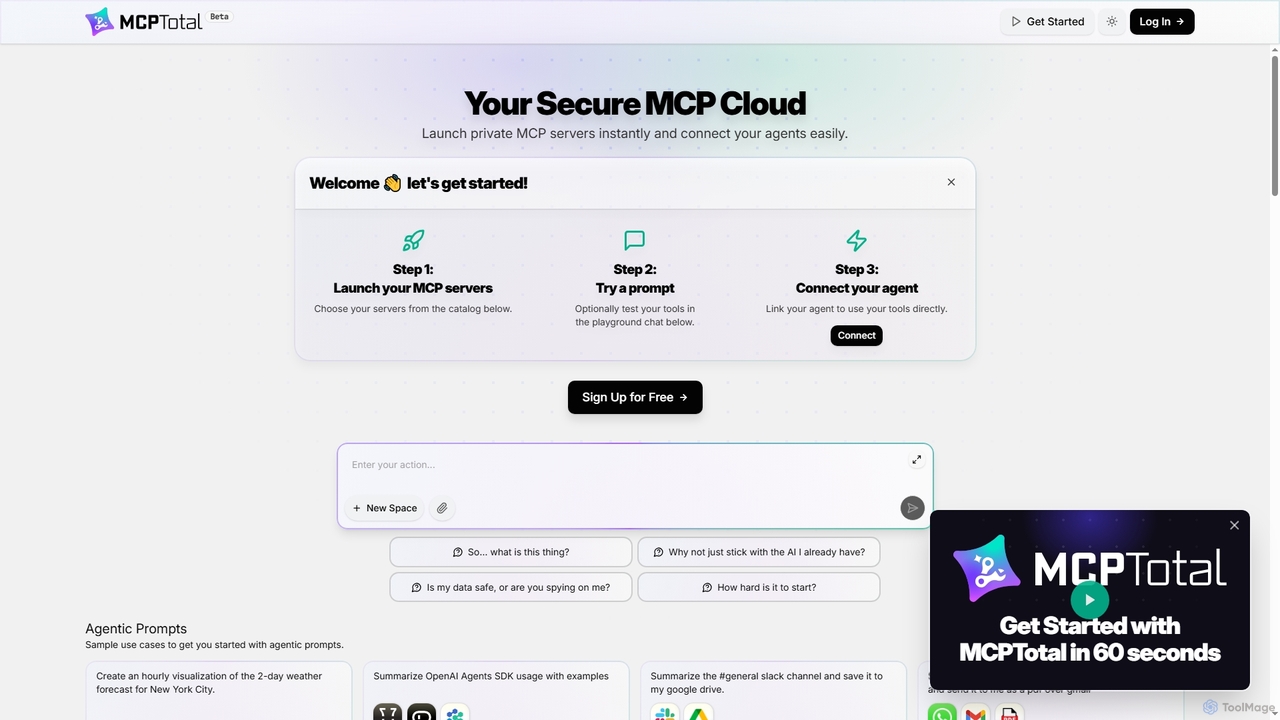
MCPTotal is a secure cloud platform that enables users to instantly launch private AI agent servers and easily …
MCPTotal is a secure cloud platform that enables users to instantly launch private AI agent servers and easily connect them to a vast catalog of third-party tools and services. It empowers AI agents to perform complex tasks across communication, productivity, development, and data management by providing real-time access and interaction capabilities.
Oneinfer
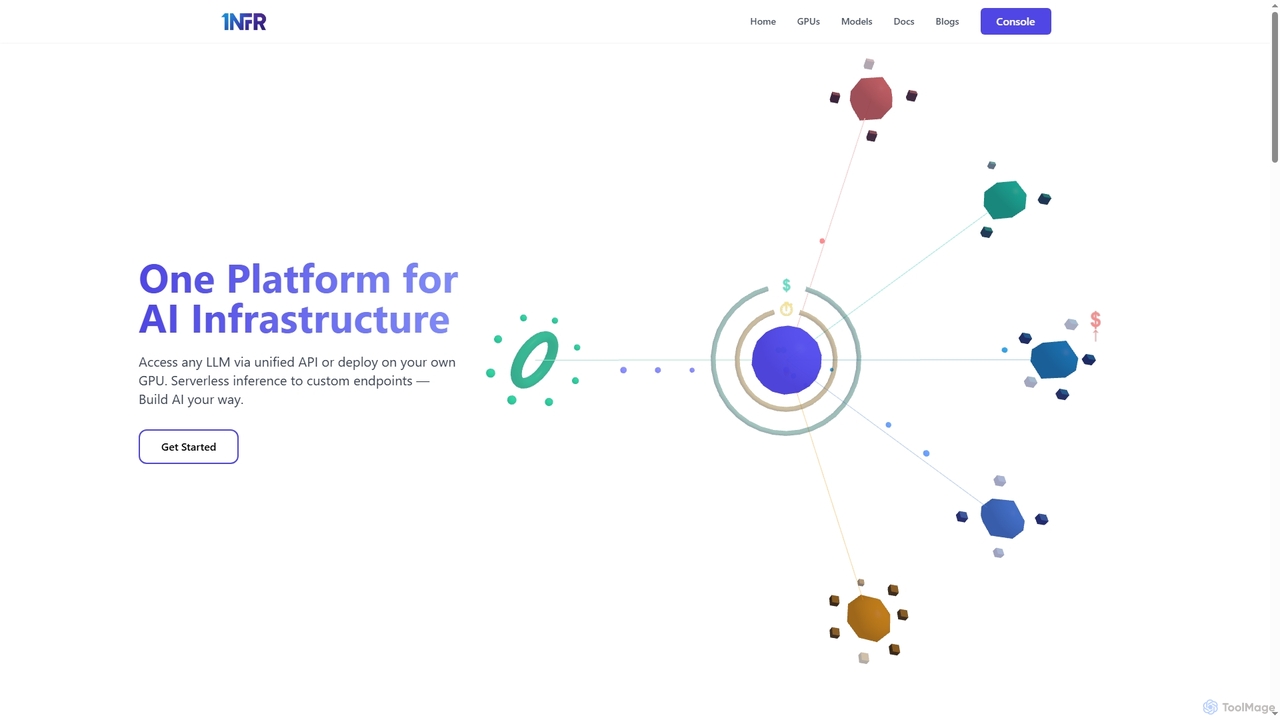
Oneinfer is a high-performance AI inference platform for developers. It offers a unified API to access over 15 …
Oneinfer is a high-performance AI inference platform for developers. It offers a unified API to access over 15 LLMs like GPT-4 and Claude, simplifying AI integration. The platform features serverless deployment, automatic scaling, enterprise-grade security, and pay-as-you-go pricing. It also provides a marketplace for renting GPU instances for custom AI workloads.
BlizzardBerry
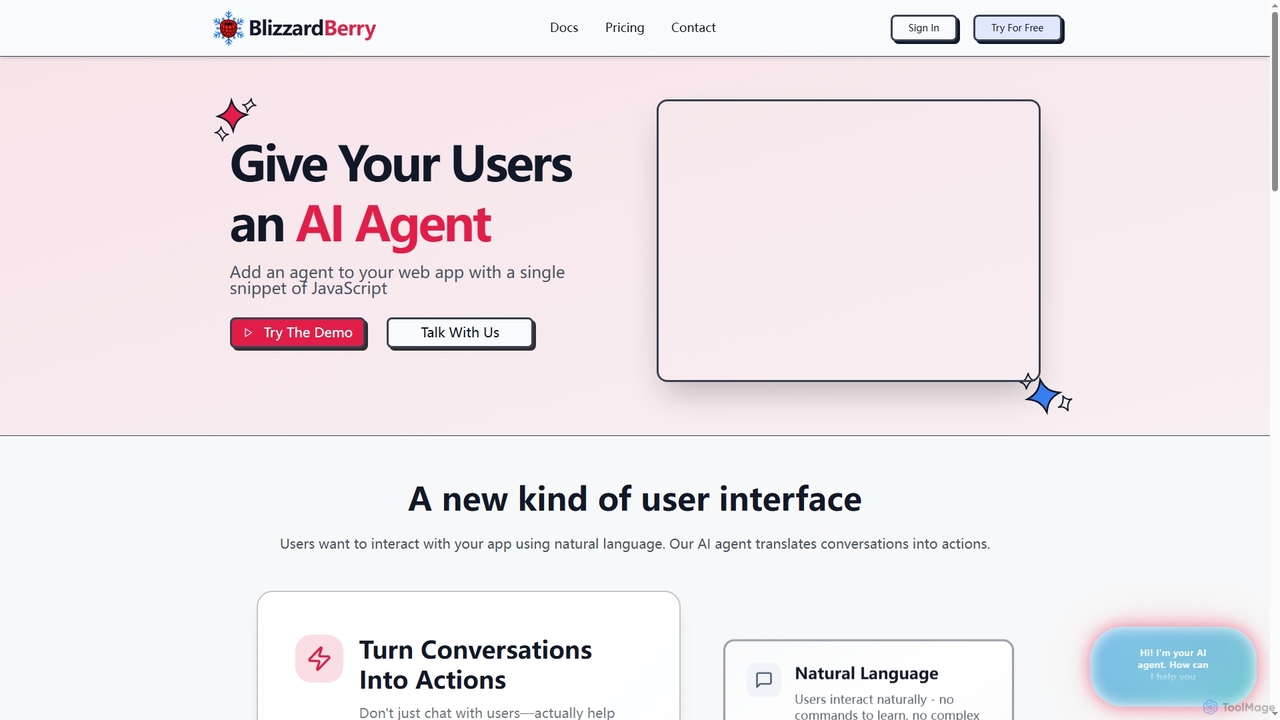
BlizzardBerry integrates AI agents into your web application with a single JavaScript snippet, enabling natural language interaction and …
BlizzardBerry integrates AI agents into your web application with a single JavaScript snippet, enabling natural language interaction and automating tasks. It transforms user experience by allowing conversations to translate directly into actions, from upgrading accounts to processing orders, providing instant, personalized support 24/7.
Geekflare AI
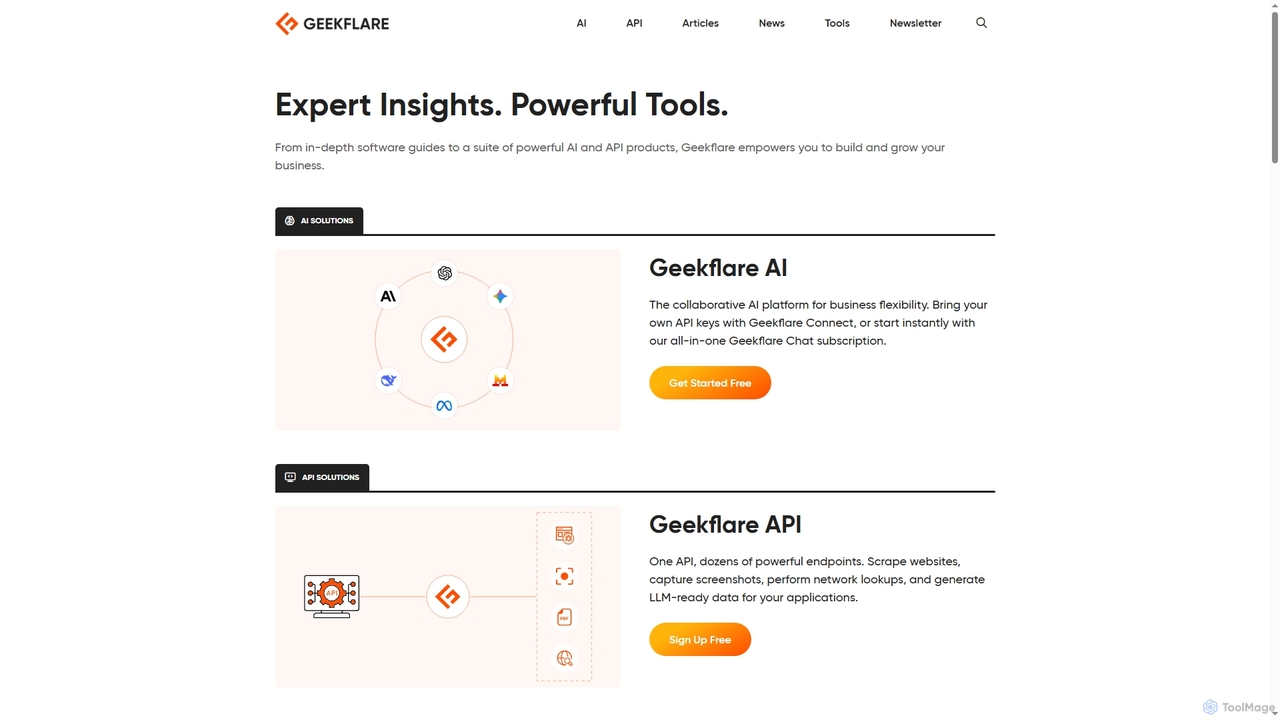
Geekflare AI is a collaborative artificial intelligence platform designed to enhance business flexibility. It allows users to integrate …
Geekflare AI is a collaborative artificial intelligence platform designed to enhance business flexibility. It allows users to integrate their own API keys via Geekflare Connect or access an all-in-one AI chat experience through a Geekflare Chat subscription, empowering businesses to automate tasks and accelerate growth.
EnhanceAI
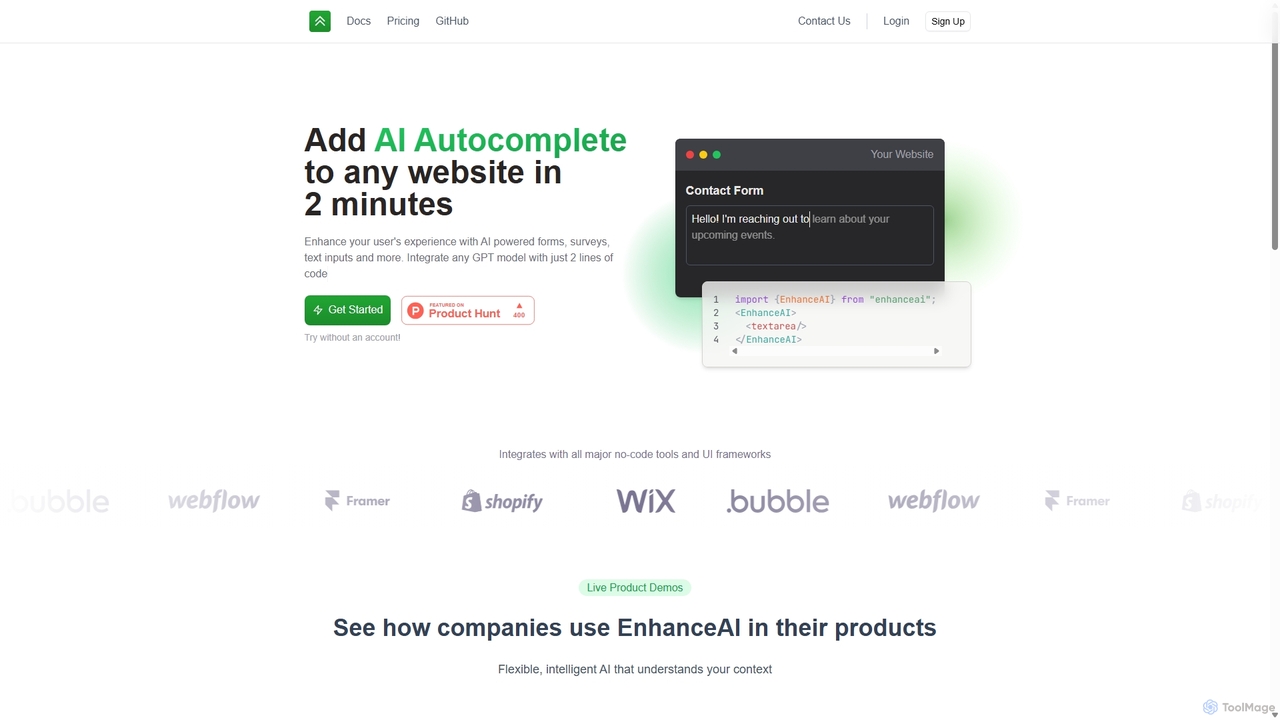
EnhanceAI is a developer tool that allows you to add powerful AI autocomplete capabilities to any website or …
EnhanceAI is a developer tool that allows you to add powerful AI autocomplete capabilities to any website or application in under two minutes. By integrating with GPT models like GPT-4, it enhances user experience in forms, text inputs, and surveys. It's a simple, context-aware solution for developers to embed AI-powered text generation without building the infrastructure from scratch.
PropelData
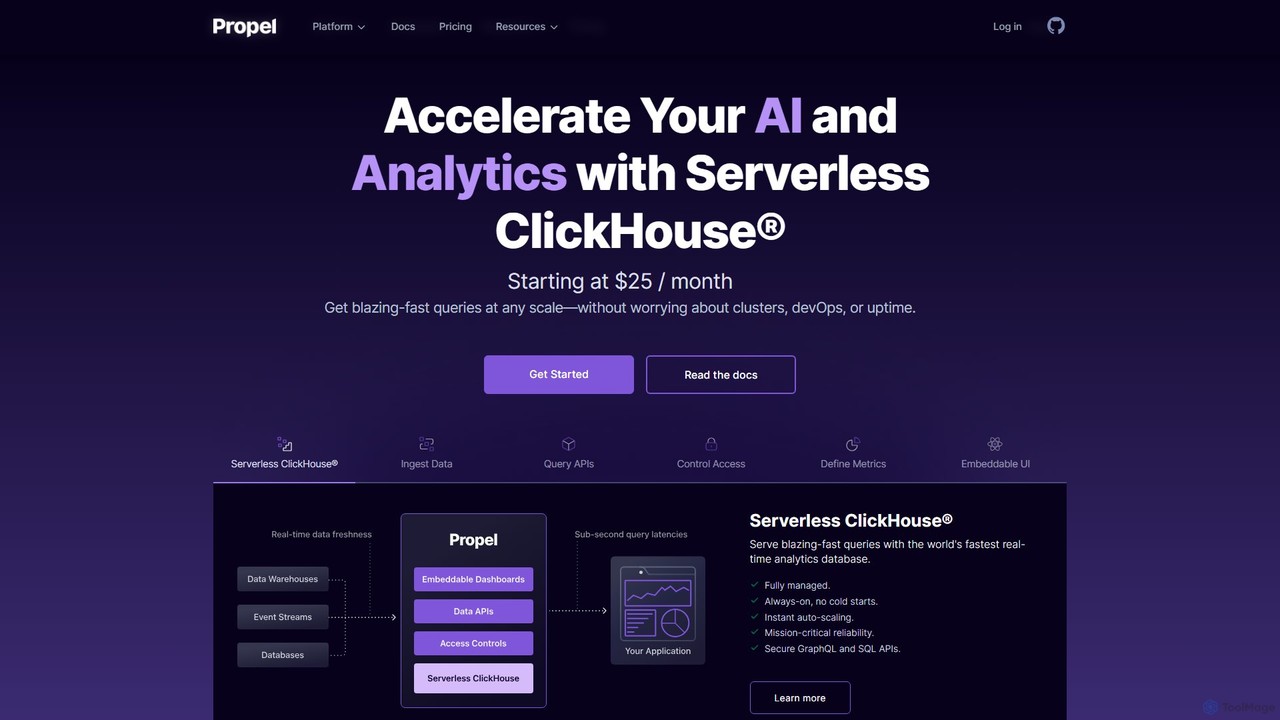
PropelData is a serverless data platform for developers, built on ClickHouse, designed to accelerate the creation of AI …
PropelData is a serverless data platform for developers, built on ClickHouse, designed to accelerate the creation of AI and analytics applications. It provides a complete toolkit, including data ingestion, real-time transformations, and secure APIs, enabling developers to build fast, scalable, and native-looking customer-facing analytics dashboards and features directly into their products without managing complex data infrastructure.
Fiorino.AI
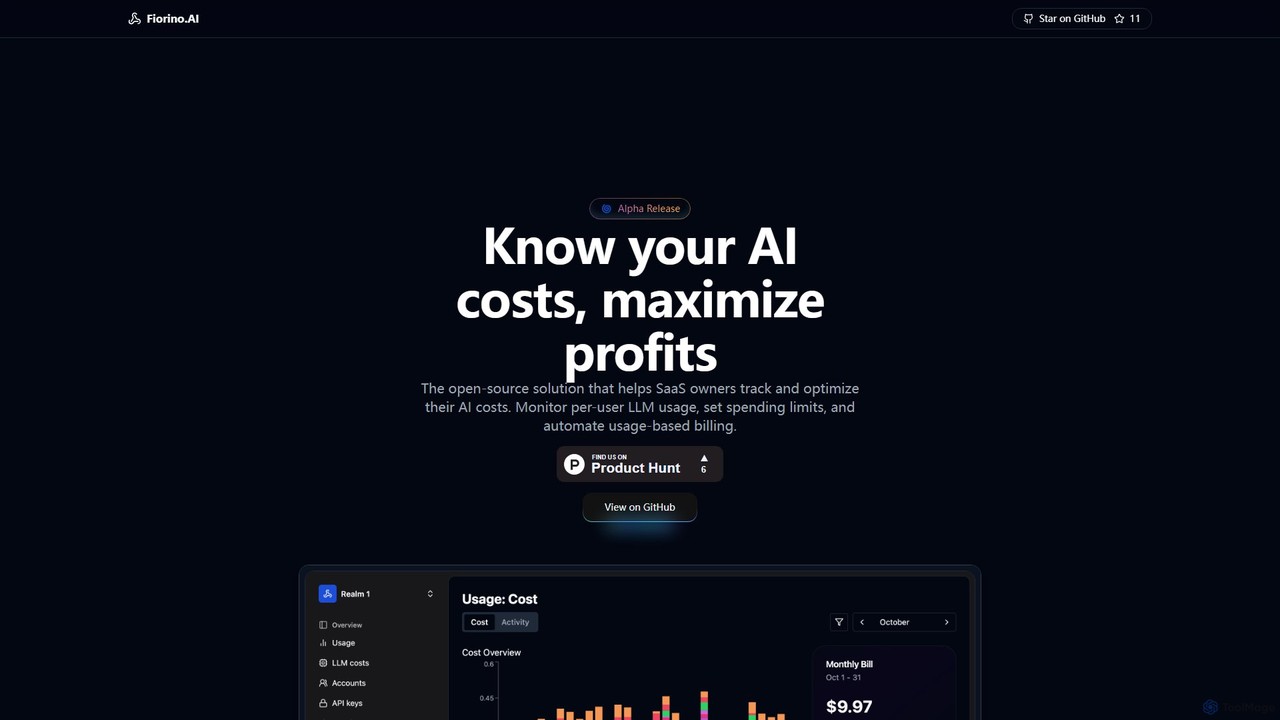
Fiorino.AI is an open-source AI cost management platform designed for SaaS businesses. It enables you to track per-user …
Fiorino.AI is an open-source AI cost management platform designed for SaaS businesses. It enables you to track per-user LLM usage, optimize costs across multiple AI providers, and automate usage-based billing. Gain real-time insights into your AI spending to maximize profitability and efficiency.
About Api & Integration
AI API & Integration tools provide programmatic access to powerful artificial intelligence models and functionalities. These tools act as a bridge, allowing developers to embed capabilities like natural language processing, image generation, or data analysis directly into their own applications, websites, and workflows without building the underlying models from scratch. They enable the rapid development of AI-powered features, accelerating innovation and enhancing user experiences across various digital products. This approach significantly lowers the barrier to entry for implementing advanced AI.
Core Features
- Model Endpoints: Direct API access to state-of-the-art AI models for tasks like text, image, and audio processing.
- SDKs & Client Libraries: Pre-built code packages for popular programming languages that simplify API calls and integration.
- Scalable Infrastructure: Managed, cloud-based hosting that handles traffic spikes and computational demands automatically.
- Comprehensive Documentation: Detailed guides, code examples, and API references to assist developers during implementation.
- Management Dashboard: A web interface for monitoring API usage, managing keys, and tracking costs.
Use Cases
These tools are fundamental for developers and businesses looking to build AI-native applications or enhance existing software. Common applications include powering intelligent chatbots for customer support, automating content moderation on social platforms, creating personalized recommendation engines for e-commerce, and integrating voice command features into mobile apps.
How to Choose
When selecting an AI API & Integration tool, evaluate the quality and performance of the specific models offered. Consider the pricing structure (e.g., pay-per-use, subscription), the clarity of the documentation, and the availability of SDKs for your preferred programming language. Also, assess factors like API latency, rate limits, and the provider's data privacy policies.
Api & IntegrationUse Cases
Build a Custom AI-Powered Chatbot
A software developer for an e-commerce company uses a large language model (LLM) API to create a sophisticated customer service chatbot. Instead of relying on rigid scripts, the developer integrates the API into the company's website chat widget. This allows the chatbot to understand complex customer queries, access order information via internal APIs, and provide natural, human-like responses 24/7, reducing support ticket volume by 40%.
Automate Content Moderation
The trust and safety team at a social media startup integrates a content analysis API into their platform. Every time a user uploads an image or posts a comment, the content is sent to the API for analysis. The API automatically detects and flags potential violations like hate speech or explicit imagery based on pre-trained models, allowing human moderators to focus only on edge cases and appeals, improving platform safety and response time.
Enhance Application Search with Semantics
A product manager at a SaaS company wants to improve the in-app search functionality. They task their development team with integrating a semantic search API. This API converts user search queries and help documents into numerical vectors. The system then finds the most relevant documents by comparing vector similarity, not just keyword matches. This allows users to find answers using natural language, significantly improving the user experience and reducing support requests.
Integrate Image Recognition into a Mobile App
A mobile app developer is creating a plant identification app. They use an image recognition API that is pre-trained on millions of plant images. When a user takes a photo of a plant, the app sends the image to the API endpoint. The API processes the image and returns a list of probable plant species with confidence scores, providing the core functionality of the app without the developer needing to train a complex computer vision model themselves.
Power an Automated Data Extraction Pipeline
A financial analyst needs to process hundreds of PDF invoices daily. They build an automated workflow using a document intelligence API. The script uploads each PDF to the API, which uses optical character recognition (OCR) and natural language processing (NLP) to identify and extract key fields like invoice number, date, total amount, and line items. The extracted data is then automatically populated into a spreadsheet, saving hours of manual data entry.
Develop Voice-Controlled Features
An IoT developer is building a smart home application. To enable voice commands, they integrate both a speech-to-text (STT) and a text-to-speech (TTS) API. The STT API transcribes the user's spoken commands (e.g., "Turn off the living room lights") into text. The application logic processes the text command, and the TTS API provides a natural-sounding voice confirmation back to the user, creating a seamless hands-free experience.