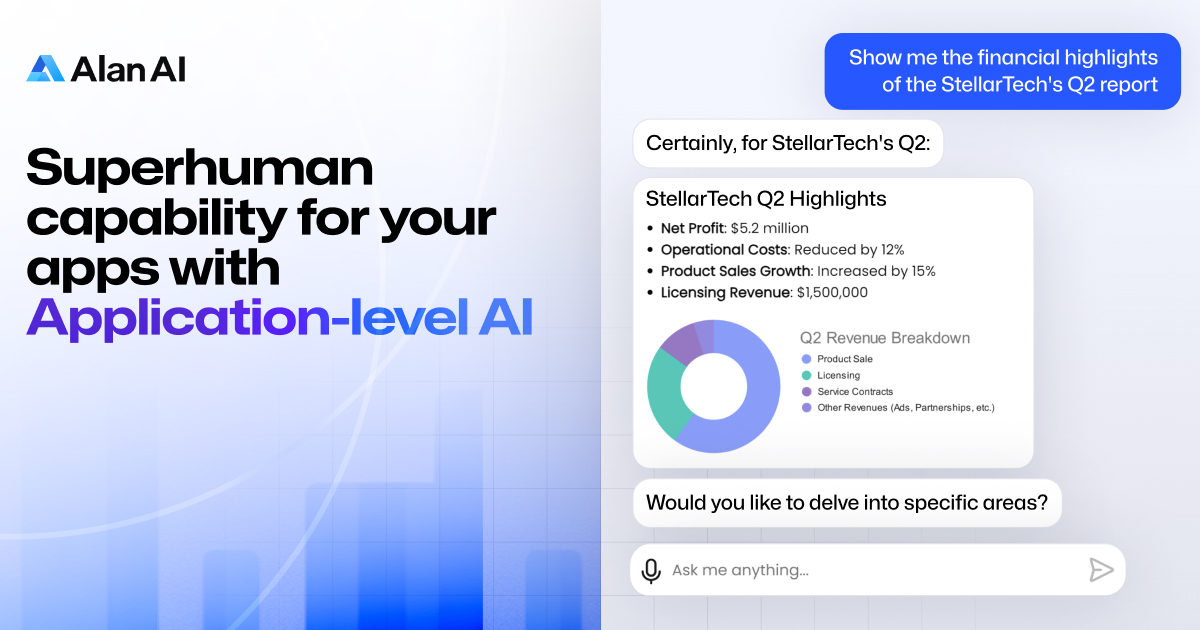
AI Application Development tools are a class of software that uses artificial intelligence to accelerate the entire lifecycle of creating software applications. These tools leverage large language models and machine learning to automate tasks like code generation, UI design, testing, and debugging. Their primary value lies in reducing development time, lowering the technical barrier for new creators, and improving code quality. Many platforms integrate directly into existing IDEs or offer low-code/no-code environments for rapid prototyping and deployment.
Core Features
- AI-Powered Code Generation: Automatically writes code snippets, functions, or entire modules from natural language prompts.
- Automated Testing: Generates unit tests, integration tests, and end-to-end tests to ensure application reliability.
- Intelligent Debugging: Analyzes code to identify bugs, suggest fixes, and explain complex errors.
- UI/UX Prototyping: Creates user interface designs and front-end code from sketches, wireframes, or text descriptions.
- Natural Language to Query: Translates plain language requests into database queries (e.g., SQL) or API calls.
Use Cases
These tools are widely used by software developers, product managers, and tech startups. For instance, a developer can use an AI assistant to refactor legacy code, while a product manager can build a functional prototype using a no-code AI platform without writing a single line of code. They are particularly effective in Agile development environments for speeding up sprints and iterating on features faster.
How to Choose
When selecting an AI Application Development tool, consider its integration capabilities with your current tech stack (e.g., IDEs, version control). Evaluate the scope of its features—does it focus solely on code completion or offer a full-cycle platform? Also, assess the supported programming languages and frameworks, as well as the pricing model, which can range from per-user subscriptions to usage-based fees.