ToolMage
Sign in

Best 1 Cms AI tools for Development

Popular Cms AI tools in Development include Wisp, helping you work more efficiently.

Wisp
Freemium

Wisp

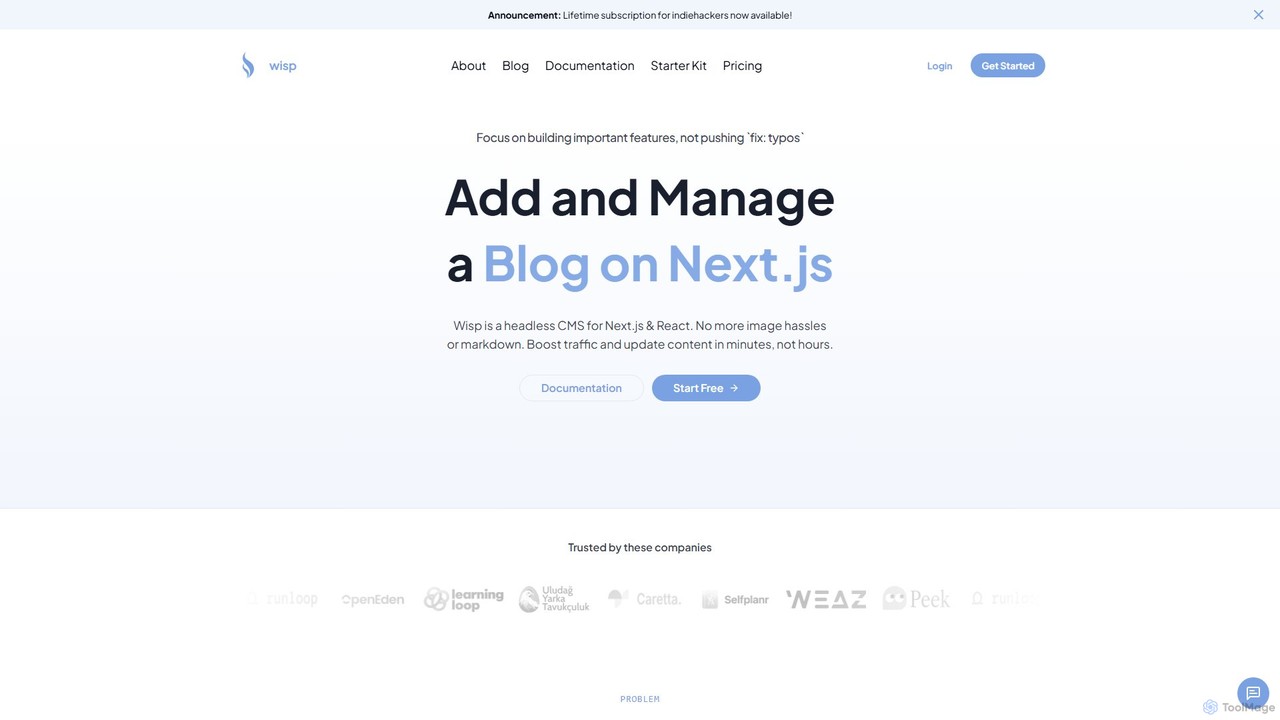
Wisp is an AI-powered headless CMS designed specifically for Next.js and React applications. It enables developers and content creators to add a high-performance, SEO-friendly blog to their sites in minutes, streamlining content updates and boosting organic traffic with intelligent features.

Cms
Visits 47.7KFavorites 150Likes 149

About Cms

AI-powered CMS (Content Management System) tools are platforms that integrate artificial intelligence to automate and enhance various aspects of content creation, management, and delivery. These tools leverage AI algorithms for tasks such as content generation, intelligent organization, personalization, and optimization, moving beyond traditional static content management. They empower businesses and content creators to manage digital assets more efficiently, deliver highly relevant experiences to users, and scale their content operations with unprecedented intelligence.

Core Features

  • AI Content Generation: Automatically drafts articles, product descriptions, or social media posts based on prompts and data.
  • Intelligent Content Organization: Uses AI to tag, categorize, and recommend content, improving discoverability and structure.
  • Personalized Content Delivery: Dynamically adapts website content, recommendations, and user journeys based on individual user behavior.
  • Automated SEO Optimization: Analyzes content for SEO best practices, suggests keywords, and optimizes meta descriptions for better search rankings.
  • Multi-language Content Management: Facilitates automated translation and localization of content for global audiences.

Applicable Scenarios

AI-powered CMS tools are invaluable for organizations managing large volumes of digital content, seeking to personalize user experiences, or aiming to streamline content workflows. They are widely adopted in content marketing, e-commerce, and digital publishing to automate routine tasks and enhance strategic content initiatives.

How to Choose

When selecting an AI CMS, consider its specific AI capabilities (e.g., generation, personalization, optimization), integration with your existing tech stack, scalability to handle future content needs, and the level of control and customization offered. Evaluate the platform's ease of use for both content creators and developers, along with its security features and support for compliance standards.

Cms use cases

1

Automated Blog Post Drafting for Content Marketing

A content marketing team needs to publish daily blog posts to maintain audience engagement and SEO. An AI-powered CMS can draft initial blog post outlines and content based on target keywords and topics. This allows human writers to focus on refining, adding unique insights, and ensuring brand voice, significantly accelerating content production cycles and increasing output volume.

2

E-commerce Product Description Generation and Optimization

An e-commerce business with thousands of products struggles to create unique, SEO-friendly descriptions for each. An AI CMS can generate compelling product descriptions from basic product data (e.g., features, specifications). It can also optimize these descriptions for relevant keywords, ensuring better search visibility and conversion rates, saving countless hours of manual writing.

3

Personalized Website Content for Enhanced User Experience

A digital publisher wants to offer a highly personalized experience to its readers. An AI CMS analyzes user browsing history, preferences, and demographics to dynamically display relevant articles, news feeds, and advertisements. This personalization increases user engagement, time spent on site, and click-through rates, making the website more sticky and valuable.

4

Streamlining Multi-language Content Localization

A global enterprise needs to manage its website content in ten different languages. An AI CMS integrates automated translation and localization features, allowing content creators to publish in one language and have AI generate localized versions. This drastically reduces the time and cost associated with manual translation, ensuring consistent global messaging.

5

Intelligent Content Tagging and Categorization for Large Archives

A media company possesses a vast archive of articles, videos, and images that are difficult to search and manage. An AI CMS automatically analyzes new and existing content, applying relevant tags, categories, and metadata. This intelligent organization improves content discoverability for both internal teams and external users, enhancing content reuse and search functionality.

6

Dynamic A/B Testing and Optimization of Landing Pages

A marketing team aims to maximize conversion rates on their landing pages. An AI CMS can dynamically generate and test multiple variations of headlines, calls-to-action, and body copy. By continuously analyzing user interactions and conversion data, the AI identifies the most effective content elements, automatically optimizing pages for peak performance without constant manual intervention.

Cms FAQ

What are AI-powered CMS tools?

AI-powered CMS tools are content management systems that integrate artificial intelligence capabilities to automate and enhance content workflows. Unlike traditional CMS, they use AI for tasks like content generation, intelligent organization, personalization, and SEO optimization, making content management more efficient, dynamic, and data-driven.

How do AI CMS tools differ from traditional CMS platforms?

The primary difference lies in the level of automation and intelligence. Traditional CMS platforms provide frameworks for manual content creation and organization. AI CMS tools, however, leverage AI to automate content drafting, suggest optimizations, personalize delivery based on user behavior, and intelligently categorize content, significantly reducing manual effort and improving content effectiveness.

What are the key benefits of using AI in content management systems?

Integrating AI into CMS offers several benefits, including increased efficiency through automation of routine tasks, enhanced content personalization for better user engagement, improved SEO performance via AI-driven optimization suggestions, and scalability for managing vast amounts of content across multiple channels and languages. It also provides deeper insights into content performance.

What should I consider when choosing an AI CMS for my business?

Key considerations include the specific AI features offered (e.g., content generation, personalization, analytics), its integration capabilities with your existing marketing and development tools, scalability to meet future growth, and the platform's user-friendliness for your content and development teams. Also, evaluate pricing models, security protocols, and the vendor's support.

Can AI CMS tools fully automate content creation?

While AI CMS tools can significantly automate content creation by drafting outlines, generating initial text, or creating variations, they typically do not fully replace human input. Human oversight is crucial for ensuring factual accuracy, maintaining brand voice, adding unique insights, and refining content for quality and emotional resonance. AI acts as a powerful assistant, not a complete substitute.