Protego
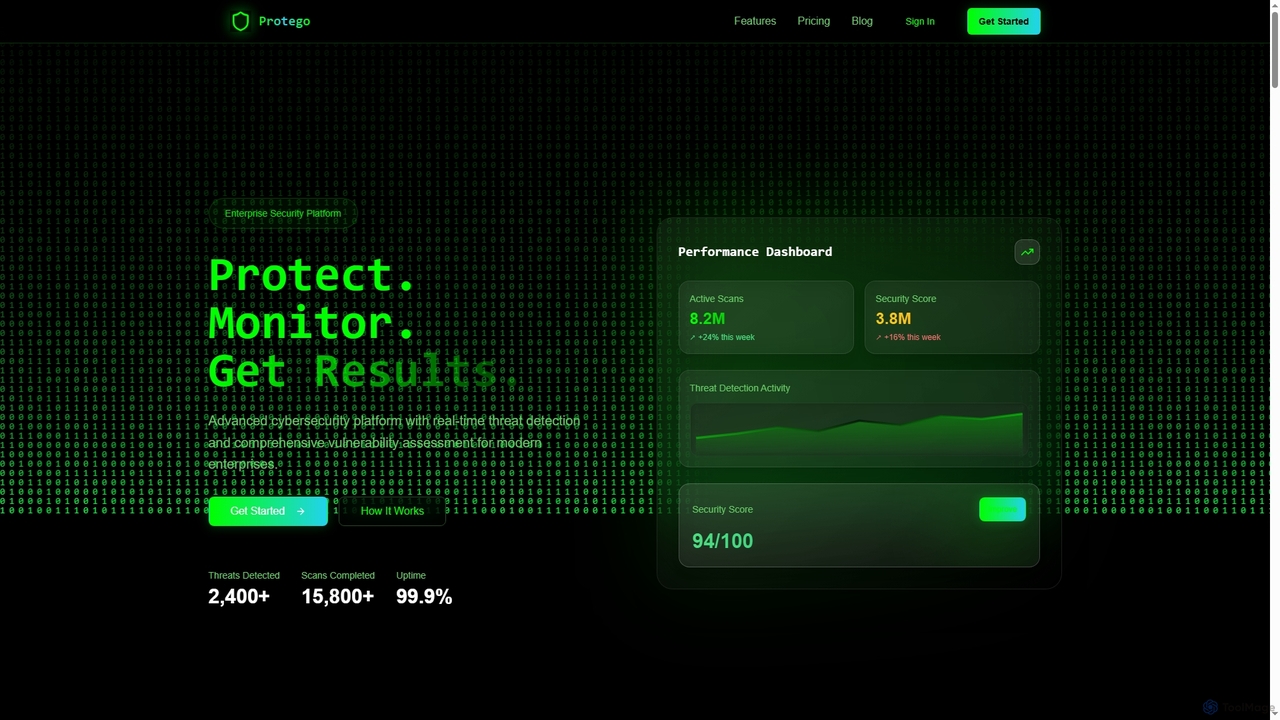
Protego is an advanced AI-powered cybersecurity platform offering real-time threat detection and comprehensive vulnerability assessment for enterprises. It …
Protego is an advanced AI-powered cybersecurity platform offering real-time threat detection and comprehensive vulnerability assessment for enterprises. It provides continuous monitoring, lightning-fast automated scans, and deep analytics to protect digital assets and ensure compliance.
About Devsecops
DevSecOps tools integrate security practices directly into the entire software development lifecycle, from initial design to deployment and operations. These platforms automate security testing, vulnerability scanning, and compliance checks within CI/CD pipelines, ensuring security is a shared responsibility across development, security, and operations teams. By embedding security early and continuously, DevSecOps aims to identify and remediate vulnerabilities faster, reduce risks, and accelerate secure software delivery.
Core Features
- Automated Security Testing: Integrates SAST, DAST, IAST, and SCA tools into CI/CD pipelines for continuous vulnerability detection.
- Vulnerability Management: Centralizes the identification, prioritization, and remediation tracking of security flaws across applications.
- Compliance and Policy Enforcement: Automates checks against regulatory standards and internal security policies throughout development.
- Container Security: Scans container images and registries for vulnerabilities and misconfigurations before deployment.
- Infrastructure as Code (IaC) Security: Analyzes IaC templates (e.g., Terraform, CloudFormation) for security misconfigurations.
Applicable Scenarios
DevSecOps tools are crucial for organizations developing cloud-native applications, microservices, or any software requiring high security and compliance. Development teams use them to embed security checks into their daily workflows, while security teams leverage them for continuous monitoring and policy enforcement. Operations teams benefit from more secure deployments and reduced post-release vulnerabilities.
How to Choose
When selecting DevSecOps tools, consider their integration capabilities with your existing CI/CD tools, version control systems, and cloud environments. Evaluate the breadth of security testing types offered (SAST, DAST, SCA), the accuracy of vulnerability detection, and the ease of policy definition and enforcement. Scalability, reporting features, and support for your specific technology stack are also critical factors.

DevsecopsUse Cases
Automated Code Vulnerability Scanning
Developers integrate DevSecOps tools into their CI/CD pipelines to automatically scan new code commits for security vulnerabilities (SAST) and open-source component risks (SCA). This allows them to identify and fix security flaws early in the development cycle, before they reach production, significantly reducing the cost and effort of remediation and preventing potential breaches.
Continuous Compliance Monitoring
Organizations in regulated industries (e.g., finance, healthcare) use DevSecOps platforms to continuously monitor their applications and infrastructure for compliance with industry standards like GDPR, HIPAA, or PCI DSS. The tools automate policy enforcement and generate audit trails, ensuring that security controls are consistently applied and documented throughout the software delivery process, simplifying audits.
Securing Containerized Applications
DevSecOps tools are essential for teams deploying applications in container environments like Docker and Kubernetes. They scan container images for known vulnerabilities, enforce security policies on container configurations, and monitor runtime behavior for suspicious activities. This proactive approach helps prevent insecure images from being deployed and protects containerized workloads from attacks.
Infrastructure as Code (IaC) Security Audits
Cloud engineers and DevOps teams use DevSecOps solutions to analyze their Infrastructure as Code (IaC) templates, such as Terraform or CloudFormation, for security misconfigurations before provisioning resources. This ensures that cloud infrastructure is deployed securely from the outset, preventing common issues like open S3 buckets or overly permissive IAM roles, and reducing cloud attack surfaces.
Dynamic Application Security Testing (DAST)
Security teams employ DevSecOps tools to perform dynamic application security testing (DAST) on running applications, often in staging or pre-production environments. DAST simulates real-world attacks to identify vulnerabilities like SQL injection, cross-site scripting (XSS), and authentication flaws that might be missed by static analysis. This provides a comprehensive view of an application's security posture from an attacker's perspective.
Supply Chain Security for Software
Organizations leverage DevSecOps tools to enhance software supply chain security by scanning third-party libraries, dependencies, and container images for known vulnerabilities and malicious code. This helps prevent the introduction of compromised components into their applications, ensuring the integrity and trustworthiness of the entire software delivery pipeline from source to deployment.