SaaSminder
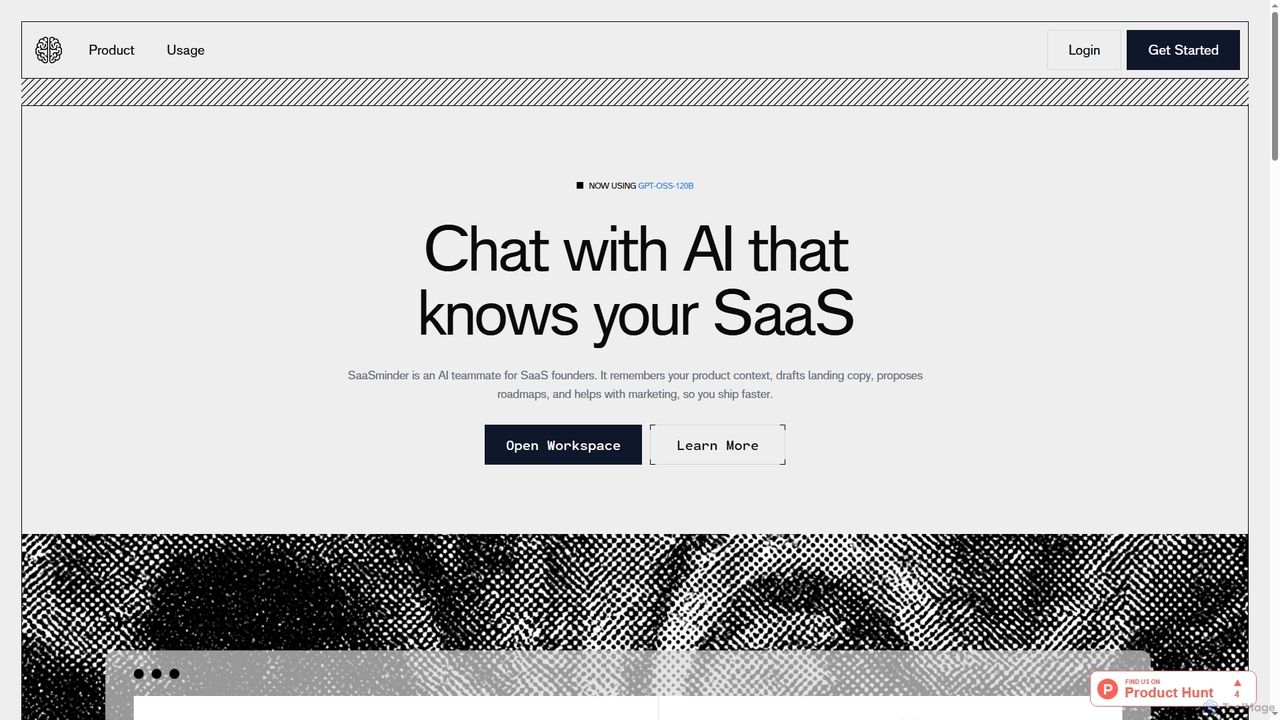
SaaSminder is an AI teammate designed specifically for SaaS founders and teams. It acts as a smart assistant …
SaaSminder is an AI teammate designed specifically for SaaS founders and teams. It acts as a smart assistant that remembers your product's context, helping you accelerate development and marketing efforts. From drafting landing page copy and proposing product roadmaps to generating growth experiments and product documentation, SaaSminder streamlines your workflow, enabling faster shipping and clearer communication.
Signlz
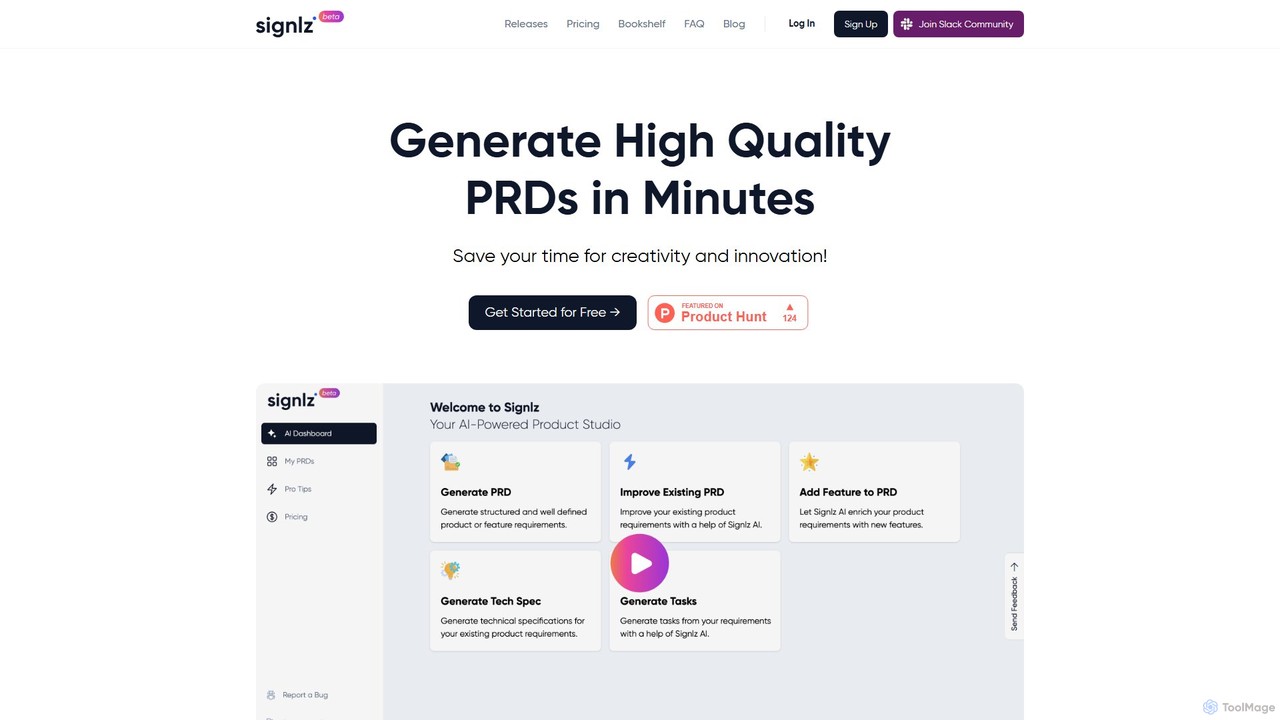
Signlz is an AI-powered platform designed for product managers to streamline the creation of Product Requirements Documents (PRDs). …
Signlz is an AI-powered platform designed for product managers to streamline the creation of Product Requirements Documents (PRDs). It transforms simple prompts into structured, professional PRDs, technical specifications, and actionable user stories. With seamless Jira integration and a specialized knowledge base of product management frameworks, Signlz automates tedious documentation, allowing product teams to focus on innovation and strategy.
prdkit
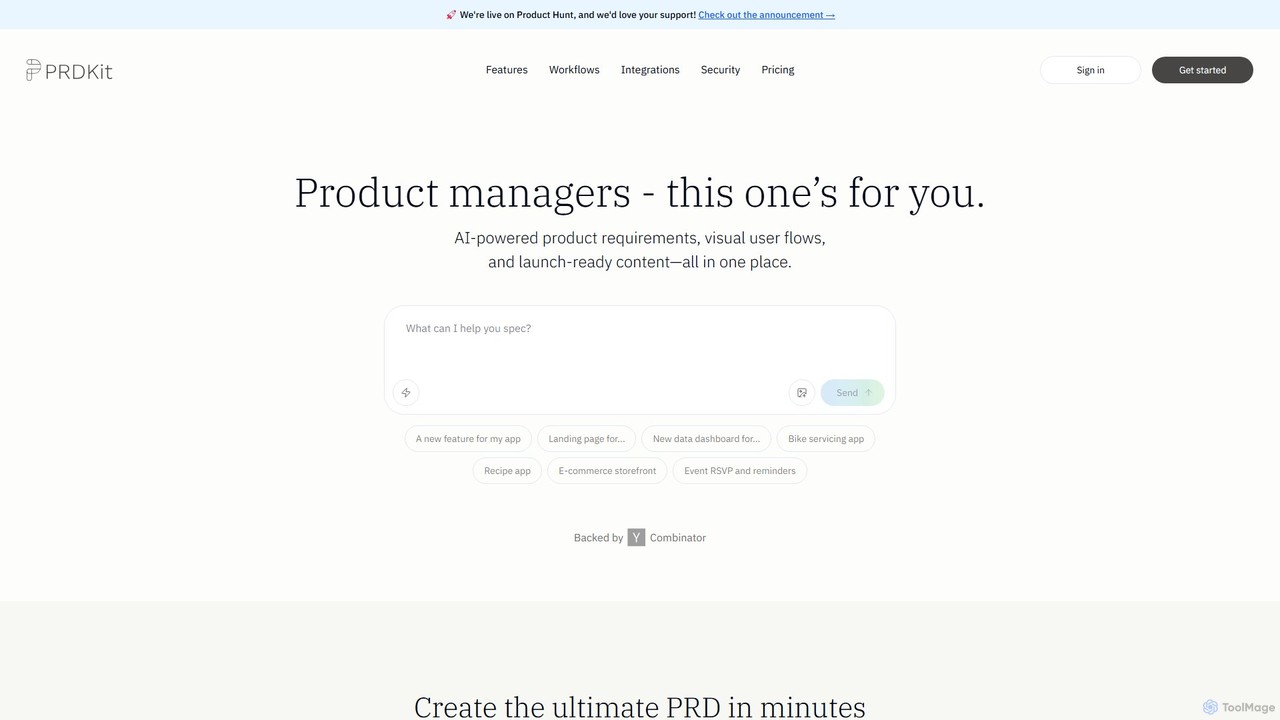
prdkit is an AI-powered platform designed for product managers to streamline the creation of product requirements documents (PRDs), …
prdkit is an AI-powered platform designed for product managers to streamline the creation of product requirements documents (PRDs), visual user flows, and launch-ready content. By simply chatting with the AI, users can transform ideas into comprehensive, structured documentation and visual assets in minutes, accelerating the entire product development lifecycle.
About Product Management
AI Product Management tools are a specialized category of software designed to automate and enhance the strategic phases of the product lifecycle. They leverage artificial intelligence, particularly natural language processing (NLP) and machine learning, to analyze vast amounts of user feedback, market data, and internal metrics. These tools empower product teams to make more objective, data-driven decisions, from identifying user needs to prioritizing features and crafting development roadmaps. They bridge the gap between raw data and actionable product strategy within the broader development process.
Core Features
- Automated Feedback Analysis: Uses NLP to automatically tag, categorize, and summarize insights from customer reviews, support tickets, and surveys.
- AI-Powered Roadmapping: Generates and suggests roadmap initiatives based on strategic goals, customer impact, and development effort.
- Intelligent Prioritization: Applies scoring frameworks like RICE or ICE automatically to help rank features objectively.
- Specification Generation: Assists in drafting user stories, acceptance criteria, and product requirements documents (PRDs) from brief inputs.
Use Cases
These tools are widely adopted by product teams in technology companies, especially in SaaS, e-commerce, and mobile app development. They are valuable for product managers handling products with large user bases, UX researchers seeking to quantify qualitative feedback, and executives aiming to align product strategy with business outcomes.
How to Choose
When selecting an AI Product Management tool, consider its integration capabilities with your existing stack (e.g., Jira, Slack, Zendesk). Evaluate the depth of its data analysis features and whether it supports both qualitative and quantitative inputs. Also, assess the customizability of its prioritization models and its ability to scale with your team's needs.
Product ManagementUse Cases
Synthesizing Thousands of User Feedback Points
A product manager for a popular mobile app is overwhelmed with daily feedback from the App Store, social media, and support emails. By connecting these sources to an AI product management tool, the system automatically processes thousands of comments. It uses NLP to identify recurring themes, categorizes feedback into 'bug reports' and 'feature requests,' and presents a dashboard with the top 5 most requested features. This eliminates over 20 hours of manual analysis per month and provides clear, unbiased data for the next sprint planning meeting.
Data-Driven Roadmap Planning
A product team at a B2B SaaS company needs to plan their roadmap for the next six months. Instead of relying solely on stakeholder opinions, they use an AI tool that analyzes customer usage data, support ticket trends, and competitor feature releases. The AI scores potential features against company objectives like 'Increase User Retention' and 'Expand to Enterprise Market'. The output is a prioritized roadmap with data-backed justifications for each item, making it easier to gain alignment from leadership and communicate the strategy to the development team.
Generating User Stories and PRDs
A startup's product manager needs to quickly create detailed specifications for a new feature. They input a high-level concept, such as 'Implement a user referral program,' into an AI tool. The AI then generates a set of comprehensive user stories ('As a user, I want to share a unique link with my friends so that I can earn rewards'). It also drafts an initial Product Requirements Document (PRD) outlining the feature's goals, success metrics, and technical considerations. This accelerates the documentation process, ensuring clarity and consistency for designers and engineers.
Competitive Feature Analysis
To stay ahead in a crowded market, a product manager uses an AI tool to monitor competitors. The tool automatically scrapes competitor websites, press releases, and customer review sites for mentions of new features. It then analyzes this data to identify market trends, highlight feature gaps in their own product, and even gauge customer sentiment towards a competitor's recent update. This provides a continuous stream of competitive intelligence, enabling the product team to react quickly to market shifts and identify new opportunities for differentiation.
Identifying User Churn Signals
A subscription-based software company wants to proactively reduce customer churn. Their product team uses an AI tool that analyzes user behavior patterns within the app. The model identifies sequences of actions (or inactions), such as a drop in feature usage or repeated visits to the cancellation page, that are highly correlated with churn. The tool then alerts the product team to these at-risk users, allowing them to intervene with targeted in-app guidance, special offers, or direct outreach, ultimately improving user retention rates.
Validating Product Ideas with Market Data
Before committing significant development resources, a product manager wants to validate a new product idea. They use an AI tool to analyze market trends, online discussions, and search query data related to the problem their idea solves. The AI synthesizes this information to estimate potential market size, identify target user personas, and highlight potential challenges or competitors. This data-driven validation provides a much stronger business case for the new idea than relying on intuition alone, reducing the risk of building something nobody wants.