ToolMage
Sign in

Best 1 Smart Contract Development AI tools for Development

Popular Smart Contract Development AI tools in Development include NextChainX, helping you work more efficiently.

NextChainX

NextChainX

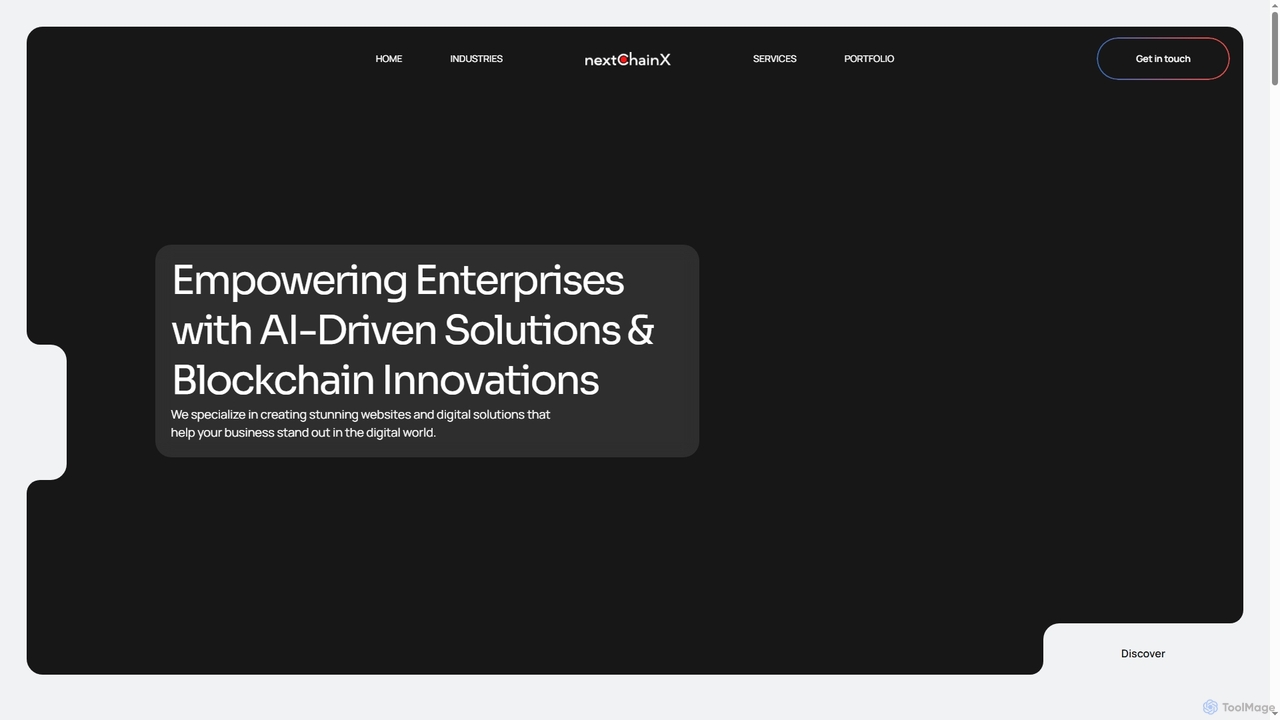
NextChainX specializes in empowering enterprises with advanced AI-driven solutions and blockchain innovations. They offer custom AI assistants, LLM integration, automation tools, and high-performance Solana development for DeFi, NFTs, and dApps, enhancing business intelligence, efficiency, and customer engagement across various industries.

Ai Development
Visits 6.4KFavorites 148Likes 149

About Smart Contract Development

Smart Contract Development tools are AI-powered platforms designed to streamline the creation, testing, and deployment of self-executing contracts on blockchain networks. These tools leverage artificial intelligence to enhance code quality, identify vulnerabilities, and automate repetitive tasks, significantly improving the efficiency and security of decentralized application (dApp) development. They empower developers to build robust and reliable smart contracts with greater speed and reduced risk.

Core Features

  • AI-Powered Code Generation: Automatically generates secure and optimized smart contract code based on high-level specifications or natural language prompts.
  • Automated Security Auditing: Scans contract code for common vulnerabilities, logical errors, and potential exploits, providing real-time feedback and suggestions.
  • Testing and Simulation Environments: Offers integrated platforms for simulating contract execution, testing various scenarios, and verifying functionality before deployment.
  • Deployment and Management Assistance: Guides developers through the deployment process on target blockchains and provides tools for monitoring and managing deployed contracts.
  • Cross-Chain Compatibility Analysis: Helps ensure smart contracts are compatible and interoperable across different blockchain ecosystems.

Use Cases

These tools are essential for blockchain developers, Web3 startups, and enterprises building decentralized solutions. They are used to accelerate the development cycle of complex DeFi protocols, create secure NFT marketplaces, and automate supply chain agreements, ensuring high integrity and trust in blockchain-based transactions.

How to Choose

When selecting Smart Contract Development tools, consider their compatibility with your target blockchain (e.g., Ethereum, Solana), the breadth of their security auditing capabilities, and the ease of integration with your existing development environment. Evaluate the level of AI assistance for code generation, the quality of their testing frameworks, and their pricing models to match your project's scale and budget.

Smart Contract Development use cases

1

Automating DeFi Protocol Creation

A blockchain developer building a new decentralized finance (DeFi) protocol can leverage AI-powered smart contract development tools to automatically generate secure and efficient contracts for tokenomics, liquidity pools, and governance mechanisms. By inputting high-level requirements, the AI assists in drafting complex logic, reducing manual coding time by up to 60% and minimizing the risk of critical vulnerabilities in financial applications.

2

Automating DeFi Protocol Development

Blockchain developers can utilize AI-powered smart contract development tools to rapidly prototype and deploy decentralized finance (DeFi) protocols. By leveraging AI for code generation and security analysis, developers can quickly create complex financial logic, identify potential exploits before deployment, and optimize gas usage, accelerating time-to-market for new financial products while ensuring robust security.

3

Enhancing NFT Marketplace Security

Companies building NFT marketplaces can leverage AI smart contract tools to ensure the security and integrity of their digital asset transactions. These tools perform automated audits on NFT minting and trading contracts, identifying vulnerabilities like reentrancy attacks or unauthorized access, thereby protecting users' valuable digital collectibles and maintaining platform trust.

4

Enhancing NFT Marketplace Security

An NFT platform developer uses smart contract development tools to audit the security of their marketplace's minting and trading contracts. The AI-powered auditor identifies potential reentrancy attacks, integer overflows, and access control issues before deployment, ensuring that user assets and transactions are protected. This proactive security measure builds trust and prevents costly exploits in a high-value digital asset environment.

5

Automating Supply Chain Agreements

A logistics company integrates smart contract development tools to create automated, transparent supply chain agreements. These tools help generate contracts that automatically trigger payments upon verified delivery, manage inventory levels, and track product provenance. The AI ensures that the contract logic is robust and tamper-proof, reducing disputes and administrative overhead, leading to a more efficient and trustworthy supply chain.

6

Developing Secure Supply Chain Solutions

Enterprises implementing blockchain for supply chain management can use smart contract development tools to create transparent and tamper-proof tracking systems. AI assists in generating contracts that automate logistics, payments, and provenance verification, ensuring that each step of the supply chain is recorded immutably and securely, reducing fraud and increasing efficiency.

7

Rapid Prototyping of Blockchain Solutions

A Web3 startup needs to quickly prototype a new blockchain solution, such as a decentralized identity system. Smart contract development tools with AI code generation allow them to rapidly iterate on contract designs, test different functionalities, and simulate network interactions. This accelerates the proof-of-concept phase, enabling faster validation of ideas and securing early-stage funding by demonstrating a working prototype.

8

Creating Decentralized Autonomous Organizations (DAOs)

Founders and developers of DAOs leverage smart contract development tools to build the foundational governance and treasury management contracts. AI assists in designing complex voting mechanisms, fund distribution rules, and proposal systems, ensuring the DAO operates autonomously, transparently, and securely according to its predefined rules, fostering community trust and participation.

9

Optimizing Blockchain Gaming Contracts

Game developers building Web3 games use smart contract development tools to create efficient and secure in-game economies, asset ownership, and player interactions. AI helps optimize contracts for lower gas fees, faster transaction speeds, and robust security against exploits, ensuring a smooth and fair gaming experience while managing unique digital assets like characters and items.

10

Optimizing Gas Efficiency for dApps

A dApp developer aims to reduce transaction costs (gas fees) for their users on a busy blockchain network. Smart contract development tools offer AI-driven optimization features that analyze contract code for gas inefficiencies and suggest improvements. This includes refactoring storage patterns, optimizing loop structures, and choosing more gas-efficient opcodes, leading to significant cost savings for users and improved dApp performance.

11

Facilitating Cross-Chain Interoperability

An enterprise is building a multi-chain dApp that requires smart contracts to interact seamlessly across different blockchains. Smart contract development tools assist in designing and implementing cross-chain communication protocols and bridges. The AI helps ensure that the contract logic handles diverse blockchain environments correctly, mitigating risks associated with asset transfers and data synchronization between disparate networks, thus enabling broader adoption and functionality.

12

Automating Legal and Regulatory Compliance

Legal tech firms and compliance officers can use smart contract development tools to automate the enforcement of legal and regulatory frameworks on the blockchain. AI assists in translating complex legal clauses into executable contract code, ensuring automatic adherence to regulations, managing digital identities, and streamlining audit trails for enhanced transparency and reduced manual compliance efforts.

Smart Contract Development FAQ

What are Smart Contract Development tools?

Smart Contract Development tools are AI-enhanced platforms that assist developers in creating, testing, deploying, and managing self-executing contracts on blockchain networks. They leverage AI for tasks like code generation, security auditing, and performance optimization, significantly streamlining the entire development lifecycle. These tools are crucial for building secure and efficient decentralized applications (dApps) across various blockchain ecosystems.

What are Smart Contract Development tools?

Smart Contract Development tools are specialized software solutions that assist in the entire lifecycle of creating and managing smart contracts on blockchain platforms. They integrate AI to automate coding, detect security flaws, and optimize performance, making blockchain development more accessible and secure for decentralized applications (dApps) and Web3 projects.

How do AI tools enhance smart contract security?

AI tools enhance smart contract security primarily through automated auditing and vulnerability detection. They can analyze vast amounts of code to identify common attack vectors like reentrancy, integer overflows, and unchecked external calls, which are often missed by manual reviews. Furthermore, AI can predict potential exploits based on historical data and suggest best practices for secure coding, significantly reducing the risk of costly security breaches before deployment.

How do AI tools enhance smart contract security?

AI tools enhance smart contract security through automated vulnerability scanning, formal verification, and anomaly detection. They can analyze code for common exploits like reentrancy or integer overflows, suggest best practices, and even simulate attack vectors to identify weaknesses before deployment, significantly reducing the risk of costly security breaches and ensuring contract integrity.

What's the difference between traditional software development and smart contract development?

Traditional software development focuses on applications running on centralized servers, while smart contract development targets decentralized blockchain networks. Key differences include immutability (smart contracts cannot be changed after deployment), transparency (all transactions are public), and deterministic execution (results are consistent across all nodes). Smart contracts also face unique security challenges due to their public and immutable nature, requiring specialized tools for auditing and verification that traditional software development typically doesn't need.

What's the difference between Smart Contract Development and general blockchain development?

Smart Contract Development is a specialized subset of general blockchain development. While general blockchain development encompasses building entire blockchain networks, protocols, and decentralized applications (dApps), smart contract development specifically focuses on writing, testing, and deploying the self-executing code (smart contracts) that governs logic and transactions within a dApp or blockchain. AI tools in this category specifically target the contract layer for enhanced efficiency and security.

Who benefits most from using Smart Contract Development tools?

Blockchain developers, Web3 engineers, and auditors benefit most. Developers gain from AI-assisted coding, faster deployment, and reduced errors. Auditors leverage advanced scanning for comprehensive security checks. Project managers and product owners also benefit from accelerated development cycles and increased confidence in the security and reliability of their decentralized applications and blockchain-based solutions.

Which programming languages are commonly used for smart contract development?

The most commonly used programming language for smart contract development is Solidity, primarily for the Ethereum blockchain and EVM-compatible networks. Other popular languages include Vyper (also for EVM), Rust (for Solana, Polkadot, and Near), and Go (for Hyperledger Fabric). AI-powered tools often support multiple languages, providing code generation and auditing capabilities across these diverse blockchain programming environments to cater to a wider range of developer needs.

How to choose the right Smart Contract Development tool?

Choosing the right Smart Contract Development tool involves evaluating several key factors. First, consider its compatibility with your target blockchain(s) and preferred programming languages. Second, assess the robustness of its AI-powered features, such as code generation accuracy, security auditing depth, and testing capabilities. Third, look at its integration with existing development environments and community support. Finally, compare pricing models and ensure it aligns with your project's complexity, team's expertise, and budget.

What are the key challenges in smart contract development that AI helps solve?

Key challenges include security vulnerabilities, high gas costs, complex coding, and slow auditing processes. AI tools address these by automating vulnerability detection and formal verification, optimizing code for gas efficiency, assisting with code generation to reduce complexity, and accelerating the auditing timeline. This significantly mitigates risks and improves the overall quality and reliability of smart contracts.

Can Smart Contract Development tools help with cross-chain deployments?

Yes, many advanced Smart Contract Development tools are designed to facilitate cross-chain deployments. They can assist in generating compatible code for different blockchain virtual machines (e.g., EVM, WASM), provide frameworks for building cross-chain bridges, and offer simulation environments to test interoperability. This capability is crucial for developers building multi-chain dApps, allowing them to deploy and manage contracts across various blockchain networks efficiently and securely, expanding their application's reach and functionality.