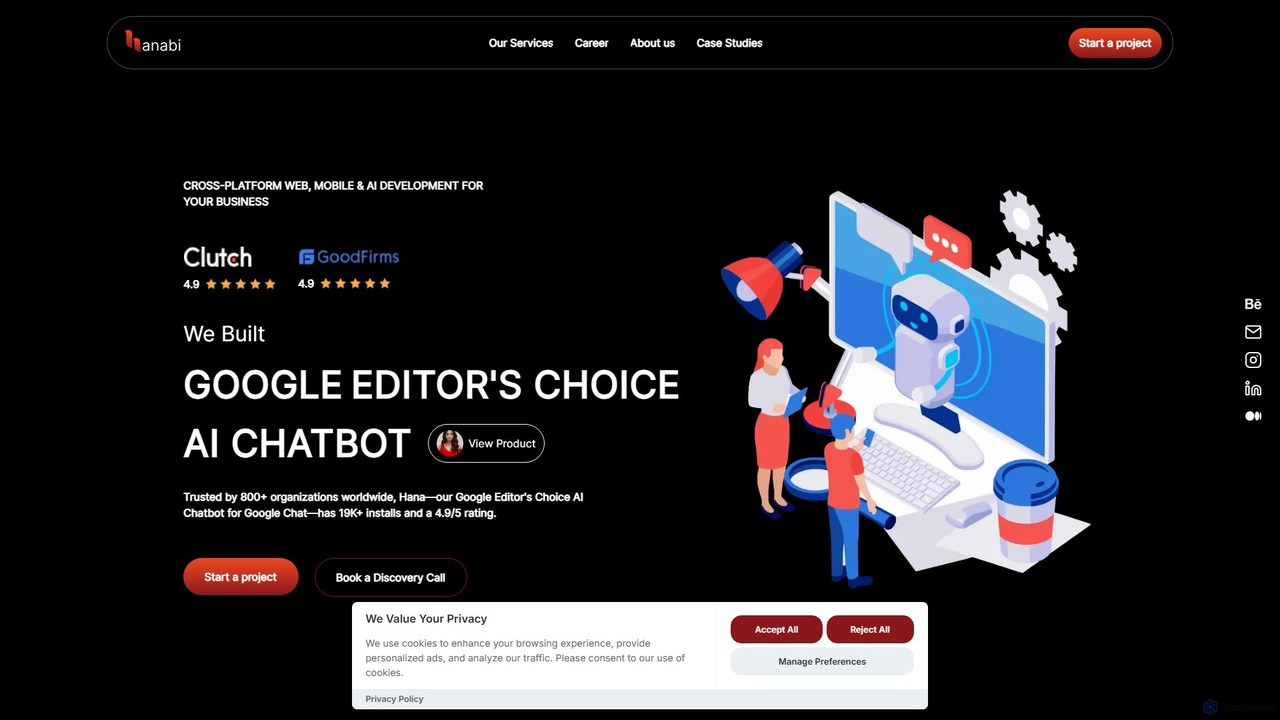
hanabitech
Hanabi Technologies is a global software development agency specializing in building custom, AI-powered solutions. They leverage modern JavaScript/TypeScript …
Hanabi Technologies is a global software development agency specializing in building custom, AI-powered solutions. They leverage modern JavaScript/TypeScript stacks (React, Node.js) and advanced AI technologies like GPT-4 and Langchain to create secure, scalable web, mobile, and desktop applications. They offer end-to-end services from design to deployment, ensuring full code ownership and transparent, flexible engagement models for businesses worldwide.
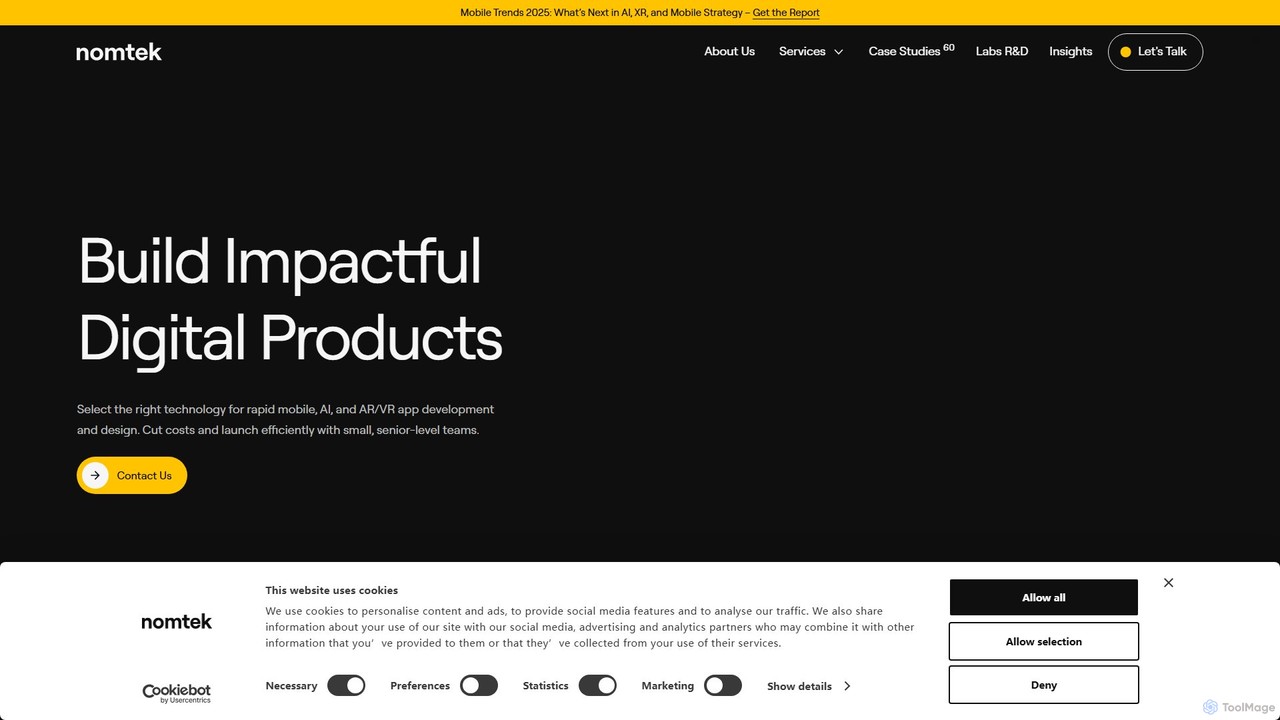
nomtek
nomtek is a premier software development agency specializing in crafting innovative mobile, AR/VR, and embedded applications. They partner …
nomtek is a premier software development agency specializing in crafting innovative mobile, AR/VR, and embedded applications. They partner with businesses to transform concepts into market-ready digital products, offering end-to-end services from product discovery and UI/UX design to development, AI integration, and post-launch support. Their expertise lies in building cutting-edge solutions that leverage emerging technologies to drive business growth and user engagement.
About Software Agency
Software Agency AI tools are specialized platforms that leverage artificial intelligence to automate and optimize various aspects of software development and project management for agencies. These tools integrate AI capabilities to assist with tasks ranging from code generation and testing to client communication and resource allocation. Their primary value lies in enhancing operational efficiency, accelerating project delivery, and improving the overall quality of client-facing software solutions.
Core Features
- AI-powered Code Generation: Automatically generates boilerplate code, suggests functions, and assists in writing complex modules, significantly speeding up development.
- Automated Testing & Debugging: Identifies potential bugs, suggests intelligent fixes, and generates comprehensive test cases to ensure robust and error-free software.
- Intelligent Project Management: Utilizes predictive analytics for task allocation, timeline estimation, and risk assessment, optimizing project workflows across multiple client engagements.
- Client Communication & Reporting: Drafts project updates, generates detailed performance reports, and streamlines feedback loops, enhancing transparency and client satisfaction.
- Resource Optimization: Recommends optimal allocation of development resources based on project requirements, team skills, and deadlines.
Applicable Scenarios
Software development agencies of all sizes utilize these tools to scale their operations and manage client projects more effectively. They are particularly beneficial for agencies handling multiple concurrent projects, where efficient resource management and accelerated development cycles are critical. Freelance developers and small teams also leverage these tools to enhance their output and compete with larger firms.
How to Choose
When selecting a Software Agency AI tool, consider its integration capabilities with your existing development ecosystem (IDEs, version control, project management software). Evaluate the sophistication of its AI models for code generation, testing, and predictive analytics, ensuring they meet your technical standards. Assess the tool's customization and flexibility to adapt to your agency's unique workflows and diverse client requirements. Finally, prioritize solutions with robust security and data privacy features to protect sensitive client information.
Software AgencyUse Cases
Automating Initial Project Setup
Development teams can leverage Software Agency AI tools to quickly generate foundational code structures, configurations, and boilerplate for new client projects. This automation significantly reduces the manual effort and time spent on initial setup, allowing developers to focus on core logic and unique features from day one. It can cut setup time by up to 50%, accelerating project kick-off and delivery.
Enhancing Code Quality with AI Reviews
Lead developers and QA teams can utilize these AI tools to automatically identify potential vulnerabilities, stylistic inconsistencies, and performance bottlenecks in codebases submitted by junior developers or across different projects. The AI provides intelligent suggestions for improvements, ensuring higher code quality standards are maintained consistently across all client deliverables and reducing the need for extensive manual code reviews.
Optimizing Project Timelines and Resource Allocation
Project managers in software agencies can leverage AI predictions for more accurate task estimations, intelligent assignment of developers based on skills and availability, and proactive identification of potential delays. This optimization maximizes efficiency across multiple concurrent client engagements, ensuring projects stay on track, resources are utilized effectively, and deadlines are met with greater consistency.
Accelerating QA Cycles with Smart Test Generation
QA engineers and development teams can significantly accelerate their quality assurance cycles by using AI tools to automatically generate comprehensive test cases and identify edge scenarios that might be missed by manual testing. This leads to faster bug detection, more thorough coverage, and ultimately, the delivery of more robust and reliable software solutions to clients, reducing post-launch issues.
Streamlining Client Reporting and Updates
Account managers and project leads can utilize Software Agency AI tools to automatically compile detailed progress reports, performance metrics, and upcoming milestones for clients. This automation ensures transparent and timely communication, reducing the manual effort of report generation and allowing more time for strategic client engagement. It enhances client satisfaction by providing consistent and data-driven updates.
Personalizing Client Proposals and Pitches
Business development teams can leverage AI tools to analyze client requirements, industry trends, and competitor landscapes, generating highly tailored project proposals and pitch decks. This personalization ensures that outreach resonates more effectively with potential clients, highlighting specific solutions that address their unique pain points and increasing the likelihood of securing new business for the agency.