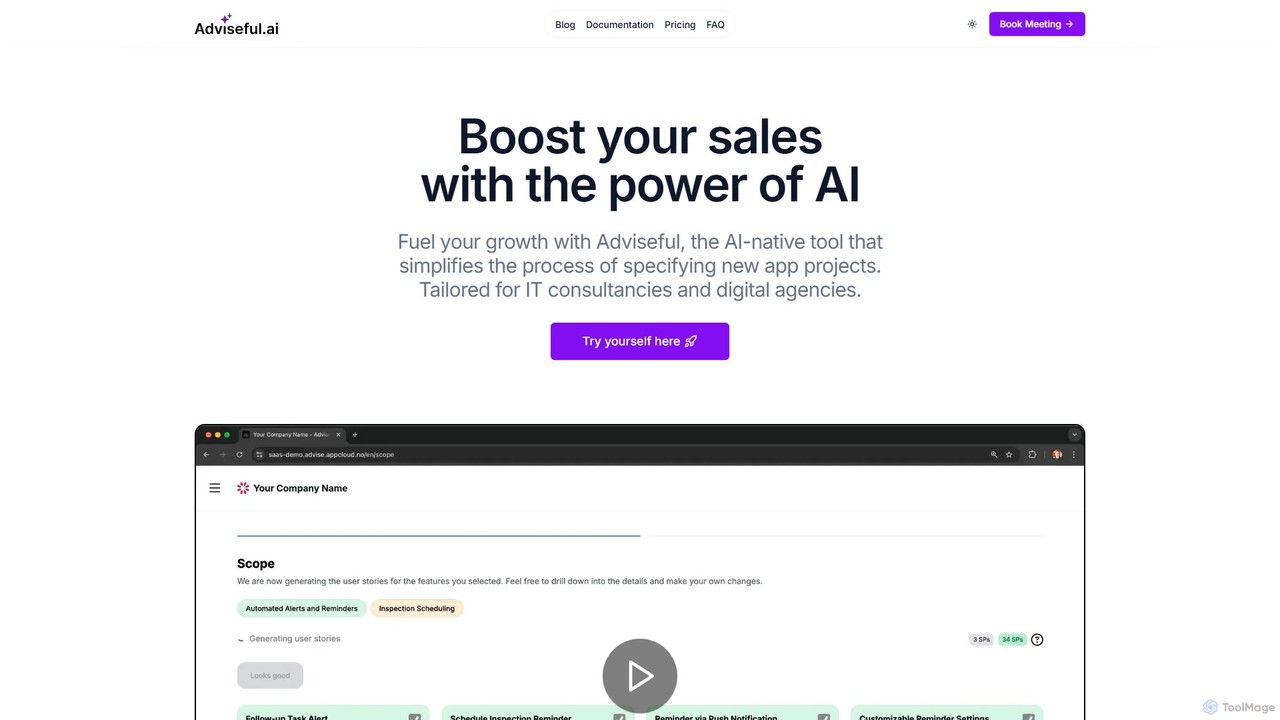
AI Specification tools are a specialized class of development software that automates the creation of detailed technical and functional requirement documents. Leveraging natural language processing (NLP), these tools analyze high-level ideas or user stories to generate structured specifications, such as SRS documents or API schemas. This process significantly reduces ambiguity, ensures consistency, and accelerates the pre-coding phase of the software development lifecycle. They act as a crucial bridge between product vision and engineering execution.
Core Features
- Requirement Elicitation: Automatically extracts and structures functional and non-functional requirements from unstructured text or conversations.
- User Story Generation: Converts feature ideas into well-formed user stories with corresponding acceptance criteria for agile development.
- API Schema Creation: Generates formal API documentation, such as OpenAPI (Swagger) specifications, from natural language descriptions.
- Consistency Analysis: Scans requirement documents to identify conflicting statements, ambiguities, or logical gaps.
- Diagram Generation: Creates visual models like UML diagrams or flowcharts based on textual descriptions of processes.
Use Cases
These tools are primarily used by product managers, business analysts, and software architects in agile environments. They are valuable for rapidly translating client briefs into detailed project scopes, formalizing feature requests into actionable user stories for sprint planning, and automating the documentation for complex APIs and microservices, ensuring clarity before development begins.
How to Choose
When selecting an AI Specification tool, consider its integration capabilities with your project management software (e.g., Jira, Trello). Evaluate the supported output formats (e.g., Markdown, PDF, Confluence) and the sophistication of its NLP model for understanding your specific domain's terminology. Also, assess its collaboration features for team reviews and feedback cycles.