Supanext
Supanext is a comprehensive Next.js Supabase SaaS starter kit designed for developers to rapidly build and launch AI …
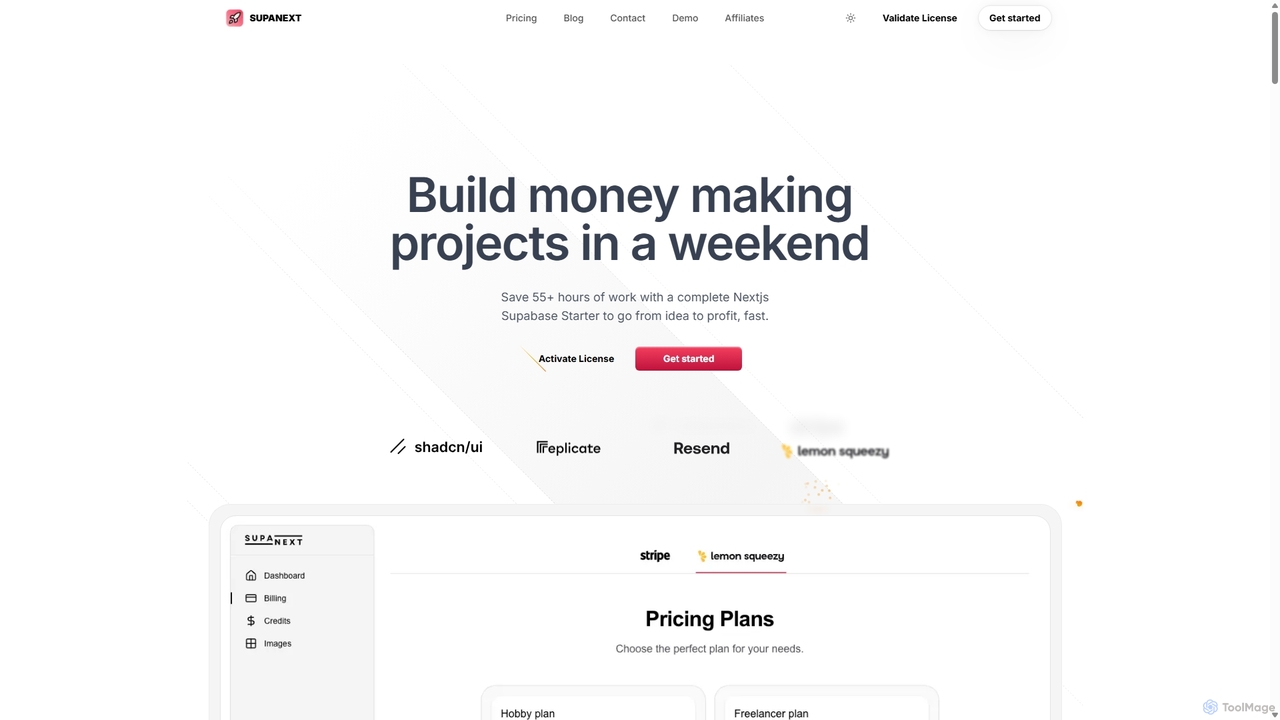
Supanext is a comprehensive Next.js Supabase SaaS starter kit designed for developers to rapidly build and launch AI and SaaS applications. It saves over 55 hours of development time by providing pre-built components for authentication, payments, database integration, AI examples, and an SEO-optimized landing page and blog, enabling a fast transition from idea to profit.
About Starter Kits
Starter Kits are pre-configured project foundations designed to accelerate the initial phase of software development. They bundle together boilerplate code, essential libraries, and build configurations, eliminating hours of repetitive setup. This allows developers to immediately focus on building unique features rather than wrestling with project structure and tooling. Many kits also incorporate best practices for performance, security, and scalability from the outset.
Core Features
- Pre-configured Tech Stack: Provides an integrated set of tools like frameworks (e.g., Next.js, Nuxt), UI libraries (e.g., Tailwind CSS), and databases.
- Boilerplate Code: Includes ready-to-use code for common features such as user authentication, payment processing, and API routes.
- Automated Build & Deployment: Comes with pre-written scripts for compiling code, running tests, and deploying to hosting platforms.
- Standardized Project Structure: Enforces a clean and scalable folder organization, making projects easier to navigate and maintain.
Use Cases
These kits are ideal for developers and teams building new web applications, SaaS products, or MVPs. They are particularly valuable in fast-paced environments like startups and hackathons where speed to market is critical for success.
How to Choose
When selecting a starter kit, consider the technology stack it's built on, the specific features it includes (e.g., authentication, multi-tenancy), the quality of its documentation, and the level of community support available for assistance.
Starter KitsUse Cases
Launching a SaaS MVP in Days
A startup team needs to validate a business idea by launching a Minimum Viable Product (MVP) quickly. Instead of spending a week setting up user authentication, subscription billing, and a database connection, they use a SaaS starter kit. The kit provides pre-built components for user sign-up, login, password reset, and Stripe integration. This allows the developers to focus their entire effort on coding the core business logic, reducing the time-to-market from weeks to just a few days.
Rapid Prototyping for a New Feature
A product manager wants to test a new standalone feature with a group of beta users. A developer uses a lightweight starter kit to quickly spin up a new application environment. The kit includes a front-end framework and basic API routing, enabling the developer to build an interactive prototype within hours. This allows the team to gather user feedback on a functional model without investing significant resources into full integration with the main product.
Standardizing Microservice Development
An enterprise engineering team manages dozens of microservices, each with slightly different configurations, leading to maintenance challenges. They adopt a standardized starter kit for all new Node.js services. This kit enforces consistent logging, error handling, environment variable management, and testing setups across the organization. As a result, new developers can onboard faster, and the DevOps team can manage deployments more efficiently.
Kickstarting a Hackathon Project
During a 48-hour hackathon, a team decides to build a mobile-first web application. To maximize their limited time, they begin with a starter kit that includes a responsive UI library, a serverless function backend, and a real-time database connection. This saves them the crucial first 4-6 hours of setup, allowing them to jump directly into implementing their innovative idea and building a more polished demo for the final presentation.
Building a Content-Driven Website
A content creator wants to launch a personal blog with a modern design and excellent performance. They choose a starter kit built on a static site generator (SSG) like Astro or Next.js. The kit comes with pre-configured Markdown support, image optimization, and a clean, customizable theme. This enables the creator to focus solely on writing content, while the kit handles the technical aspects of generating a fast, SEO-friendly website.
Learning a New Technology Stack
A developer is transitioning from Vue to React and wants to understand best practices for building a full-stack application with Next.js. They use a popular open-source starter kit as a reference project. By examining the well-structured code for data fetching, state management, and API integration, they can quickly grasp practical application architecture. This hands-on approach accelerates their learning curve far more effectively than reading documentation alone.