Vercel
Vercel is a frontend cloud platform providing developers with the tools and infrastructure to build, scale, and secure …
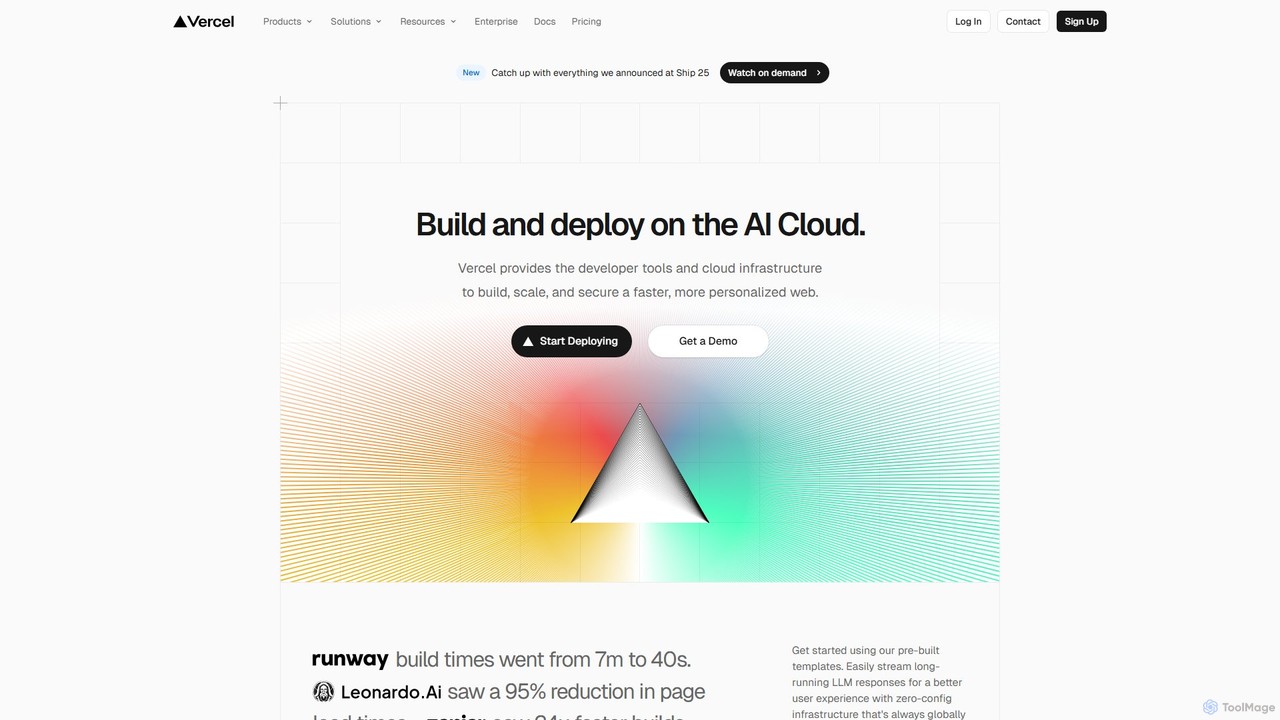
Vercel is a frontend cloud platform providing developers with the tools and infrastructure to build, scale, and secure faster, more personalized web experiences. It offers zero-config deployments, a global edge network, and serverless functions. With its new AI Cloud, Vercel simplifies the development and deployment of high-performance AI-powered applications, enabling features like streaming LLM responses with ease.
About Web Hosting
Web Hosting services provide the online infrastructure and technology required for a website or application to be accessible on the internet. These services store website files on powerful servers, ensuring they are available to visitors 24/7. As a fundamental component of the development process, web hosting makes a project live and public. Many modern hosting platforms now integrate AI for automated security monitoring, performance optimization, and resource management.
Core Features
- Server Management: Provides a stable environment with managed hardware, software updates, and server maintenance.
- Security Features: Includes SSL certificates, firewalls, malware scanning, and DDoS protection to safeguard websites.
- Performance Optimization: Utilizes tools like Content Delivery Networks (CDNs), caching, and load balancing to ensure fast loading times.
- Scalability Options: Offers various plans (Shared, VPS, Dedicated, Cloud) to accommodate traffic growth and resource needs.
- AI-Powered Management: Employs artificial intelligence to proactively detect threats, optimize server configurations, and predict resource requirements.
Use Cases
Web Hosting is essential for individuals, businesses, and developers. It's used for launching personal blogs and portfolios, creating online stores for e-commerce businesses, deploying complex web applications for enterprises, and providing a reliable platform for digital agencies managing multiple client sites.
How to Choose
When selecting a Web Hosting service, consider your expected website traffic, technical requirements (e.g., programming language support), and budget. Evaluate the types of hosting offered (Shared for beginners, VPS for more control, Dedicated for high performance). Also, assess the quality of customer support, uptime guarantees, and the inclusion of AI-driven features for security and optimization.

Web HostingUse Cases
Launch a Personal Blog or Portfolio
For content creators, freelancers, and artists, establishing an online presence is crucial. Web hosting services provide an accessible entry point. Users can select an affordable shared hosting plan, which often includes a one-click installer for platforms like WordPress. This allows them to quickly set up a professional-looking blog or portfolio to showcase their work, share their thoughts, and connect with an audience without needing deep technical knowledge. The hosting service manages server uptime and security, letting the creator focus on content.
Deploy a Scalable E-commerce Platform
Online retailers require a robust and scalable hosting solution to handle fluctuating traffic, especially during sales events. A Virtual Private Server (VPS) or cloud hosting plan is ideal for this scenario. These options provide dedicated resources, greater control over the server environment, and the ability to scale resources up or down as needed. This ensures the e-commerce site remains fast and responsive, preventing lost sales due to downtime or slow loading pages, and provides the necessary security for handling customer data and transactions.
Host a High-Traffic Web Application
Developers building SaaS products or complex web applications need a high-performance hosting environment. Dedicated servers or advanced cloud hosting configurations offer maximum power, customization, and security. This allows development teams to install custom software, fine-tune server settings for optimal performance, and handle thousands of concurrent users. With full root access and dedicated hardware, they can ensure the application runs smoothly, securely, and can scale to meet growing user demand, which is critical for the success of a tech product.
Manage Multiple Client Websites for an Agency
Digital agencies and freelance developers often manage websites for multiple clients. Reseller hosting or a powerful VPS plan allows them to create separate, isolated hosting accounts for each client under one main account. This simplifies management, billing, and resource allocation. They can provide clients with their own control panel access (like cPanel or Plesk) while maintaining overall administrative control. This setup is cost-effective and efficient for managing a portfolio of client projects, ensuring each site has its own secure and stable environment.
Utilize AI for Automated Security and Performance Tuning
Modern web hosting platforms increasingly use AI to automate complex tasks. For a business owner, this means the hosting environment can proactively protect their site. AI algorithms continuously scan for malware and suspicious activity, automatically patching vulnerabilities. They also analyze server performance, adjusting resource allocation and caching rules in real-time to handle traffic spikes without manual intervention. This provides a higher level of reliability and security, allowing the owner to focus on their business rather than technical server management.
Set Up a Staging Environment for Development
Professional development workflows require a safe space to test changes before deploying them to a live website. Many hosting providers offer staging environments or tools to easily create one. A developer can clone the live site to a private staging area, work on new features, update plugins, or fix bugs without affecting visitors. Once the changes are tested and approved, they can be pushed to the live site with a single click. This process minimizes the risk of breaking the production site and ensures a smooth, professional deployment process.