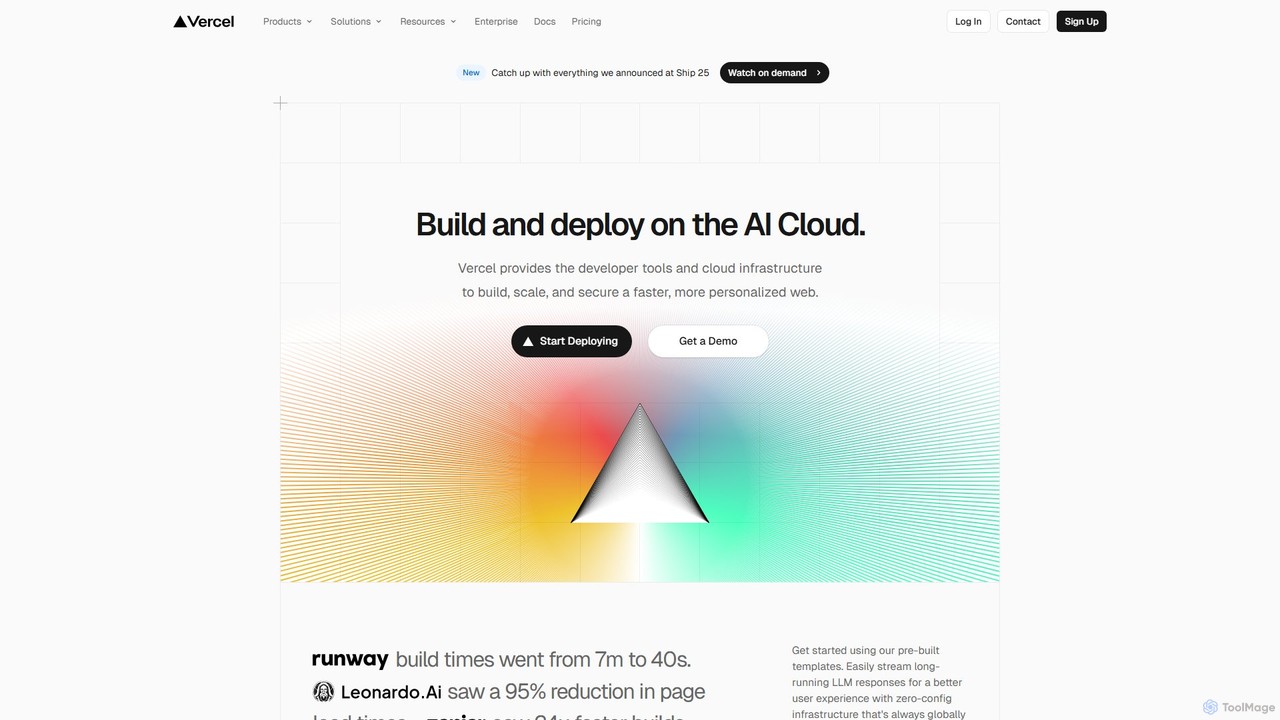
Web Hosting services provide the online infrastructure and technology required for a website or application to be accessible on the internet. These services store website files on powerful servers, ensuring they are available to visitors 24/7. As a fundamental component of the development process, web hosting makes a project live and public. Many modern hosting platforms now integrate AI for automated security monitoring, performance optimization, and resource management.
Core Features
- Server Management: Provides a stable environment with managed hardware, software updates, and server maintenance.
- Security Features: Includes SSL certificates, firewalls, malware scanning, and DDoS protection to safeguard websites.
- Performance Optimization: Utilizes tools like Content Delivery Networks (CDNs), caching, and load balancing to ensure fast loading times.
- Scalability Options: Offers various plans (Shared, VPS, Dedicated, Cloud) to accommodate traffic growth and resource needs.
- AI-Powered Management: Employs artificial intelligence to proactively detect threats, optimize server configurations, and predict resource requirements.
Use Cases
Web Hosting is essential for individuals, businesses, and developers. It's used for launching personal blogs and portfolios, creating online stores for e-commerce businesses, deploying complex web applications for enterprises, and providing a reliable platform for digital agencies managing multiple client sites.
How to Choose
When selecting a Web Hosting service, consider your expected website traffic, technical requirements (e.g., programming language support), and budget. Evaluate the types of hosting offered (Shared for beginners, VPS for more control, Dedicated for high performance). Also, assess the quality of customer support, uptime guarantees, and the inclusion of AI-driven features for security and optimization.