Mythos
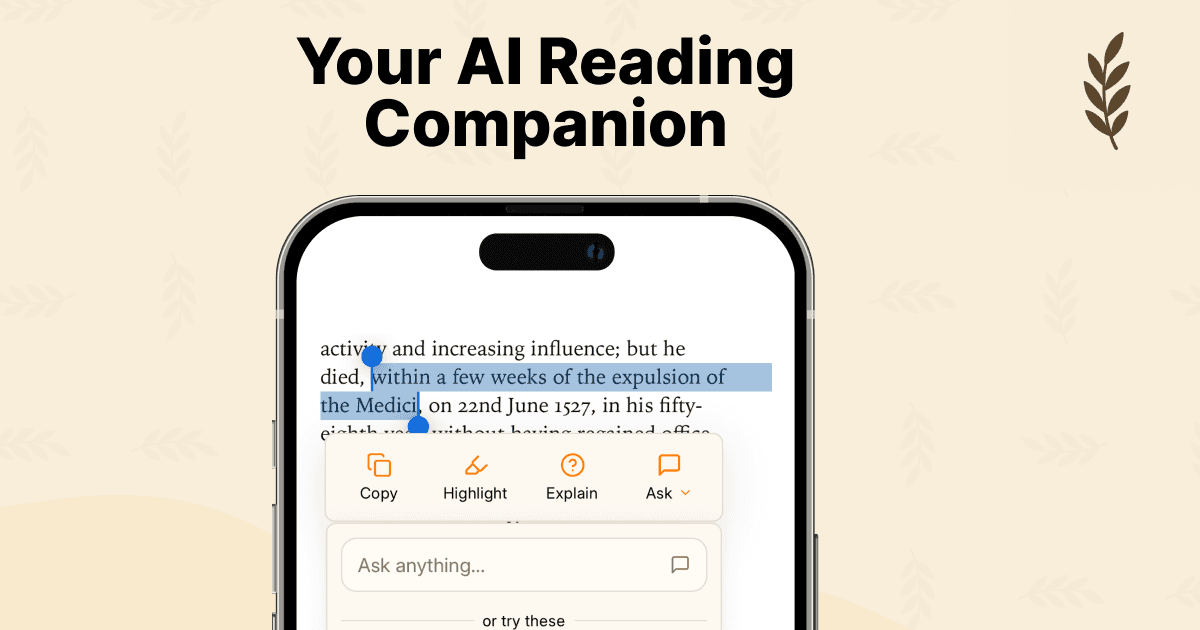
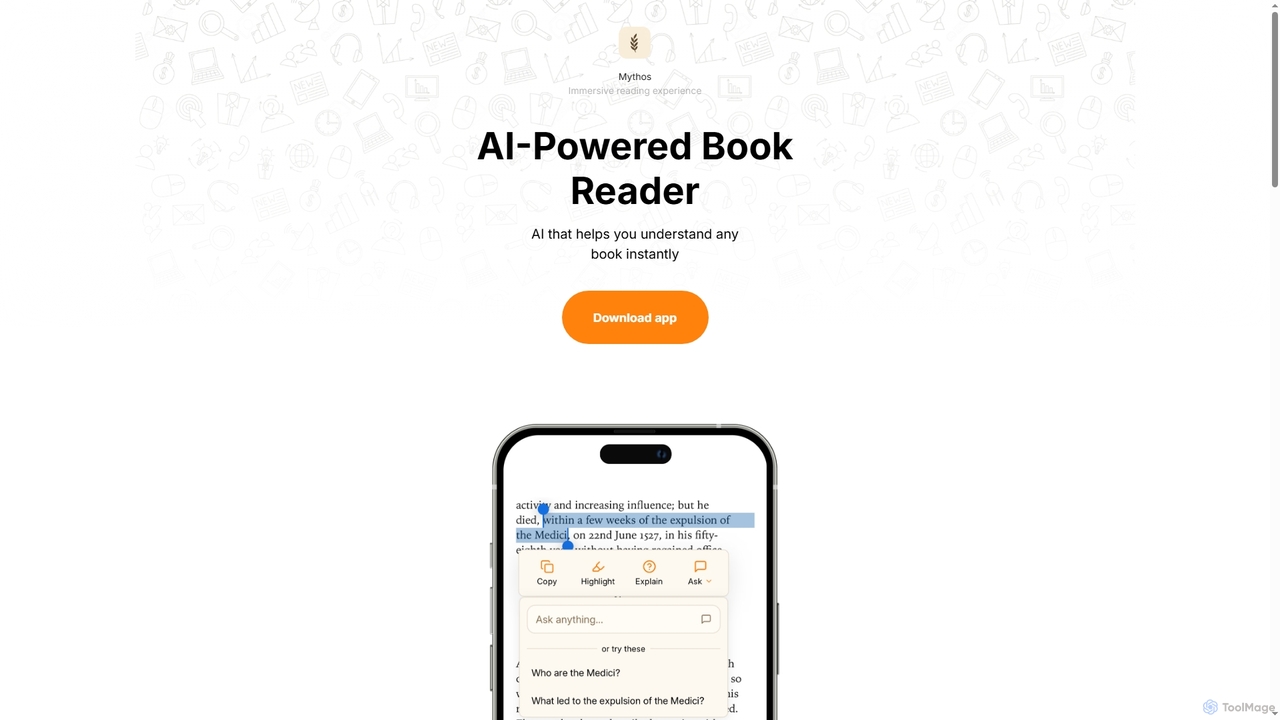
Mythos is an AI-powered book reader app designed to enhance your reading experience. It helps you instantly understand …
Mythos is an AI-powered book reader app designed to enhance your reading experience. It helps you instantly understand any book by providing smart AI actions and suggestions when you select text. It supports EPUB and PDF formats, making it easier to dive deep into complex topics, especially in technical books.
AI Finder
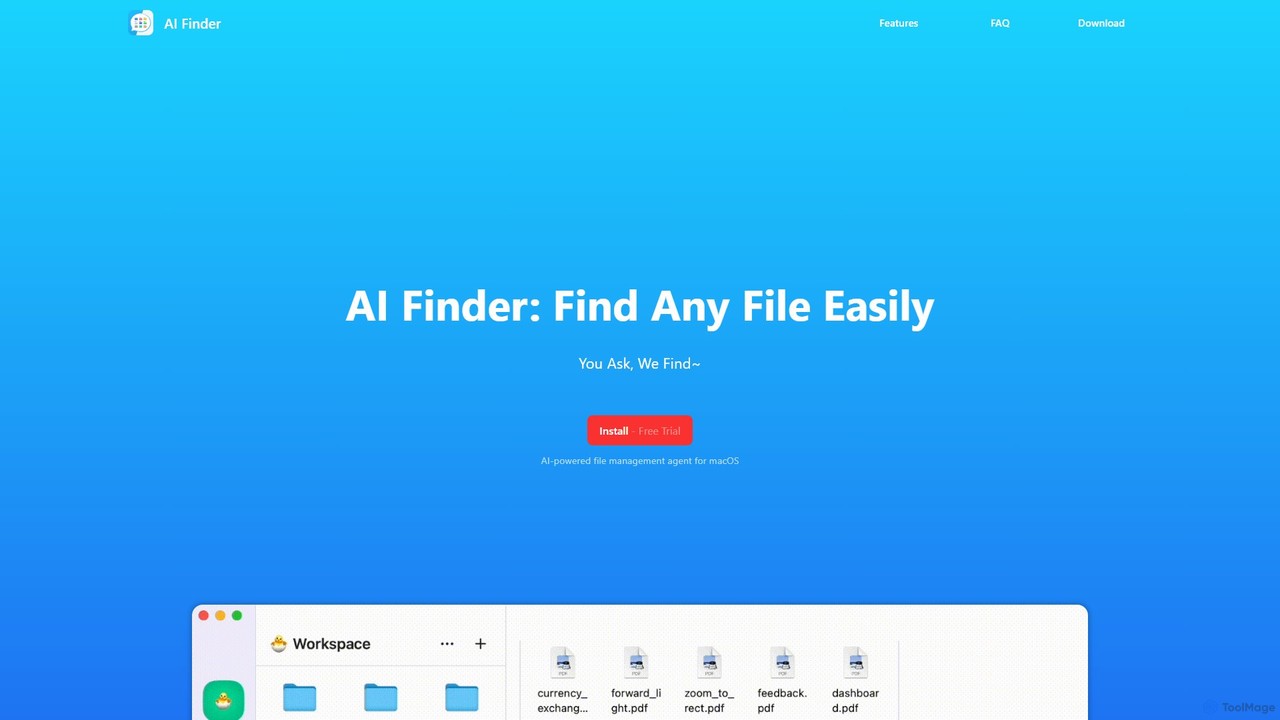
AI Finder is an intelligent file management agent for macOS that revolutionizes how you find files. Using natural …
AI Finder is an intelligent file management agent for macOS that revolutionizes how you find files. Using natural language, you can search files by content, creation date, or even vague descriptions. It also features a 'Talk to PDF' function, allowing you to chat with, summarize, and extract key insights from your documents. All processing is done locally, ensuring your data remains private and secure.
About Analysis
AI Document Analysis tools are a specialized category of software designed to automatically interpret, extract insights from, and evaluate textual content. Leveraging Natural Language Processing (NLP), these tools go beyond simple keyword searching to understand context, sentiment, and complex relationships within documents. They are instrumental for transforming vast amounts of unstructured text from contracts, reports, and research papers into structured, actionable intelligence. This capability allows professionals to make data-driven decisions faster and with greater accuracy.
Core Features
- Semantic Understanding: Comprehends the meaning and context of text, enabling nuanced search and information retrieval beyond simple keyword matching.
- Data Extraction: Automatically identifies and pulls specific data points such as names, dates, financial figures, or contract clauses from unstructured text.
- Sentiment & Tone Analysis: Determines the emotional tone (positive, negative, neutral) of the text, which is crucial for analyzing customer feedback or media mentions.
- Topic Modeling & Classification: Identifies the main themes in a document or a collection of documents and automatically categorizes them based on content.
- Risk & Compliance Detection: Scans legal or financial documents to flag non-standard clauses, potential risks, or compliance issues against predefined rules.
Use Cases
These tools are widely used in sectors that handle large volumes of documents. Legal professionals use them for contract review and e-discovery. Financial analysts rely on them to dissect earnings reports and market research. Academic researchers accelerate literature reviews, and business intelligence teams analyze customer feedback and competitor reports to gain a strategic edge.
How to Choose
When selecting a document analysis tool, consider the specific types of documents you'll be working with (e.g., PDFs, scanned images with OCR). Evaluate the depth of analysis required—from basic topic classification to complex legal clause interpretation. Assess its integration capabilities via API for seamless workflow automation. Finally, ensure the tool meets your industry's security and data privacy standards, such as GDPR or HIPAA.
AnalysisUse Cases
Legal Contract Review and Risk Assessment
A corporate legal team needs to review a 150-page merger agreement under a tight deadline. Instead of manual reading, they upload the document to an AI analysis tool. The tool instantly identifies and flags non-standard clauses, potential liabilities, and ambiguous language. It also extracts key information like party names, effective dates, and termination conditions into a structured summary. This allows lawyers to focus their attention on the most critical sections, reducing review time by over 70% and minimizing the risk of human error in high-stakes negotiations.
Financial Report Analysis for Investment Decisions
An investment analyst is evaluating several companies in the tech sector. They use an AI analysis tool to process quarterly earnings reports, 10-K filings, and transcripts of investor calls. The tool extracts key financial metrics, identifies trends in revenue growth, and performs sentiment analysis on the 'Management's Discussion and Analysis' section to gauge executive confidence. By comparing structured data across all companies simultaneously, the analyst can quickly spot outliers and identify promising investment opportunities or potential red flags that would be time-consuming to find manually.
Automating Academic Literature Reviews
A PhD student is conducting a literature review on a complex scientific topic, facing a database of thousands of research papers. Using an AI analysis tool, they can input their research question in natural language. The tool semantically searches the entire collection, identifying not just papers with matching keywords, but those with relevant concepts and methodologies. It then groups papers by theme, extracts key findings from each, and generates a summary matrix. This transforms a process that could take months into a matter of days, ensuring a more comprehensive and less biased review of existing literature.
Analyzing Customer Feedback from Surveys
A product manager receives thousands of open-ended responses from a customer satisfaction survey. Manually categorizing this feedback is impractical. By feeding the raw text data into an AI analysis tool, they can automatically perform topic modeling and sentiment analysis. The tool identifies recurring themes like 'pricing issues,' 'feature requests,' and 'positive UI feedback,' and quantifies the sentiment for each. This provides a clear, data-backed overview of customer opinions, enabling the product team to prioritize improvements and feature development effectively.
Insurance Claim Processing and Fraud Detection
An insurance company processes thousands of claims daily, each supported by various documents like medical reports and police statements. An AI analysis tool automates the initial review by using OCR to digitize scanned documents, extracting key data (e.g., dates of incident, medical codes, costs), and cross-referencing this information with the policyholder's coverage. The system can also flag inconsistencies or patterns indicative of potential fraud, such as multiple claims for similar incidents, allowing human adjusters to focus on complex or suspicious cases, thereby speeding up payouts for legitimate claims.
Enhancing Due Diligence in Mergers & Acquisitions
During an M&A transaction, the acquiring firm must perform due diligence by reviewing thousands of the target company's documents. An AI analysis platform can structure this process by ingesting the entire data room (contracts, emails, financial statements). It automatically categorizes documents, identifies change-of-control clauses in contracts, flags potential litigation risks from email communications, and extracts financial data for valuation. This provides the M&A team with a comprehensive, searchable, and analyzed view of the target company, enabling a more thorough and faster due diligence process.