CV Shortlist
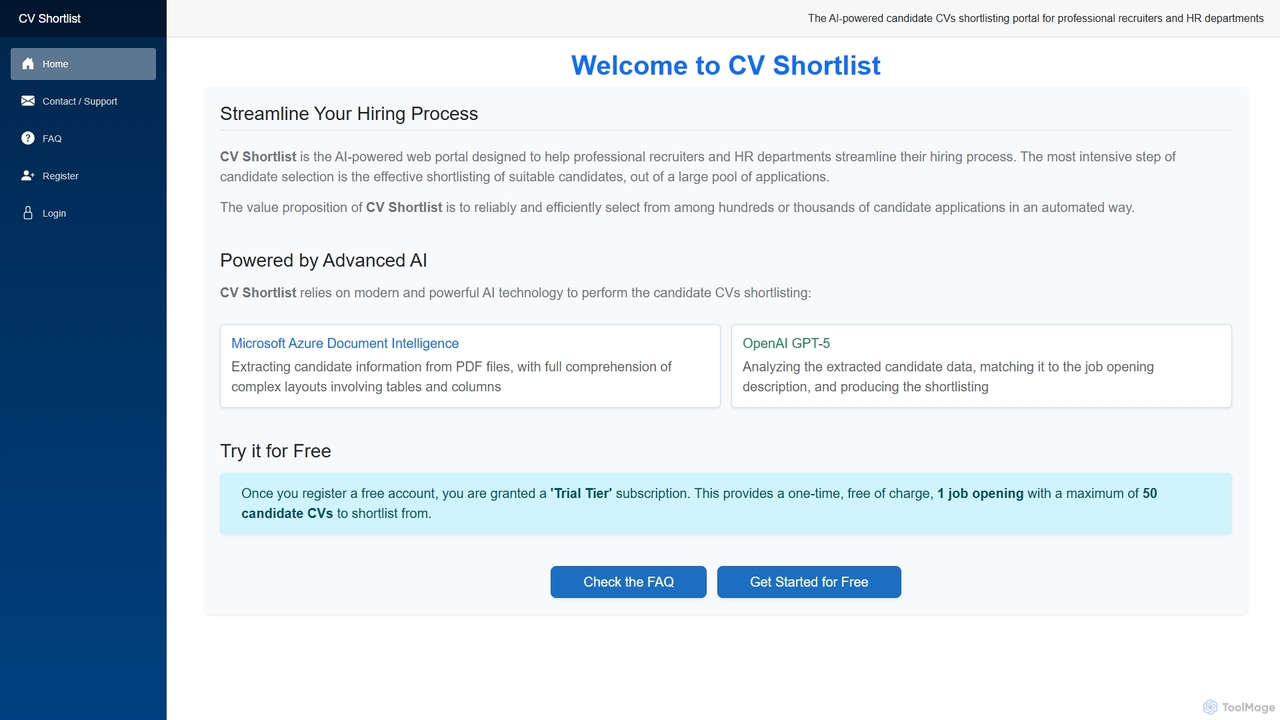
CV Shortlist is an AI-powered web portal designed to revolutionize the hiring process for professional recruiters and HR …
CV Shortlist is an AI-powered web portal designed to revolutionize the hiring process for professional recruiters and HR departments. It efficiently automates the intensive task of shortlisting suitable candidates from hundreds or thousands of applications, leveraging advanced AI to extract, analyze, and match CV data against job descriptions.
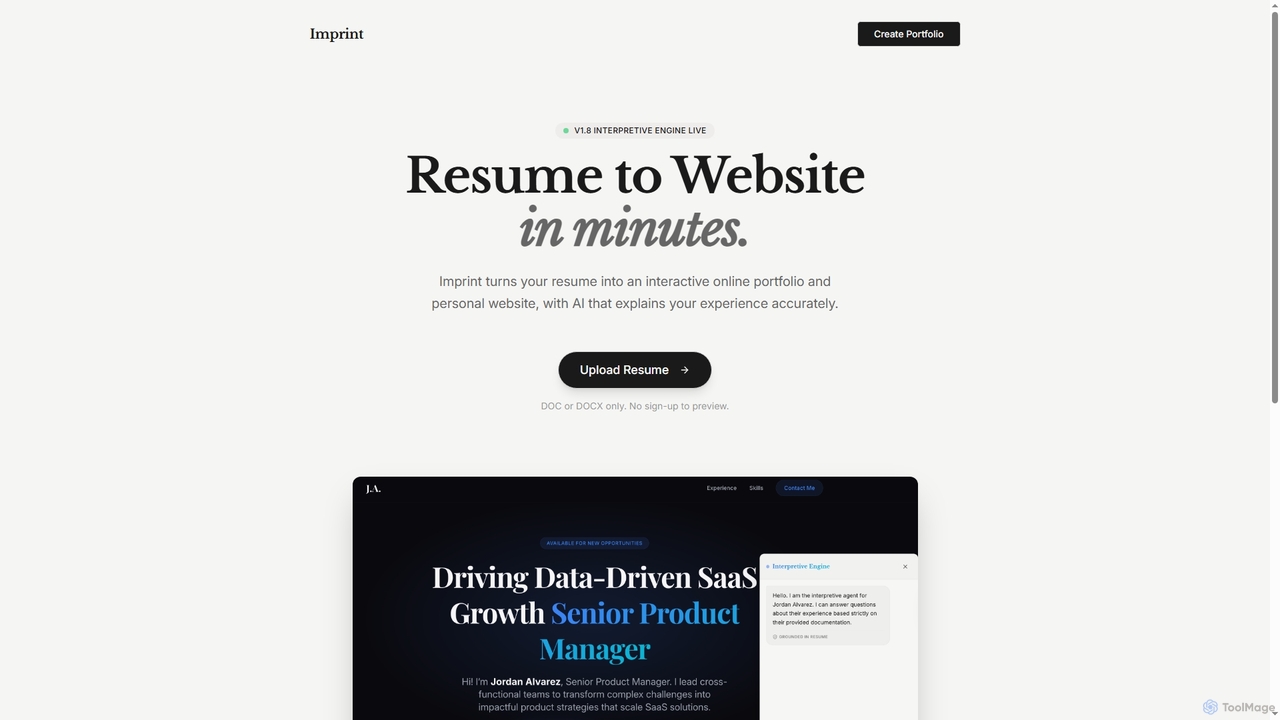
Imprint
Imprint transforms your DOC/DOCX resume into an interactive online portfolio and personal website in minutes. Leveraging AI, it …
Imprint transforms your DOC/DOCX resume into an interactive online portfolio and personal website in minutes. Leveraging AI, it accurately explains your experience, making your professional story dynamic and responsive to recruiter inquiries without requiring a sign-up to preview.
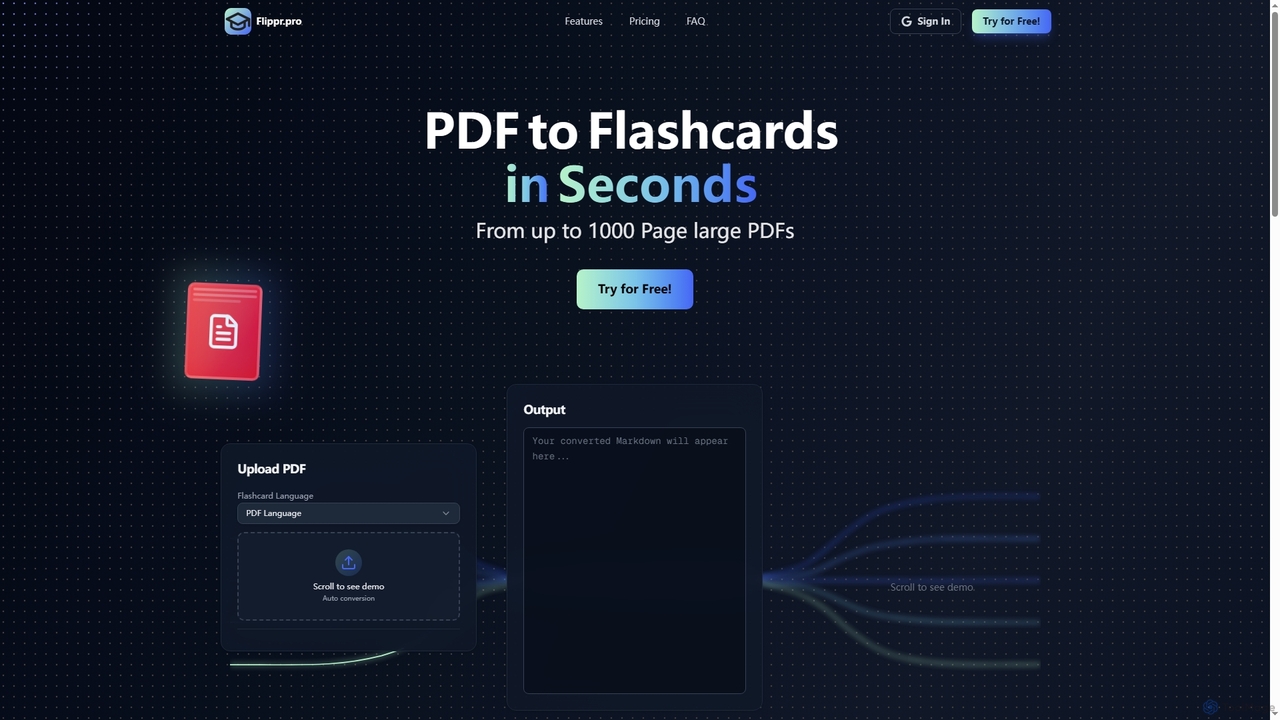
Flippr
Flippr is an AI-powered study tool that rapidly converts PDF documents into interactive flashcards. Designed for students and …
Flippr is an AI-powered study tool that rapidly converts PDF documents into interactive flashcards. Designed for students and professionals, it streamlines the learning process by transforming extensive study materials into digestible, easy-to-review formats in seconds.
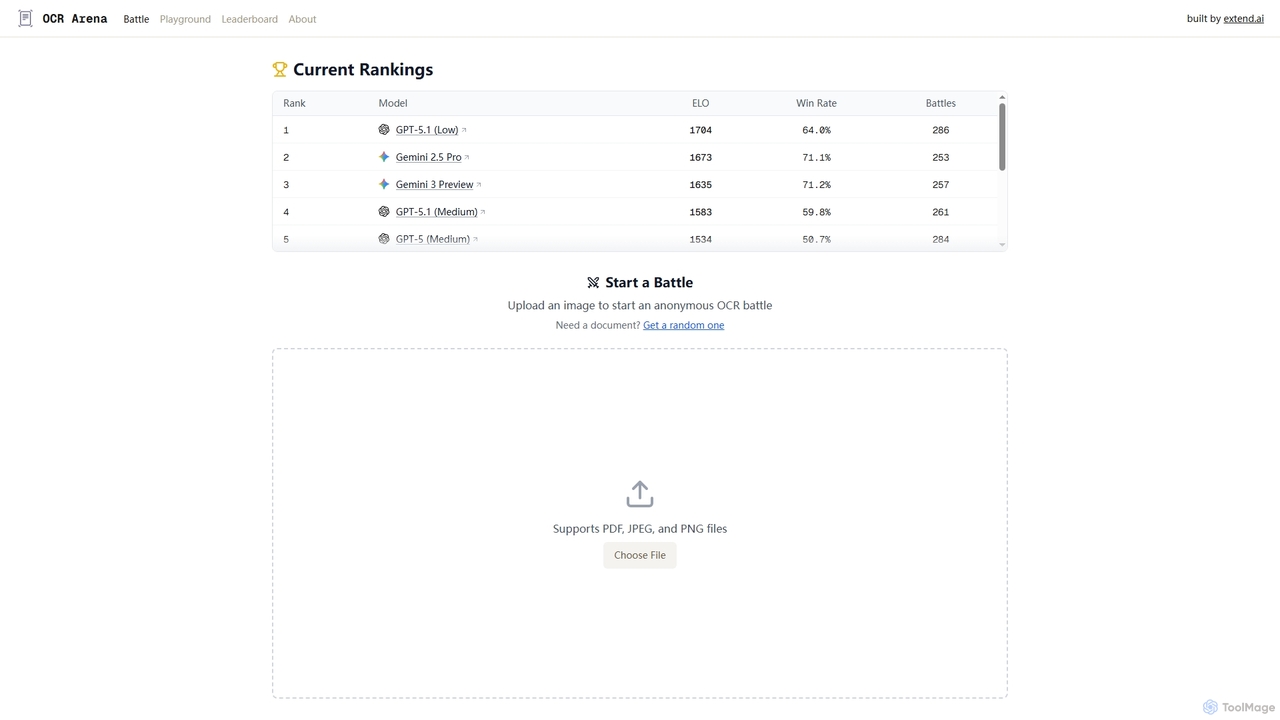
OCR Arena
OCR Arena is a free online platform designed for testing and evaluating leading foundation Vision-Language Models (VLMs) and …
OCR Arena is a free online platform designed for testing and evaluating leading foundation Vision-Language Models (VLMs) and open-source Optical Character Recognition (OCR) models. It allows users to upload documents, measure accuracy, and compare model performance on a public leaderboard.
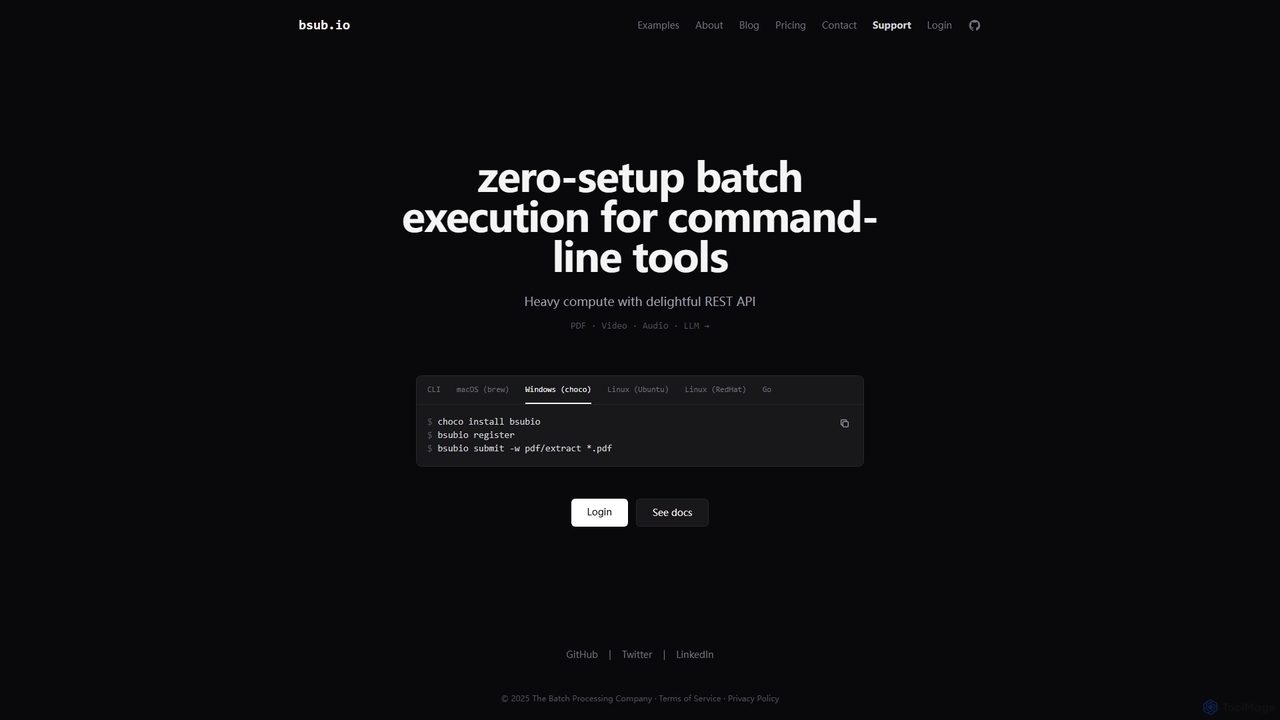
Bsub
Bsub is a zero-setup batch processing platform designed for developers to execute command-line tools at scale. It simplifies …
Bsub is a zero-setup batch processing platform designed for developers to execute command-line tools at scale. It simplifies heavy computational tasks like PDF extraction, video transcoding, audio transcription, and large language model (LLM) batch inference through a simple REST API, eliminating infrastructure management and scaling concerns.
Octro
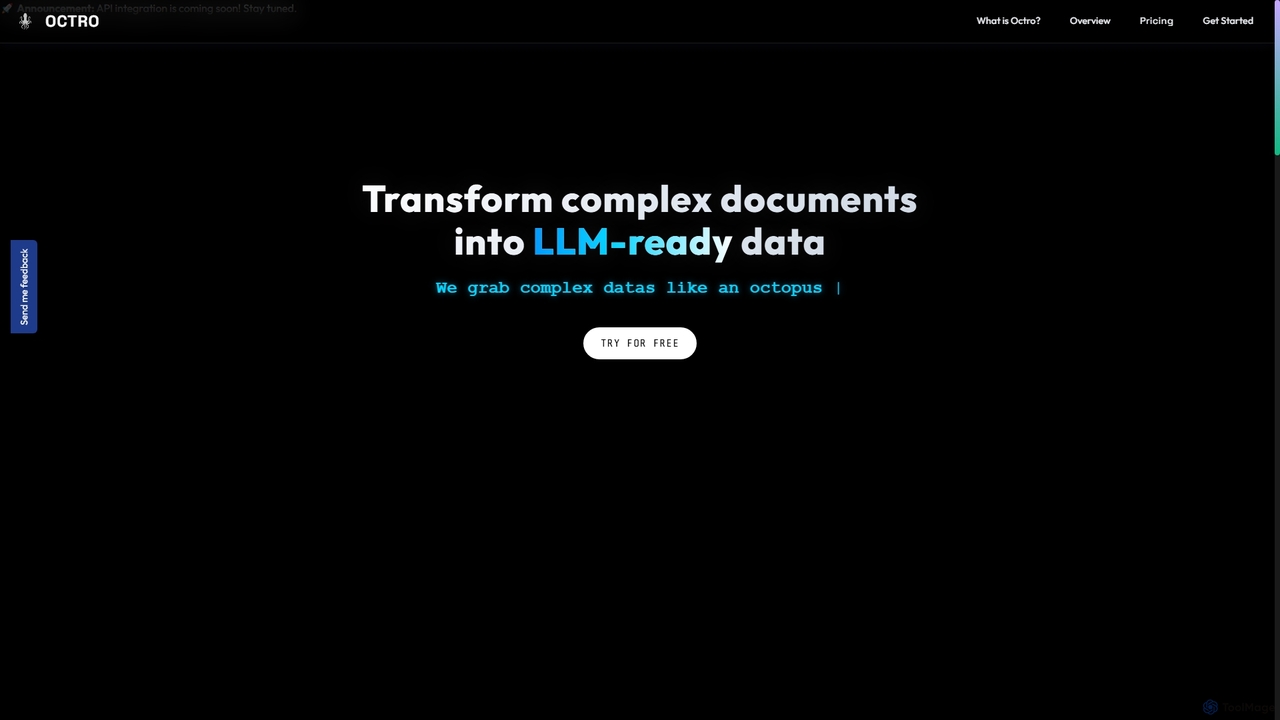
Octro is an AI-powered tool designed to transform complex documents, particularly PDFs, into structured, LLM-ready data formats like …
Octro is an AI-powered tool designed to transform complex documents, particularly PDFs, into structured, LLM-ready data formats like JSON and CSV. It specializes in accurate table extraction, enabling businesses across various industries to streamline data processing and enhance analytical workflows.
OfficeBot
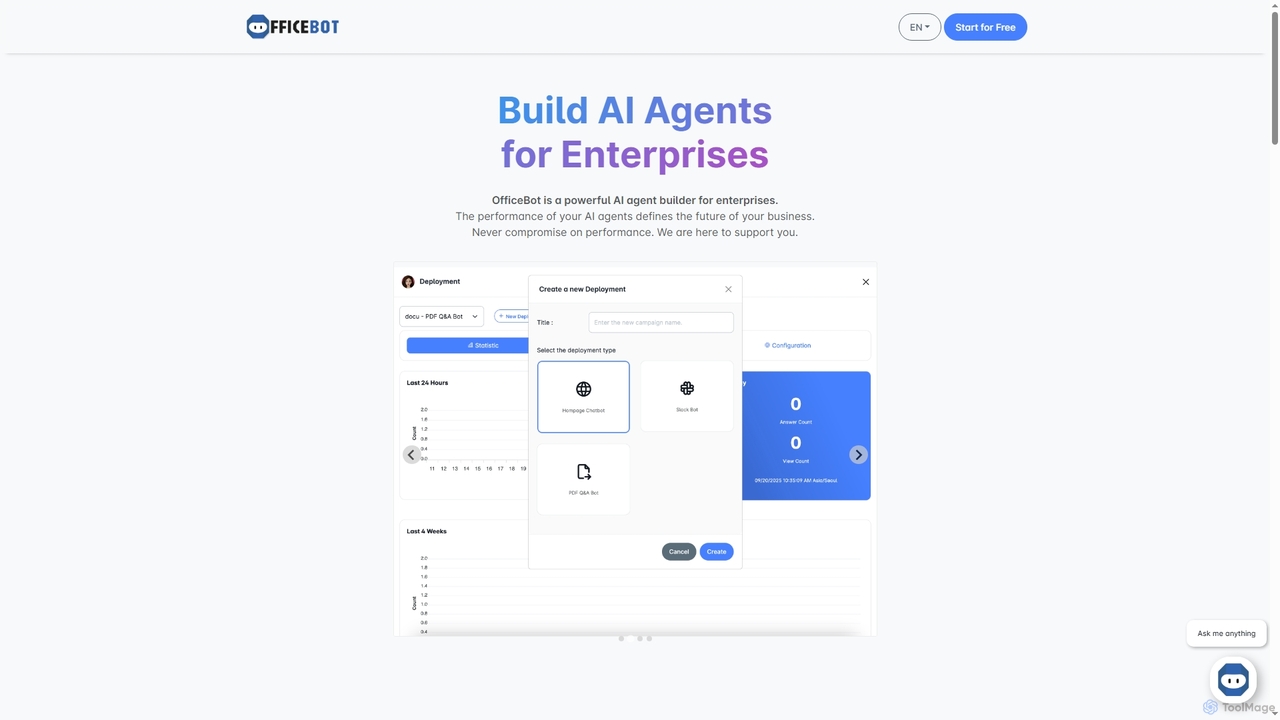
OfficeBot empowers enterprises to build custom AI agents for enhanced knowledge management and operational efficiency. It offers a …
OfficeBot empowers enterprises to build custom AI agents for enhanced knowledge management and operational efficiency. It offers a platform to process documents, answer complex queries, and automate information retrieval, supported by flexible token-based pricing and expert developer assistance.
About Document Processing
Document Processing tools are AI-powered applications designed to automatically extract, analyze, and manage data from various documents. They leverage technologies like Optical Character Recognition (OCR) and Natural Language Processing (NLP) to interpret both structured and unstructured content. This automation streamlines workflows like invoice processing and contract analysis, significantly reducing manual effort and improving data accuracy. These tools transform static information from formats like PDFs and scanned images into actionable, structured data for business systems.
Core Features
- Intelligent Data Extraction: Automatically identifies and extracts specific data points, such as names, dates, and amounts, from unstructured documents.
- Document Classification: Sorts and categorizes incoming documents (e.g., invoices, contracts, receipts) based on their content and layout.
- Natural Language Understanding: Analyzes text to comprehend context, sentiment, and key topics, enabling advanced search and summarization.
- Automated Validation: Cross-references extracted information against existing databases or predefined rules to ensure data integrity.
Use Cases
These tools are widely used in industries like finance for accounts payable automation, legal for contract lifecycle management, and healthcare for digitizing patient records. Roles such as financial analysts, paralegals, and compliance officers use them to accelerate data-intensive tasks, minimize human error, and ensure information is readily accessible and compliant.
How to Choose
When selecting a tool, consider its accuracy rates for your specific document types. Evaluate its integration capabilities with your existing software (e.g., ERP, CRM) via APIs. Assess the level of customization available for training the model on unique document layouts. Finally, verify its security protocols and compliance with industry standards like GDPR or HIPAA.
Document ProcessingUse Cases
Automate Invoice Data Entry
An accounts payable specialist in a mid-sized company receives hundreds of invoices weekly in various formats like PDF and JPG. By using an AI Document Processing tool, they can upload all invoices in a single batch. The AI automatically extracts key fields such as vendor name, invoice number, due date, line items, and total amount with high accuracy. This data is then automatically populated into their accounting software, reducing manual entry time by over 90% and minimizing costly payment errors.
Accelerate Legal Contract Review
A corporate legal team needs to review a 100-page acquisition agreement for potential risks. Instead of spending days reading it manually, a paralegal uploads the document to an AI platform. The tool instantly identifies and extracts critical clauses, such as liability limitations, indemnification, and termination conditions. It can also compare these clauses against the company's standard templates, flagging any deviations. This allows the legal team to focus their attention on non-standard terms, completing the review in hours instead of days.
Streamline Customer Onboarding with ID Verification
A financial institution needs to verify customer identities during onboarding, a process that involves manually checking IDs and application forms. By implementing an AI document processing solution, customers can simply upload a photo of their driver's license and a utility bill. The AI performs OCR to extract personal details, validates the document's authenticity using fraud detection algorithms, and cross-references the information with the application form. This automates the Know Your Customer (KYC) process, reducing onboarding time from days to minutes and enhancing compliance.
Automate Resume Screening for HR
A human resources department is overwhelmed with hundreds of applications for a single job opening. Using an AI document processing tool, recruiters can automatically parse every resume submitted, regardless of its format. The system extracts key information like work experience, skills, education, and contact details, structuring it into a consistent format. Recruiters can then filter and rank candidates based on specific criteria (e.g., '5+ years of Python experience'), instantly identifying the most qualified applicants and saving dozens of hours per job posting.
Digitize and Analyze Medical Records
A healthcare research institution needs to analyze thousands of unstructured patient records, including physician notes and lab results, for a clinical study. An AI document processing tool can ingest these documents in various formats (scanned PDFs, faxes, EMR exports). It uses specialized medical NLP models to accurately identify and extract critical data points like diagnoses, medications, dosages, and lab values. This process transforms messy, unstructured text into a structured dataset, enabling researchers to perform large-scale analysis while maintaining patient privacy and HIPAA compliance.
Create a Searchable Knowledge Base from Internal Documents
A large enterprise has decades of internal reports, technical manuals, and project documents stored across various systems, making it difficult for employees to find information. By using a document processing tool, the company can create a centralized, intelligent knowledge base. The tool ingests all documents, uses OCR and NLP to make them fully searchable, and understands semantic queries. An employee can now ask a natural language question like 'What were the key findings of the Q4 2022 market research?' and receive a precise answer with links to the source documents, rather than just a list of keyword matches.