GoWit
GoWit is an AI-powered retail media platform designed for e-commerce businesses, marketplaces, and retailers. It enables them to …
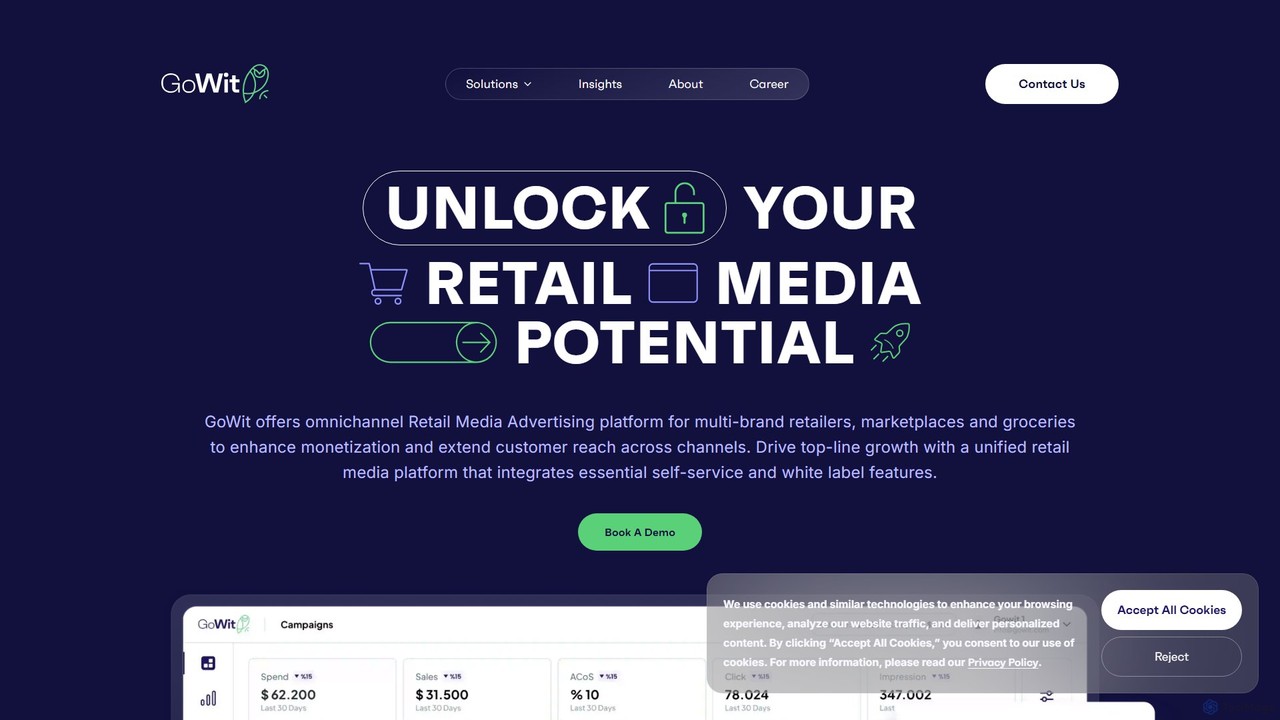
GoWit is an AI-powered retail media platform designed for e-commerce businesses, marketplaces, and retailers. It enables them to monetize their digital properties through omnichannel advertising solutions. The platform uses an AI bidding engine to maximize ad revenue, activate first-party data for precise targeting, and offer a self-service dashboard for advertisers, ultimately boosting sales and ROAS.
About Monetization
AI Monetization tools are a specialized category of e-commerce software that uses artificial intelligence to optimize and automate revenue generation from digital content, products, and services. These tools analyze user behavior, market trends, and engagement data to make intelligent decisions about pricing, subscriptions, and advertising. This enables creators and businesses to maximize their income streams, reduce customer churn, and personalize offers at scale. Unlike standard payment processors, AI monetization platforms focus on the entire revenue lifecycle, from acquisition to retention.
Core Features
- Dynamic Pricing: Automatically adjusts prices for digital products or services based on demand, user segmentation, or competitive analysis.
- Subscription Management & Churn Prediction: Manages recurring billing and uses machine learning to identify subscribers at risk of canceling, allowing for proactive retention efforts.
- Ad Revenue Optimization: Employs AI to test and select the most profitable ad formats, placements, and networks for a website or app.
- Content Gating & Smart Paywalls: Intelligently determines when and to whom to show a paywall, balancing free access with conversion to paid subscriptions.
- Affiliate & Partnership Automation: Identifies high-potential affiliate partners and automates performance tracking and commission management.
Use Cases
These tools are ideal for content creators, SaaS companies, digital publishers, and online course providers. For example, a SaaS business can use AI to predict churn and offer targeted discounts to retain customers. A news publisher can optimize ad placements in real-time to maximize revenue from every article view without manual intervention.
How to Choose
When selecting an AI Monetization tool, consider its integration capabilities with your existing platforms (e.g., CMS, CRM). Evaluate the specific monetization models it supports (subscriptions, one-time sales, ads). Also, assess the depth of its analytics and reporting features, and ensure its pricing model aligns with your business growth.
MonetizationUse Cases
Automating Subscription Management for SaaS
A SaaS company founder uses an AI monetization tool to manage their growing subscriber base. The platform automates monthly billing and invoicing, reducing administrative overhead. More importantly, its AI model analyzes user activity patterns to predict churn. When a user is flagged as high-risk, the system can automatically trigger a retention campaign, such as offering a temporary discount or a personalized message from customer support. This proactive approach helps reduce monthly churn by 15-20% and stabilizes revenue streams.
Dynamic Pricing for Online Courses
An online educator selling video courses uses an AI monetization tool to implement dynamic pricing. The AI analyzes factors like geographic location, referral source, and time of day to present the optimal price to each visitor. For instance, a visitor from a high-income country might see a standard price, while a visitor from a developing country or one referred from a specific partner blog might see a localized, discounted price. This strategy increases the overall conversion rate and maximizes revenue by tailoring the price to what different market segments are willing to pay.
Optimizing Ad Revenue for a Content Blog
A food blogger with significant website traffic uses an AI monetization tool to optimize their ad revenue. Instead of manually placing ad units, the tool's AI analyzes the page layout and user engagement for each article. It then automatically tests different ad sizes, formats (e.g., display, video, native), and ad network partners in real-time. The system learns which combinations yield the highest CPM (cost per mille) for different audience segments, effectively maximizing the earnings from every page view without requiring the blogger to have deep technical expertise in ad operations.
Implementing a Smart Paywall for a News Publisher
A digital news publisher wants to convert more free readers into paid subscribers. They use an AI monetization tool to deploy a 'smart paywall'. The AI tracks each reader's behavior, such as reading frequency, topics of interest, and number of articles read per month. Instead of a rigid '5 free articles' rule, the paywall is triggered dynamically. Highly engaged readers who are more likely to subscribe see the paywall sooner, while casual visitors can read more content for free. This personalized approach has been shown to increase subscription conversions without alienating the broader audience.
Automating Affiliate Link Management
A lifestyle influencer who runs a large blog uses an AI tool to manage their affiliate marketing monetization. The tool scans their new and existing articles, understands the context, and automatically suggests relevant affiliate products from various networks. It can insert links, generate product display boxes, and ensure all links are properly tagged for tracking. The AI also monitors link performance and can automatically replace underperforming links with better alternatives, saving the influencer hours of manual work each week and increasing their overall affiliate commission earnings.
Selling Digital Products with Personalized Offers
A graphic designer sells digital assets like icon packs and templates on their website. They integrate an AI monetization tool that personalizes the shopping experience. The AI analyzes a visitor's browsing history on the site and can generate a pop-up offer for a bundle deal, such as 'Get 20% off when you buy this icon pack and our most popular font together'. For returning customers, it might offer an exclusive discount on a new product related to their past purchases. This level of personalization increases the average order value and encourages repeat business.