
ToolMage
Sign in

Best 1 Admissions Counseling AI tools for Education

Popular Admissions Counseling AI tools in Education include Borderless, helping you work more efficiently.

Borderless
Freemium

Borderless

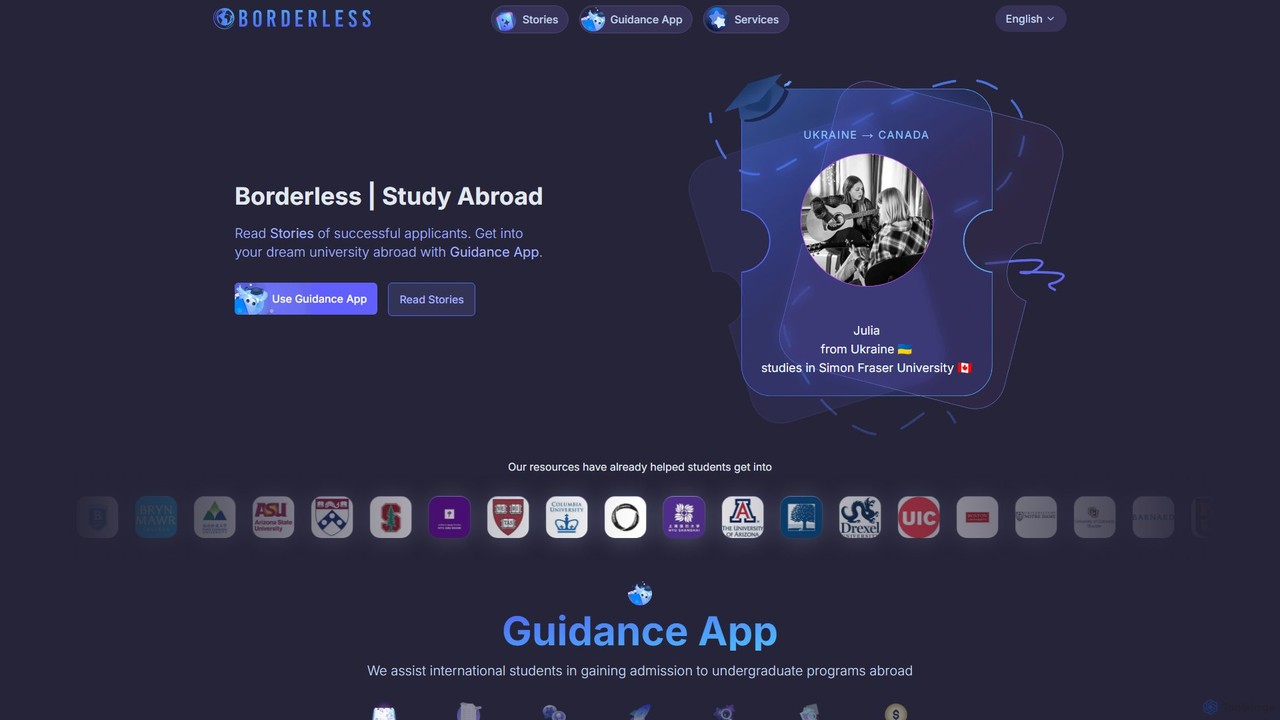
Borderless is a comprehensive platform designed to help international students navigate the complex process of applying to universities abroad. It offers a free Guidance App with step-by-step roadmaps, a college list generator, and essay-building tools. For personalized support, Borderless also provides a premium one-on-one mentorship program with experienced counselors.

Admissions Counseling
Visits 131.3KFavorites 149Likes 134

About Admissions Counseling

AI Admissions Counseling tools are specialized platforms that leverage artificial intelligence to guide students through the complex college and university application process. These tools utilize machine learning algorithms and natural language processing (NLP) to analyze a student's academic profile, personal interests, and goals. They provide data-driven recommendations for suitable institutions, offer assistance in crafting application essays, and help manage critical deadlines. This technology streamlines the often-overwhelming journey of admissions, making personalized guidance more accessible and efficient for applicants and their families.

Core Features

  • School Matching Engine: Analyzes student data (grades, test scores, extracurriculars) to generate a personalized list of target, reach, and safety schools.
  • Essay Analysis & Feedback: Uses NLP to review personal statements for grammar, tone, clarity, and structure, often providing suggestions for improvement.
  • Application Management Dashboard: Centralizes all application components, tracks deadlines, and monitors the status of submissions across multiple institutions.
  • Interview Preparation Simulator: Offers mock interviews with AI-powered coaches to help students practice their responses and build confidence.
  • Scholarship & Financial Aid Search: Scans extensive databases to identify relevant financial aid opportunities based on the student's profile and needs.

Applicable Scenarios

These tools are primarily used by high school students preparing for undergraduate admissions, as well as by transfer students and those applying to graduate programs. School counselors can also use these platforms to manage their caseloads more effectively, providing data-backed advice to a larger number of students. Educational consulting firms integrate these tools to enhance their service offerings and improve client outcomes.

Selection Criteria

When choosing an AI Admissions Counseling tool, consider the comprehensiveness of its school database and the sophistication of its matching algorithm. Evaluate the quality of the essay feedback tools—do they offer more than just basic grammar checks? Also, assess the user interface for ease of use and the platform's ability to integrate with other planning tools. Finally, review the pricing model, whether it's a one-time fee, subscription, or part of a larger counseling package.

Admissions Counseling use cases

1

Personalizing University Shortlists for Students

A high school junior feels overwhelmed by the thousands of universities available. Using an AI admissions counseling tool, they input their GPA, standardized test scores, preferred major, desired location, and extracurricular activities. The platform's algorithm processes this data against a vast database of institutions, instantly generating a categorized list of 'safety,' 'match,' and 'reach' schools. This data-driven approach saves dozens of hours of manual research and provides a realistic, personalized roadmap for their application strategy, helping them focus their efforts on schools that are a genuine fit.

2

Refining Application Essays with AI Feedback

An applicant has written a first draft of their personal statement but is unsure about its effectiveness. They upload the draft to an AI admissions tool. The tool's NLP model analyzes the text for common pitfalls like clichés, passive voice, and repetitive phrasing. It provides a detailed report highlighting areas for improvement in structure, clarity, and impact. It might also generate topic suggestions or alternative phrasings. This allows the student to iterate on their essay with objective, constructive feedback, transforming a good draft into a compelling narrative that stands out to admissions officers.

3

Preparing for Admissions Interviews with an AI Coach

A student has secured an interview with one of their top-choice universities and wants to practice. They use an AI interview simulator, which presents them with common admissions questions. The AI records their responses, then provides feedback on the content of their answers, speaking pace, use of filler words, and even body language if a camera is used. The student can run through multiple simulations, gaining confidence and refining their answers without the pressure of a live mock interview. This preparation helps them feel more composed and articulate during the actual interview.

4

Managing Multiple Application Deadlines Efficiently

A student is applying to ten different universities, each with its own set of deadlines for applications, financial aid, and supporting documents. To avoid missing a critical date, they use an AI admissions tool's management dashboard. They input all their target schools, and the platform automatically populates a timeline with every key deadline. It sends automated reminders via email or push notifications as dates approach. This centralized system replaces messy spreadsheets and sticky notes, ensuring all components are submitted on time and reducing the stress associated with tracking numerous moving parts.

5

Discovering Niche Scholarship Opportunities

A family is looking for ways to finance their child's education but finds generic scholarship search engines overwhelming. They use an AI admissions counseling platform that includes a financial aid module. By inputting the student's detailed profile—including academic achievements, heritage, parents' occupations, and unique hobbies—the AI scans thousands of scholarships. It filters out irrelevant options and presents a curated list of niche scholarships the student is highly qualified for, such as one for aspiring journalists of a specific descent. This targeted approach significantly increases the chances of securing funding that might have been missed otherwise.

6

Empowering School Counselors with Data Analytics

A high school counselor is responsible for advising over 200 students, making personalized guidance challenging. They adopt an AI admissions counseling platform for their department. The platform's dashboard provides an at-a-glance overview of each student's progress, including application statuses, essay completion, and upcoming deadlines. The AI can also generate reports on historical admissions data from their high school, showing which universities students with similar profiles were accepted to in previous years. This empowers the counselor to provide more strategic, data-backed advice at scale, ensuring no student falls through the cracks.

Admissions Counseling FAQ

What are AI Admissions Counseling tools?

AI Admissions Counseling tools are software platforms that use artificial intelligence to assist students with the university application process. They function as a digital assistant, helping with tasks like finding suitable colleges, refining application essays, preparing for interviews, and tracking deadlines. By analyzing a student's data, these tools provide personalized, data-driven recommendations that complement the guidance from human counselors. Their primary goal is to make the complex admissions process more organized, efficient, and accessible for everyone involved.

How to choose the right AI Admissions Counseling tool?

Choosing the right tool depends on your specific needs. Consider the following factors:

  • Feature Set: Do you need a comprehensive platform with school matching, essay help, and interview prep, or just a tool for one specific task?
  • Data Quality: How large and up-to-date is the tool's database of universities and scholarships? Look for platforms that use reliable data sources.
  • User Interface (UI): The platform should be intuitive and easy to navigate. A confusing interface can add stress to an already stressful process.
  • Feedback Mechanism: For features like essay review, assess the depth and quality of the feedback. Is it just grammar, or does it cover structure, tone, and content?
  • Cost and Value: Compare pricing models (subscription vs. one-time fee) and determine if the features offered provide good value for the cost.
AI counseling vs. human counselors: What's the difference?

AI tools and human counselors serve complementary roles. AI excels at data processing, organization, and providing initial feedback. It can quickly analyze vast amounts of information to suggest schools or find scholarships, and it's available 24/7. A human counselor, however, provides nuanced, empathetic guidance based on years of experience. They can understand a student's personal story, help navigate complex family dynamics, and offer mentorship that an algorithm cannot. The most effective approach often involves using AI tools to handle the logistical and data-heavy tasks, freeing up the human counselor to focus on strategic advice and personal connection.

Can AI tools write my college essay for me?

No, and you should not use them for that purpose. AI admissions counseling tools are designed to be writing assistants, not ghostwriters. Using an AI to generate your entire essay is a form of academic dishonesty and can be detected by plagiarism checkers. The proper use of these tools is to help you brainstorm ideas, check your grammar and style, improve clarity, and ensure your essay is well-structured. The personal stories, reflections, and voice in the essay must be your own. Admissions officers want to hear from you, not an algorithm.

Who can benefit most from AI Admissions Counseling tools?

A wide range of users can benefit, but these tools are particularly helpful for:

  • Independent Applicants: Students applying without the help of a private counselor or those in large schools with overburdened counseling staff.
  • First-Generation Students: Individuals whose families may be unfamiliar with the complex and often unwritten rules of the college admissions process.
  • International Students: Applicants navigating the unique requirements of applying to universities in a different country.
  • School Counselors: Professionals looking to manage large caseloads more efficiently and provide data-driven advice to all their students.
  • Budget-Conscious Families: Those seeking affordable alternatives or supplements to traditional, high-cost admissions counseling services.