Education Best in category 1 results Animal Science AI Tool

Popular AI tools in the Animal Science field of Education include breed.dog, etc., helping you quickly improve efficiency.

Free
breed.dog

breed.dog

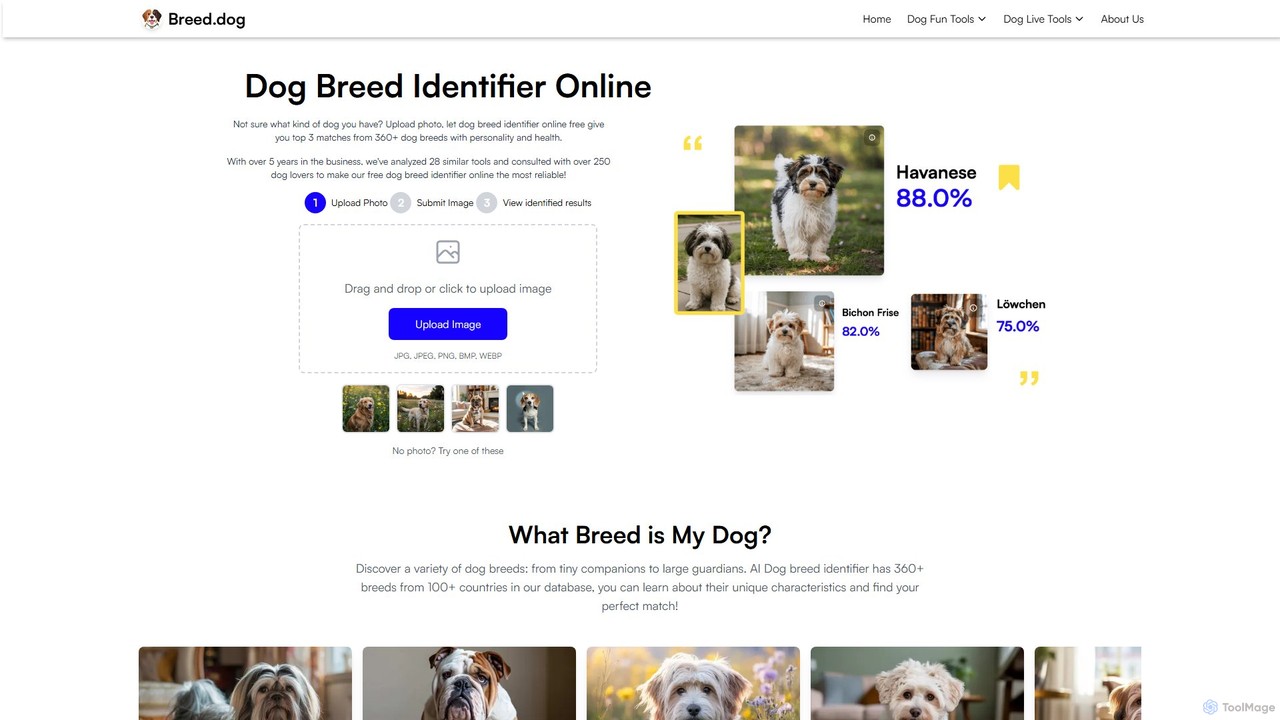
A free, AI-powered suite of tools for dog lovers. Primarily, it identifies a dog's breed from a photo, …

5.6K

About Animal Science

AI Animal Science tools are a specialized category of software that applies artificial intelligence to analyze animal-related data for educational and research purposes. These tools utilize machine learning, computer vision, and predictive analytics to interpret complex information from sources like medical imaging, genetic sequences, and behavioral tracking. They empower researchers, veterinarians, and students to accelerate diagnostics, optimize livestock management, monitor wildlife, and deepen the understanding of animal biology. This data-driven approach facilitates more accurate and efficient research and practice within the broader field of education and science.

Core Features

  • Behavioral Analysis: Automatically identifies and quantifies specific animal behaviors from video footage to study patterns.
  • Diagnostic Image Recognition: Uses machine learning to detect diseases or abnormalities in X-rays, ultrasounds, and microscopic slides.
  • Genetic Data Processing: Analyzes genomic data to identify genetic markers for desirable traits or hereditary diseases.
  • Predictive Health Monitoring: Assesses data from herds or flocks to forecast disease outbreaks and optimize animal welfare.
  • Automated Species Identification: Employs computer vision to identify animal species from images or sounds for ecological studies.

Use Cases

These tools are primarily used in academic research, veterinary medicine, and advanced agriculture. For instance, veterinary schools use them for diagnostic training, large-scale farms apply them for precision livestock management, and conservation organizations rely on them for non-invasive wildlife monitoring.

How to Choose

When selecting an AI Animal Science tool, consider the data type (e.g., imaging, genetic, behavioral), the target species (livestock, companion animals, wildlife), integration capabilities with existing lab or farm systems, and the scientific validation or peer-reviewed evidence supporting the AI model's accuracy.

Animal ScienceUse Cases

1

Assisting Veterinary Diagnostic Training

A veterinary student uses an AI-powered diagnostic tool to analyze a library of canine chest X-rays. The student first makes their own assessment of potential abnormalities, such as cardiomegaly or pneumonia. They then use the AI tool, which highlights areas of concern and provides a differential diagnosis based on its analysis of thousands of similar cases. This allows the student to compare their findings, understand subtle visual cues they might have missed, and accelerate their learning process in a controlled, educational environment, improving their diagnostic accuracy for future clinical practice.

2

Automating Wildlife Population Monitoring

A conservation research team deploys a network of camera traps in a remote forest to study a rare species. Manually reviewing hundreds of thousands of images is unfeasible. They use an AI species identification tool that automatically processes the images, filtering out false triggers (like moving leaves), identifying the target species, and even recognizing individual animals based on unique markings. The system generates a dashboard with population estimates, activity heatmaps, and movement patterns, providing critical data for conservation strategies without requiring thousands of hours of manual labor.

3

Optimizing Livestock Feed Efficiency

A manager of a large dairy farm uses an AI-powered system to enhance feed efficiency. Cameras in the feeding troughs, combined with sensors on the animals, monitor individual feeding behavior, including intake volume and duration. The AI analyzes this data against milk production and health metrics. It identifies cows that are not eating enough or are converting feed inefficiently, allowing the manager to adjust rations for specific animals or groups. This precision feeding approach reduces feed waste by up to 15% and improves the overall health and productivity of the herd.

4

Analyzing Animal Behavior in Research

An ethology researcher studying social hierarchies in a lab setting uses an AI video analysis tool. The software tracks multiple animals simultaneously, identifying and logging specific behaviors like grooming, aggression, and submission without manual coding. The AI generates detailed ethograms and social network maps, revealing complex interaction patterns that would be extremely time-consuming to quantify by hand. This allows the researcher to objectively measure the effects of experimental variables on social dynamics, leading to more robust and reproducible scientific findings.

5

Accelerating Genetic Selection in Breeding

A plant and animal breeding company uses an AI platform to accelerate the development of disease-resistant livestock. The platform analyzes vast genomic datasets from thousands of animals, along with their health records. The AI identifies complex genetic patterns and markers associated with immunity to a specific disease, something that is difficult to spot with traditional statistical methods. This allows breeders to more accurately select parent animals for their breeding programs, significantly reducing the time and cost required to develop a new, more resilient generation of livestock.

6

Analyzing Aquaculture Environments

An aquaculture farm manager uses an AI monitoring system to maintain optimal conditions for fish growth. Underwater cameras and sensors continuously collect data on water quality, temperature, and fish behavior. The AI tool analyzes this real-time data to predict potential issues like algae blooms or oxygen depletion. It also monitors feeding patterns to automate and optimize feed delivery, preventing overfeeding and waste. The system sends alerts to the manager's phone if any parameter deviates from the optimal range, enabling swift corrective action to protect the health and yield of the fish stock.

Animal ScienceFrequently Asked Questions