moonlightai
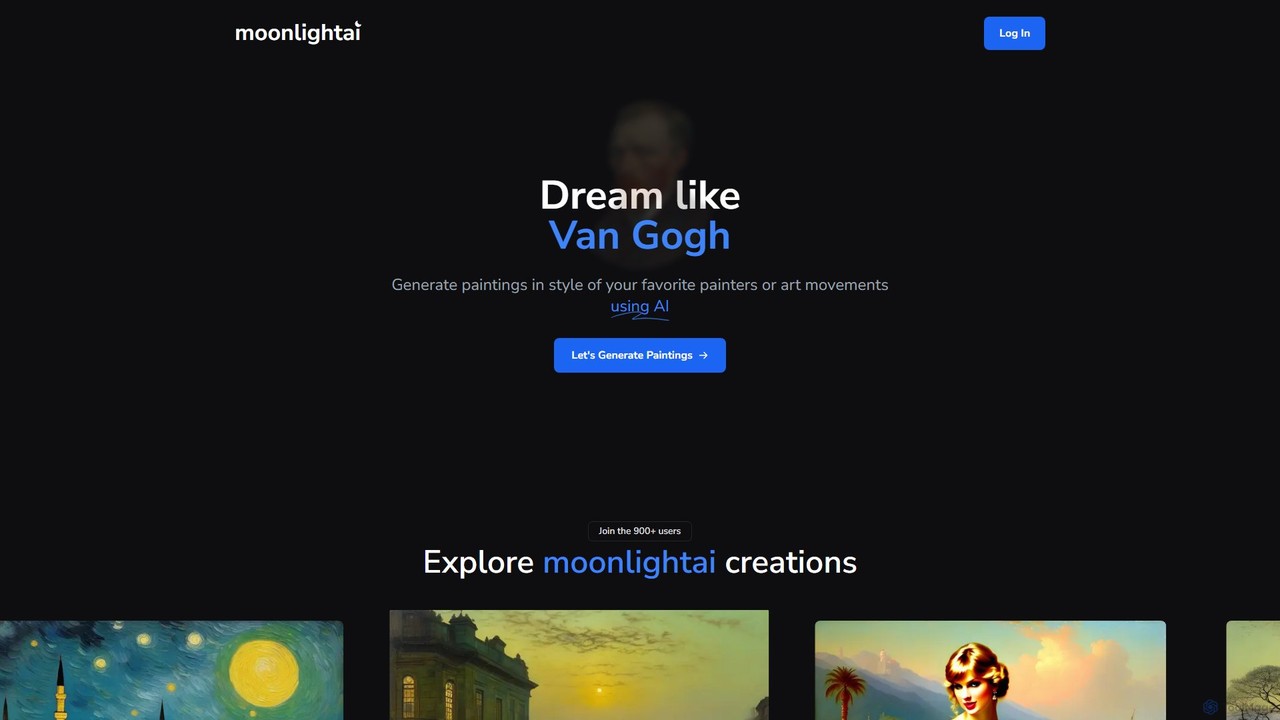
moonlightai is an AI-powered painting generator that allows users to create unique artworks in the styles of famous …
moonlightai is an AI-powered painting generator that allows users to create unique artworks in the styles of famous painters and historical art movements. Simply choose a style, provide a prompt, and generate masterpieces inspired by artists like Van Gogh, Picasso, and Dali.
About Art History
Art History AI tools are specialized artificial intelligence applications designed to enhance the study, analysis, and preservation of art and cultural heritage. These tools leverage advanced computer vision, natural language processing, and machine learning algorithms to process vast datasets of artworks, historical documents, and architectural designs. They provide researchers, educators, and enthusiasts with innovative ways to explore artistic movements, identify stylistic patterns, authenticate pieces, and reconstruct historical contexts, significantly enriching the field of digital humanities within the broader education sector.
Core Features
- Image Recognition & Analysis: Automatically identifies artworks, artists, periods, and styles from visual data, and detects subtle stylistic elements.
- Textual Analysis of Art Historical Documents: Processes and analyzes large corpora of art historical texts, uncovering connections, influences, and thematic trends.
- Virtual Reconstruction & 3D Modeling: Creates digital reconstructions of historical sites, artifacts, or lost artworks based on fragmented data.
- Chronological & Geographical Mapping: Visualizes the evolution and spread of artistic styles, movements, and artists across time and space.
- Authentication & Provenance Tracking: Assists in verifying the authenticity of artworks and tracing their ownership history through data analysis.
Use Cases
Art historians utilize these tools for large-scale data analysis, such as identifying previously unknown connections between artists or movements. Museum curators employ them for digitizing collections, automating metadata generation, and creating interactive exhibits. Educators integrate AI for personalized learning experiences, allowing students to explore art history through virtual tours and interactive stylistic comparisons.
How to Choose
When selecting Art History AI tools, consider the breadth and accuracy of their underlying datasets, their specific analytical capabilities (e.g., stylistic analysis, textual mining, 3D reconstruction), and the quality of their visualization and reporting features. Evaluate the tool's ease of use for non-technical users, its integration potential with existing research platforms, and the level of support for diverse art forms and historical periods.

Art HistoryUse Cases
Identifying Unattributed Artworks
Art researchers use AI image recognition to compare unknown paintings or sculptures against vast digital archives, identifying potential artists, schools, or periods based on stylistic similarities and iconographic elements. This significantly speeds up the attribution process, helping to uncover lost or mislabeled works.
Analyzing Stylistic Evolution Across Eras
Art history students and scholars employ AI to analyze visual features like brushwork, color palettes, and compositional structures across thousands of artworks from different periods. The AI can detect subtle shifts and continuities, providing data-driven insights into the evolution of artistic styles and movements.
Virtual Reconstruction of Ancient Sites
Archaeologists and cultural heritage experts leverage AI-powered 3D modeling to reconstruct damaged or lost historical sites and artifacts from fragmented photographic evidence, historical drawings, and textual descriptions. This creates immersive virtual experiences for research, preservation, and public education.
Automated Cataloging of Museum Collections
Museums and galleries utilize AI to process newly acquired artworks or digitize existing collections. AI tools can automatically extract metadata from images (e.g., subject matter, dominant colors, potential period) and associated documents, streamlining the cataloging process and improving searchability for researchers and the public.
Uncovering Connections in Art Historical Texts
Digital humanities scholars apply natural language processing (NLP) AI to analyze vast corpora of art historical essays, letters, and critiques. The AI identifies recurring themes, influences, and intellectual networks between artists, critics, and patrons, revealing new perspectives on historical discourse.
Interactive Learning Experiences for Students
Educators develop AI-powered interactive platforms where students can explore art history. For example, an AI might guide students through a virtual gallery, offering real-time information on artworks, comparing pieces from different eras, or even generating quizzes based on their learning progress.