Education Best in category 1 results Aviation Training AI Tool

Popular AI tools in the Aviation Training field of Education include CFR Explorer, etc., helping you quickly improve efficiency.

Free
CFR Explorer

CFR Explorer

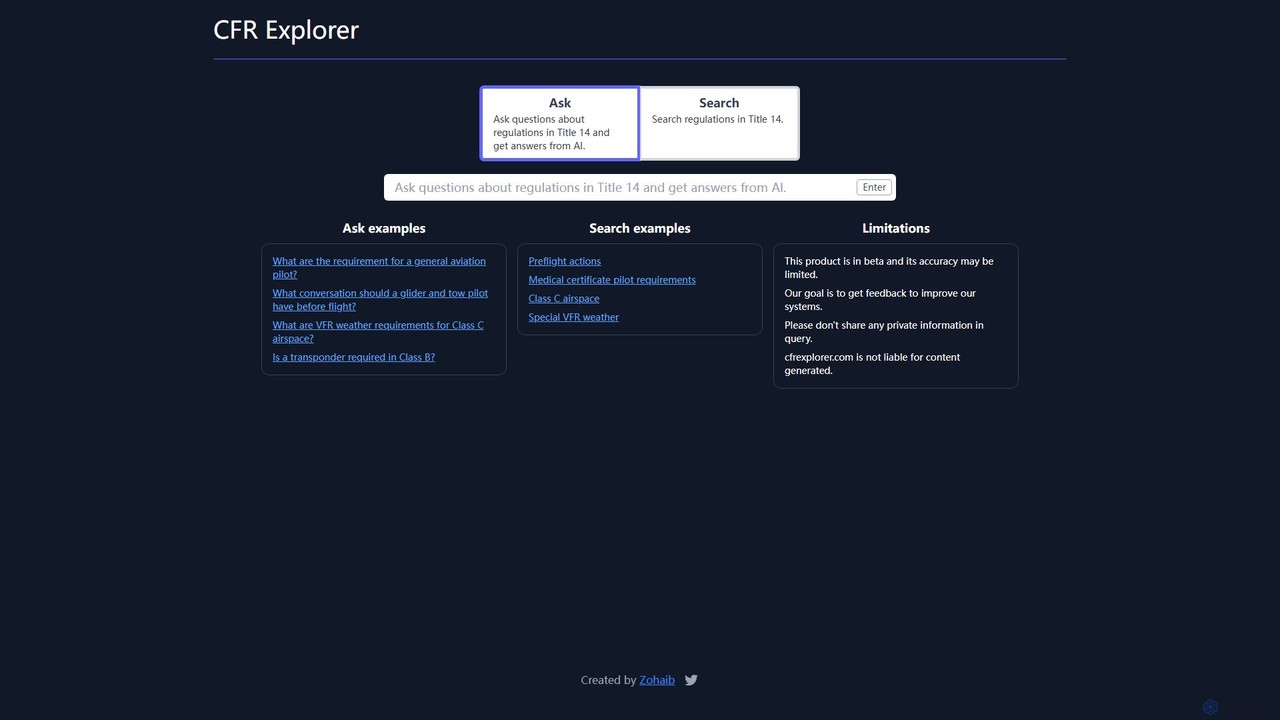
CFR Explorer is an AI-powered search engine designed for the aviation industry. It allows users to ask natural …

3.0K

About Aviation Training

Aviation Training AI tools leverage artificial intelligence to revolutionize education and skill development across the aviation sector. These advanced platforms utilize AI-driven simulations, adaptive learning algorithms, and virtual/augmented reality to create highly realistic and personalized training experiences. They are designed to enhance the proficiency and decision-making capabilities of pilots, air traffic controllers, maintenance crews, and cabin staff, ultimately improving safety and operational efficiency.

Core Features

  • Intelligent Flight Simulators: AI-driven scenarios, dynamic weather conditions, and emergency procedure training with real-time feedback.
  • Adaptive Learning Paths: Personalized curriculum and content delivery based on individual trainee performance and learning pace.
  • Performance Analytics: Objective assessment of skills, identifying strengths and weaknesses through data-driven insights.
  • Virtual & Augmented Reality: Immersive environments for procedural training, aircraft maintenance, and cabin crew drills.
  • Natural Language Processing: AI for communication training, including air traffic control phraseology and cockpit crew resource management.

Use Cases

These tools are crucial for pilot recurrent training, allowing them to practice complex emergency scenarios and refine decision-making under pressure. Air traffic controllers benefit from realistic, high-density traffic simulations to hone their communication and conflict resolution skills. Aircraft maintenance technicians can perform virtual walkthroughs and repair procedures, reducing the need for physical equipment and minimizing risks.

How to Choose

When selecting Aviation Training AI tools, consider the realism and fidelity of simulations, the adaptability of learning paths, and the depth of performance analytics. Evaluate integration capabilities with existing training management systems, compliance with aviation regulatory bodies (e.g., FAA, EASA), and the cost-effectiveness of the solution. User interface intuitiveness and technical support are also important factors for successful implementation.

Aviation TrainingUse Cases

1

Pilot Emergency Scenario Training

Pilots undergo recurrent training using AI-powered flight simulators to practice complex emergency scenarios such as engine failures, severe weather encounters, or system malfunctions. The AI dynamically adjusts the scenario based on the pilot's actions, providing realistic challenges and immediate feedback on decision-making and procedural execution, ensuring readiness for critical situations.

2

Air Traffic Controller Skill Development

Air traffic control (ATC) trainees utilize AI-driven simulations to manage high-density air traffic in various weather conditions and emergency situations. The AI generates realistic aircraft behaviors and pilot communications, allowing trainees to practice communication protocols, conflict resolution, and decision-making under pressure, improving their ability to maintain safe and efficient airspace.

3

Aircraft Maintenance Virtual Training

Aircraft maintenance technicians use AR/VR-powered AI tools to conduct virtual inspections, disassembly, and repair procedures on digital twin models of aircraft components. This allows them to learn complex tasks, identify faults, and practice intricate manual skills in a risk-free environment, reducing the need for expensive physical mock-ups and accelerating training timelines.

4

Cabin Crew Safety & Service Drills

Cabin crew members engage in AI-enhanced VR simulations to practice emergency evacuations, first aid, and passenger management. The AI can simulate diverse passenger behaviors, cabin conditions (e.g., smoke, turbulence), and communication challenges, providing a safe and repeatable environment to master critical safety procedures and refine customer service skills under pressure.

5

Personalized Ground School Instruction

Aspiring pilots and aviation enthusiasts use AI-powered adaptive learning platforms for ground school theory. These tools analyze individual learning styles and progress, delivering customized modules, quizzes, and explanations. This personalized approach accelerates theoretical understanding, ensures mastery of complex aviation concepts, and prepares students more effectively for certification exams.

6

Drone Pilot Advanced Maneuver Training

Commercial drone operators train for complex industrial inspections, aerial photography, or delivery routes using AI-enhanced flight simulators. These tools allow pilots to practice precision flying, obstacle avoidance, and payload management in varied virtual environments, simulating challenging real-world conditions without risking expensive equipment or violating airspace regulations.

Aviation TrainingFrequently Asked Questions