Education Best in category 2 results Bootcamp AI Tool

Popular AI tools in the Bootcamp field of Education include Fullstack Academy、Avocademy, etc., helping you quickly improve efficiency.

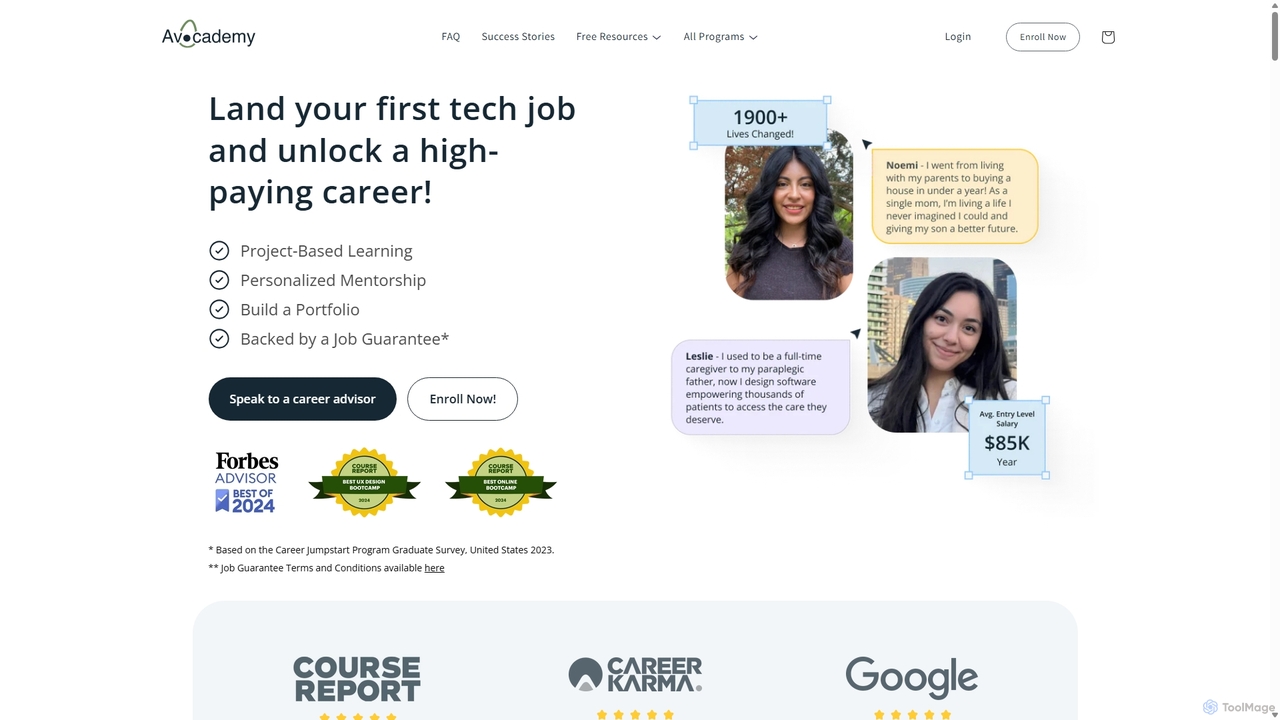
Avocademy

Avocademy

Avocademy is an online educational platform specializing in UX/UI design, with a unique focus on designing for AI …

9.3K
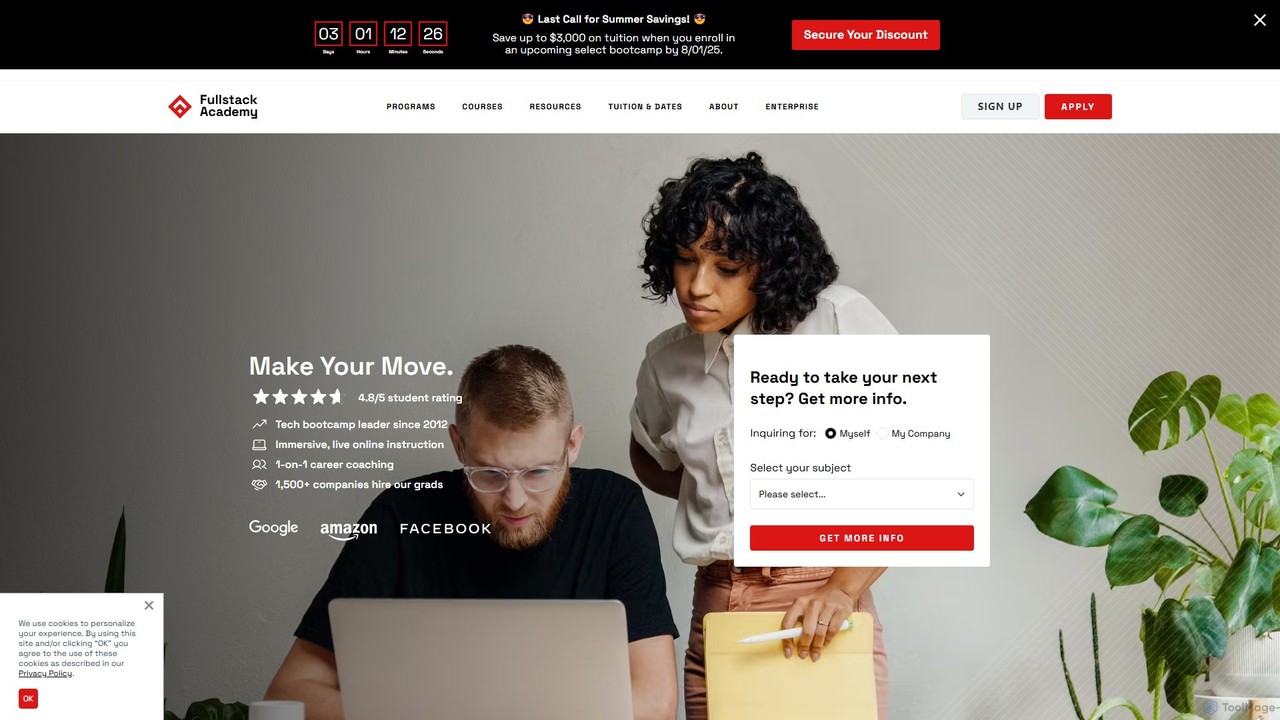
Fullstack Academy

Fullstack Academy

Fullstack Academy is a leading online tech bootcamp offering immersive, live training in high-demand fields like AI & …

53.1K

About Bootcamp

AI Bootcamps are intensive, short-term educational programs designed to equip individuals with practical, job-ready skills in artificial intelligence. They focus on hands-on, project-based learning to bridge the gap between academic theory and real-world industry demands. These programs are ideal for career changers, professionals seeking to upskill, or recent graduates wanting to specialize in fields like data science, machine learning, or AI development. The compressed format allows for rapid skill acquisition in a matter of weeks or months.

Core Features

  • Intensive Curriculum: A concentrated, up-to-date syllabus covering essential AI concepts and tools in a condensed timeframe.
  • Project-Based Learning: Building a portfolio of real-world projects to demonstrate practical abilities to employers.
  • Career Services: Dedicated support including resume building, interview preparation, and networking opportunities with hiring partners.
  • Industry Mentorship: Direct guidance and feedback from experienced professionals currently working in the AI field.

Use Cases

AI Bootcamps are widely used by individuals aiming for a career transition into tech, such as a marketing analyst becoming a data scientist. They also serve existing tech professionals, like software developers, who need to upskill in machine learning. Companies often utilize bootcamps for corporate training to quickly elevate their teams' AI capabilities.

How to Choose

When selecting an AI Bootcamp, evaluate the curriculum's relevance to your career goals (e.g., data analytics vs. deep learning). Investigate their job placement statistics and alumni network. Also, consider the instructors' industry experience and the availability of flexible learning formats, such as full-time, part-time, or online options.

BootcampUse Cases

1

Transitioning into a Data Science Career

A professional from a non-technical background, such as finance or marketing, enrolls in a data science bootcamp to pivot their career. The curriculum provides foundational knowledge in Python, SQL, statistics, and machine learning. Through hands-on projects like building predictive models or analyzing large datasets, they develop a strong portfolio. Upon completion, the bootcamp's career services assist with resume refinement and interview coaching, enabling them to successfully land a junior data scientist or analyst role.

2

Upskilling for AI-Powered Product Management

An experienced product manager recognizes the growing importance of AI in their industry. To lead AI product development effectively, they join a specialized bootcamp focused on the practical applications of machine learning. The program covers how to identify AI opportunities, manage data pipelines, and understand model evaluation metrics without needing to become a deep expert coder. This empowers them to communicate more effectively with engineering teams, define realistic AI product roadmaps, and make data-informed strategic decisions.

3

Launching a Career as a Machine Learning Engineer

A recent computer science graduate finds their academic knowledge is too theoretical for many job openings. They join an advanced machine learning bootcamp to gain practical experience. The program focuses on deploying models, working with cloud platforms like AWS or Google Cloud, and using MLOps tools. By building and deploying several end-to-end applications, they acquire the specific, in-demand skills that employers are looking for, significantly improving their competitiveness in the job market for ML engineer positions.

4

Corporate Team Training for AI Adoption

A mid-sized company decides to integrate AI into its operations to stay competitive. Instead of hiring a new team, they enroll their existing software development team in a customized corporate AI bootcamp. The training is tailored to their industry and focuses on skills directly applicable to their upcoming projects, such as natural language processing for customer support or computer vision for quality control. This approach rapidly upskills the entire team, fostering internal innovation and accelerating the company's AI transformation.

5

Building a Portfolio for AI Freelance Work

A freelance web developer wants to expand their services to include AI-powered features for clients. They enroll in a part-time AI bootcamp to learn skills like building recommendation engines or integrating chatbot APIs. The project-centric nature of the bootcamp allows them to create several high-quality, demonstrable projects for their portfolio. This tangible proof of their new capabilities enables them to attract higher-paying clients and take on more complex, specialized freelance projects in the AI space.

6

Gaining Practical Skills After Academic Research

A PhD graduate in a quantitative field like physics or mathematics possesses strong theoretical and research skills but lacks practical software engineering experience. They attend an AI bootcamp to bridge this gap. The curriculum emphasizes industry best practices, version control with Git, collaborative coding, and building production-ready applications. This practical training complements their deep analytical background, making them a highly attractive candidate for research scientist or quantitative analyst roles in the tech industry.

BootcampFrequently Asked Questions